Diesels and COLD weather?

/ Diesels and COLD weather? #1  

M.C.

New member
Joined
Jan 9, 2026
Messages
5
Location
Eastern N.C.
Tractor
Gc1723
Gentlemen, looking for information regarding my diesel tractors ( MF-135 and GC-1723 ) and cold weather. I do not farm just have a few acres that I maintain. Mostly summer mowing with the 135 and a little occasional work with the 1723. However, after our recent significant (for our area) snow I find myself concerned with needing my tractors during COLD weather. I’d like to know about the problem with the fuel when it is below freezing and how long after the temperature gets back above freezing before it’s safe to start the tractor. I’ve always just made it a point to not try to start then after a COLD spell (nights below freezing and days in the 40s). Also, I’d be interested in everyone’s use of fuel treatments to prevent cold weather fuel problems. I mean, do you have to add the treatment then run the tractor a little on a warm day or can they be added after the temperature drops below freezing? Any and all recommendations would be greatly appreciated. I would also be very interested in information related to installing a block heater in my 1723. Worth it or not?? Thanks, MC
 
/ Diesels and COLD weather? #2  
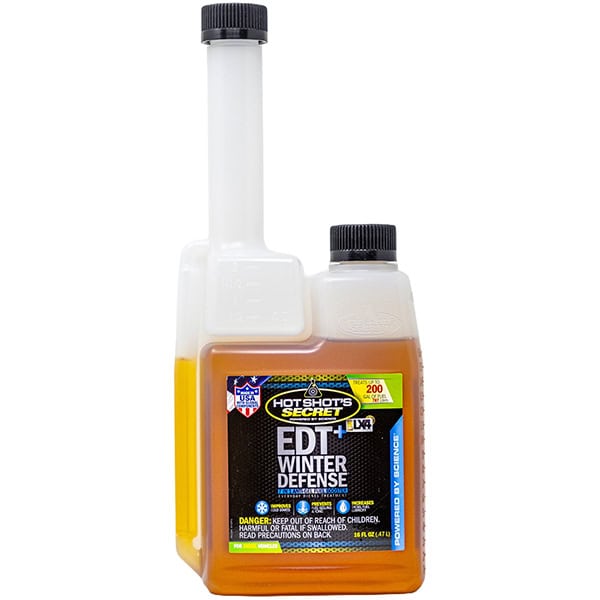
Hot Shots.
Add it to fuel, then add some more fuel to blend it together.
Run tractor a while so it pulls newly treated fuel up into your lines, fuel filter and injectors.


Block heaters are nice if you are running a lot in the winter, plowing snow, emergency services, etc.. Your glow plugs along with properly treated fuel should be all you need for occasional use. Block heaters cause a noticeable bump up in electric bill.
Put it on a timer if possible.
 
Last edited:
/ Diesels and COLD weather? #3  
Gentlemen, looking for information regarding my diesel tractors ( MF-135 and GC-1723 ) and cold weather. I do not farm just have a few acres that I maintain. Mostly summer mowing with the 135 and a little occasional work with the 1723. However, after our recent significant (for our area) snow I find myself concerned with needing my tractors during COLD weather. I’d like to know about the problem with the fuel when it is below freezing and how long after the temperature gets back above freezing before it’s safe to start the tractor. I’ve always just made it a point to not try to start then after a COLD spell (nights below freezing and days in the 40s). Also, I’d be interested in everyone’s use of fuel treatments to prevent cold weather fuel problems. I mean, do you have to add the treatment then run the tractor a little on a warm day or can they be added after the temperature drops below freezing? Any and all recommendations would be greatly appreciated. I would also be very interested in information related to installing a block heater in my 1723. Worth it or not?? Thanks, MC
Adding a block heater to a GC 1723 is well worth it: makes starting it in winter like starting it in summer! I had an OEM one installed by the dealer, so I'm not sure how difficult it is.

After starting it in the cold, it is still a good idea to let it warm up because the hydraulic fluid will still be cold. A couple of minutes at 1500 rpm, then 2000 rpm, and then operating the loader and or backhoe without load and piddling around slowly until things get smoother.
 
/ Diesels and COLD weather? #4  
I use an additive and blend kerosene in at about 20%. It’s usually only a problem when it starts getting close to zero outside. I’m using a Lucas additive now but like Haydude says I’ll probably switch to Hotshots next time I buy some.
 
/ Diesels and COLD weather? #5  
You are in an area that may not treat diesel for the winter season. I would treat the fuel if your temps get much below freezing. Numbers are all over the page on the internet, but I settled on these for summer untreated diesel :

Cloud Point about 32 deg untreated (summer diesel)
CFPP about 10-15 deg untreated (summer diesel)
Gels at 0 deg
The CFPP (cold filter plugging point) will stop you dead, and you'll only allow your fuel system to actually gel once.

Routine use additives must be added prior to gelling or CFPP.
 
/ Diesels and COLD weather? #6  
RjCorazza,


Power Service 9-1-1 is a self-clearing fuel gel product: https://www.oreillyauto.com/detail/...products-diesel-9-1-1-diesel-de-gel/pws3/8026
Pour the recommended amount into your fuel tank, and wait for it to spread itself throughout the fuel system, including filters.
EDIT:
My Massey Ferguson Perkins engine has straight summer diesel in the tank, no additive. It has never failed to start and run continuously for hours in 10°-15°F weather.
I do keep a bottle of PS 9-1-1 in the garage JIC.
 
Last edited:
/ Diesels and COLD weather? #8  
yeah 911 is for...911 issues.
not really sure the expense of block heater good use of your funds, how often does it get below freezing there?
cost of heater as well as pretty much full coolant change. thats if you do it yourself.
 
/ Diesels and COLD weather? #9  
Power Service 911 is recommended AFTER you have a gelling problem, it’s hard on the fuel system.
 
/ Diesels and COLD weather? #10  
Gentlemen, looking for information regarding my diesel tractors ( MF-135 and GC-1723 ) and cold weather. I do not farm just have a few acres that I maintain. Mostly summer mowing with the 135 and a little occasional work with the 1723. However, after our recent significant (for our area) snow I find myself concerned with needing my tractors during COLD weather. I’d like to know about the problem with the fuel when it is below freezing and how long after the temperature gets back above freezing before it’s safe to start the tractor. I’ve always just made it a point to not try to start then after a COLD spell (nights below freezing and days in the 40s). Also, I’d be interested in everyone’s use of fuel treatments to prevent cold weather fuel problems. I mean, do you have to add the treatment then run the tractor a little on a warm day or can they be added after the temperature drops below freezing? Any and all recommendations would be greatly appreciated. I would also be very interested in information related to installing a block heater in my 1723. Worth it or not?? Thanks, MC
In eastern NC it is unlikely your fuel will ever gel. The temp at which diesel fuel gels is very well documented and in my experience woith both tractors and VW diesels it is right at 11 deg F. Of course it gets "thicker" at a little above that temp and it will be "too late" below 11 or 12 deg. It is important as Hey Dude says above that you (no matter what you add to the fuel) run it long enough for the treated mixture to get in through the injection pump and into the engine for a while. In your area it is a VERY safe bet that local supply fuel has not been treated for cold weather. In much colder climates I never ever depended on that anyway -- it is more like a crap shoot as to whether fuel has really been treated or not AND how much so. The best in my opinion has always been to mix in #1 fuel (kerosene) when it is going to be down in the teens or below. It will never hurt anything and you forget it after that. A lot of people swear by the additives and I'm sure many do work. To what degree who knows.

There is no threshold at freezing. The gel threshold is, as mentioned above, around 11-12 deg. It is never unsafe to start your tractor. Just use your glow plugs as needed -- several seconds before cranking. You will be fine.
 
/ Diesels and COLD weather? #12  

This is an article about Power Service additives in general. not specifically about their 911 product.
911 is not intended to be used as a routine winter additive.
 
/ Diesels and COLD weather? #13  
Here are two bottles ... HotShots Winter Defense on the Left, Power Service 911 on the right ... I just pulled out of my side box.

Basically says to mix anti-gel at 32°F+ and the 911 is not to be used as an anti-gel, it is for emergency use of non-starting engines ...

IMG_20260204_182511130~2.jpg


I have never used 911 ever in 34 years if driving, but use anti-gel ... I carry it mostly if another driver has a problem ...
 
/ Diesels and COLD weather? #14  
Here are two bottles ... HotShots Winter Defense on the Left, Power Service 911 on the right ... I just pulled out of my side box.

Basically says to mix anti-gel at 32°F+ and the 911 is not to be used as an anti-gel, it is for emergency use of non-starting engines ...

View attachment 4948548

I have never used 911 ever in 34 years if driving, but use anti-gel ... I carry it mostly if another driver has a problem ...

I recently switched to HotShots after some comments here, and the Project Farm test video.
So far so good, and we have gotten down to around 0f here recently.
 
/ Diesels and COLD weather? #15  
My dozen or so experiences with a 911 or similar product helping others is really hit or miss as an emergancy fix.
Pouring it or similar Into top of tank and waiting to see if it can work its way through through the filters, separators, rail, pump, etc.... right through to I injectors has been very hit and miss if engine not running and fuel just sitting.
Instead now when someone is gelled I find dragging it I to a heated shop or tent it with insulated tarp and add heat underneath is a much more sure thing and no wasted time.

Cheers
 
/ Diesels and COLD weather? #16  
I use a shot of 911 and a couple shots of PS white bottle in a full tank. No issues at 0-5 degrees F.
 
/ Diesels and COLD weather? #17  
It's better to add some fuel additive and have them topped off at the end of the season. If you know for a fact that you don't have biodiesel that gives you some added cushion and might just keep the additive on hand in case you will need to use your tractors. If it is biodiesel be aware that it can begin to gel at 32 degrees. If it's animal fat oil based it can be as warm as 40 degrees. Many don't realize that and it's not an issue most of the time unless you are in the cold climates.
 
/ Diesels and COLD weather? #18  
It's better to add some fuel additive and have them topped off at the end of the season. If you know for a fact that you don't have biodiesel that gives you some added cushion and might just keep the additive on hand in case you will need to use your tractors. If it is biodiesel be aware that it can begin to gel at 32 degrees. If it's animal fat oil based it can be as warm as 40 degrees. Many don't realize that and it's not an issue most of the time unless you are in the cold climates.
Did you read my reply #6? Everything you buy is at least B2, which is not required to be labeled as containing biodiesel. Summer blend B2 is in my tractor, no extra additive, and it starts at 10°-15°F. The tractor has ran for hours without any fuel gelling.
 
/ Diesels and COLD weather? #19  
It's better to add some fuel additive and have them topped off at the end of the season. If you know for a fact that you don't have biodiesel that gives you some added cushion and might just keep the additive on hand in case you will need to use your tractors. If it is biodiesel be aware that it can begin to gel at 32 degrees. If it's animal fat oil based it can be as warm as 40 degrees. Many don't realize that and it's not an issue most of the time unless you are in the cold climates.
Lookout folks. There is a staggering amount of misinformation and downright nonsense on the web about diesel fuel in general and gelling temperatures specifically. Most of the "information" is conflicting all over the place. Cloud point gets confused with gel temperature but maybe it is the same? On and on. Some factoids I believe and seem important: (from filtering apparently credible website info)
  • #2 std, I have had VW diesels miss and sputter at a known stable 12 deg F. using older "plain diesel" not blended
  • Nationwide filling station diesel fuel these days is 5% bio diesel and it does gel at a higher temperature than world-wide standard #2. How much higher? Wildly varying claims.
  • Blended bio and petro diesel are called "B20" for 20% bio, many sites say B5 dominates the market these days
  • Good discussion: Wiki titled "Winter diesel fuel"
  • If the Society of Automotive Engineers (SAE) publishes it I believe it
  • The most reliable practice for avoiding winter diesel issues is mixing #2 with #1 as much as 50/50. That is what the heavy equipment operators do in northern states and Canadian provs.
  • Exxon AI overview says
    • Unmodified #2 Diesel: Gels around 10°F to 15°F.
    • Cloud Point: The temperature where wax begins to crystallize, making the fuel appear cloudy (often 10-15°F higher than the gel point). Good ex. of conflicting terminology.
    • Specific Product Data Sheets (PDS) exist for each delivery area -- but typically not see by users or even station owners
    • 10°F to 15°F (-12°C to -9°C): This is the common Gel Point (Cold Filter Plugging Point)
https://www.tractorbynet.com/forums...253/#:~:text=In general, neat diesel (ULSD,*F!!!!! is another TBN thread on this topic.
 
/ Diesels and COLD weather? #20  
Pouring it or similar Into top of tank and waiting to see if it can work its way through through the filters, separators, rail, pump, etc.... right through to I injectors has been very hit and miss if engine not running and fuel just sitting.

The bottle says to also remove the filters and add a 50% mix of 911 to them ...

IMG_20260204_182511130~4.jpg


Now I know this is a tractor forum, but I said I carry the 911 to help out another truck driver who hadn't treated there fuel as I did ... We have this type of fuel filters ... Easy to just dump in the top ... As I don't carry filter wrenches and spares filters on my truck, and no way to tow someones truck, or a heated shop to get it into ... Just unscrew the black knob on top, and pour it in!

IMG_20260205_044236041~2.jpg


Did you read my reply #6? Everything you buy is at least B2, which is not required to be labeled as containing biodiesel

Maybe in Indiana ... But, in Missouri we have 100% "dino-diesel" petroleum, no bio-diesel in it available to buy ... This is the off-road diesel version I buy from the local farm supply ...

IMG_20251114_084639573.jpg


I went inside and specifically asked them if there was ANY bio-diesel in it, they said "NO" ... I asked if they treated it with an anti-gel in the winter, they said "YES" ...

I see billboard signs advertising some truck stops that offer 100% diesel, just like some places offer 100% gasoline ...

I still add my own treatment, both summer and winter ... No fuel problems in the 4 years I've been using there fuel since I moved here ... Used my tractor last weekend when it was a low of 1°F, and started my tractor once it has warmed up to 2°F! No problems running ...
 

Marketplace Items

Trailmobile Van Trailer (A63118)
Trailmobile Van...
2025 12v Fuel Pump (A61568)
2025 12v Fuel Pump...
UNUSED WOLVERINE TL-12-72W 72" HYD TILLER (A62131)
UNUSED WOLVERINE...
2024 Western Star Dump Trucks 49X Truck, VIN # 5KKHBWDR4RLUZ9033 (A61165)
2024 Western Star...
2014 Ford Explorer SUV (A61569)
2014 Ford Explorer...
7888SFL (A61567)
7888SFL (A61567)
 
Top