Home electrical question

   / Home electrical question #1  

Jstpssng

Epic Contributor
Joined
Aug 7, 2005
Messages
30,115
Location
Maine
Tractor
Kubota L3301
I'm bringing home a Craftsman planer/molder which was my father's. It runs on 220/15 or 20 amp, I don't remember which.
Eventually I will build my garage and set it up in there but for now need to hook up a temporary power supply. My place is wired for an electric range but I use propane. I am thinking about swapping the 50 amp breaker for the one which is proper for the planer, then building a 20 foot pigtail adapter to bring power out of the house.
Does this make sense, or sound like a good way to burn the house down?

Thank you
 
   / Home electrical question #2  
I'm bringing home a Craftsman planer/molder which was my father's. It runs on 220/15 or 20 amp, I don't remember which.
Eventually I will build my garage and set it up in there but for now need to hook up a temporary power supply. My place is wired for an electric range but I use propane. I am thinking about swapping the 50 amp breaker for the one which is proper for the planer, then building a 20 foot pigtail adapter to bring power out of the house.
Does this make sense, or sound like a good way to burn the house down?

Thank you
Yes. No problem. Use 12-3 romex in a conduit. The wire itself in much easier to work with than direct burial 12-3 UF. Just make sure the cable is protected from damage where it transits the wall. If youre talking running the wire above ground you can protect it well using the ballistic nylon braided sheath tubing used on hydraulic lines.
 
   / Home electrical question
  • Thread Starter
#3  
Yes. No problem. Use 12-3 romex in a conduit. The wire itself in much easier to work with than direct burial 12-3 UF. Just make sure the cable is protected from damage where it transits the wall. If youre talking running the wire above ground you can protect it well using the ballistic nylon braided sheath tubing used on hydraulic lines.
Thank you. I thought it made sense, but have a knack for doing things wrong. 🤔
 
   / Home electrical question #4  
Swap the breaker out with a 2 pole 20 amp also. Protection at the proper ampacity for those number 12 conductors on the extension of the circuit.
 
   / Home electrical question #5  
Thank you. I thought it made sense, but have a knack for doing things wrong. 🤔
are you talking about just the breaker or the wire as well. I assume you mean just the breaker, 50amp wire is not going fit under a 20 amp breaker. does it have a built in circuit breaker?
 
   / Home electrical question #6  
Cheapest method to splice conductors while preserving wire length.

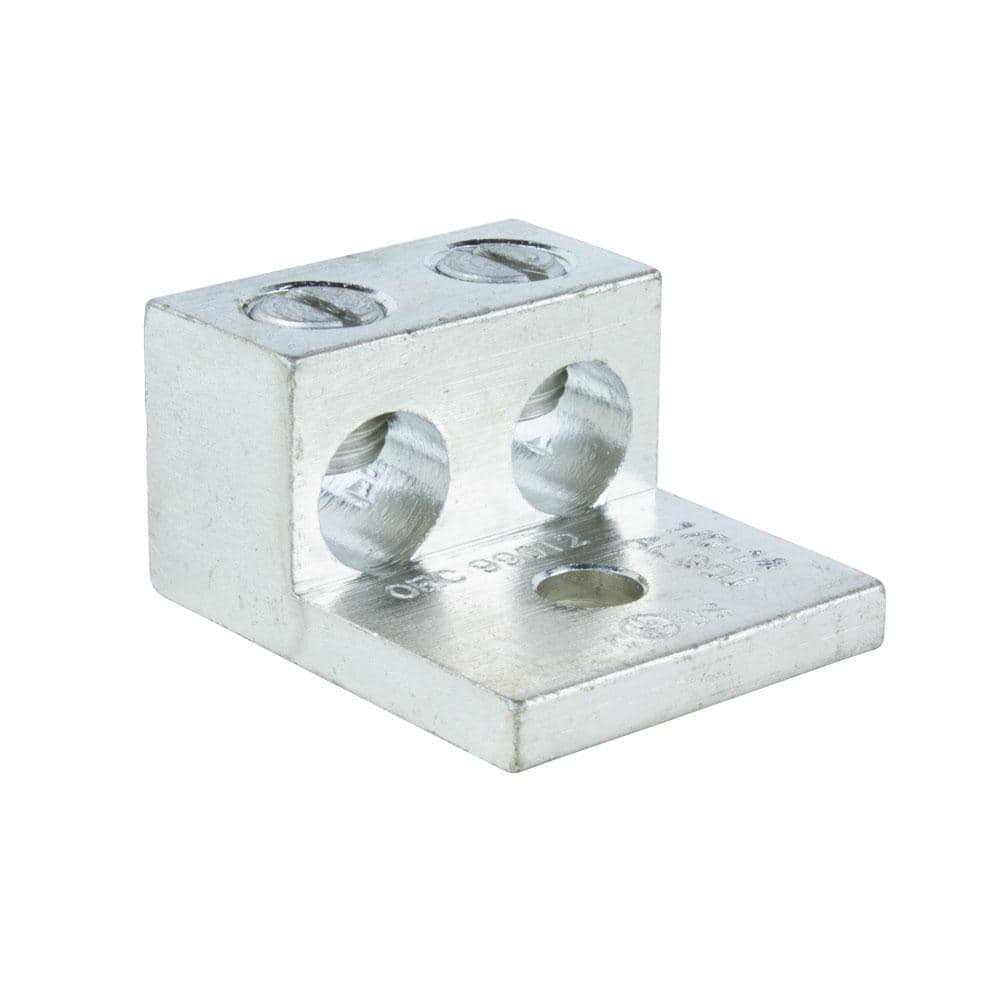
You can use a two hole mechanical lug.


Connect wire from (Edit) the range circuit 50 amp breaker in panel (Remove 50 amp breaker and replace with a 20 amp to protect the #12 conductor size) to one side of the mechanical lug or a split bolt, Then use a short #12 to connect from the lug to the new 20 amp breaker.

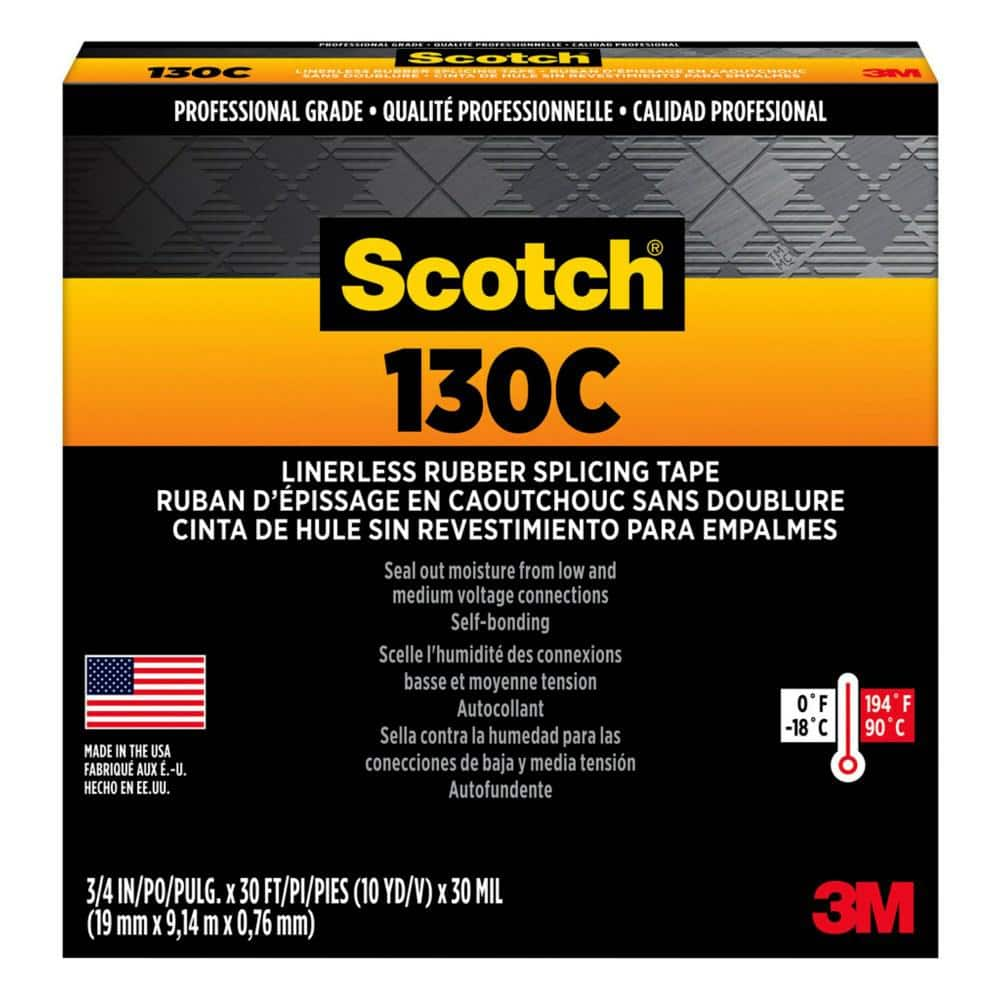
Wrap the lug with electrical tape, then the linerless rubber splicing tape. Then wrap with electrical tap again.
It may look like a ball of tape when you are done but it is safe.
Reason for using electrical tape in the first wrap is so that you can take it apart easier when the time comes.
The splicing tape is very sticky once it is in use and will mold into somewhat of a single piece that will not unwrap the same way it went on. Best to cut with a knife to disassemble.


If using split bolt connectors, use the same tape layering method.

If your panel is close to where you want to use the planer, you could just take the circuit directly from the panel.
 
Last edited:
   / Home electrical question #7  
Cheapest method to splice conductors while preserving wire length.

You can use a two hole mechanical lug.


Connect wire from 50 amp breaker in panel to one side, Then use a short #12 to connect from the lug to the new 20 amp breaker.

Wrap with electrical tape, then the linerless rubber splicing tape. Then wrap with electrical tap again.
It may look like a ball of tape when you are done but it is safe.
Reason for using electrical tape in the first wrap is so that you can take it apart easier when the time comes.
The splicing tape is very sticky once it is in use and will mold into somewhat of a single piece that will not unwrap the same way it went on. Best to cut with a knife to disassemble.


If using split bolt connectors, use the same tape layering method.

If your panel is close to where you want to use the planer, you could just take the circuit directly from the panel.
yea, this is the way to go, forgot about split bolts, even though i use them, cheapest and easiest way to go.
 
   / Home electrical question
  • Thread Starter
#8  
are you talking about just the breaker or the wire as well. I assume you mean just the breaker, 50amp wire is not going fit under a 20 amp breaker. does it have a built in circuit breaker?
I intend to change the breaker in the box, wire size shouldn't matter.
 
   / Home electrical question #11  
I am not an electrician, but I thought you never use romex inside a conduit?
Correct. Either UF or THHN is acceptable, romex is not. Buried conduit is considered "wet location".
 
   / Home electrical question #12  
I'm trying to picture this in my head. where is the plainer gonna be vs the range plug vs the breaker panel
 
   / Home electrical question #13  
I was under the impression that a circuit breaker is sized to protect the wire between the breaker and the outlet.

Doug in SW IA
 
   / Home electrical question #14  
I was under the impression that a circuit breaker is sized to protect the wire between the breaker and the outlet.

Doug in SW IA
Yes, it is.

I believe that what @MAX-24-Dean is describing is "20A breaker to 12ga short wire to split bolt to the 8ga wire (50A wire) to the outlet", so the 20A breaker protects the 12ga pigtail, and the rest of the wiring is a low resistance/low loss wire, with no chance of being overloaded by the upstream 20A breaker.

(I had to read it twice myself.)

All the best,

Peter
 
   / Home electrical question #15  
Yes, it is.

I believe that what @MAX-24-Dean is describing is "20A breaker to 12ga short wire to split bolt to the 8ga wire (50A wire) to the outlet", so the 20A breaker protects the 12ga pigtail, and the rest of the wiring is a low resistance/low loss wire, with no chance of being overloaded by the upstream 20A breaker.

(I had to read it twice myself.)

All the best,

Peter
Thanks for the clarification, I edited the original post to hopefully make it easier to understand for anyone that looks at this later.
Dean
 
   / Home electrical question #16  
@MAX-24-Dean thanks for the suggestion and the edit!
(I'm glad that I didn't mess up your suggestion.)

All the best,

Peter
 

Tractor & Equipment Auctions

2025 14ft. Bi-Parting Driveway Gate (A59231)
2025 14ft...
Nissan Forklift (A55973)
Nissan Forklift...
2021 FREIGHTLINER CASCADIA TANDEM AXLE SLEEPER (A59905)
2021 FREIGHTLINER...
Bobcat 873 (A55272)
Bobcat 873 (A55272)
2023 CASE 580 SUPER N BACKHOE (A60429)
2023 CASE 580...
7ft Pull-Behind Rake Tractor Attachment (A59228)
7ft Pull-Behind...
 
Top