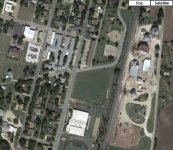
As far as allowing it to be that close to houses, the plant was there first and the town built up around it. We had a firetruck built there by the W.A. Neel Company in 1983. West was a small place then. I had to go back occasionally for parts or service. Most people don't know or don't consider what is around them when they buy a house or property. Look at the people who bought million dollar homes in Southlake or Grapevine and then found out they were in the approach pattern for DFW Airport. When the wind changed and the traffic patterns changed they screamed to have the airport moved, like that's going to happen.
Randy, your points all agree with the what I'm saying. That fertilizer plant would probably not have been built around if the sign out front said "
Pantex" or some other ordnance manufacturer. Because it is a fertilizer plant, or even a chemical plant, people don't feel as threatened.
As far as Grapevine/Colleyville/Southlake/Coppell cities, those were tiny towns when DFW airport was built. Carpenter farm was a huge tract of raw mesquite covered prairie. Grapevine was a dying little town that supported recreation on Lake Grapevine and housed lots of Army Corp of Engineer workers who maintained the Dam. The airport purchased huge tracts of undeveloped land for future expansion and safe zone areas. Hwy 121 wasn't much more than a bumpy paved cow path and Beltline Rd through Coppell wasn't anything but a speed trap. Southlake incorporated in 1956 and didn't grow until DFW airport was built. The same is true of Irving/Grand Prairie/Arlington/Euless on the south side of the airport. Many people complained that was being built way out in the country away from the people in Dallas and Ft. Worth it was built to serve. So yes, people do live right next to the airport, but with a little examination, they could have seen that the Airport owned the undeveloped areas that butted up to their new "McMansion" development. The existence of the airport and the boom to economics is the reason those cities exist.
Even so, if you stand on the airport's property line, you are probably at least 2 miles from the terminal if not much more. If fertilizer plants were required to have even a half-mile boundary, the danger of the immediate blast zone would be contained. It would not have saved the lives of the VFD members, but it would have saved the homes and injuries to many. Unfortunately, the fertilizer plant didn't have the funds to buy large tracts of land when it was started. Unlike the airport, it had no public funding and taxation authority. It was a private enterprise just hoping to be a big enough success to stay in existence. People considered it no more danger than if it had been the Acme Brick Company in Ennis or the grain silos in Saginaw. Because of the explosion, we may never know what led to the fire that triggered it. After the area is declared safe, investigating the fire will be a whole new challenge. That's one process that Don is probably very familiar with. Let's hope they can identify some definitive causes and put in safeguards in the future.