Making my own 20 KW Genset

   / Making my own 20 KW Genset
  • Thread Starter
#41  
I thought it would of been in bad form to comment. Even to compliment.... I assumed it was akin to attractive WWII aircraft nose art and left it at that out of respect......

Am I wrong for having this point of reference?

That photo was kind of interesting. The guys on the Coal Forum had helped me get the boiler installed properly, and they had seen my wife in other photos, and so one innocently joked, "Hey, get a picture of your boiler. Wait, get a picture of your wife and your boiler and we will see which one is better looking."

It was all said in good fun, so when I told Katie, she said she would pose beside the boiler, and went and put on her Little Red Dress and posed for some photos. I thought that that was good of her because she knew I was going to share them with the guys on the coal forum.

But we are farmers, so when we go to town, in order to shed the denim-overalls, and shuck of straw between the two gapped teeth look, we dress up, often being the best dressed people at a restaurant. So, it's not like Katie has not worn that Little Red Dress in public before. Still, the men do not say much, but their wives sure have some snide comments.

The interesting part was, when that photo was taken, she was in her mid thirties, and taken just after the birth of our fourth child.

 
   / Making my own 20 KW Genset
  • Thread Starter
#42  
Fatal flaw in your engineering math. Mechanical energy doesn稚 magically become heat energy. Loss from conversion is high.
While using the waste heat from the engine will work you will not have the btus you calculated. You are only recovering the btus from your engine cooling system.

That is true, but it is still enough. And I have actually included those losses in my calculations.

I did some research and found out that by design, 90% of the heat from an engine is absorbed by the water jacket, with 10% going up the stack. That is why I came up with an engine as having a heater efficiency of around 65%. That is pretty dismal considering my propane, Stainless Steel, Condensing Boiler has an efficiency of 95%. So an engine would make a very poor heater for sure.

BUT it is still free heat. If a person is looking for electricity, then capturing the generated heat is thus free, and put to good use. Or it could be vise versa. If they are looking for heat, then the electricity produced is thus free. Combined, it puts the efficiency at around 87%. Not bad, an 87% efficient boiler would be considered very good. Still, this is not a new concept. High Pressure Steam Boiler Houses have been using turbines as Pressure Reducing Stations since the 1920's. With a return on investment of less than a year, it just makes sense.

But to put this in a real world situation: what would happen if I parked an engine just outside of my home's window, then directed all the air from the radiator into the house? Would that engine heat my home, and the answer is "of course it would."

An even more important question is: how long would it take to do that? And the answer is, 8 hours on the coldest day of the year.

Now granted I have some built in efficiencies since I have a super insulated home, and radiant floor heat. With the latter there is no real heat transfer until it gets put into my pex-laden concrete floors. In that way, I am just taking water heated at the engine, and moving it to the floor of my house, so it would be much more efficient then my radiator in the window example.

And why not? If I am going to be operating my generator, why send that heat out through the radiator? How hard is it to put 100 feet of line from the boiler room of my house, to the engine of the generator? Then it is just a matter of throwing in a circulating pump, a high point vent, some isolation valves, and some wiring. It really is not complex or expensive to do so why not do it?
 
   / Making my own 20 KW Genset #43  
I think you are very enthusiastic and spent time thinking about this. You have good skills and are knowledgeable. I agree there is waste heat from an engine. I don’t agree with your calculations but don’t let that stop you.
When you make your connections it would be easy to add thermometers on the supply and return lines and a flow meter. Then you can calculate input btus to your floor. You have to be careful your floor system doesn’t heat your engine’s radiator. You have to spend money to pump that free heat. Then we would have some common ground to compare.

Most folks find it simpler and efficient to put excess generator wattage into cal rods and heat the floor water directly. Low loaded generators are less efficient and hard on engines.

We can run our home on 2400watt inverter generator 8hrs/1.6gal of gas during power outages. Refrigerator, freezer, some lights, phone, Internet, tv, microwave, and wood stove fan. Some not all at once. Only 10% of your needs.
Wish you the best and thanks for sharing.
 
   / Making my own 20 KW Genset
  • Thread Starter
#44  
I think you are very enthusiastic and spent time thinking about this. You have good skills and are knowledgeable. I agree there is waste heat from an engine. I don稚 agree with your calculations but don稚 let that stop you.
When you make your connections it would be easy to add thermometers on the supply and return lines and a flow meter. Then you can calculate input btus to your floor. You have to be careful your floor system doesn稚 heat your engine痴 radiator. You have to spend money to pump that free heat. Then we would have some common ground to compare.

Most folks find it simpler and efficient to put excess generator wattage into cal rods and heat the floor water directly. Low loaded generators are less efficient and hard on engines.

We can run our home on 2400watt inverter generator 8hrs/1.6gal of gas during power outages. Refrigerator, freezer, some lights, phone, Internet, tv, microwave, and wood stove fan. Some not all at once. Only 10% of your needs.
Wish you the best and thanks for sharing.

Hey thanks, I try and put a lot of thought into what I do before I do it.

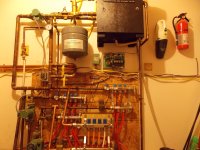
As for thermometers and flow controls, I do have them. I was not home when they ran the pex for my floor so they ran various lengths, where as I keep each loop the exact same. That meant not only do I have flow controls, I have flow controls for EACH loop. Kind of crazy, but it was what I had to do to balance the system. I also added a 3 speed TACO metering Valve for the same reason: I did not know what I needed for flow!

But my flow is very variable. It is set by the PLC basing that number on the outside temp, temp in the slab, return manifold temp, zone temp, and target temp.

The modulating, condensing boiler I have could do this, but I knew I would add a firewood/coal boiler at some point, and knocking down high heat with a Line Deheater seemed stupid to me. Why use cold water to knock down high temp water when it cost money to make hot water in the first place, so I went with a metering valve instead.

But by doing that, it sets me up nicely to use engine heat. As long as I keep my primary loop from 100 to 150 degrees, my back-up boiler will not come on, and the engine operates above that.

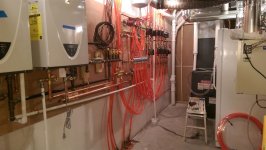
This is my radiant floor heating system:

DSCN3865.JPG
 
   / Making my own 20 KW Genset #45  
Who put that system in Mario and Luigi.....:laughing:
 
   / Making my own 20 KW Genset #47  
Nice setup, I hope you have a good schematic of it along with the directions to control and set it up.
If something ever happens and some else has to work on it they would waste a lot of time getting up to speed.
I haven't finished mine and it's simpler then yours but nobody else could work on it efficiently.
 
   / Making my own 20 KW Genset #48  
And finally, this is the Firewood/Coal boiler that is sitting next to the genset.

The good thing about the way this whole thing will be set up is; if the engine is down, or the firewood/coal boiler is not being used, the propane boiler in my house will come on, and circulate warm water back through the boiler and engine, and keep them always at 100-150 degrees. That will make the engine easy to start anyway. (Naturally, being a reefer engine, it has exceptionally powerful glow plugs).

View attachment 644327

That would definitely keep you warm.:licking:
 
   / Making my own 20 KW Genset #49  
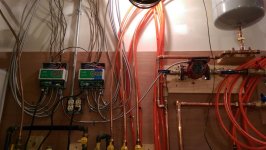
Ha! A man after my own heart.... here's mine:

Radiant plumbing done (2) (Medium).jpg

Edit - that one was before the controls were hooked up. Here they are, positioned between the heaters and the tubing:

Radiant wall done (4) (Medium).jpg
 
   / Making my own 20 KW Genset
  • Thread Starter
#50  
Nice setup, I hope you have a good schematic of it along with the directions to control and set it up.
If something ever happens and some else has to work on it they would waste a lot of time getting up to speed.
I haven't finished mine and it's simpler then yours but nobody else could work on it efficiently.

The short answer is...no, I do not.

The longer answer is, a few years ago I decided I loved radiant floor heat so much that I would include the front half of the house that was built before radiant floor heat was really well used. The back half of the home had been built after radiant floor heat was well known, so I had half a house on conventional heat, and the back half of the house as radiant floor heat.

But that doubling of size threw off how the system was balanced. I called in (2) different heating techs, four guys in all, and they could not figure it out.

The guys over on the Coal Burning Forum were like, "No one is more motivated to fix this than you, so go for it." So I was grateful for that piece of advice, and in the end I had to go back to my manuals, and reading it through a few times, I figured it out.

But I am slow like that. It takes me a few times to understand things, and how to change things, particularly in the PLC or on programming the boiler parameters. But I did get it eventually. In that way, I am a "chewer", and have to mull things over for awhile.
 
   / Making my own 20 KW Genset
  • Thread Starter
#51  
Ha! A man after my own heart.... here's mine:

View attachment 647996

Edit - that one was before the controls were hooked up. Here they are, positioned between the heaters and the tubing:

View attachment 647997

Yeah I like this stuff too.

I tried to take some HVAC training, but it never worked with my schedule, so instead I am taking college classes now for my High Pressure Steam Boiler License.

I got a job at the local hospital if I want it, but another job came up, so I took that instead. It is as a welding instructor instead of High Pressure Steam, or HVAC, but I was a welder for 23 years, so I took it. I will still get my High Pressure Steam License that way I always have it. But boilers are boilers. My little hang-on-the-wall condensing boiler that is the size of a microwave is no different in operation than a 13 story, cogenerating boiler at the papermill that has a condensing superheater. Pressure, steam and size is the only difference.
 
   / Making my own 20 KW Genset
  • Thread Starter
#52  
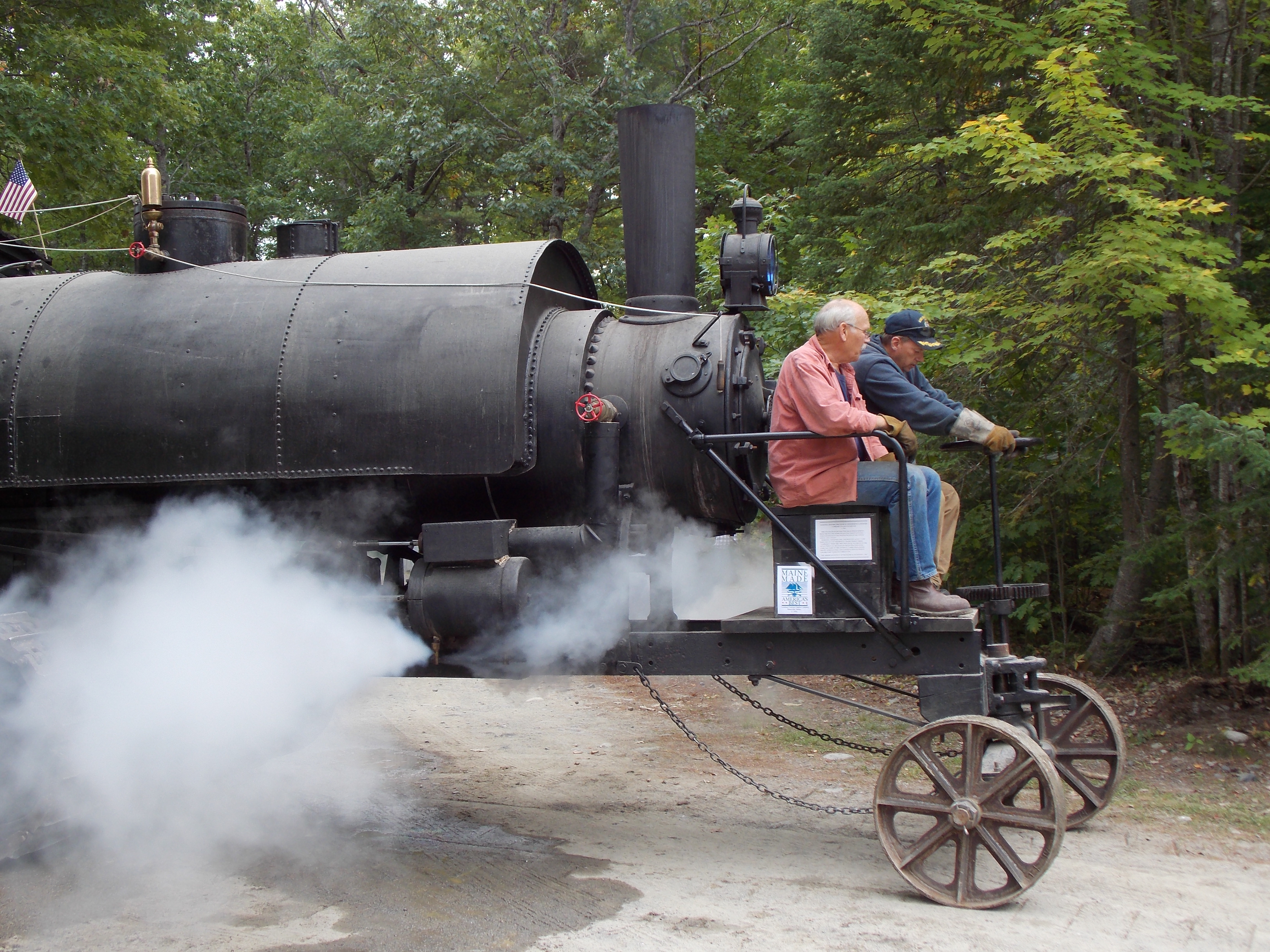
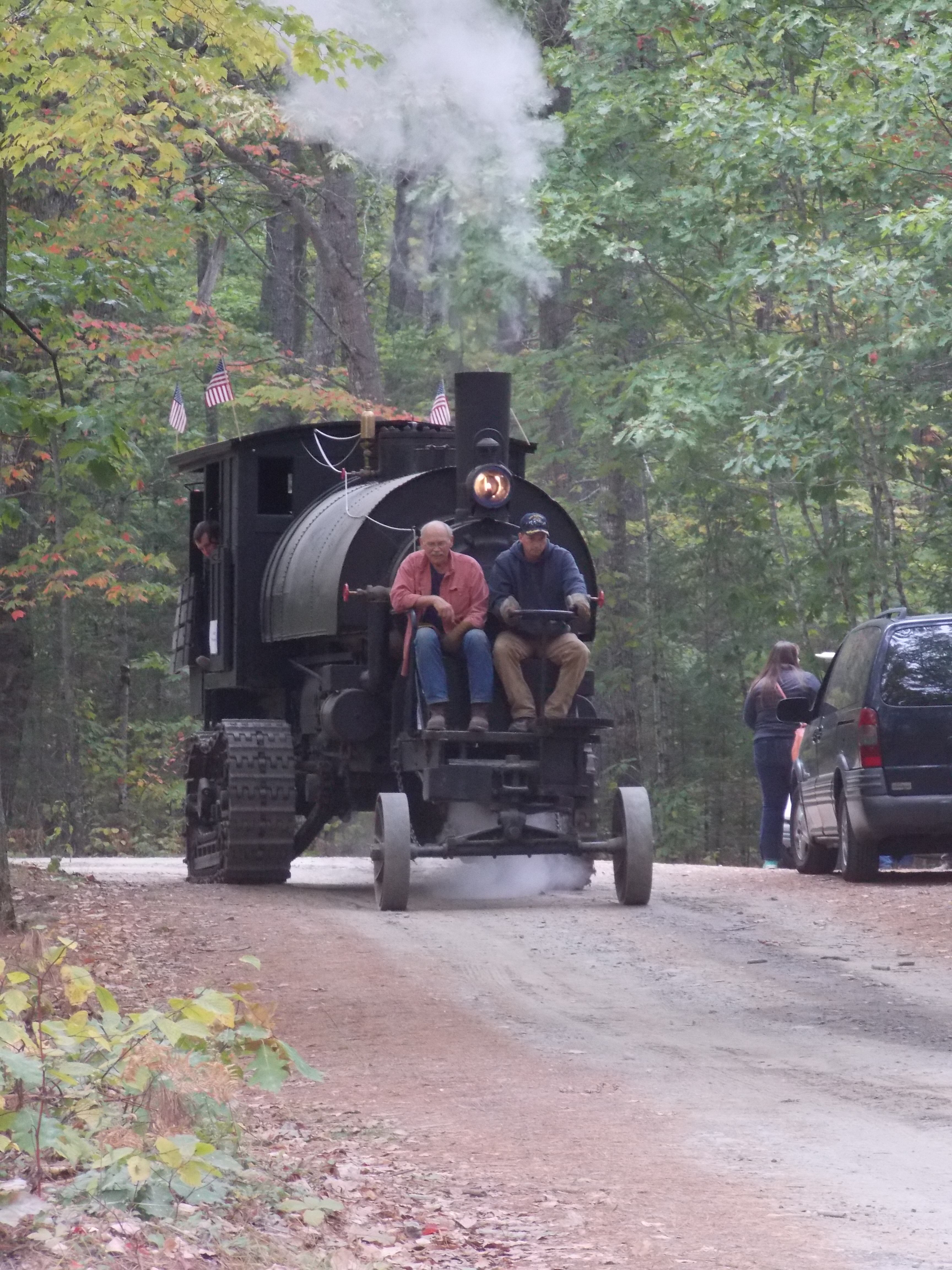
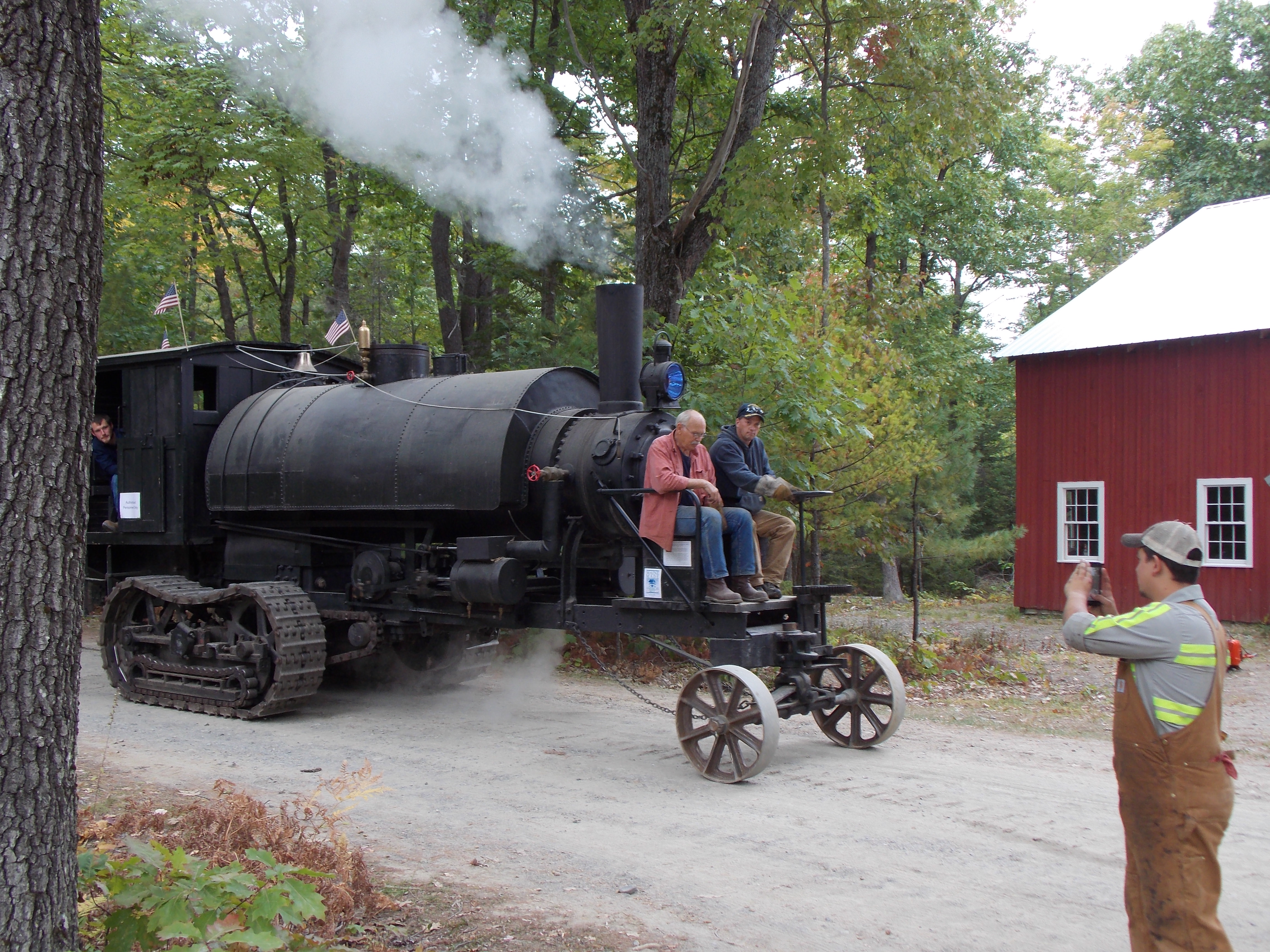
A few years ago I did get to play around with steam though...well sort of: I got to steer the ole gal. And old is the truth. I think it is 100 years old, but the State of Maine rebuilt this Lombard Log Hauler, and said since taxpayers paid to rebuild it, taxpayers could enjoy it, so when they dig it out, they give rides, and let the public steer it if they want to. I jumped at the chance.

I have driven a lot of tractors, but never a steam powered bulldozer!


Attachments

  • DSCN4406.JPG
    DSCN4406.JPG
    2.5 MB · Views: 120
  • DSCN4408.JPG
    DSCN4408.JPG
    3.6 MB · Views: 129
   / Making my own 20 KW Genset
  • Thread Starter
#53  
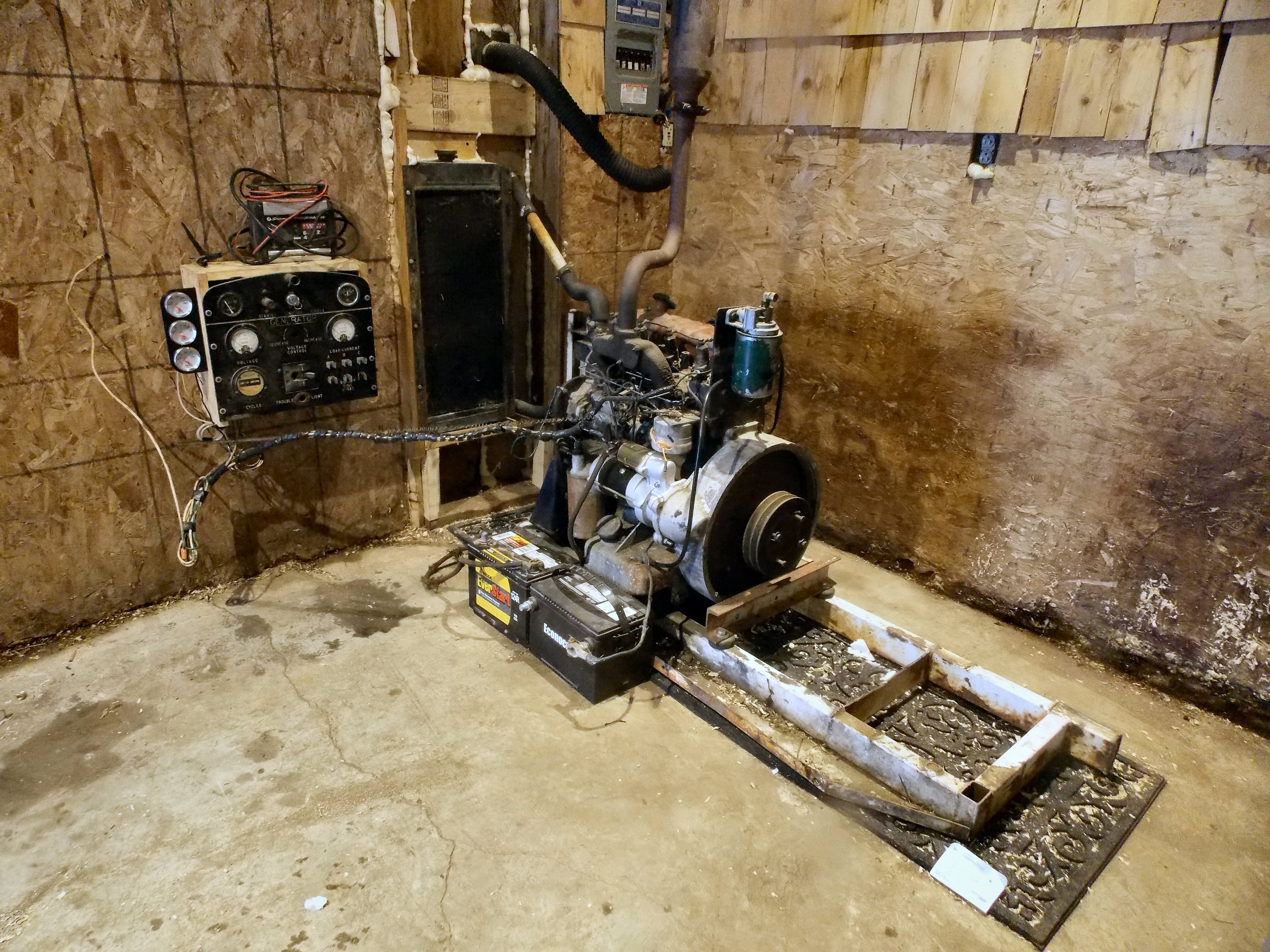
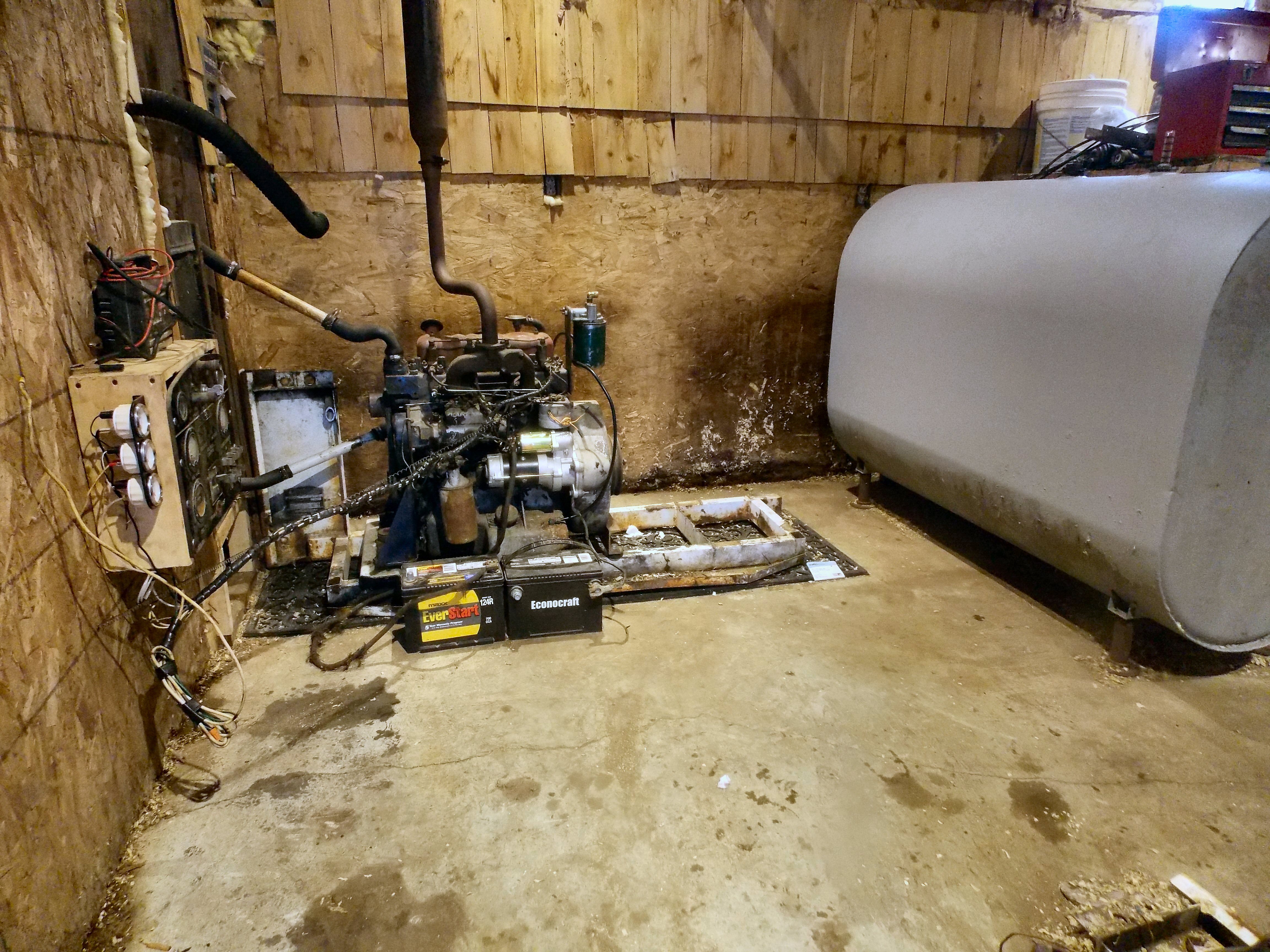
It is amazing the stuff a person can find if they just go looking for it. The engine itself was a barn-find, so I figured in the spirit of things I minds well find as much as I can to make the engine go.

I went looking for some parts for the coolant system and managed to find the radiator and hoses for it. So I cut a hole through the wall for the radiator and mounted that, then cut a hole for the air intake. I then bolted the radiator to the wall figuring it was easier to plumb the radiator lines to the radiator, then it was to duct the expelled heat through a plenum out the wall. It will mean I will need (2) 12 inch electric fans instead of and engine driven one, but with it being a generator, I always have 120 volts available to me.

I even managed to find the right size belt, it having to be super tight since there is no alternator on this thing, but rather a battery-tender to help keep the battery charged. If nothing else, it removes as many parasitic loads on the engine. The only "load" being the belt running from the crankshaft to the water pump. It just had to be stretched super tight over the pulleys since there is no way to tension the belt via alternator. But I actually found a belt I had kicking around. Wonders never cease.

Surprisingly, I thought a longer air intake hose would be easy enough to find, but I struck out. But in looking up at the old sawmill, I did find a pile of exhaust pipe. One piece was only bent to about 45 degrees, and I needed 90 degrees, so I made a makeshift wood bender, and bent the pipe to 90 degrees using my barn posts, and a lining bar. Now I just need a muffler clamp to make the connection leakproof.

But I am currently without a license (medical reasons) so I cannot just run to the autoparts store and pick things up otherwise I would get a lot more done!
 
   / Making my own 20 KW Genset
  • Thread Starter
#54  
My orginal intent was to put a cow stall mat under this engine to isolate it from vibration. Tractor Supply has them for $46, but the other Day we were at Home Depot, and they had these really thick door mats on sale for half price. So I bought them instead. They were $12 for (2) mats and plenty big enough to sit the generator/engine on top of. So I used my trusty lining bar, some wedges, and managed to lift the engine up to slide the rubber mats underneath it.

Now I have to get some anchor bolts and bolt this unit to the concrete floor and walls of the generator shed so it does not move.
 
   / Making my own 20 KW Genset
  • Thread Starter
#55  
Well I finally went out and got some photos of the Cogenerating Unit I am building.

It bothers me to show pictures of it in a way because I always think, "I should do this before I post a picture of it, or I should do that", but then I end up having no start and finish pictures. In that sense, it is always good to show where you started, and the build along the way; no matter how bad it may look!

The only thing I think I will change is the tank arrangement. Right now it is inside the generator shed, which is good, but if it was outside it would give me more room, AND allow me to fuel up my tractor as well. It would also help me align the fuel lines a little better, and be easier for the fuel delivery man to get too. So a lot of benefit, except, fuel can gel when it gets really cold. But I guess there is ways to prevent that.

So this is what I got so far...


   / Making my own 20 KW Genset #56  
GREAT pictures!

Love the old frankenstein gauges! That oil tank should keep the Beer Fridge cold a long time.

That tracked beast is one of the coolest things I have seen on here. There does ned to be a plexiglass sheild between the two guys though.
 
   / Making my own 20 KW Genset #57  
That's quite a project! And good for you for conserving the wasted heat, too.
Years ago I built a generator using an old Isuzu P'up 2L diesel engine that a friend had sitting around and a Chinese generator head. The trickiest part was finding a coupling that would work, and then rigging up a system to keep the frequency (rpm) correct as load varied. I put the whole thing on a Harbor Freight trailer so I could move it around. I got it running and generating, but never used it. Finally sold it to another tinkerer for the price I paid for the generator head. He got a great deal, but it was still a project.

PS- Nice boiler!
 
   / Making my own 20 KW Genset
  • Thread Starter
#58  
GREAT pictures!

Love the old frankenstein gauges! That oil tank should keep the Beer Fridge cold a long time.

That tracked beast is one of the coolest things I have seen on here. There does ned to be a plexiglass sheild between the two guys though.

I used to think the Lombard Log Hauler was the first "track-laying" tractor, but I think the Miller Tractor, built in the mid 1880's beat Lombard out by about twenty years. I know a lot of people give Benjamin Holt credit for that, but he actually saw one of Lombard tractors at work in Wisconsin two years before. Lombard sued Holt over patent infringement and WON! (Holt later went on to start Caterpillar Tractor Company with (first name escapes me) Best).

But a lot of people do not know that the first all-wheel drive tractor was back in the steam days of tractors, and was not four-wheel drive...it was actually a Tricycle Design. Yes, no joke, a tricycle, but all three wheels were powered, even the one that steered on the front. I believe it was a Roberts and Doak Steam Tractor, but I would have to check.
 
   / Making my own 20 KW Genset #59  
Just noticed the freq meter. I think I have his little brother!

I was given a book on the History of tractors but feel it is very British oriented and missing a lot. Interesting though to see how the large driven rear wheels and small front steering wheels lasted for so long.
 
   / Making my own 20 KW Genset
  • Thread Starter
#60  
Well I had a major set-back yesterday on this project.

I could roll the engine over by hand, but not fully, and it bugged me. I thought it was because of the high compression engine, but it just did not seem right, so I ended up finally just removing the head. It was apparent after doing that as to why: #3 cylinder had an inch of sludge on it, and #4 cylinder had a mouse nest in it: it is pretty hard to compress any of THAT!

So I got a new top end set of gaskets coming for it...and where else...but Walmart! Who would have thought that they would have parts for a 42 year old engine just a few years ago?

So while I am waiting for that to come in, I think I will pull the oil pan and swab out the oil/sludge that is in there, and get that all cleaned up.

I am also going to rebuild the injectors and the fuel injection pump while I am at it. This engine only has 2607 hours on it, but it has been sitting idle for 32 years. Diesels are super simple as they operate under the principal of the squish-bang theory, so I know it has plenty of compression, and can get air, so if I can spend my time and money on getting fuel to it, she will run for sure.

In the end it is a set-back of sorts, but it will be a lot better engine once I get past this, and getting squishing, banging and making smoke.
 

Tractor & Equipment Auctions

Towable Centrifugal Water Pump (A59228)
Towable...
2011 Freightliner Cascadia 113 S/A Day Cab Truck Tractor (A59230)
2011 Freightliner...
Commercial Lawn Mower 652R (A56859)
Commercial Lawn...
2015 Freightliner M2 106 Terex Hi-Ranger TL55 55ft. Insulated Material Handling Bucket Truck (A60460)
2015 Freightliner...
2022 FORD F-750 SUPER DUTY DUMP TRUCK (A60430)
2022 FORD F-750...
8 TOOTHED BUCKET FOR MINI EXCAVATOR (A58214)
8 TOOTHED BUCKET...
 
Top