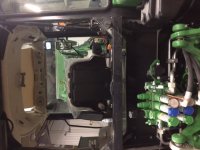
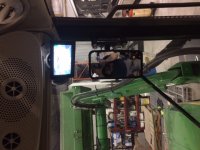
It doesn't really have much to do with CCD or CMOS. Actually in most cases CCDs are less advanced than CMOS as CCD technology is rapidly approaching obsolescence. The things that do matter is the resolution of the display and the resolution of the camera along with sensitivity (night time when it's dark out) and the rarely quoted dynamic range of the camera or the range of brightness values in the scene.
Many of the cameras being sold are somewhat limited in resolution to standard definition or the older TV standards, think VGA (640 X 480) for computer displays that was a standard definition a long long time ago. If it's a simpler analog interface then it's likely to be an older TV standard camera and display like PAL or NTSC. Your old tube type TVs were NTSC here and PAL in Europe and other places. Don't expect to get much detail with this type of system but likely enough to keep you from running into something.
To get more displayed definition along with higher dynamic range etc. it starts to get a bit more complicated and the interface is likely to be digital and the price begins to ramp up for both the camera and the display.
There are camera sensors that have been developed specifically for this kind of application as for many automotive systems involving driver aids where the output is intended for display and machine vision systems that do things not involving a display like airbag deployment, collision detection etc.
OmniVision
Of course the high dynamic range cameras (think black cat in a coal bin at night and a daylight scene at the same time) are capable of detecting more dynamic range than any display is capable of showing unless you do something that usually makes for a somewhat ugly looking picture. However they can capture a wider range of luminance values than even the human eye can deal with in a single frame. For example with a high dynamic range camera I could read the printing on a 100 watt light bulb, with the bulb on. Try it if you think it's easy. Most cameras will just white out or go completely black. With a CCD camera any bright point of light will usually translate into a vertical white stripe up and down the whole display because it's just the nature of how they work.
To deal with the dynamic range problem with a standard camera try to keep your camera pointed down so you aren't seeing the horizon which is likely to include the sun or bright light.
A side note, I think limited dynamic range was at the bottom of the recent fatality with the Tesla so called autopilot crash. A white trailer against a bright sky and the car drove itself right into the trailer simply because it couldn't see it. It all looked white to the camera. Proving that nothing is idiot proof or can be taken for granted. Back to the drawing board guys, a high dynamic range camera wouldn't have been fooled so easily.
For better night time performance you're better off with a black and white camera. This is because color cameras typically include a near IR filter that excludes near infrared light that produces color crosstalk and ugly color pictures. All silicon based image sensors, CCD and CMOS alike are naturally sensitive down into the near infrared region. You probably don't really need color anyway. BTW standard halogen and filament type lamps are rich sources of near IR light too so they can help you see a little further out, LEDs not so much in the near IR.
For cameras mounted inside the cab, shielding the camera to exclude reflected light from the windshield to the camera will help.
Yeah I used to do this stuff for a living.