/ The guy that put the engine internals together says "The rings are not seated yet end the smoking is normal. Just give it a couple hours of work"
#41
You are using an out of date browser. It may not display this or other websites correctly.
You should upgrade or use an alternative browser.
You should upgrade or use an alternative browser.
The guy that put the engine internals together says "The rings are not seated yet end the smoking is normal. Just give it a couple hours of work"
- Thread starter TomSam
- Start date
- Views: 41907
More options
Who Replied?
/ The guy that put the engine internals together says "The rings are not seated yet end the smoking is normal. Just give it a couple hours of work"
#42
Ah, enough to make a mess but not get overly excited about.The muffler is just sat up there at this point since I have not put the hood on yet. Black ink like oil runs out of the junction between the muffler and the manifold. It runs down the motor and the fan blows it back on the valve cover and gas tank. It has smoke coming out of the muffler before the manifold is even warm.The amount of oil is hard to estimate. The oil level is at the full mark and has not gone down after 45 minutes of run time at 1000rpms to 1400rpms
Thanks
” He put clevite on everything.” If he was pretty generous with it, that would account for some smoke.
” The pressure coincides with the 2 oil pressure gages. one electric one i installed on the dash and the manual one on the side of the motor.” Both off the same sending unit? How do we know that one’s accurate?
/ The guy that put the engine internals together says "The rings are not seated yet end the smoking is normal. Just give it a couple hours of work"
#43

The manual one is an actual oil pressure gage with a short copper tube running to it. The electric one has a sender. I have a separate Low Oil Pressure alarm sender to a obnoxious buzzer. I put the manual one on for initial start up and to check make sure the electric one was reading right. .......Am I paranoid about burning the new motor up? Maybe...lolAh, enough to make a mess but not get overly excited about.
” He put clevite on everything.” If he was pretty generous with it, that would account for some smoke.
” The pressure coincides with the 2 oil pressure gages. one electric one i installed on the dash and the manual one on the side of the motor.” Both off the same sending unit? How do we know that one’s accurate?
/ The guy that put the engine internals together says "The rings are not seated yet end the smoking is normal. Just give it a couple hours of work"
#44
Thanks! It seems like a beast with those big 4wd front tires. The power steering is smooth as silk....like it is not even touching the ground. The best part is no electronics.Oh OK Well when the Ford is finally dialed in It will be a pleasure to use.
Old Fords are wonderful machines I Dare say equal to John Deere.or Kubota..
/ The guy that put the engine internals together says "The rings are not seated yet end the smoking is normal. Just give it a couple hours of work"
#45
TractorTech
Elite Member
- Joined
- Jan 26, 2012
- Messages
- 3,042
- Location
- California
- Tractor
- Ford 7710, Ford 550, Ford 1910, Ford 4430, KD Forklift, Ford LGT17H, New Holland L255 Skidsteer
If and when you do remove the top cover to access the PTO, you should also reseal the 3pt piston and examine the 3pt cylinder bore.
/ The guy that put the engine internals together says "The rings are not seated yet end the smoking is normal. Just give it a couple hours of work"
#46

Dman1981
Gold Member
- Joined
- Jul 28, 2023
- Messages
- 420
- Tractor
- Kubota bx2200
Overhauled literally thousands of engines never had one smoke like that have had bad sleeves and piston rings aftermarket ****.
Oil pressure bad oil pump or relief valve in pump or to
Much clearance in bearings
Did they cross hatch after boring
Are there seal on valve guides
My break in was start it up warm them up put on dyno and crank it up.
Check for leaks and run it for a few hours
I have had cranks break from shop not cutting a radius
I have had sleeves get sucked down again shop do not cut relief for sleeve
I have had water blow out from hole
In block and sleeve did not seal
Anything and everything can happen
Need to pull pan and palatinate crank pull pistons
And check for crosshatch
Also when assembling never use engine oil I used marvel
Mystery oil on all my over hauls
As soon as it gets hot is gone just enough lubricant for turning over
And starting. looks like the guy put assembly lube on pistons
Oil pressure bad oil pump or relief valve in pump or to
Much clearance in bearings
Did they cross hatch after boring
Are there seal on valve guides
My break in was start it up warm them up put on dyno and crank it up.
Check for leaks and run it for a few hours
I have had cranks break from shop not cutting a radius
I have had sleeves get sucked down again shop do not cut relief for sleeve
I have had water blow out from hole
In block and sleeve did not seal
Anything and everything can happen
Need to pull pan and palatinate crank pull pistons
And check for crosshatch
Also when assembling never use engine oil I used marvel
Mystery oil on all my over hauls
As soon as it gets hot is gone just enough lubricant for turning over
And starting. looks like the guy put assembly lube on pistons
/ The guy that put the engine internals together says "The rings are not seated yet end the smoking is normal. Just give it a couple hours of work"
#47
I wish I had your experience to draw from.
-I saw him check the crank bearings and they were well within the tolerance listed in the manual. I do not remember the numbers
-It is a new Oil pump (I know that does not mean not defective) The oil pressure gets low at RPMs less than 800 and after the temperature reaches 160F 12-15PSI
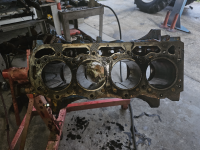
-I do not remember an obvious cross hatching on the piston walls. I attached a picture and it looks like no to me.
-Would I be able to see the the valve seals on the guides by pulling the valve cover? I am not sure. The company that did the heads has a great reputation but I do not know.
-He used Clevite on all the bearings but I do not think he put it on the pistons or rings. I am not sure ...if he did it was not much since it is bright red and very obvious.
-I am not familiar with "Palantinate". What is that and what does it do or show?
I appreciate your time and input on this. The ultimate call on what to do is up to the owner. I am so relieved I decided not put the actual engine intrnals together myself. My fear was that something like this would happen and engine building is not my expertise.
-I saw him check the crank bearings and they were well within the tolerance listed in the manual. I do not remember the numbers
-It is a new Oil pump (I know that does not mean not defective) The oil pressure gets low at RPMs less than 800 and after the temperature reaches 160F 12-15PSI
-I do not remember an obvious cross hatching on the piston walls. I attached a picture and it looks like no to me.
-Would I be able to see the the valve seals on the guides by pulling the valve cover? I am not sure. The company that did the heads has a great reputation but I do not know.
-He used Clevite on all the bearings but I do not think he put it on the pistons or rings. I am not sure ...if he did it was not much since it is bright red and very obvious.
-I am not familiar with "Palantinate". What is that and what does it do or show?
I appreciate your time and input on this. The ultimate call on what to do is up to the owner. I am so relieved I decided not put the actual engine intrnals together myself. My fear was that something like this would happen and engine building is not my expertise.
Attachments
/ The guy that put the engine internals together says "The rings are not seated yet end the smoking is normal. Just give it a couple hours of work"
#48

ruffdog
Super Star Member
- Joined
- Dec 31, 2011
- Messages
- 12,506
- Location
- America's Dairyland
- Tractor
- Bobcat Toolcat 5610G, Deere X744, Cub Cadet IH 982
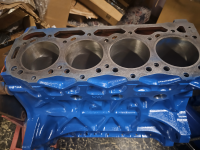
The picture of the block is interesting. That does NOT look like a bore/hone done by a machine shop. That looks like no boring was done but instead just a clean-up with 400 grit sandpaper. Each bore looks different (odd) and the left one still has a vertical mark that wasn't cleaned up.-I do not remember an obvious cross hatching on the piston walls. I attached a picture and it looks like no to me.
/ The guy that put the engine internals together says "The rings are not seated yet end the smoking is normal. Just give it a couple hours of work"
#49
There were ridges and water damage. The shop said they did not need sleeves since 040 cleaned them up. Is all I knowThe picture of the block is interesting. That does NOT look like a bore/hone done by a machine shop. That looks like no boring was done but instead just a clean-up with 400 grit sandpaper. Each bore looks different (odd) and the left one still has a vertical mark that wasn't cleaned up.
Attachments


/ The guy that put the engine internals together says "The rings are not seated yet end the smoking is normal. Just give it a couple hours of work"
#50
I will....ThanksIf and when you do remove the top cover to access the PTO, you should also reseal the 3pt piston and examine the 3pt cylinder bore.
/ The guy that put the engine internals together says "The rings are not seated yet end the smoking is normal. Just give it a couple hours of work"
#51

sd455dan
Super Member
- Joined
- Oct 23, 2012
- Messages
- 6,357
- Location
- North Idaho
- Tractor
- Rhino 554, Ford 550 TLB (JD X500, MTD, Gilson riding mowers) Ford 3000-Sold
There were ridges and water damage. The shop said they did not need sleeves since 040 cleaned them up. Is all I know
That block does not appear to be surfaced, by a real surfacing stone grinding or a fly cutter.
The before rebuild shows a LOT of piston to wall clearance so the bores and or pistons were worn.
The one cylinder shows a vertical scratch that should not be there with a fresh re bore.
I hope somebody isn't using word salad to make a 400 grit hone job sound like boring .040" over after using a ridge reamer to remove pistons and a heavy hone job.
Are there any pictures of the fresh engine with new pistons and rings without the head on it yet?
How about a parts and labor bill showing new .040 over pistons and matching ring set etc.
Sorry, just a bit unsettled looking a bit closer at the pictures provided
Last edited:
/ The guy that put the engine internals together says "The rings are not seated yet end the smoking is normal. Just give it a couple hours of work"
#52
I will get the invoices. and i don't have any pics before the head was on thanksThat block does not appear to be surfaced, by a real surfacing stone grinding or a fly cutter.
The before rebuild shows a LOT of piston to wall clearance so the bores and or pistons were worn.
The one cylinder shows a vertical scratch that should not be there with a fresh re bore.
I hope somebody isn't using word salad to make a 400 grit hone job sound like boring .040" over after using a ridge reamer to remove pistons and a heavy hone job.
Are there any pictures of the fresh engine with new pistons and rings without the head on it yet?
How about a parts and labor bill showing new .040 over pistons and matching ring set etc.
Sorry, just a bit unsettled looking a bit closer at the pictures provided
/ The guy that put the engine internals together says "The rings are not seated yet end the smoking is normal. Just give it a couple hours of work"
#53
JimRB
Veteran Member
Here is an article about crosshatch. 40 years ago kids would rebuild or re-ring an engine. Use a ridge cutter, run a hone up and down a bit and throw it back together maybe with some new rings. What a bunch of smoking engines. You cannot really fix worn bores with a lick and promise. A mill and a cutter maybe. Proper crosshatch after a proper machining is supposed to help seat rings.
I have a few lawnmower engines that could use a +10 or +20 piston. Maybe someday I will play on the mill.

 dannysengineportal.com
I have a few lawnmower engines that could use a +10 or +20 piston. Maybe someday I will play on the mill.
Cylinder Bore Deglazing - Purpose - Proper Crosshatch And Angle
The cylinder bore deglazing process is basically, removing the glaze from your engines cylinder walls. And, having the proper finish, is extremely
dannysengineportal.com
/ The guy that put the engine internals together says "The rings are not seated yet end the smoking is normal. Just give it a couple hours of work"
#54

CliffordK
Veteran Member
- Joined
- Mar 8, 2013
- Messages
- 2,449
- Location
- Eugene, Oregon
- Tractor
- Toro D200, Ford 1715, International 884,
In this case, the engine was apparently bored, and got new pistons (presumably .040 over).
Valves and guides were also supposed to have been replaced.
The bill added to the first post indicates everything that should have been done.
Stuff still might go wrong, and one can't tell the shop's experience without more info.
Valves and guides were also supposed to have been replaced.
The bill added to the first post indicates everything that should have been done.
Stuff still might go wrong, and one can't tell the shop's experience without more info.
/ The guy that put the engine internals together says "The rings are not seated yet end the smoking is normal. Just give it a couple hours of work"
#55
sequoyah101
Silver Member
- Joined
- Nov 13, 2009
- Messages
- 163
- Location
- East Central Oklahoma
- Tractor
- CaseIH 50A, CaseIH JX95, CaseIH JX80, Case 321F, Case CX90, Allis 190XT, Daewoo DD80L Dozer, Schaeff SKL831 Loader, Komatsu PC40-7 Trackhoe, JCB 210S TLB, JD750, JD820, Kubota FR3680, Kioti Mechron
Nope. Not at all normal. Should have at least 30 to 40 psi. Never should have oil running out of the exhaust. I have built more than a few and never had this happen. 40 over is a lot in my book. Not saying this is the problem but that is a lot to bore.The engine only has about 30 or 45 minutes of runtime on it right now and that is basically been slow and fast idle. It is boiling black oil out of the exhaust manifold that runs down the engine. He said since it is Florida that it is not necessary to put a thermostat in it. I noticed that it never warmed up more than 110 or 120°. I put the thermostat in it and let it warm up to normal operating temperatures. When it warms up to normal temperatures the low oil pressure alarm goes off when the idle goes below 1000 RPMs. This coincides with a manual oil pressure gauge that I put on the side of the engine. We trailered it over to his shop and he said that the oil pressure is normal that it should be about 10 psi per 1000 RPMs. So at 1000 RPMs an oil pressure of 10 psi would be OK. He suggested using Lucas oil treatment and thicker oil. It currently has 15 W 40 oil in it. In his defense he ran the tractor around the property for a short time while riding the brakes to put some stress on the engine and it did seem like it was smoking less. The oil pressure issue remains the same. So my question is what is a good oil pressure at an idle on a brand new engine. I understand that a new engine will smoke when it is first started. How much is too much how long before it should stop or go down to the minimum. I am certainly not an engine rebuilder but I have done everything on this tractor except for actually assembling the internals of the engine. I feel a little bit uncomfortable about putting a big bush hog on it and running it for a couple hours without checking with someone else to see how they feel. What do you think. Thanks for your time and attention. OK
Sorry I should have included that information from the beginning.
-Bored 040 over
-Machined Crank
-New Pistons all
-New Rods all (one was bent)
-New Rings
-New Injectors
-New Valves
-New Guides
-New Oil Pump
-New Cam Bearings
-Lifters looked perfect just cleaned
-Push rods checked and re-used
-New Idler timing Gear
-New Water Pump
-New Radiator
I dealt with the machine shop dropped and picked up. The machine shop got the Reliant rebuild kit and did the cam bearings, the rings were installed when I got the pistons in the boxes. They said everything was correct and ready for assembly. I have done mechanical work since I can remember and do pretty well on any project BUT, I wanted an experience builder to actually put it together. I have put engines together but I am NOT "The Engine Guy"
The guy that put the internals together came to my shop with his father and put it together. I had everything cleaned, labeled, and laid out on a table like a surgery before the doctor gets there. I watched them and waited on his every request (tools, bolts, supplies...etc). He seemed to know what he was doing. No big red flags on the build.
/ The guy that put the engine internals together says "The rings are not seated yet end the smoking is normal. Just give it a couple hours of work"
#56
sequoyah101
Silver Member
- Joined
- Nov 13, 2009
- Messages
- 163
- Location
- East Central Oklahoma
- Tractor
- CaseIH 50A, CaseIH JX95, CaseIH JX80, Case 321F, Case CX90, Allis 190XT, Daewoo DD80L Dozer, Schaeff SKL831 Loader, Komatsu PC40-7 Trackhoe, JCB 210S TLB, JD750, JD820, Kubota FR3680, Kioti Mechron
The cylinder bores look lousy from what I can see of the picture. Not honed or cross hatched in the least little bit.The engine only has about 30 or 45 minutes of runtime on it right now and that is basically been slow and fast idle. It is boiling black oil out of the exhaust manifold that runs down the engine. He said since it is Florida that it is not necessary to put a thermostat in it. I noticed that it never warmed up more than 110 or 120°. I put the thermostat in it and let it warm up to normal operating temperatures. When it warms up to normal temperatures the low oil pressure alarm goes off when the idle goes below 1000 RPMs. This coincides with a manual oil pressure gauge that I put on the side of the engine. We trailered it over to his shop and he said that the oil pressure is normal that it should be about 10 psi per 1000 RPMs. So at 1000 RPMs an oil pressure of 10 psi would be OK. He suggested using Lucas oil treatment and thicker oil. It currently has 15 W 40 oil in it. In his defense he ran the tractor around the property for a short time while riding the brakes to put some stress on the engine and it did seem like it was smoking less. The oil pressure issue remains the same. So my question is what is a good oil pressure at an idle on a brand new engine. I understand that a new engine will smoke when it is first started. How much is too much how long before it should stop or go down to the minimum. I am certainly not an engine rebuilder but I have done everything on this tractor except for actually assembling the internals of the engine. I feel a little bit uncomfortable about putting a big bush hog on it and running it for a couple hours without checking with someone else to see how they feel. What do you think. Thanks for your time and attention. OK
Sorry I should have included that information from the beginning.
-Bored 040 over
-Machined Crank
-New Pistons all
-New Rods all (one was bent)
-New Rings
-New Injectors
-New Valves
-New Guides
-New Oil Pump
-New Cam Bearings
-Lifters looked perfect just cleaned
-Push rods checked and re-used
-New Idler timing Gear
-New Water Pump
-New Radiator
I dealt with the machine shop dropped and picked up. The machine shop got the Reliant rebuild kit and did the cam bearings, the rings were installed when I got the pistons in the boxes. They said everything was correct and ready for assembly. I have done mechanical work since I can remember and do pretty well on any project BUT, I wanted an experience builder to actually put it together. I have put engines together but I am NOT "The Engine Guy"
The guy that put the internals together came to my shop with his father and put it together. I had everything cleaned, labeled, and laid out on a table like a surgery before the doctor gets there. I watched them and waited on his every request (tools, bolts, supplies...etc). He seemed to know what he was doing. No big red flags on the build.
/ The guy that put the engine internals together says "The rings are not seated yet end the smoking is normal. Just give it a couple hours of work"
#57
I will start out by saying Al engines have their own “normal “ operating characteristics. Some smoke more than others and some have higher or lower oil pressures that are considered normal. I am a JD tech, so not familiar with your model Ford. The slobbering and smoke on this one may be unburnt fuel rather than oil. I have seen this on fresh rebuilds that run at no or light load for too long. Putting it to work or running on Dino for an hour or 2 would probably clear that up. Most concerning is the oil pressure. I am afraid the extra heat of running under load will put pressure dangerously low. were all crank bearing clearances checked with plastigage? Possibly a defective oil pump? Did cam bearings have proper clearance? Did machine shop have the camshaft to fit the cam bearings properly?
/ The guy that put the engine internals together says "The rings are not seated yet end the smoking is normal. Just give it a couple hours of work"
#58
MikeEyre74
New member
- Joined
- Jun 14, 2013
- Messages
- 3
- Location
- Barkhamsted, CT
- Tractor
- International 140, Engineering Specialties "Economy"
That one vertical line, you guys are seeing in the photo, on the left-hand side of the picture, is probably where the guy slid One of the piston rings into the bore to check the end gap. I don’t see that on any of the others in the photo, and the original poster said the guy only checked one ring that he saw. That’s a problem, but it would explain why there’s only one vertical line visible. I know the original poster also didn’t include an after bore and hone photo until well into the messages, but that sure looks like a proper cross hatch to me on those cylinders, or you’d never be able to see a very slight vertical scratch from the piston ring being inserted to check the gap. by the way, the only reason the piston ring probably scratched the wall is because the ends of the rings weren’t lightly filed before that installation. it’s not a big deal, but it’s what separates the men from the boys in real engine shops. Attention to detail.
/ The guy that put the engine internals together says "The rings are not seated yet end the smoking is normal. Just give it a couple hours of work"
#59
The oil pressure is too low; no amount of break in is going to make this get better. I suspect clearances with all the machine work were not properly checked & standard size parts found their way in there. (Oversize bearings, etc) Putting thick or magic oil in here isn’t the answer and oil addatives will many times prevent proper break in. The behavior of suggesting no thermostat / Lucas gives me a zero confidence vote in the person who assembled your engine.
My push -
Start by talking to the machineshop. Did they order the parts? Ask them to check if something standard size got mixed up. Find out what they did to the valves and what remaining steps still needed to be done (were the valve seats ground?). Did your guy lap / seat the valves?
Do a compression & leak down check and record results.
I dont think you are going to get away with not pulling the engine. Said reassembler should be familiar with dial bore guages, have a large set of micrometers, plastiguage, something to measure runout with, & be able to show you plenty of evidence of other rebuilds.
My push -
Start by talking to the machineshop. Did they order the parts? Ask them to check if something standard size got mixed up. Find out what they did to the valves and what remaining steps still needed to be done (were the valve seats ground?). Did your guy lap / seat the valves?
Do a compression & leak down check and record results.
I dont think you are going to get away with not pulling the engine. Said reassembler should be familiar with dial bore guages, have a large set of micrometers, plastiguage, something to measure runout with, & be able to show you plenty of evidence of other rebuilds.
/ The guy that put the engine internals together says "The rings are not seated yet end the smoking is normal. Just give it a couple hours of work"
#60
Something is not right here. Number one you need a thermostat so that all the internal parts work at the same temperature. The oil pressure is too low that indicates rod bearing, main bearing or Cam Bearing clearances or excessive. I recently rebuilt a 268 Ford engine and they had three different sets of main bearings and rod bearings for my engine I only had 20 lb of oil pressure at idle so I ended up putting the bigger oil pump in that was for the turbocharged 268. Now my oil pressure is 60 at idle when cold and 40 when hot.The engine only has about 30 or 45 minutes of runtime on it right now and that is basically been slow and fast idle. It is boiling black oil out of the exhaust manifold that runs down the engine. He said since it is Florida that it is not necessary to put a thermostat in it. I noticed that it never warmed up more than 110 or 120°. I put the thermostat in it and let it warm up to normal operating temperatures. When it warms up to normal temperatures the low oil pressure alarm goes off when the idle goes below 1000 RPMs. This coincides with a manual oil pressure gauge that I put on the side of the engine. We trailered it over to his shop and he said that the oil pressure is normal that it should be about 10 psi per 1000 RPMs. So at 1000 RPMs an oil pressure of 10 psi would be OK. He suggested using Lucas oil treatment and thicker oil. It currently has 15 W 40 oil in it. In his defense he ran the tractor around the property for a short time while riding the brakes to put some stress on the engine and it did seem like it was smoking less. The oil pressure issue remains the same. So my question is what is a good oil pressure at an idle on a brand new engine. I understand that a new engine will smoke when it is first started. How much is too much how long before it should stop or go down to the minimum. I am certainly not an engine rebuilder but I have done everything on this tractor except for actually assembling the internals of the engine. I feel a little bit uncomfortable about putting a big bush hog on it and running it for a couple hours without checking with someone else to see how they feel. What do you think. Thanks for your time and attention. OK
Sorry I should have included that information from the beginning.
-Bored 040 over
-Machined Crank
-New Pistons all
-New Rods all (one was bent)
-New Rings
-New Injectors
-New Valves
-New Guides
-New Oil Pump
-New Cam Bearings
-Lifters looked perfect just cleaned
-Push rods checked and re-used
-New Idler timing Gear
-New Water Pump
-New Radiator
I dealt with the machine shop dropped and picked up. The machine shop got the Reliant rebuild kit and did the cam bearings, the rings were installed when I got the pistons in the boxes. They said everything was correct and ready for assembly. I have done mechanical work since I can remember and do pretty well on any project BUT, I wanted an experience builder to actually put it together. I have put engines together but I am NOT "The Engine Guy"
The guy that put the internals together came to my shop with his father and put it together. I had everything cleaned, labeled, and laid out on a table like a surgery before the doctor gets there. I watched them and waited on his every request (tools, bolts, supplies...etc). He seemed to know what he was doing. No big red flags on the build.
I've never rebuild an engine that had smoke like you were showing in your photos above which indicates something is not right.