New Construction HVAC decisions. Geothermal vs. alternatives with upgraded envelope.

/ New Construction HVAC decisions. Geothermal vs. alternatives with upgraded envelope. #1  

MGH PA

Gold Member
Joined
Oct 25, 2010
Messages
280
Location
Northcentral, PA
Tractor
2005 Gravely 148Z 48" ZTR
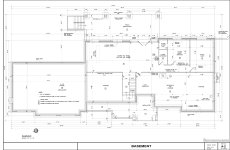
I posted this over on the GBA forum as well, but I've posted here quite a bit regarding my build plans. I will attach a copy of my floor plans as well for reference.

I know these questions are hard to answer online, but I will do my best. Most of the information I receive locally is from HVAC suppliers pushing a particular system.

So, a little information that will help.

We are building (in June) in Northcentral PA, in zone 5, on 25 acres. We're at ~1000ft of elevation with a mixture of shale/loam soils. We have no access to NG. It's Propane, oil, or electric. Current rate is around $.11/kWh. We have ~6300 HDDs.

We arebuilding a single story with a fully exposed walkout basement. 2986 sq.ft on the first floor as well as the basement. Basement will be ICF with R10 subslab insulation. I'm planning on putting Creatherm panels and running per for a future hydronic system. On the main floor, we are using traditional 2x6 with NuWool, and R49 spray in ceilings. We're using Low E Paradigm windows, and have ~708 sq.ft of glass.

We were quoted by two different contractors for a Water Furnace 5 series, 4ton system, single zone with electric backup at ~28,000 before tax credits. That was for vertical well systems. Only one contractor was willing to do a horizontal loop, and that came in at $24,000. Adding a desuperheater, and extra zones would drive the cost well north into the mid to upper 30,000 range before tax credits.

Right now, we're considering adding foam sheathing to the outside of the building envelope to help eliminate thermal bridging and increase our R value above code (waiting on the quote from the contractor as he originally quoted me for R5, but I need a minimum of R7.5 with a 2x6 wall). I think in doing that, along with the insulated slab/hyrdonic heat, that we might end up better in the long run with a higher efficiency ASHP + the hydronic and possible wood stove for rare sub zero nights/days.

Granted, I'm not a pro, so I may be overlooking some obvious things, or maybe I need better estimates.

I would love to hear everyone's thoughts on this.
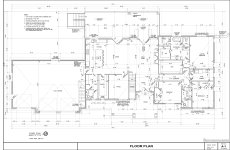
firstfloor.jpg

secondfloor.jpg
 
/ New Construction HVAC decisions. Geothermal vs. alternatives with upgraded envelope. #2  
PM if you want to chat. It’s pages of info. Some stuff you are on the right track but most things need a tweak.

Check out buildingscience.com but don’t go overboard!
 
/ New Construction HVAC decisions. Geothermal vs. alternatives with upgraded envelope. #3  
With all building methods, you start with the basics and then try to improve from there. For heating and cooling, the two basic rules are that heat goes up and that wind goes sideways. Insulating the walls for heat is a distraction once you go beyond the basics. Wind is what is most important in the walls. If you can keep the wind out of the wall cavity, R13 is fine and R19 is pretty well maxed out. House wrap has helped a lot with this, but some of the new technology has a lot of promise. I personally believe Zip System is worth the extra cost over house wrap. An inch or two of closed cell foam on interior wall cavity is the ultimate wind stopper, but it's a lot of money and the return is sometimes never achieved. Windows have to be tape sealed and the space around them filled with open cell foam. Same with doors and every other penetration of the wall cavity. Attic space is simple. Max out your R value with insulation. R60 is becoming the norm. Foam is the best, but for attic space, blown in will give you the same R value for a lot less money. I personally go for 2 feet of Attic Cat blown in insulation.

For your HVAC system, SEER rating is what you are paying for. I think 14 is kind of the standard for most systems, and then the bigger the number, the more you will pay to buy it, but the less it will cost you to run it. I have an 19 SEER unit in my house. I was tempted to go higher, but the jump in cost was just too much. One thing to remember with HVAC systems is that just like cars, the most energy is used when it starts up. Ideally you want a system that runs longer then one that is always starting up for short periods of time.

Something else that is important to me is where its mounted. Seems like most new construction likes to put it in the attic. I've run into a lot of homes where the attic wasn't framed to do this. Either they put it on top of 2x6 rafters, that only allows you to insulate 5.5 inches for R 19 attic insulation under it, or they block off that cavity completey and there is zero insulation under the unit. In some homes, the build up a platform to mount the unit and it can be insulated under it. This needs to be done in the framing stage before the HVAC guys get there. You also need a way to get to the unit that does not destroy the insulation along that path. Your unit should have the filters changed every month, and bleach poured down the condensation drain at the same time. I get a lot of work every year from water damage to the ceiling of a house caused by the pan over flowing because the primary drain is plugged from sludge that built up because nobody put bleach in there, and the secondary drain is plugged up from insulation, debris or sludge. Sometimes it's not even sloped away properly and the pan overflows before water can get to the secondary drain.

In my house, and the house that I built for my parents, I made it a point to install the HVAC units in an area where you can get to them easily, and NOT in the attic. What I found surprising is that of all the HVAC companies that I called to bid on the job, only one agreed to put it where I wanted it. All the others said that they would only install it in the attic.

When dealing with contractors, especially when its something that you are not familiar with, be sure to talk to at least five. More is better. Just make it a point to not hire, or commit to anything until you have spoken to at least five. Some are very good salesmen, very personable and believable. Some are horrible in person. You don't know which one is honest until you do your research. Will they show up at midnight on Saturday night when you have a problem? Will they have a van full of parts to fix your problem? Anybody can sell a system and make a profit off of the commission, but the company that is there when you need them is a lot more important then the one that is a couple hundred bucks cheaper then the other guys.
 
/ New Construction HVAC decisions. Geothermal vs. alternatives with upgraded envelope. #4  
Make sure your HVAC guys all do a load analysis with your quotes and compare. We have geothermal and love it but our guy missed the mark by a bunch. We have way more tonnage than required and it took some work on my part getting the most efficiency out of our system. We have multiple zones and all were short cycling leading to a not very efficient setup. Zone bleeds, some programming of the zones to trick the system into always running in the lowest stage one regardless of how many zones are calling and a couple of other tweaks and I now have a very efficient setup.

Just to give you an idea of how far off he was we have two 4 ton units each controlling half of the house plus backup heat strips for the coldest temps. Units are 2 stage compressors and I have the zoning tricked into never leaving the lowest stage one (about 60% of unit capacity). Breakers for heat strips have never been turned on. Last week we had near record breaking temps at -12 overnight. My units still cycled on and off a couple of times overnight and had no problems keeping the set temp of 73 in our home in stage 1. This tells me we could have probably got by with only 4-5 tons. Depending on which waterfurnace unit you are getting I think they have scroll compressors that make the load calcs a lot more forgiving though, at least if you end up oversized.

Finally make sure you do a blower door test prior to sheetrock. Super easy way to find air leaks. If you want to make it interesting use a theatrical fogger inside the home on a day with no wind and reverse the blower door. You can walk around your house and see every area that is leaking. Also make sure your quotes include an HRV or ERV for fresh air exchange on a tight home. Another mistake by our HVAC guy for not including it. He told us do to the size of the home we would not need one. I think he underestimated how tight I was able to seal up our house. We had to add one after the fact once I started monitoring our co2 levels.
 
/ New Construction HVAC decisions. Geothermal vs. alternatives with upgraded envelope.
  • Thread Starter
#5  
With all building methods, you start with the basics and then try to improve from there. For heating and cooling, the two basic rules are that heat goes up and that wind goes sideways. Insulating the walls for heat is a distraction once you go beyond the basics. Wind is what is most important in the walls. If you can keep the wind out of the wall cavity, R13 is fine and R19 is pretty well maxed out. House wrap has helped a lot with this, but some of the new technology has a lot of promise. I personally believe Zip System is worth the extra cost over house wrap. An inch or two of closed cell foam on interior wall cavity is the ultimate wind stopper, but it's a lot of money and the return is sometimes never achieved. Windows have to be tape sealed and the space around them filled with open cell foam. Same with doors and every other penetration of the wall cavity. Attic space is simple. Max out your R value with insulation. R60 is becoming the norm. Foam is the best, but for attic space, blown in will give you the same R value for a lot less money. I personally go for 2 feet of Attic Cat blown in insulation.

For your HVAC system, SEER rating is what you are paying for. I think 14 is kind of the standard for most systems, and then the bigger the number, the more you will pay to buy it, but the less it will cost you to run it. I have an 19 SEER unit in my house. I was tempted to go higher, but the jump in cost was just too much. One thing to remember with HVAC systems is that just like cars, the most energy is used when it starts up. Ideally you want a system that runs longer then one that is always starting up for short periods of time.

Something else that is important to me is where its mounted. Seems like most new construction likes to put it in the attic. I've run into a lot of homes where the attic wasn't framed to do this. Either they put it on top of 2x6 rafters, that only allows you to insulate 5.5 inches for R 19 attic insulation under it, or they block off that cavity completey and there is zero insulation under the unit. In some homes, the build up a platform to mount the unit and it can be insulated under it. This needs to be done in the framing stage before the HVAC guys get there. You also need a way to get to the unit that does not destroy the insulation along that path. Your unit should have the filters changed every month, and bleach poured down the condensation drain at the same time. I get a lot of work every year from water damage to the ceiling of a house caused by the pan over flowing because the primary drain is plugged from sludge that built up because nobody put bleach in there, and the secondary drain is plugged up from insulation, debris or sludge. Sometimes it's not even sloped away properly and the pan overflows before water can get to the secondary drain.

In my house, and the house that I built for my parents, I made it a point to install the HVAC units in an area where you can get to them easily, and NOT in the attic. What I found surprising is that of all the HVAC companies that I called to bid on the job, only one agreed to put it where I wanted it. All the others said that they would only install it in the attic.

When dealing with contractors, especially when its something that you are not familiar with, be sure to talk to at least five. More is better. Just make it a point to not hire, or commit to anything until you have spoken to at least five. Some are very good salesmen, very personable and believable. Some are horrible in person. You don't know which one is honest until you do your research. Will they show up at midnight on Saturday night when you have a problem? Will they have a van full of parts to fix your problem? Anybody can sell a system and make a profit off of the commission, but the company that is there when you need them is a lot more important then the one that is a couple hundred bucks cheaper then the other guys.

Thanks. Very help as usual. I’m making it a point to have great air sealing to help cut back on infiltration. We are using ZIP, and the NuWool is a damp spray that gets put in AFTER all seams and penetrations have been sealed. Part of me feels this should be more than sufficient, but I also worry about thermal bridging.

I’m going to have all utilities placed in the basement central located for what it’s worth.

I just get frustrated because we live in a “low tech” area where I feel like most of the subs are used to building what they’re used to and scoff at the newer ideas (like the use of Manual J’s to properly size an HVAC system).

My GC is great about staying up to date with current building methods, but in the areas he subs out, I’m finding even his good subs don’t know all I want them to know to complete some aspects of the project.

When I’m paying the bills, and I want my house to perform a certain way, I’m going to be extremely disappointed if it doesn’t because some sub didn’t or couldn’t bother to stay up to date on proper building science.
 
/ New Construction HVAC decisions. Geothermal vs. alternatives with upgraded envelope.
  • Thread Starter
#6  
Make sure your HVAC guys all do a load analysis with your quotes and compare. We have geothermal and love it but our guy missed the mark by a bunch. We have way more tonnage than required and it took some work on my part getting the most efficiency out of our system. We have multiple zones and all were short cycling leading to a not very efficient setup. Zone bleeds, some programming of the zones to trick the system into always running in the lowest stage one regardless of how many zones are calling and a couple of other tweaks and I now have a very efficient setup.

Just to give you an idea of how far off he was we have two 4 ton units each controlling half of the house plus backup heat strips for the coldest temps. Units are 2 stage compressors and I have the zoning tricked into never leaving the lowest stage one (about 60% of unit capacity). Breakers for heat strips have never been turned on. Last week we had near record breaking temps at -12 overnight. My units still cycled on and off a couple of times overnight and had no problems keeping the set temp of 73 in our home in stage 1. This tells me we could have probably got by with only 4-5 tons. Depending on which waterfurnace unit you are getting I think they have scroll compressors that make the load calcs a lot more forgiving though, at least if you end up oversized.

Finally make sure you do a blower door test prior to sheetrock. Super easy way to find air leaks. If you want to make it interesting use a theatrical fogger inside the home on a day with no wind and reverse the blower door. You can walk around your house and see every area that is leaking. Also make sure your quotes include an HRV or ERV for fresh air exchange on a tight home. Another mistake by our HVAC guy for not including it. He told us do to the size of the home we would not need one. I think he underestimated how tight I was able to seal up our house. We had to add one after the fact once I started monitoring our co2 levels.

That sounds like a ton of tweaking you had to do. I feel like the tonnage calcs that most of the subs are using is just based on square footage and basic layout. Most didn’t ask about U factor of the windows, glazing square footage, subslab insulation, wall construction, etc. They’re essentially “ballparking.”
 
/ New Construction HVAC decisions. Geothermal vs. alternatives with upgraded envelope. #7  
MGH,

I'm wondering how much sun you get in the winter and if thermal solar might work for you. It will never do 100% in any case, in the winter. But what it does give and the simplicity of it, make it very appealing. Plus, Spring through Fall it can offer 100% of your heat and hot water needs when delivered through an in-slab radiant system. Again, with a very simple and reliable setup that requires no well and no heat pump.

You mentioned running PEX for a future hydronic system, but I'm wondering why you don't use the radiant as your primary delivery system? Radiant floors can use the lowest delivery temperature and offer the greatest comfort while operating silently. And that system is pretty much required for good solar efficiency.

Your environment may be way different than mine, but in my case, I have about 1,800 sq ft of living and 1,000 sq ft of attached garage that is also heated. Both are an 8" thick radiant slab. Total 4 zones, but mostly operated as two. We live at 4,900 ft and get good sun, with a some days of overcast and snow. Lows are usually high teens. It's a single story, steel framed house, on a slab, with an attic. R-38 in most of the ceiling and 22" of blown in over the living room. R-19 or better in the walls. From mid March through November my water heater stays turned off and our heating needs are handled by the solar with no backup. November through mid march is the season we use some backup and have an electric water heater to top off the pre-heated solar water. My backup energy source is diesel fuel in a conventional boiler rated at 85%. I sacrificed some efficiency for absolute reliability and I've done some simple modifications to make it even better. Last year I used 38 gallons of backup fuel for the entire heating season., but I'm expecting about twice that this year. Our electric bill, including the mother-in-law unit and keeping the pump house warm, gets up to about $140 to $160 in the winter and down to $40 in the summer. We also have a wood stove. I like wood heat and it makes a good backup during any power failures or extended bad weather. During extended periods of overcast, it's so easy to get immediate heat by lighting a fire in the morning. We use less than a cord per year overall and prefer the solar radiant as much as possible.

Managing the system really helps it produce more. With an 8" slab, I can dump solar into the floor for hours on marginal days to keep the panels as cool as possible. This raises their efficiency and reduces heat loss to the environment from them. Or, at the end of a day of collecting, we can heat for hours from the storage. The floor becomes part of the storage and is maintained at a comfortable temperature most of the time. All of this "management" is fun, but not needed as I can simply set the thermostat and let the system work.

I installed (6) 4'X10' collectors ina drain back system that uses fresh water for storage and transfer from the collectors. It cannot freeze because the panels drain by gravity unless they are collecting. This means absolute freeze protection, no glycol and a very simple heat exchange system. Storage is (5) 120 gallon solar storage tanks.
So, we have the drinking water, that is also the storage water, the collection loop and the radiant floor water loop. The system automatically switches from solar to backup, if given permission to do so at the thermostats. In the Spring through Fall we have 650 gallons of hot water on tap and cannot run out.

The beauty of the system, besides it's efficiency, is is ridiculous simplicity. Everything can be reached for service if needed, pumps are off the shelf, controls are mostly wall thermostats with a differential solar controller and a setpoint controller. The boiler is old school with proven reliability and parts are easy to get if needed. The heat involves no blowing air, no ductwork, no geo horizontal array or well and the tile floors are warm. I have enough backup diesel stored for at least 12 years of use and will not have to buy any more for that period, so price fluctuations are not a problem. I just bought 200 gallons to make up for the last four years or so, because there was price dip, but it wasn't necessary. I don't like propane for heating, but did install it for the kitchen stove.
 
/ New Construction HVAC decisions. Geothermal vs. alternatives with upgraded envelope. #8  
That sounds like a ton of tweaking you had to do. I feel like the tonnage calcs that most of the subs are using is just based on square footage and basic layout. Most didn’t ask about U factor of the windows, glazing square footage, subslab insulation, wall construction, etc. They’re essentially “ballparking.”

It was and was very frustrating for a bit as the HVAC contractor was not offering much help. I think he was worried I was going to press for new units. The short cycling was leading to humidity issues in the summer as well. In the end through a lot of head scratching I ended up doing the following.
1. Slight zone bleeds so when one zone calls we are heating or cooling other zones as well. Not enough to overheat or cool them but essentially maintaining longer before they call for hvac.
2. Added a zone to each unit that does not exist. My units require each zone to be given a % of total. When greater than 67% of the zones call for heat or cooling they go into stage 2. By adding an additional zone I was able to make sure that even when all zones called at once the total did not exceed 67%, thereby always keeping them in stage 1.
3. By keeping units in stage 1 I was able to eliminate 1 of 2 pumps for each unit. I'm now running 2 pumps instead of 4.
4. New thermostats that allowed me to increase the temp swing differential between calls.

By doing all of the above I was able to go from non-stop 5-6 minute calls from multiple zones to less frequent 12-15 minute calls. My efficiency increased dramatically. On a bonus side my loop temps even toward the end of winter or summer are really good since my loops are oversized for the units in stage 1 operation.

Anyway. Apologies to the op for the hijack. Just learn from my mistake in sizing. The system installed and the ductwork done were fantastic. Better than a lot of commercial work however it was grossly oversized.
 
/ New Construction HVAC decisions. Geothermal vs. alternatives with upgraded envelope. #9  
We had geo put in about 4 years ago. We had the horizontal loops put in using directional boring. Going by memory here but it cost 20k and after the tax breaks cost 13k. We also pay a few pennies less for KWH on the geo. We already had ducting in place. I think ours is a 4 ton 2000 sq ft house with full basement single zone. Works good.

The tax breaks is what steered us into geo. We used propane before.
 
/ New Construction HVAC decisions. Geothermal vs. alternatives with upgraded envelope. #10  
Insulation is a one time cost and so inexpensive compared to years of energy consumption. I know I am in a different zone but look at Canadian insulation methods. R22/24 in walls plus R10 outside under siding for R32+. R60 in the attic. Methodologies vary for basements, especially those with walkout fronts, but insulate well outside and under the slab to start with and add inside based on outside.

Another option is to rearch passive solar construction. Methods can be adopted for most house designs.There is a contractor around building homes that use a 2000 watt heater, yes, in Canadian winters.
 
/ New Construction HVAC decisions. Geothermal vs. alternatives with upgraded envelope. #11  
I installed geo myself for around $7k per unit, including ductwork mods.
 
/ New Construction HVAC decisions. Geothermal vs. alternatives with upgraded envelope. #12  
I also installed geo units myself. Mine was $ 8500 in '05 for two geo systems (zones up and down stairs). A 2 ton for the first floor and a 1.5 ton on the second floor, sharing the same geo loop. Using horizontal trenches was the most cost effective.

paul
 
/ New Construction HVAC decisions. Geothermal vs. alternatives with upgraded envelope.
  • Thread Starter
#13  
There are a lot of things I’m comfortable with as a DIY. HVAC is definitely not one of them.
 
/ New Construction HVAC decisions. Geothermal vs. alternatives with upgraded envelope. #14  
Anyone who is giving you a "size" per your HVAC system, ask them to see their load calculation. Personally, for that kind of money on a Geo system, particularly per the fact that this is new construction, you shouldn't have to ask for one IMO.

When looking for a geothermal HVAC contractor, one standard I'd try to ensure they met is that they're a member of the International Ground Source Heat Pump Association, and verify that they took took training. Absolute worst case, ask the HVAC contractors for references on previous jobs they did and contact the homeowners yourself. A contractor who does good work and stand behind what they do generally has no problem giving out references and the people they do work for don't mind sharing their experience. Because of this, 28k for a new install for new construction isn't way out of wack depending on the quality of work IMO. However, what scares me is no one is willing to go over their load calculations with you.

Geo is genearally rated in EER for cooling and COP for heating (not SEER rating). a 20 SEER fully modulating forced air AC/heat pump system may have around a 13 EER rating. A mid tier geo unit generally starts out around 30 EER. World of difference per performance.
 
Last edited:
/ New Construction HVAC decisions. Geothermal vs. alternatives with upgraded envelope. #15  
Heres a good quote for you

80 percent of a buildings costs are in the day to day operations over the buildings lifespan, not the initial build price.

I dont think you will lose money by paying more up front to over insulate and build using energy efficient components. It will be cheaper to operate in the long run and keep money in your pocket.

Also consider passive solar...take advantage of free energy available by simply orienting your home appropriately and using things like overhangs and porches to minimize solar gain in summer and maximize gain in winter.
 
/ New Construction HVAC decisions. Geothermal vs. alternatives with upgraded envelope. #16  
Curveball: Skip the geothermal, and save thousands! Geothermal is great but dang, it's expensive. And you still suck down plenty of kW to keep it running.

You have a great floor plan with perfect position of the chimney in the exact center of the house. Get a high efficiency wood stove or fireplace insert, and try to heat primarily with wood! Your bedrooms will stay a few degrees cooler, but so what? Good sleeping temps back there, and nice and toasty in the main room. 25 acres should give you free firewood in perpetuity.

Agreed on the exterior rigid foam - do one inch of polyiso with taped seams and thermal bridging is all but conquered. Eddie is right on the window treatment advice, this is critical. You can also go nuts with caulk on framing seams before insulating. R50+ in the attic... minimize your can lights in the ceiling, they pour heat through.

For backup heat, since obviously you may have to leave home and can't let the house get cold, put a big ***** mini split in the main room, and one or two more in the bedrooms if you want. My house is similarly all electric, and we put in baseboard heaters in the bedrooms, but never use them. 65 degrees back there is just fine. We also did 2x6 walls with nu-wool. Our house stays warm for days! We also earth-sheltered our whole north house wall (kind of like one big walk-out basement) but I realize that's not for everyone nor compatible with many floor plan desires.

Is the house orientation on the lot already set? Don't forget about passive solar gain - free heat! Get that huge window wall in the kitchen aiming south and you won't even need heat on sunny winter days. Watch your glass coating on the south so that it does NOT block thermal gain (but do block it on the east and west sides).

Finally, if you don't have central ducting, you still need a ventilation system. A heat-recovery ventilator (HRV/ERV) system is very affordable and keep the house air fresh, with minimal energy loss.

Just food for thought. I think more people really ought to focus on minimizing their electrical demand up front - what will the energy and electricity situation be like in 30 or 40 years? The tree will always be there for firewood, but the grid might get pretty sketchy. Plus having a small electrical demand means you can install a PV array and get free electricity with a quick payback time.
 
/ New Construction HVAC decisions. Geothermal vs. alternatives with upgraded envelope. #17  
At the time we did geo, some one on here had a really good spreadsheet for figuring energy costs. Gas, geo, electric, propane etc and you could put in actual numbers in it to see the cost. For example, propane at $1.50 per gallon. When I looked at it wood, natural gas and geo were pretty even, but I'm going by memory. Of course wood takes a lot of work and you may not have natural gas available. In our case the pay back for geo was about 5 years, but propane was the only other choice unless I wanted the work of wood.

The only drawback of geo that I can think of, other than the initial cost is you can't really screw with the temp. Turning it up and down a lot just doesn't work well.
 
/ New Construction HVAC decisions. Geothermal vs. alternatives with upgraded envelope. #18  
I have not updated costs in a while, but here is one version of heating costs.

Paul
 

Attachments

  • Cost per MBTU.pdf
    9.5 KB · Views: 113
/ New Construction HVAC decisions. Geothermal vs. alternatives with upgraded envelope.
  • Thread Starter
#19  
Curveball: Skip the geothermal, and save thousands! Geothermal is great but dang, it's expensive. And you still suck down plenty of kW to keep it running.

You have a great floor plan with perfect position of the chimney in the exact center of the house. Get a high efficiency wood stove or fireplace insert, and try to heat primarily with wood! Your bedrooms will stay a few degrees cooler, but so what? Good sleeping temps back there, and nice and toasty in the main room. 25 acres should give you free firewood in perpetuity.

Agreed on the exterior rigid foam - do one inch of polyiso with taped seams and thermal bridging is all but conquered. Eddie is right on the window treatment advice, this is critical. You can also go nuts with caulk on framing seams before insulating. R50+ in the attic... minimize your can lights in the ceiling, they pour heat through.

For backup heat, since obviously you may have to leave home and can't let the house get cold, put a big ***** mini split in the main room, and one or two more in the bedrooms if you want. My house is similarly all electric, and we put in baseboard heaters in the bedrooms, but never use them. 65 degrees back there is just fine. We also did 2x6 walls with nu-wool. Our house stays warm for days! We also earth-sheltered our whole north house wall (kind of like one big walk-out basement) but I realize that's not for everyone nor compatible with many floor plan desires.

Is the house orientation on the lot already set? Don't forget about passive solar gain - free heat! Get that huge window wall in the kitchen aiming south and you won't even need heat on sunny winter days. Watch your glass coating on the south so that it does NOT block thermal gain (but do block it on the east and west sides).

Finally, if you don't have central ducting, you still need a ventilation system. A heat-recovery ventilator (HRV/ERV) system is very affordable and keep the house air fresh, with minimal energy loss.

Just food for thought. I think more people really ought to focus on minimizing their electrical demand up front - what will the energy and electricity situation be like in 30 or 40 years? The tree will always be there for firewood, but the grid might get pretty sketchy. Plus having a small electrical demand means you can install a PV array and get free electricity with a quick payback time.

Our orientation can be anything we want. Right now, we're planning for SSE. We can have 150ish degree views from the back of the house.

I really don't want to deal with wood to be honest. I know it's great since it's accessible and all, but I have very little free time with two kids, and it's not really how I want to spend what little free time I have. I've been heating with wood for 10 years, and grew up with it as well. The dirt, allergens, etc. wouldn't be missed.

I do see your point, though.
 
/ New Construction HVAC decisions. Geothermal vs. alternatives with upgraded envelope. #20  
MGH,

You mentioned Creatherm panels in the basement for hydronic radiant heat. Does that mean you'll be putting down a topping slab over the structural slab? If so, I'm wondering why? Why not put the tubing in the structural slab?

What about the main floor? Radiant there too? And again, if so, how will you do it?. The best way I've found is to staple the tubing directly to the subfloor, double plate all the walls, and pour a thin slab the thickness of the lower plate, typically 1 1/2". This gives you a radiant floor that will accept any flooring material and offers some mass for temperature stability. You can tile directly over it in the bath, or tile the whole house. So, you save money on the installation, you save putting in a tile mortar bed in the bathrooms, you get a stable heated floor everywhere and you can design the heat well because you are not locked into a defined tube spacing of the Creatherm panels.

You also mentioned the hydronic system would be later, but again, why? If you want tile, you'll need the hydronic floors or the tile will be very uncomfortable. I don't get why you would want to deliver the heat with blowing air, instead of with a radiant floor system that you are already planning anyway.

Have you done research to find the long term cost of maintenance and the reliability of GS systems? Maybe some others can chime in here too. I'm not saying one case is indicative, but my neighbor put a system in and it has not been reliable or cheap to operate. In other words, it has not lived up to its promise. If cost is a concern, a few service calls can certainly offset the savings you might get through a lower cost of operation. And each of those calls means a period without heat.

With all systems, you have to look beyond the theoretical efficiency and factor in reliability. This can vary wildly between different manufacturers as new products become available and contractors take them on. Manufacturer's reps, visit contractors and architects to promote new products, that then get spec'd in the plans, but have no track record. In my hydronic heating business I have been burned too many times by the newest, and seemingly greatest new products that did not prove to be reliable. All of those cases cost me dearly in warrantee repairs and somewhat in reputation. Be sure you understand the reliability and parts availability of any complicated system you choose.
 

Marketplace Items

HYDRAULIC WINCH RACK (A58214)
HYDRAULIC WINCH...
UNUSED FUTURE 16" HYD AUGER (A52706)
UNUSED FUTURE 16"...
2023 Chevrolet Tahoe FL SUV (A59231)
2023 Chevrolet...
2018 PJ TRAILER 32FT GOOSENECK TRAILER (A55745)
2018 PJ TRAILER...
(INOP) TAKEUCHI TL12V2 SKID STEER (A60429)
(INOP) TAKEUCHI...
500 BBL FRAC TANK (A58214)
500 BBL FRAC TANK...
 
Top