International 444, 1968. Progress Thread, Getting Going

   / International 444, 1968. Progress Thread, Getting Going #81  
It does look like the arms should drop more. How far may be determined by unhooking the subsoiler and drop the draft arms as far as they will go, standing on them if necessary, and see if they will drop further.

Looking at it from the side it looks like the shank is if not plumb, maybe a little forward at the bottom, making the point even though it has some downward pitch may be running flat, not allowing it to drop anymore, basically running flat on the bottom of the entire length of the bottom part.

The pitch will change the more you lower it. In that case you'll need to shorten the top link to make it more aggressive on the point, pointing more downward.

If the top link is adjusted all the way in, you may have gotten the longer top link, they make 2 lengths. A shorter one should make it more aggressive. But before buying another (if that one is the longer version) unhook the subsoiler and see if the arms will drop further.
 
   / International 444, 1968. Progress Thread, Getting Going #82  
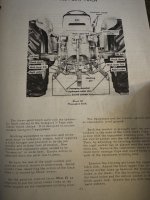
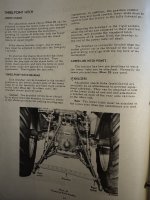
This series of IH tractors has two sets of mounting points for the lower 3 point arms on the rear of the tractor.

They also have two positions on the links that run up from the lower arms to the upper point that actually does the lifting.

I don’t know which one yours are in, but that may help it go deeper. I would try the other position and see if it helps.
 
Last edited:
   / International 444, 1968. Progress Thread, Getting Going #83  
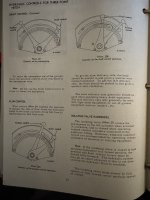
What was the position of your draft control lever the one closest to the seat?

To go deeper the draft control lever as needs far forward and down as possible and then move it up some if you are loosing traction.

If it was to the rear it would limit your depth.
 
   / International 444, 1968. Progress Thread, Getting Going
  • Thread Starter
#84  
I will check this afternoon. I thought I played with all the levers/stops on the 3pt and that was as low as I could get it to go. It also looks to me like the hole positions for the links are in the lowest settings. I'll dig in to it here today and see what I come up with. Its hooked to the brush hog now so I might do some work in the field mowing first then maybe switch it back over to the ripper.
 
   / International 444, 1968. Progress Thread, Getting Going #85  
Here’s some information from my owners manual on the three point hitch.
 

Attachments

  • IMG_0282.jpeg
    IMG_0282.jpeg
    3.6 MB · Views: 98
  • IMG_0281.jpeg
    IMG_0281.jpeg
    3.7 MB · Views: 102
  • IMG_0280.jpeg
    IMG_0280.jpeg
    3.3 MB · Views: 97
   / International 444, 1968. Progress Thread, Getting Going
  • Thread Starter
#86  
I played with the levers a bit. As I was thinking - I did have the levers positioned, as I can tell, "normally" in the position the 3pt would go the lowest it could.

That said, I bent the levers and guard/guide plate a bit so I could get the pin on the round knob lever to go up and over the depth control stop slide plate. Now the pin is inside the depth control slide plate, as opposed to free above it.

In this position the 3pt now goes much deeper. However, I am not thinking the way I did this is "right". I shouldn't have to bend things and force things, I don't think?

Here is a side-by-side comparison of the depths before the new lower position and after. I can't recall if this was "all the way down" or not, the tractor did bog down and spin wheels when the load got too high - what I would have expected from the get-go.

3pt depth comparison.jpg


Here are some pictures of the draft control etc. They aren't very good, but hopefully with my description above you can see and understand what is going on.

20241006_182122.jpg


20241006_182137.jpg

20241006_182219.jpg
 
   / International 444, 1968. Progress Thread, Getting Going
  • Thread Starter
#87  
We got a 2 bottom dearborn plow. Over the ripped ground it was a bit tough to get the plow to turn the ground over, it liked to catch the "sod" on top and clog with the carpet patches.

That aside, when I came out of the field after running the plow the most (didnt finish, got too dark so I continued the next day) the exhaust was glowing red. With the hood off sine I've been working on the tractor the glowing exhaust caught me off-guard. It was a substantial red glow coming from the engine at dark.

A friend of mine is suggesting that the fuel mix might be way off.

Thoughts?

Another issue I found is the wide track width of the drive tires does not work well with the plow - the right side drive should sit in the bottom of the furrow with the front steer tire. That doesn't happen - the drive sits above and rolls over the turned over ground.

20241014_175652.jpg


After I took this picture I switched sides - I was plowing over the turned over ground going this direction. However, that made no difference in the sod clogging the plow.

20241013_122245.jpg


20241013_193133.jpg

test
 
   / International 444, 1968. Progress Thread, Getting Going #88  
We got a 2 bottom dearborn plow. Over the ripped ground it was a bit tough to get the plow to turn the ground over, it liked to catch the "sod" on top and clog with the carpet patches.

That aside, when I came out of the field after running the plow the most (didnt finish, got too dark so I continued the next day) the exhaust was glowing red. With the hood off sine I've been working on the tractor the glowing exhaust caught me off-guard. It was a substantial red glow coming from the engine at dark.

A friend of mine is suggesting that the fuel mix might be way off.

Thoughts?

Another issue I found is the wide track width of the drive tires does not work well with the plow - the right side drive should sit in the bottom of the furrow with the front steer tire. That doesn't happen - the drive sits above and rolls over the turned over ground.

View attachment 1576341


After I took this picture I switched sides - I was plowing over the turned over ground going this direction. However, that made no difference in the sod clogging the plow.

View attachment 1576342

View attachment 1576343
test
You have solid non-adjustable wheels. With the AG two piece wheels or the power adjust wheels one can adjust the wheel spacing to let the tire run in the plow furrow.

There is a good thread on here that explains how to setup a tractor with a moldboard plow.
 
   / International 444, 1968. Progress Thread, Getting Going #89  
Dieselscout80 is absolutely correct. You have pressed steel wheels and they are set as narrow as it will go. Whereas a tractor set up for Ag./row crop use has a 2 piece set up with a center dish, and looped rim. Width can be adjusted by setting loops on either side of the center dish, or even flipping the concave center dish is or out. And more than likely on an Ag. tractor rear tires may be a lot narrower like a 12.4 width. Here is another link from Case/IH showing the difference: Case IH | Schematic, Manuals, Specifications and Diagrams for wheels and wheel weights, rear wheels | MyCNH US Store What you have is on the left, what we're describing is on the right.

To be set up correctly, the end of the first plow bottoms share should be even with the inside of your right rear tire. When making the second round, and rear tire running in the previously made round that will make the plow cut the bottom of the furrow off clean into the previous pass furrow. If not cutting off cleanly it usually kicks the plow sideways towards unplowed ground, and will turn over, or try to turn over the extra width of sod/soil between the inside of the rear tire and end of share. That appears to be a 14" bottom plow, and with your tire spacing you may be trying to turn over 16" to 18" or more of sod. When that happens you get the results of what you have. I do see some adjustment left on the crossbar the 3 pt. lift arms attach to, but not sure it is enough to get the end of the share to align with the inside of the tire. You can eyeball that distance setting on the ground, and measure how much you can slide that bar, but looks like about maybe 2" at best.

The least expensive option would be to find a decent pull type plow (assuming the tractor has a mounted drawbar that I can't see) there may be enough adjustment on the plow hitch to set it over far enough to match. If not, a 3 pt. drawbar in the 3 pt. lift arms has various holes to adjust sideways.

If you decide to go this route, find a plow that the shares a good on or at least a brand you can still get new shares and moldboards for. You can still get now wear parts for most older IH, John Deere, and Oliver plows. The mechanical lifts most generally work great. They can get caked up with dirt & grease in the lift mechanism, but cleaning them up and new grease, they'll work great. I see you have a rear hydraulic remote, so a hydraulic lift plow would be great, but more expensive, and many don't have the cylinder with them so there's more $$$.

As for the red hot exhaust, yes, it could be running lean, or timing could be off too. If timing is retarded it will make the exhaust hot. Too far advanced can burn the pistons. If you have a timing light, or access to one probably best to set the timing that way. But in reality, if you're working it hard, probably not uncommon, and more than likely why the manifold is cracked as you described. Always best to let them idle for a while to cool down after working them hard. I'm assuming by the time you got to where you park it, it may have cooled down enough not to glow. I'd set the timing first you can tweak on the carb. when working it and see if it makes a difference.

One other thing, it's pretty dry to be plowing now. You want a smidge of moisture, but not wet. I suspect subsoiling before plowing didn't help when it's this dry. It can actually pull the topsoil loose from the subsoil. Had that happen 6-8 years ago when I tried running my subsoiler in some wet spots in the hayfield, it literally pulled slabs of topsoil loose. I just let it go until we got some rain and worked much better.
 
   / International 444, 1968. Progress Thread, Getting Going #90  
   / International 444, 1968. Progress Thread, Getting Going
  • Thread Starter
#91  
Dieselscout80 is absolutely correct. You have pressed steel wheels and they are set as narrow as it will go. Whereas a tractor set up for Ag./row crop use has a 2 piece set up with a center dish, and looped rim. Width can be adjusted by setting loops on either side of the center dish, or even flipping the concave center dish is or out. And more than likely on an Ag. tractor rear tires may be a lot narrower like a 12.4 width. Here is another link from Case/IH showing the difference: Case IH | Schematic, Manuals, Specifications and Diagrams for wheels and wheel weights, rear wheels | MyCNH US Store What you have is on the left, what we're describing is on the right.
Thinking through this - If I narrow up the tractor that is going to be a significant help all around the farm, not just in plowing. And depending on how narrow I can get it - I might even be able to get it on my trailer.

Do you have any thoughts on how to track down a 2 piece wheel set?

The tires I have now have a lot of tread life left. They aren't the same tires, but close enough - same "size" and the tread wear is about the same. I'm thinking it would be great to be able to swap those to another wheel set, but with the age of the tires I don't know if they will survive dismounting them and remounting them?
 
   / International 444, 1968. Progress Thread, Getting Going #92  
I can give you a few salvage yards we deal with that may swap what you have for what they have, if they have the correct size. But I would expect to pay some boot, but you never know. I'm sure those center wheel discs were used on several different models, so that is a plus. Finding decent rims that haven't been loaded with calcium and rusted might be something else. But again, you never know. 2 years ago on our Black Friday run 3 of the guys found sets of rims & tires with no rust, and decent tread on the tires. He did give them a deal being they bought 3 sets and had cash in hand. Cash is king at any salvage yard. I'll post links to each one, and you'll just have to call and see, and see what they have. It'd be a good idea to get some good pics of them, anymore you can text a picture to them, and they can see what you have, and vice versa.

Gene's recycling at Attica specializes in IH tractors & equipment. He's right on Rt. 4. Good guy to deal with, always seems to have new inventory when we go there, although we only go yearly on Black Friday. genes » Page 1 of 7

TMS Stoller is a bit further north at Sterling, Ohio. But they have a LOT of IH tractors in for salvage. Also decent guys to deal with. Contact Information

Wilson Farm at Mt. Vernon is another. They do have some IH tractors, but again inventory is always changing so you never know what will be there. Wilson Farms

Andersons at Bluffton always treated me right but haven't purchased anything from them in over 20 years. Don't know that they would have any tractors that small, but again you never know. All it will cost is a phone call. When you open the link to their site, you see a pic of their inventory setting in the yard. Those buildings are full of parts from tractors that have been dismantled. Most generally salvage yards will have a section of used tires & rims, center discs may still be on a tractor, or in a building. Home | Anderson Tractor Supply, Inc. | New/Used Tractor Sales | Bluffton |

These would be the ones I know of within driving distance. If they don't have what you need, they may be able to steer you towards someone that does. The center disc probably isn't a real hot item but doubt it's something they would scrap. More than likely still on a tractor the tires & rims have been removed from and setting sank in the dirt but shouldn't be all that bad and can be cleaned up. One may have the centers, and another may have the tires & rims to fit.
 
   / International 444, 1968. Progress Thread, Getting Going
  • Thread Starter
#93  
Its been a while since I've posted on here. We've been busy. We got a rear blade at the same time as a disk back in November that was bent up pretty good. With the 2 implements we got a pretty good deal on them. Since the bones on the blade were workable (still a good blade, functional pivot, etc) I went for it. I cut the frame up and between a hydraulic press to straighten what I could and strategic welding I got it to work. Getting the snow we did in January it was a project that needed done. We have run it twice now.

The lights are also an addition. I have them wired for 2 fronts, 2 rears, and "work lights" - 2 more front/2 more rear/2x each side for 360deg coverage.

20241117_145835.jpg


20250110_180516.jpg
20250112_134211.jpg


20250112_142947.jpg
 
   / International 444, 1968. Progress Thread, Getting Going
  • Thread Starter
#94  
I just realized I didn't post any on the disk. Its an 8' wide disk, also an International apparently from the seller. I am not sure what model.

We used this to knock down the plowed garden plot last fall and will continue to use it for spring tillage and maintenance tillage depending on what we need/when.

20241116_160816.jpg
 
   / International 444, 1968. Progress Thread, Getting Going
  • Thread Starter
#95  
Now the bad news. When it got cold and we had the snow the tractor was very difficult to start. I would crank it for a good while and once it would fire it would take a few more seconds of cranking to spool up then it would ramp up to rpm.

The last time we had it "running" was a bit over 2 weeks ago. It was harder to get to go and was backfiring a ton. I towed a trailer (our 6x16' tandem axle utility/landscaping trailer) to the back of the field then fired it up and came back a while later. It barely made it back. I parked it in the barn and couldn't get it really to start again.

Last week it warmed up a bit. I tried starting it and it fired. I got it to "run" long enough to get the loader up and blocked it. In that time I tried the 3 point hitch and it only lifted the blade about 6" off the ground. So I set it back down.

That all having been said, I was trying to get through the winter before doing a lot of work on the tractor. I had yet to do the engine + hydraulic oil. I know, probably a huge mistake. It did have a good amount of engine oil, the hydraulic oil was low and leaking a good bit so I'm sure it just went lower.

This weekend I got the tractor in to the shop. I towed it out then had my neighbor come over with his loader tractor to push. I did try to start it before calling for his assistance but the engine just popped a couple times and made odd noise when cranking after a bit (almost a "grind", but more like a heavy resistance, not gear teeth or metallic "grind").

When I got it in the shop this is the hydraulic oil that came out of it:

20250202_162228.jpg


This is the pan under the transmission. I am going to sift through the buckets and see whats in there also, but the pan as some metal shavings in it. I'm not significantly concerned with the small bits yet, but it is a concern. The bigger concern is anything bigger that flowed out when the plug was removed - yet to be determined.

20250202_214724.jpg


This magnet has some of the shavings collected from the pan on it for reference.

20250202_171052.jpg


More to come as I work through this. At least the machine is inside where I can get some heat going and work on it out of the weather.
 
   / International 444, 1968. Progress Thread, Getting Going #96  
My IH 424 has generally always had milky looking hydraulic oil.

The hydraulic system is really only used for the power steering and the three point hitch.

This limits how warm the hydraulic oil gets and it’s not enough to cause the moisture to evaporate. The lack of a breather on the hydraulic tank may also be a contributing factor.
 
   / International 444, 1968. Progress Thread, Getting Going #97  
Looking at the trans/draulic oil, someone has let it set out in the weather. Rainwater will enter into the transmission around the shifter. If you park it inside, or under the lean-to pictured it should pretty much eliminate that problem.

If you tried starting it in that cold spell we had a few weeks back, both the engine oil and trans/draulic oil was pretty thick, it really drags them down. Water in the transmission oil didn't help. That oil is made by design to absorb water and keep it suspended in itself, so the water won't go to the bottom and freeze solid and possibly do damage to internal parts.

Seeing it's that contaminated, it will probably take several oil changes (with the least amount used to make everything function) to completely purge the system of water. I'd use the least expensive hydraulic oil you can find to do that. You'll have to cycle all loader functions quite a few times to get cleaner oil in them, 3 pt. too. I would help if you drained the loader hoses to remove at least that much. Whether it's resting on the ground or safely blocked up. Resting on the ground would be best and safest and relieve pressure on all loader functions.

I looked up the hydraulic/transmission capacity and looks to be 8 to 14 gallons depending on the setup. Front mounted pump takes more. If that is the case, I'm thinking 5 gallons per purge flush may be enough. But guess that is yet to be determined.

You'll want to change the hydraulic filter too. I looked the filter up through Case/IH, and they aren't cheap @ $56 a pop. However, I found a Baldwin filter for $19 at All
State tractor parts. Baldwin® Transmission Filter Element fits International 424 444 392532R91 fits White fits Oliver fits Minneapolis Moline fits Gleaner For that price I'd probably get 2. I'd probably change before adding the first round of flush oil, then once completed install the second filter. It's not going to be a cheap fix, but not as bad as it could be, between using OEM, and aftermarket oils & filters. It's a good bet the filter is made by Baldwin or Wix for Case/IH anyway. The "Premium" Trans/Draulic oils from TSC, or Rural King should be good enough. I've been using both in my Farmall 656 for over 20 years with no issues.

The filing's in the oil is more than likely 50 years worth of grinding gears going from forward to reverse, or just cramming it in gear from the get-go. Seems loader tractors are the worst for this as PO's have got the clutch hot and may have warped the clutch disk a bit, or just simply don't let the transmission spin down before trying to put in gear. These aren't synchronized transmissions, just simple straight gear transmissions. So you need to let it come to a complete stop before changing directions or let the transmission spin down. If your magnet will stick to the pan, you could always get a couple of the rectangular magnets they sell at Harbor Freight, or other place and put in the bottom of the pan to collect any filing's that may get flushed out later. I do that on my smaller IH tractors I've gone through and found such filing's, just for peace of mind.

Hard to say on the popping. It could be moisture causing a miss fire jumping across internally, or externally. You'll find when it has been cold like we've had a few weeks ago, then warms up quicker that the metal and other parts of the tractor they will go through what I call the "Spring sweats", especially when the humidity is high. Moisture will condense on the metal parts and parts like the distributor cap transferring to cold through the metal parts. This can happen inside or outside. One of the things you look for when checking oil and coolant levels. If it ran fine that last time you used it, there's a good chance moisture is the culprit. You can simply wipe it off, but something like starter fluid, carb./brake cleaner, spray rubbing alcohol can speed the process, just be sure to let it set for a bit, and completely dry.

Looks like I got carried away with my explanations again, so I'll stop for now.
 
   / International 444, 1968. Progress Thread, Getting Going
  • Thread Starter
#98  
.....
Looks like I got carried away with my explanations again, so I'll stop for now.
No worries on the long reply. All very good information and I appreciate it.

I won't quote everything in detail, however here are some points to relate back to what you said:

Yes, there was a lot of suspended water in the oil. I sifted through all of the hydraulic oil last night. See pictures to follow. I did not find anything other than what you would expect - the small filings. There were some crumbs/flakes in there that I couldnt tell if it was just rust bits or flakes off of some of the castings, but no gear teeth or chunks of any kind. You would think if there was anything "more" it would have either been in the drained oil or the pan before the plug. So that is very encouraging news.

Considering the amount of oil I pulled out of the machine so far, when I got it to fire last and got the loader frame up the 3pt wouldn't lift the rear blade more than about 6-8" off the ground. So I would say either there is something wrong with the hydraulic pump/circuit or there wasn't enough fluid. Though, when it "ran" last a couple weeks ago I had a hitch ball on the blade and pulled our 16' tandem axle trailer - the hydraulics had no problem then.

So far I've pulled about 14 gallons of oil out from the 2 drains on the bottom of the transmission. The main drain I got I'd say about 12 gallons from. The rest was from the rear drain.

The first 2 pictures are the bottoms of the buckets from the main drain:
20250203_181029.jpg


20250203_182351.jpg


This is the bottom of the oil bucket from the rear drain:

20250203_183215.jpg


So it doesn't look all that bad to me. However, there could still be some major things wrong.

I haven't been able to get the oil pan off. It appears it was attached/sealed with a gasket goop of some kind and it is going to take some prying off. I will see about getting that off tonight.

More to come.
 
   / International 444, 1968. Progress Thread, Getting Going #99  
Looking at the trans/draulic oil, someone has let it set out in the weather. Rainwater will enter into the transmission around the shifter. If you park it inside, or under the lean-to pictured it should pretty much eliminate that problem.

If you tried starting it in that cold spell we had a few weeks back, both the engine oil and trans/draulic oil was pretty thick, it really drags them down. Water in the transmission oil didn't help. That oil is made by design to absorb water and keep it suspended in itself, so the water won't go to the bottom and freeze solid and possibly do damage to internal parts.

Seeing it's that contaminated, it will probably take several oil changes (with the least amount used to make everything function) to completely purge the system of water. I'd use the least expensive hydraulic oil you can find to do that. You'll have to cycle all loader functions quite a few times to get cleaner oil in them, 3 pt. too. I would help if you drained the loader hoses to remove at least that much. Whether it's resting on the ground or safely blocked up. Resting on the ground would be best and safest and relieve pressure on all loader functions.

I looked up the hydraulic/transmission capacity and looks to be 8 to 14 gallons depending on the setup. Front mounted pump takes more. If that is the case, I'm thinking 5 gallons per purge flush may be enough. But guess that is yet to be determined.

You'll want to change the hydraulic filter too. I looked the filter up through Case/IH, and they aren't cheap @ $56 a pop. However, I found a Baldwin filter for $19 at All
State tractor parts. Baldwin® Transmission Filter Element fits International 424 444 392532R91 fits White fits Oliver fits Minneapolis Moline fits Gleaner For that price I'd probably get 2. I'd probably change before adding the first round of flush oil, then once completed install the second filter. It's not going to be a cheap fix, but not as bad as it could be, between using OEM, and aftermarket oils & filters. It's a good bet the filter is made by Baldwin or Wix for Case/IH anyway. The "Premium" Trans/Draulic oils from TSC, or Rural King should be good enough. I've been using both in my Farmall 656 for over 20 years with no issues.

The filing's in the oil is more than likely 50 years worth of grinding gears going from forward to reverse, or just cramming it in gear from the get-go. Seems loader tractors are the worst for this as PO's have got the clutch hot and may have warped the clutch disk a bit, or just simply don't let the transmission spin down before trying to put in gear. These aren't synchronized transmissions, just simple straight gear transmissions. So you need to let it come to a complete stop before changing directions or let the transmission spin down. If your magnet will stick to the pan, you could always get a couple of the rectangular magnets they sell at Harbor Freight, or other place and put in the bottom of the pan to collect any filing's that may get flushed out later. I do that on my smaller IH tractors I've gone through and found such filing's, just for peace of mind.

Hard to say on the popping. It could be moisture causing a miss fire jumping across internally, or externally. You'll find when it has been cold like we've had a few weeks ago, then warms up quicker that the metal and other parts of the tractor they will go through what I call the "Spring sweats", especially when the humidity is high. Moisture will condense on the metal parts and parts like the distributor cap transferring to cold through the metal parts. This can happen inside or outside. One of the things you look for when checking oil and coolant levels. If it ran fine that last time you used it, there's a good chance moisture is the culprit. You can simply wipe it off, but something like starter fluid, carb./brake cleaner, spray rubbing alcohol can speed the process, just be sure to let it set for a bit, and completely dry.

Looks like I got carried away with my explanations again, so I'll stop for now.
The transmission and the hydraulic system on this series of IH tractors are separate reservoirs. Unless it’s an industrial version with the common sump system (backhoe version) (may not have the 3 point hitch).

Somewhere I have a picture of the hydraulic connection to the common sump setup.

Added information: That said the shifter lever is a source of water getting into the transmission housing and rear axle housing.
 
Last edited:
   / International 444, 1968. Progress Thread, Getting Going
  • Thread Starter
#100  
Thanks for all the info.

Continuing with the diagnosing here - I got the oil pan off. It appears there are no "metal bits" in the oil pan, either. Just some sludge and metal shavings like the pan under the transmission. That is a good sign. Though, there could still be any number of problems.

The pan did have a regular gasket. It was adhered to both the pan and block and tore when I pried it off. So that will all have to be scraped/ground off and replaced. I have a dremel tool that might work well for that.

The top right of the pan bottom has a small round magnet. I swirled the little bit of oil around so the magnet would collect anything suspended in the oil. It doesn't look like it caught anything of concern - just filings and the sludge you see.

20250204_184243.jpg


I am tempted to put the pans back on and get some good fluids in there to see what happens. I do have the lower temp rated weight oil - 10w-30 down to 10deg F.
 

Tractor & Equipment Auctions

2019 BOBCAT T630 COMPACT SKID STEER TRACK LOADER (A56438)
2019 BOBCAT T630...
UNKNOWN  20 FLATBED GOOSENECK (A58214)
UNKNOWN 20...
2018 Deere 323E (A53317)
2018 Deere 323E...
2024 DEVELON DL250-7 WHEEL LOADER (A59823)
2024 DEVELON...
SKID STEER ATTACHMENT SIFT BUCKET (A58214)
SKID STEER...
2022 Club Car Tempo Cart (A55852)
2022 Club Car...
 
Top