Gas Shutoff's

   / Gas Shutoff's #1  

Paystar

Elite Member
Joined
Nov 22, 2008
Messages
3,614
Location
Ontario, Canada
Tractor
Kubota B2620
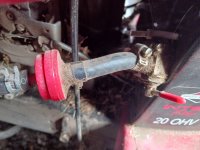
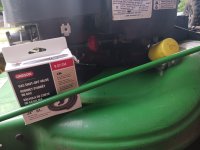
Todays mission, installing gas line shutoff's and filters on every small engine I have.

I buy premium gas that is supposed to NOT be ethanol, I run Marine Stabil in all my gas and still I just had my John Deere push mower and my generator quit mid use and found the carbs to be completely gummed up.
Gas quality is getting to be crap here now.

My small engine mechanic friend just went for his renewal training for his B&S master license and he said they told him gas only has a life of 30 to 60 days now.

From now on I'm going to run carbs dry after every use.
 

Attachments

  • 20250711_075629.jpg
    20250711_075629.jpg
    4.8 MB · Views: 114
  • 20250711_075735.jpg
    20250711_075735.jpg
    5.4 MB · Views: 102
   / Gas Shutoff's #2  
Strange....no problems here with fuel. Maybe it is a problem at that one source? I run all my engines dry if they are going to sit over the winter.
 
Last edited:
   / Gas Shutoff's #3  
I just started my weed eater that's been sitting with 2 year old 87 octane E10 gas on the 6th pull. Runs great.

I started my Toro mower that sat all winter with E10 on the 2nd pull.

I started my 2013 Impala that's been sitting with E10 since before Christmas.

I don't know why we've never had problems with old E10, but we haven't in 40 years.
 
   / Gas Shutoff's #5  
I've installed those shut-off valves on my older lawn mowers. My newest is a Honda and it came from the factory with a shut-off valve installed in the fuel line. If any of my small engines are going to sit for any length of time I turn off the valve and let the engine run until it runs out of fuel. Carburetors last forever if you do that.
 
   / Gas Shutoff's #6  
With that said, I have had a couple problems with dirt/grit under the needle in a carb or two over the years. I attribute that to bad/non-existent filtration. My pressure washer is a good example. It wouldn't start. I took the carb apart and there was grit under the needle. Put it back together, and now it leaks fuel. My fault for sure. So I threw a shutoff valve and a filter in the line to make it easier to work on so that I don't have to drain the tank or pinch the line to change the filter.
 
   / Gas Shutoff's #7  
I with the I don’t have any fuel problems group but I’m of the fill it to the brim before storage mindset.
I get that everyone’s experience is different and I believe local climate is a factor but heck this stuff is what forums are for right?
My opinion for this is personal experience and I’ll elaborate…

Running it dry = can’t be done. Shut valve and engine will die before bowl is truly dry leaving product to evaporate and leave “lacquer” that eventually flakes off and gets under needle and looks like grit. It can also get past the needle and plug passages. Empty bowl is an environment for repeated condensation development.

Filling and vale open = no air space for condensation in bowl or tank.
With a properly working system as the fuel evaporates from the carburetor via the vent the float will allow it to refill eliminating lacquer and moisture.

Especially would not run a 2-stoke out of fuel because the leaning out of the fuel air as it dies is about the worst thing you do to a 2-stoke GAS engine that is when you burn holes in pistons. Note that it’s not good for 2-stroke Diesel engines either because shutting off the fuel would remove needed lubrication from the injector pump and brings a whole bunch of other requirements to get it running again.

Can only recall one instance of difficulty in getting a motorcycle started in the spring of the pre-ethanol days in the early 90’s and that was the first time and the last time my buddy talked me into using Seafoam.

I buy and store my gasoline and diesel fuel in 55 gallon drums that were new and impeccably clean because they were food grade drums.
Drums are kept sealed when not needed and it takes me about a whole summer or longer to use a drum of gas and almost three years to use up the diesel in my little 25hp tractor that’s main purpose is snow removal.

I use No fuel additives or conditioners other than what comes in the fuel when I buy it.

But whatever works for you and lets you sleep at night is the right thing to do.

And I hope that for the original poster that they discover it’s as simple as a bad batch of fuel.
 
   / Gas Shutoff's #8  
I use canned fuel in all my 2 stroke engines and never run them dry as canned gas (Echo Red Armor) has a 2 year good as new warranty on it. Running them dry, however won't hurt them as they are running dry on pre mix, not straight gas.

Other engines, diesel particularly, I top off the fuel tanks and let them sit all winter, no issue and the cars are built for running corn squeezed gas, no issue. One reason why they are all fuel injected today. FI has no float bowls, needles or other components to get gummed up.
 
   / Gas Shutoff's
  • Thread Starter
#10  
I with the I don’t have any fuel problems group but I’m of the fill it to the brim before storage mindset.
I get that everyone’s experience is different and I believe local climate is a factor but heck this stuff is what forums are for right?
My opinion for this is personal experience and I’ll elaborate…

Running it dry = can’t be done. Shut valve and engine will die before bowl is truly dry leaving product to evaporate and leave “lacquer” that eventually flakes off and gets under needle and looks like grit. It can also get past the needle and plug passages. Empty bowl is an environment for repeated condensation development.

Filling and vale open = no air space for condensation in bowl or tank.
With a properly working system as the fuel evaporates from the carburetor via the vent the float will allow it to refill eliminating lacquer and moisture.

Especially would not run a 2-stoke out of fuel because the leaning out of the fuel air as it dies is about the worst thing you do to a 2-stoke GAS engine that is when you burn holes in pistons. Note that it’s not good for 2-stroke Diesel engines either because shutting off the fuel would remove needed lubrication from the injector pump and brings a whole bunch of other requirements to get it running again.

Can only recall one instance of difficulty in getting a motorcycle started in the spring of the pre-ethanol days in the early 90’s and that was the first time and the last time my buddy talked me into using Seafoam.

I buy and store my gasoline and diesel fuel in 55 gallon drums that were new and impeccably clean because they were food grade drums.
Drums are kept sealed when not needed and it takes me about a whole summer or longer to use a drum of gas and almost three years to use up the diesel in my little 25hp tractor that’s main purpose is snow removal.

I use No fuel additives or conditioners other than what comes in the fuel when I buy it.

But whatever works for you and lets you sleep at night is the right thing to do.

And I hope that for the original poster that they discover it’s as simple as a bad batch of fuel.
Me too, I fill to full after use. Buy from same high volume station with Petro Canada premium. The generator is even kept indoors climate control until I need to run it.
Maybe it was just a freak thing.
But there is big temp swings where I live here. Because of lake Superior I go from 39*F at night to 86 when the sun comes out.
 
   / Gas Shutoff's #11  
What works for me is shutting off or pulling the fuel hose and choking it until it kills, then trying to start it with full choke. No snake oil except for Berryman's on occasion. Never e-10 in small engines. 🤷‍♂️
 
   / Gas Shutoff's #12  
Fuel quality varies from place to place. It's not always the fuel supplier to the gas stations either. Years ago I filled my VW bug at an Arco station in Seattle. My house was about 20 miles from the station. The bug started to run worse and worse the closer I got to home. The next morning it started, died, and would not start again. I eventually figured out what the problem was. I drained over a quart of water from about 9 gallons left in the tank. Gas stations are supposed to have filters that keep water out of the fuel delivered, so why did I get so much water filling up? Why was there so much water in the gas station's tank anyway? Suppliers can also be a problem. Did a supplier deliver fuel with a bunch of water? So individual experiences may not be an accurate way to determine what is the best way to deal with fuel.
Eric
 
   / Gas Shutoff's #13  
etpm, you started out with “yeas ago”
And that’s the answer
Years ago they didn’t have hyroscopic type filters on fuel dispensing pumps like they do now
Getting water in gas from a station really doesn’t happen anymore unless you go to a really old station that has been grandfathered and not updated the tanks and pumps and there aren’t many of those left.
It was part of my job to maintain underground fuel tanks at about 35 locations and around the 80’s or so the EPA made big changes in the regulations regarding leaks as well as infiltration of groundwater. Tanks are now double wall with monitoring of the water level inside the tank as well as the interstitial space.
 
   / Gas Shutoff's #14  
Spelling correction
Hygroscopic filters
 
   / Gas Shutoff's #15  
etpm, you started out with “yeas ago”
And that’s the answer
Years ago they didn’t have hyroscopic type filters on fuel dispensing pumps like they do now
Getting water in gas from a station really doesn’t happen anymore unless you go to a really old station that has been grandfathered and not updated the tanks and pumps and there aren’t many of those left.
It was part of my job to maintain underground fuel tanks at about 35 locations and around the 80’s or so the EPA made big changes in the regulations regarding leaks as well as infiltration of groundwater. Tanks are now double wall with monitoring of the water level inside the tank as well as the interstitial space.
Even 30 years ago gas stations had water removal filters. Back then Arco stations in the Seattle area had a very bad reputation for cheap but crappy gas. I was buying cheap gas because I was living on a shoestring, buying a house and raising a family with my wife in college. Too bad the gas was so crappy and had so much water in it. At least I made it home that evening.
Eric
 
   / Gas Shutoff's #16  
I've installed those shut-off valves on my older lawn mowers. My newest is a Honda and it came from the factory with a shut-off valve installed in the fuel line. If any of my small engines are going to sit for any length of time I turn off the valve and let the engine run until it runs out of fuel. Carburetors last forever if you do that.
Same. But after my monthly gen test or an actual use, i shut gas off, let carb run dry.
 
   / Gas Shutoff's #17  
I can't think of the name of the stuff at the moment, but have you tried using the same thing people use in their boat engines to store them over the winter? It basically gets sprayed into the engine while it's running and coats the entire thing in an oil mist. Easy enough in the Spring to run it a little bit to clear all of that out.
 
   / Gas Shutoff's #18  
I buy regular gas at brand name gas stations only. Add marine Stabil in all engines and never had any problem. Even when some equipment not in use over a year
 
   / Gas Shutoff's #19  
1970's international cub cadet garden tractors came with glass sediment bowls that had shutoffs in them. Early 1980 troy bilt tiller had shut off. honda gx engine had shutoff. The old Briggs that had fuel tanks mounted directly to the carbs didn't have shutoffs.

Leaving any gas in the carb over the winter always meant having a stuck carb needle in the spring in my experience.

I only use non-ethanol gas in small engines.
 
   / Gas Shutoff's #20  
I buy premium gas that is supposed to NOT be ethanol

If you are interested in testing for ethanol, it's simple to do:

  1. Rinse out an empty 20 oz coke bottle (or similar clear container)
  2. Draw a line about 2" up from the bottom on the side of the bottle
  3. Fill bottle with water up to the line (be accurate in this fill)
  4. Add a sample of gas, filling most of the way up (I fill a bit less full than it was when full of Coke - leaving some room for shaking it up)
  5. put cap on bottle and shake it up.
  6. Allow to settle for a few minutes
  7. You'll see the water settle out in the bottom of the bottle. It looks almost like a bubble in that sinks to the bottom of the bottle.
  8. If the water settles out right at the line you filled the water to, the gas had no ethanol. If that "water" level is higher than the line you drew, the difference is the ethanol which combined with the water and settled out of the fuel mixture.
That's the simple, "no special tools required" test.

If you want to get fancy, you can used a 100 ml graduated cylinder (like what a chemist uses). add 10 ml water, 90 ml fuel, cap and shake well. When things settle out, note how many ml ABOVE the 10 ml mark the water/ethanol bubble is divide that number by 90 (the amount of fuel you put in), and multiple by 100 to get the percent ethanol.

For example:
  • Add 10 ml water, 90 ml fuel to a graduated cylinder. Shake and let settle.
  • Let's say the water/ethanol in the bottom of the cylinder is now at 18 ml. that's an increase of 8 ml from the water you added.
  • 8/90 X 100 = 8.89 So you had just about 9% ethanol in your fuel sample.
Remember that on pumps which share one hose for ethnol and non-ethanol fuels, you are getting some of whatever the last person pumped when you first start. When I buy from such pumps, I pump the first gallon or two into my car before filling my gas can for use in my small engines or for testing the gas.
 

Tractor & Equipment Auctions

16ft x 8ft Flat Bed (A57454)
16ft x 8ft Flat...
HUSQVARNA RIDING MOWER 46IN DECK (A56859)
HUSQVARNA RIDING...
2015 VANTAGE TRAILER 3 POD PNEUMATIC TRAILER (A55745)
2015 VANTAGE...
2011 DOOSAN G25KW GENERATOR (A55745)
2011 DOOSAN G25KW...
UNUSED FUTURE 350 HYD BREAKER HAMMER (A52706)
UNUSED FUTURE 350...
2013 Ford E-150 Passenger Van (A59230)
2013 Ford E-150...
 
Top