You are using an out of date browser. It may not display this or other websites correctly.
You should upgrade or use an alternative browser.
You should upgrade or use an alternative browser.
ATV/Riding Mower bridge using materials laying around...request thoughts
- Thread starter cpy911
- Start date
- Views: 8317
More options
Who Replied?
/ ATV/Riding Mower bridge using materials laying around...request thoughts
#21
OP
cpy911
Bronze Member
- Joined
- Feb 22, 2020
- Messages
- 75
- Location
- Oregon City, OR
- Tractor
- John Deere 445, Craftsman GT 6000, Yanmar YM186D
For the center of the stream and possible supports, the water will not go much higher than the picture. I picked this spot because the water will rarely even get close to the bridge itself and usually will be halfway or less up to the bridge itself.I like doorman63's suggestion of utility poles. They'll support a lot of weight, and will likely outlast you before they rot, unlike the fir.
As far as center support (should you go that route), how big is the stream at its highest? A strong current or high level is going to put a lot of stress on those supports unless they're well anchored.
My comment is when people say it’s too bouncy
OP
cpy911
Bronze Member
- Joined
- Feb 22, 2020
- Messages
- 75
- Location
- Oregon City, OR
- Tractor
- John Deere 445, Craftsman GT 6000, Yanmar YM186D
Any thoughts on painting roof coating (asphalt based) on the fir beams to help them last longer?

An inverted king post bridge design will add strength, even if the post is 1 foot. More is better if you can keep it out of the water.
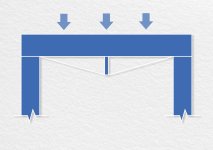

 www.archdaily.com
Bruce
How Inverted King Post Trusses Allow for Large, Elegant Open Spaces
Inverted king post trusses are made of steel bars and cables, these last used to reduce bending and deformation and truss’ height
www.archdaily.com
Bruce
I’ve considered doing something similar with 1/4 or 3/8 aircraft cable and 2 short pieces of tube steel if the bounce is too much. I have most of the materials on hand.An inverted king post bridge design will add strength, even if the post is 1 foot. More is better if you can keep it out of the water.
View attachment 783249
How Inverted King Post Trusses Allow for Large, Elegant Open Spaces
Inverted king post trusses are made of steel bars and cables, these last used to reduce bending and deformation and truss’ height
Bruce
I know you can buy everything at Rural King/Farm and Fleet/etc

Used an old tank as a culvert over a seasonal creek bridging a ravine on my up north property. I found tank in the woods cut both ends off it left a few inches around the ends of plates to add rigidity I think I posted a picture of it when I towed it up north, anyways worked great driving ATVs snowmobiles and a sxs over until my stubborn confidence took over and I partially crushed in the side when I attempted to drive my 10k lb skid steer over it.

ovrszd
Epic Contributor
- Joined
- May 27, 2006
- Messages
- 33,727
- Location
- Missouri
- Tractor
- Kubota M9540, Ford 3910FWD, Ford 555A, JD2210
Yep. That was my thoughts with my "ATV" bridge. A Jeep or tractor won't fit on it. Same with Doorman's design.A good design feature is to have weak bridges narrow enough to keep heavy vehicles off them.
Bruce
My next one is gonna be for vehicles…..I have all of the steel tubes/angle iron. Most of the 3x4 decking. May not run the Kubota over it…….Yep. That was my thoughts with my "ATV" bridge. A Jeep or tractor won't fit on it. Same with Doorman's design.
ovrszd
Epic Contributor
- Joined
- May 27, 2006
- Messages
- 33,727
- Location
- Missouri
- Tractor
- Kubota M9540, Ford 3910FWD, Ford 555A, JD2210
Please start a thread when you build it.My next one is gonna be for vehicles…..I have all of the steel tubes/angle iron. Most of the 3x4 decking. May not run the Kubota over it…….
My big bridge would probably hold my Ford TLB or my Kubota but I don't have to cross it with them so I don't. I tend to over build things......

WranglerX
Super Member
I had similar thoughts for my bridges, but did not take into account atmospheric river and one of my bridged ended up about 20 feet down stream and one had water flowing over it.... If you think its high enough, add another foot to height.....For the center of the stream and possible supports, the water will not go much higher than the picture. I picked this spot because the water will rarely even get close to the bridge itself and usually will be halfway or less up to the bridge itself.
jaxs
Elite Member
Sandwich Fir beams between cee purlins, 2x boards or whatever is on hand. 3' to 6' cut offs can be bought cheap or sometimes picked up free around weld up buildings.Can you elaborate on how the cee purlin would be used? Are they vertical, supporting the beams? I am not following. Thanks.
Vigo327
Platinum Member
Depending on what your materials are in the bridge, one relatively easy thing to do would be to tie one or more corners to a good post you set in concrete with your posthole digger, if you had one. Would probably only need to loosely anchor one corner on the 'home' shore to keep the thing from being a cleanup project somewhere downstream. It might still be severely damaged, or it might not, but it should be more of a 'breakaway' than a 'float away' design, at least in my mind.one of my bridged ended up about 20 feet down stream and one had water flowing over it.... If you think its high enough, add another foot to height.....

It’s mostly built in my head!!!Please start a thread when you build it.
My big bridge would probably hold my Ford TLB or my Kubota but I don't have to cross it with them so I don't. I tend to over build things......
I’ll start a thread when I start fab work. Should be in the next few weeks
Moved some trees/dirt/fill already.
azbinder
Gold Member
Had a customer use an old railroad flat car with out the axles and swivels. Just the frame and deck.. Would hold most anything you would want to put on it.