How do you prep for future power outages?

/ How do you prep for future power outages? #121  
So, I am not the smartest person. I thought my problem was the hot water in the pipes cooled just sitting in the pipe with no use. Then, you turn on the hot water and all the cooled water had to flow thru the pipes until the hot water in the tank gets to the spigot.

The water flow is limited by the faucet.

How does a pump help? Does the pump continuously re-circulate the water so it’s always hot in the pipes?

Sorry if this is a dumb question.

MoKelly
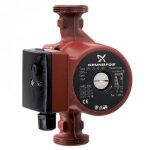
yes, it continually cycles hot water. its a micro 1/15th hp pump (as far as i recall). looks something like this . it requires a 3rd pipe (hot,cold,recirc) to be plumbed to furthest point in system at rough plumbing. mine has a built in timer face, so it starts about 1 hr before i wake up , than shuts down about 10 pm.
 

Attachments

  • 9.jpg
    9.jpg
    111.5 KB · Views: 141
/ How do you prep for future power outages? #122  
On water heaters:
Most carry a 5 year warranty and I've known of a few that have failed within a month or two of expiration.
Most Condos now mandate replacement @ 10 years.
Our condo has twice been flooded, once by our tank* and then by the upstairs neighbor.
Then came the insurance claim 'fun'.

*later I determined it was due to sloppy installation as the overflow pan was improperly installed.
 
/ How do you prep for future power outages? #123  
Not sure why the builder didn’t put the second floor water heater upstairs. There is a furnace area located upstairs. The water does have to travel some distance to get to the upstairs bathrooms. Perhaps the original owners were not comfortable with a 50 gallon heater located upstairs? I can sort of understand that concept.
This is the first I've heard of multiple water heaters in a single-family house, but everywhere I've ever lived all the water-using rooms were fairly close to one another. Maybe a tankless upstairs? That way you won't have the weight of all that water.
 
/ How do you prep for future power outages? #124  
For the cost, its really not that bad. I swear by the AO Smith water heaters. We have been getting 15 years and more out of them even with junk well water.
This is way off topic for this thread, but water heaters would last much longer if people replaced the sacrificial anode every 2 or 3 years.
 
/ How do you prep for future power outages? #125  
I use a 40 gallon boiler mate water heater works great provides more then adequate hot water.
Five daughters and clothes and dish washers every day and often at the same time.
As far as circulating water back to the water heater quite often a 1/4 inch line from the furthest
hot water faucet will create a thermal siphon flow loop and circulate water without a pump.
 
/ How do you prep for future power outages? #126  
I just ordered 2 anodes for mine. I meant to do it earlier this year...forgot.

thanks for the reminder. I had one of the FV sensors fail on one of mine reciently. Noticed water wasn’t as hot. Made me go look at units. Luckily I have 2 spare sensors. 10 minutes later its up and running again. Just ordered an additional sensor.

cant stand not having hot water. Keep plenty of spares. I can also throw a few valves to isolate a single tank to replace or whatever if necessary.

and since my furthest bath is about 60 feet from water heaters, the circulation system lets us have instant hot water at any faucet. Otherwise I’d have to wait minutes for water.
 
/ How do you prep for future power outages? #127  
Yes; they are a couple of ways to do it. One is to plumb in a return line from near the far end of your hot water run back to the cold water inlet on the water tank and then the pump (we use a little Grundfos) pushes water around the line continuously. We have our on a timer. The other way is to get a thermal bypass valve or sensor valve(s) in addition to your pump, but not plumb in a return line. The sensor valve is a heat swelling plug between the hot and cold lines. When it is cold, it lets the cold "hot" water bleed through to your cold water line. When warm water gets there, it swells shut. You can put in several throughout your house to have instant warm water at distant faucets. They do wear out, but we have had ours for over a decade.

We love it.

We also replaced the anode rod with an electronic version that doesn't wear out and doesn't need annual cleaning. I highly recommend them if your water isn't super soft and you aren't in the habit of frequently cleaning your water heater anode rods. We bought ours from Powered Anodes - Water Heater Rescue Our water heater lifetime has more than tripled, and still counting...

All the best,

Peter

Thank you! I am definitely looking into this idea.

MoKelly
 
/ How do you prep for future power outages? #128  
Plumb the return line with PEX. Easy DIY. Hotels and Motels typically have circulating HW so roomers don't wait.

Some guys use WHs w/pumps for boilers to add baseboard heat for additions. Some will use a thermal siphon. That's done by teeing a HW return into where the drain cock is. (NOT the T&P) It's less effective than a pump, flows continously, and as always we want to wrap our HW lines wherever we can reach them.

btw, Best trick I heard to save waiting with a 'remote' upgrade is to put a 1 1/2 gal or small tankless near the point of use but plumb the input from the main HW line. You get hot right away and when the input from the main source catches up the remote will cycle off and flow through.
 
/ How do you prep for future power outages? #129  
Plumb the return line with PEX. Easy DIY. Hotels and Motels typically have circulating HW so roomers don't wait.

Some guys use WHs w/pumps for boilers to add baseboard heat for additions. Some will use a thermal siphon. That's done by teeing a HW return into where the drain cock is. (NOT the T&P) It's less effective than a pump, flows continously, and as always we want to wrap our HW lines wherever we can reach them.

btw, Best trick I heard to save waiting with a 'remote' upgrade is to put a 1 1/2 gal or small tankless near the point of use but plumb the input from the main HW line. You get hot right away and when the input from the main source catches up the remote will cycle off and flow through.
Im using pex on almost all construction now.
 
/ How do you prep for future power outages? #130  
I've considered taking my 35-40 gallon electric water heater out and replacing it with either a smaller one, or a point of use device. But I'm too cheap to spend the money as long as it's still working. When it dies, I may go to a 20 gallon or so.
 
/ How do you prep for future power outages? #131  
I’m not sure there is anytime when a hot water heater breaking is not the worst time. We all need hot water when we want hot water.

MoKelly
I gotta go with Christmas Eve as the worst time. Don't ask me why I say that. Let's just say I learned how to use pex fittings.
hugs, Brandi
 
Last edited:
/ How do you prep for future power outages? #132  
I got a call on Thanksgiving morning a few years ago. A well pump or switch had gone out. I grabbed the working Sta-Rite I'd just replaced and took it over arriving just as dinner was done, gained shelf space, and enjoyed my first food drunk of the day. Always happy to help.
 
/ How do you prep for future power outages? #133  
This is way off topic for this thread, but water heaters would last much longer if people replaced the sacrificial anode every 2 or 3 years.
I had never even heard of that before. I watched the following video on replacing one. I was surprised by the amount of force that was required to loosen the nut holding the rod in place. It looked like I would need another man to hold the water heater in place, so it doesn't move and damage the copper connection pipes. He uses a long pipe on his wrench at around 2:40 in the video to loosen it.

Have you found it challenging to get that thing loose?

 
/ How do you prep for future power outages? #134  
Mine are even worse, and there almost isn't enough room above the water heater to do the change, though they make jointed ones that you can unkind as you feed them in. Impact wrenches really help. I think that the force is proportional to the amount of corrosion going on at the anode. Here in California water heaters are solidly bolted to the wall, so you can get a grip on them.

I don't miss pulling them annually, which is what I needed to do with our very hard water. The covering of calcium is a real problem. The powered ones are closer to once and done, though I keep an eye on it to make sure that it is still running.

All the best,

Peter
 
/ How do you prep for future power outages? #135  
I had never even heard of that before. I watched the following video on replacing one. I was surprised by the amount of force that was required to loosen the nut holding the rod in place. It looked like I would need another man to hold the water heater in place, so it doesn't move and damage the copper connection pipes. He uses a long pipe on his wrench at around 2:40 in the video to loosen it.

Have you found it challenging to get that thing loose?

We have a seismic code where I live, so the water heater is firmly attached to the framing. It's not going anywhere.
 
/ How do you prep for future power outages? #136  
My kitchen, guest bath and master bath are located back to back, so I installed a little 5 gallon water heater under the cabinet, with a hatch on the outside wall so I can get to it for maintenance. I get quick hot water at the taps and in the shower. The big water heater in the garage feeds the little water heater. It was a simple solution that doesn't require running a recirc pump all the time. If I had natural gas, I would go with a tankless unit, but I don't.
 
/ How do you prep for future power outages? #137  
But the power needed to run the small water heaters way outruns what is needed to power the tiny circ pump. Mine is actually 1/25 th horsepower (looked up data sheet) about 60 watts give or take. 12 hr run time per day so at my cost per KW, it cost me $1.05 per month to operate it.
 
/ How do you prep for future power outages? #138  
My pump is the same size, running for a few hours more (5am-10pm). Electricity is prepaid for with solar.

All the best, Peter
 
/ How do you prep for future power outages? #139  
A circulating pump makes all HW pipes better radiators. Can you say 'parasitic losses?' :sneaky: There will be trade-offs for convenience. Nobody has posted about heating water for free.
 
/ How do you prep for future power outages? #140  
But the power needed to run the small water heaters way outruns what is needed to power the tiny circ pump. Mine is actually 1/25 th horsepower (looked up data sheet) about 60 watts give or take. 12 hr run time per day so at my cost per KW, it cost me $1.05 per month to operate it.
Recirc pumps cost more energy than just the electricity to run them.

Recirculating the hot water will likely lose additional water heat in the lines, especially if the water isn't used during the day. Without the pump, the water in the pipes would lose heat until it's the same temperature as the surrounding environment; with the pump, that cooler water gets dumped back into the tank and rewarmed.

I still like mine, however, and my wife the nurse loves it when she can get right into the shower at 0dark30 (and I hear about it when the pump tiner didn't self-adjust for DST!).

The timer on our recirc pump failed at about 20 years but the pump is still good, so I leave it turned on all the time and plugged it into another timer...
 
 
Top