
Quaffer
Veteran Member
I only use non-ethanol fuel treated with Stabil in anything less than vehicle size. Too many past problems from not doing that.
Another vote here, for the big-bore jets in the olde stuffI've noticed many times those quoting how they use E fuel in this or that old engine and never have problems. I've experienced this with OLD engines too, and I think it's because those old engines aren't jetted so lean, and pass "junk" that would stop up one of the LEAN jetted newer engines. (read Honda)
SR
 If they are sort of gucked up, you could often trickle enough cleaner through while running to side-step a tear-down.
360 was originally heavily marketed as protecting the top of the fuel tank from corrosion.You mean Sta-Bil 360 which is the one to use for ethanol containing fuel treatment.
I have used it for several years in small engine fuel and it works as advertised !

Consider yourself privileged. Because for many of us the option of no-E gas has disappeared…I only use non-ethanol fuel treated with Stabil in anything less than vehicle size. Too many past problems from not doing that.

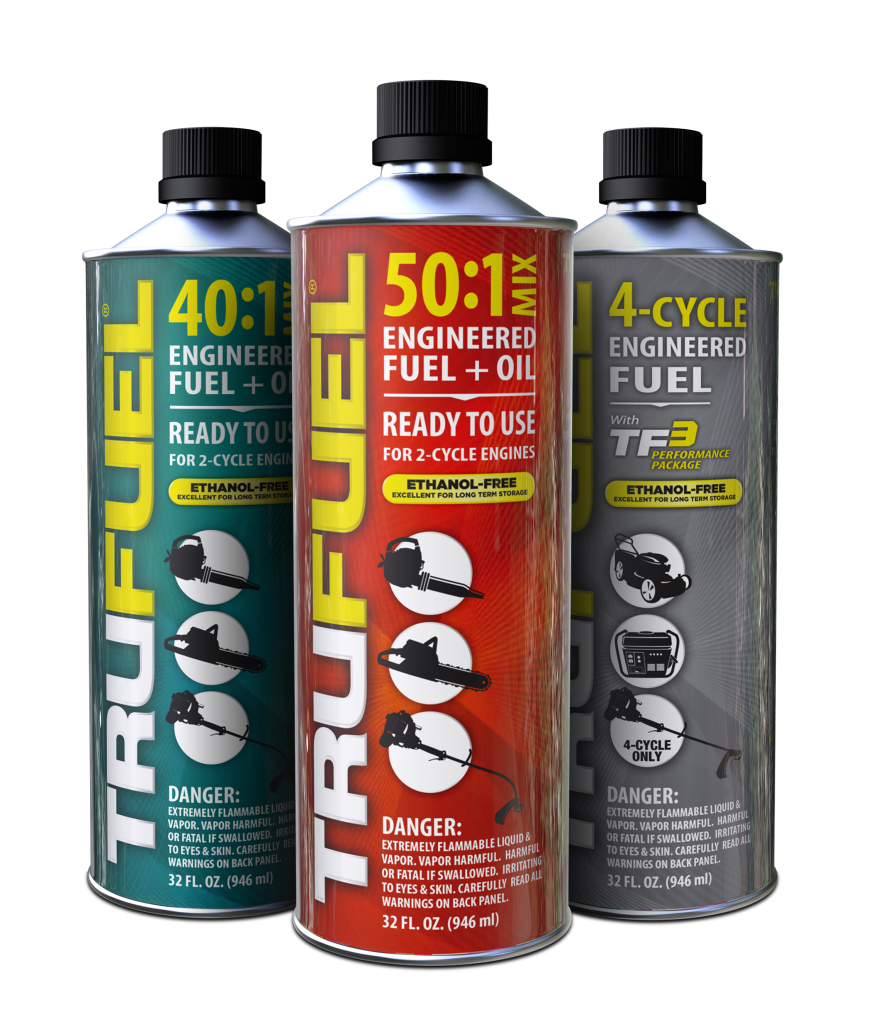
 trufuel50.com

My saw shop had a recommendation I liked, which was to use regular e-gas when running the machine, but then engineered or canned fuel for storage. This was more in reference to OPE that's used seasonally, essentially draining the e-gas and running some canned fuel through it before storage, but there's no reason the same couldn't be done for a generator. Doing this, one of those expensive gallon cans can last a long time, or serve several machines.Before non ethanol gas was available around here, I used engineered fuel in my small engines:
Engineered Fuel & Oil | Ready to Use, Pre-Mixed Ethanol-Free Fuel
TRUFUEL is engineered premixed fuel with synthetic lubricants and stabilizers that are specially made for your 2-cycle & 4-cycle outdoor power equipment.
Due to the cost, it isn't practical for large gas generators though.

Regular use replenishing fuel seems ok... plus keeping in a lower humidity constant temp storage can't hurt.Over 5000 hours on my Honda and it gets the same gas my truck and side by side and garden tractor get.
Those hours are what most of off grid systems are getting with there honda and yamaha inverter generators. Its good to see it reported by others every now and then! Regular maintenence, oil change intervals and spark plugs.Over 5000 hours on my Honda and it gets the same gas my truck and side by side and garden tractor get.
I wonder what other people do to get the noise level down. My gen is LOUD. Tried adding an automotive muffler, but that didn't really work. And tried running the exhaust under water. That also didn't work. Figured out if I set it up to reflect noise away from the house, it is much better. The noise is in the single piston engine design. Even outside on the ground, we can feel the vibrations inside, panting the windows.
Those hours are what most of off grid systems are getting with there honda and yamaha inverter generators. Its good to see it reported by others every now and then! Regular maintenence, oil change intervals and spark plugs.
Most off gridders use thier generators enough in the winter that they use the cheaper e-gas. Its hasn't been a problem with continous use.

Or stolen…I enjoy the noise a generator makes. Its when they dont make any noise my phone rings………
I repair generators.
Well now…that WOULD suck.Or stolen…
Reminds me of the "smells like money" phrase used by many guys in the septic system repair trade.I enjoy the noise a generator makes. Its when they dont make any noise my phone rings………
I repair generators.
Let me get this straight.....Construction heaters make great loadbanks. Used to have a bunch of outlets on a board to connect 9 heaters up either single phase or 3 phase to test gensets on mountain tops. A bunch of heaters are a lot easier to load into a helicopter than one big loadbank.


