Will this work? If not what will?

/ Will this work? If not what will? #1  

dwadec21

New member
Joined
Apr 4, 2013
Messages
7
Location
Beaumont, Texas
Tractor
Kubota B6200D
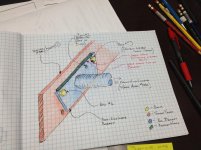
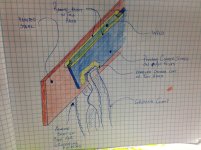
Do you guys think the proposed method in the first sketch will work? the two pieces of steel are already affixed together, so taking them apart to prep is out of the question. Ill attach a second sketch to give you an idea of what i am doing.

Thanks

photo1.jpgphoto.jpg
 
/ Will this work? If not what will? #2  
Just to be clear, the problem is that you have some stripped bolt holes in your tractor frame, and you want to secure the loader frame to the tractor frame permanently with welds?
 
/ Will this work? If not what will?
  • Thread Starter
#3  
Just to be clear, the problem is that you have some stripped bolt holes in your tractor frame, and you want to secure the loader frame to the tractor frame permanently with welds?

This is correct. I don't want to remove the loader frame from the tractor frame, to strip the powder coating, because i don't want to chance completely losing "Bolt #3's" threads. And I fear not having a good ground by just connecting the ground clamp to the tractor frame alone because I assume that continuity between the two pieces of material is not present because of the layer of powder coat that is sandwiched between the two.
 
/ Will this work? If not what will? #4  
I think your assumption about grounding between the pieces is correct. You could test this with a multimeter if you really cared to, but grinding clean both sides and then clamping to them should create the necessary continuity, since one side of the clamp will be touching each of the pieces. Here's an alternative, that will save you from grinding off very much powdercoat from the loader frame: grind clean the back surface of the frame, then clamp as depicted in the drawing. Grind clean the paint/powdercoat from the joint, then strike an arc on the frame side of the joint and carry the puddle over to the loader frame, creating a tack. Once the pieces are tacked together, there will be ample continuity.
 
/ Will this work? If not what will? #5  
Bolt #3 will be grounding the two pieces together. Wire wheel where you are going to weld. The powder coating will be slag when you run the weld. Another method would be tapping the existing holes for a bigger bolt. If bolt #3 has questionable threads; do the first holes and then back #3 out and do that one oversize also.
 
/ Will this work? If not what will? #6  
I think you're trying to avoid welding out of position by only putting a single bead on the top, but I do have to wonder whether a single bead will provide enough strength to replace the missing bolts. It's surely not how a manufacturer would have welded it up.
 
/ Will this work? If not what will? #7  
I think you're trying to avoid welding out of position by only putting a single bead on the top, but I do have to wonder whether a single bead will provide enough strength to replace the missing bolts. It's surely not how a manufacturer would have welded it up.

I have to agree with Josh that only welding the top will not be strong enough. Are these blind holes or can you drill them through and use a bolt and nut to hold the frame on? If something goes wrong with the tractor and you have to split it, would this frame prevent you from doing that?
 
/ Will this work? If not what will?
  • Thread Starter
#8  
Bolt #3 will be grounding the two pieces together. Wire wheel where you are going to weld. The powder coating will be slag when you run the weld. Another method would be tapping the existing holes for a bigger bolt. If bolt #3 has questionable threads; do the first holes and then back #3 out and do that one oversize also.

The the interior of the bolt holes in the loader frame are coated with powder coat as well.

I thought about tapping also. The bolts actually go through the frame and bolt into the engine block. be impossible to tap. Unless they have a tap set for that purpose that I don't know about, which is completely possible, hah.
 
/ Will this work? If not what will?
  • Thread Starter
#9  
I think you're trying to avoid welding out of position by only putting a single bead on the top, but I do have to wonder whether a single bead will provide enough strength to replace the missing bolts. It's surely not how a manufacturer would have welded it up.

I have to agree with Josh that only welding the top will not be strong enough. Are these blind holes or can you drill them through and use a bolt and nut to hold the frame on? If something goes wrong with the tractor and you have to split it, would this frame prevent you from doing that?

You guys think it would be a good idea to weld the entire perimeter? My thoughts were that if I were to have to split the frame in the future it would be alot easier to grind one bead of weld on the top for removal of the loader mount instead of the entire perimeter. But at the same time I dont want the FEL to fall off.

They are blind holes. The bolts go through the actual tractor frame and fasten into the engine block or one of the engines appurtenances.
 
/ Will this work? If not what will? #10  
From:
Tap and die - Wikipedia, the free encyclopedia


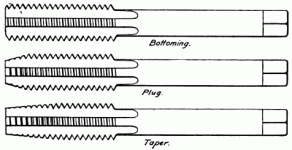
Bottoming tap or plug tap

The tap illustrated in the top of the image has a continuous cutting edge with almost no taper — between 1 and 1.5 threads of taper is typical. This feature enables a bottoming tap to cut threads to the bottom of a blind hole. A bottoming tap is usually used to cut threads in a hole that has already been partially threaded using one of the more tapered types of tap; the tapered end ("tap chamfer") of a bottoming tap is too short to successfully start into an unthreaded hole. In the US, they are commonly known as bottoming taps, but in Australia and Britain they are also known as plug taps.

TapTypes.gif
 
/ Will this work? If not what will? #11  
You guys think it would be a good idea to weld the entire perimeter?

I'm really out of my depth here, so my official answer is that I don't know what you should do. But I guarantee you if the frame came from the factory welded on, it would be welded all the way around, not a single bead on top. I really wonder whether you should consult with a machinist, if you haven't already, to see if there's a way to recover the existing bolt holes. Sometimes there are clever solutions that people who don't work in the business don't know about.

I have seen posts on WeldingWeb from a guy who works in a machine shop where he pulls off some amazing (to me, at least) saves. Maybe a post there, asking for advice on the repair, would be helpful.
 
/ Will this work? If not what will? #12  
If you are going to weld it, you need to weld it all the way around or at least top and bottom edge. You might consider welding on a thick plate (1" )that you can tap into rather than weld the FEL frame on to the tractor or weld on some heavy nuts to the bolt locations and just fasten in to those
 
/ Will this work? If not what will?
  • Thread Starter
#13  
From:
Tap and die - Wikipedia, the free encyclopedia


Bottoming tap or plug tap

The tap illustrated in the top of the image has a continuous cutting edge with almost no taper between 1 and 1.5 threads of taper is typical. This feature enables a bottoming tap to cut threads to the bottom of a blind hole. A bottoming tap is usually used to cut threads in a hole that has already been partially threaded using one of the more tapered types of tap; the tapered end ("tap chamfer") of a bottoming tap is too short to successfully start into an unthreaded hole. In the US, they are commonly known as bottoming taps, but in Australia and Britain they are also known as plug taps.

View attachment 311555

Nice! I was only aware of the taper type die. The 2nd hole I illustrated has a partial bolt broke off into it though with nothing exposed. In fact its embedded Im guessing about 3/8 of an inch. I tried a few different extraction methods to no avail. And Im paranoid to drill top much because the engine block is what Im attaching the bolts to.
 
/ Will this work? If not what will? #14  
I would think the larger problem would be welding to the tractor frame. They typically don't make this out of mild steel, and it would take specialized knowledge of the material to weld it, if at all.
 
/ Will this work? If not what will?
  • Thread Starter
#15  
I would think the larger problem would be welding to the tractor frame. They typically don't make this out of mild steel, and it would take specialized knowledge of the material to weld it, if at all.

This may not matter, but its a small 15 HP tractor. There was a homemade weight/hitch that was welded to the front of the frame that was welded on before I removed it. May have been done by the dealer or a professional welder, but I would assume not judging the craftsmanship, or lack thereof. Just some insight.
 
/ Will this work? If not what will? #16  
Ok. You have some stripped threads in an engine block, and a broken bolt in another.

First lets deal with the broken bolt.
Was it broken from side load or bending over, or was it broken from twisting?

If from a side load, that's good. It can likely be removed without too much trouble. You might try using a cold chisel to turn it out. If you have enough bolt left, you could weld a washer to the broken end and then weld a nut to the washer. The heat from the welding will help to free the bolt too.

Now for the stripped holes in the block. What you need is a heli- coil thread repair kit for that size thread.
The kit will come with the right size drill and special tap. You drill out the rest of the damaged threads and then use the oversized tap to cut new threads. Then you use the installation tool to screw in the heli-coil. The coil looks like a spring, and will fit into the newly tapped hole. When in place the inside of the spring will be the same threads as the original threaded hole.
 
/ Will this work? If not what will? #17  
I agree with Dan H. The connection of the engine "frame" to the engine block is as critical, if not more critical, than the connection of the loader "frame" to the engine "frame". And as you explained the bolts go through clearance holes in the loader frame and engine frame into the engine block.

And the best (almost the only) way to restore that connection between the two frames and the engine block is to fix it so that you can install new bolts and tighten them to the manufacturers specifications (or at least to specs from a bolt size table). And the only way to do that is to remove at least the loader frame, and perhaps the tractor frame, from the engine. If bolt number 3 is already "partially stripped" it is not doing much any, and you don't lose much by taking it out. With the frame(s) removed you can remove the broken bolt in one of several ways as Dan H said, and put a heli-coil in hole 3 to restore it to original strength.
 
/ Will this work? If not what will? #18  
Since the frame attaches to the block I'd suggest you want to do whatever to repair that attachment, be it helicoil or oversize bolt.
Go to a machine shop or whatever but do it right as I suggest that by not doing so you risk that extra loads on the remaining bolt could cost you an engine block, and that will be a disaster $$ wise.

The broken bolt with some heat *, drilled and an 'easy out' is not all that difficult and then simple replacement of broken bolt is then easy. Use graded bolt to replace and also torque all those bolts to the proper spec.
This is why we should always check torque settings every now and then: to avoid just this sort pf problem.

* not 'cherry red' but enough to break any bonding from rust etc, also heat causes expansion and when cooled the fit becomes a bit looser.
 
/ Will this work? If not what will? #19  
I am with the helicoil or thread insert crowd. If you are stuck with welding I would suggest skip welding instead of welding it solid. The reason being if your weld fails at any end it will come undone like a sipper where skip welds will fail more like buttons on your shirt. If your zipper fails, it's done but you can get by missing one button.

Pretty much the same thing as loosing a bolt (or even several bolts) or the part falling off completely.

You also have to factor in what is going to break next. The bolts could have been a "fuse" to keep from breaking something more serious.
 
/ Will this work? If not what will? #20  
To remove a broken bolt just weld a nut to what is left. The heat will expand the remaining bolt and once it cools a bit will come right out.
 

Marketplace Items

2025 BrushFox XHD72 72in Rotary Brush Cutter Skid Steer Attachment (A66734)
2025 BrushFox...
2011 BRENNER TANK TRAILER (A67714)
2011 BRENNER TANK...
2023 CATERPILLAR 259D3 SKID STEER (A65056)
2023 CATERPILLAR...
2019 INTERNATIONAL MV607 REEFER TRUCK (A67714)
2019 INTERNATIONAL...
2015 KUBOTA F3990 MOWER (A66091)
2015 KUBOTA F3990...
2 PALLETS OF SNOW CHAINS (A66091)
2 PALLETS OF SNOW...
 
Top