
You are using an out of date browser. It may not display this or other websites correctly.
You should upgrade or use an alternative browser.
You should upgrade or use an alternative browser.
trail clearing technique and tools
- Thread starter ArlyA
- Start date
- Views: 390146
More options
Who Replied?
/ trail clearing technique and tools
#1,641
OP

ArlyA
Super Star Member
- Joined
- Mar 18, 2016
- Messages
- 14,490
- Tractor
- Outlander1000 6x6, Ego lawn mower and shopping for tractor
Its a compromise. We will need to move rocks, logs and slash. Doze root bulbs.
 None are best all those jobs. Going by memory, that grapple is 40+ inches fully open.
Last edited:
OP
ArlyA
Super Star Member
- Joined
- Mar 18, 2016
- Messages
- 14,490
- Tractor
- Outlander1000 6x6, Ego lawn mower and shopping for tractor
Today we are heading into the field to do some clearing of dead-falls that came down over the winter on Boundary Road trails. Its the most dead-falls we've seen on these trails over the winter. Will post pics later.
OP
ArlyA
Super Star Member
- Joined
- Mar 18, 2016
- Messages
- 14,490
- Tractor
- Outlander1000 6x6, Ego lawn mower and shopping for tractor
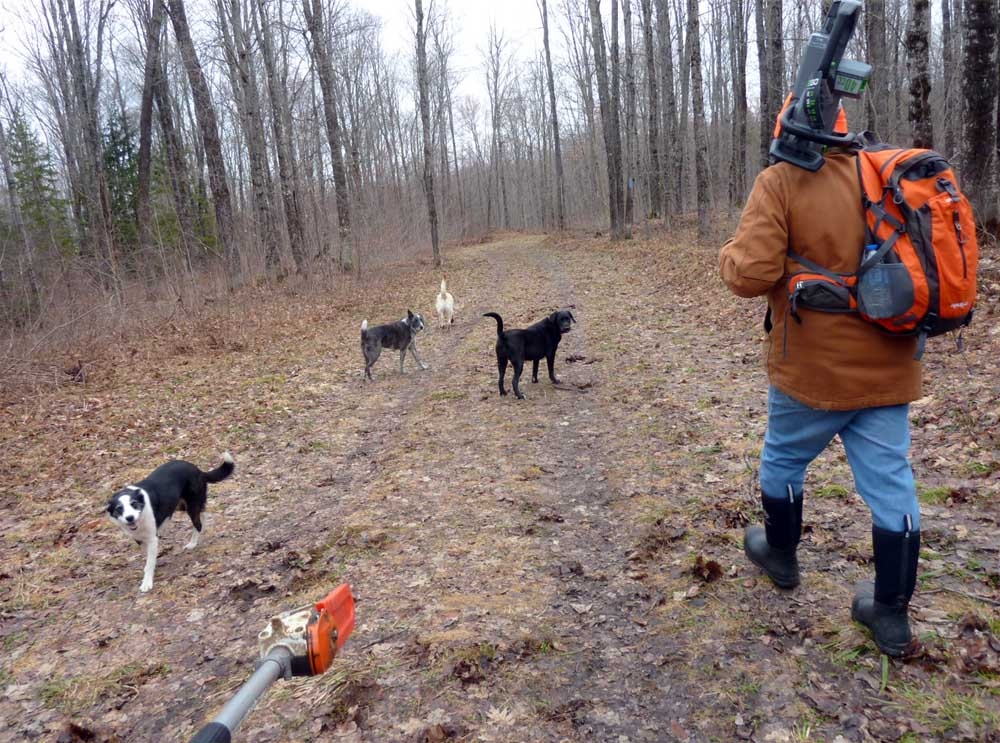
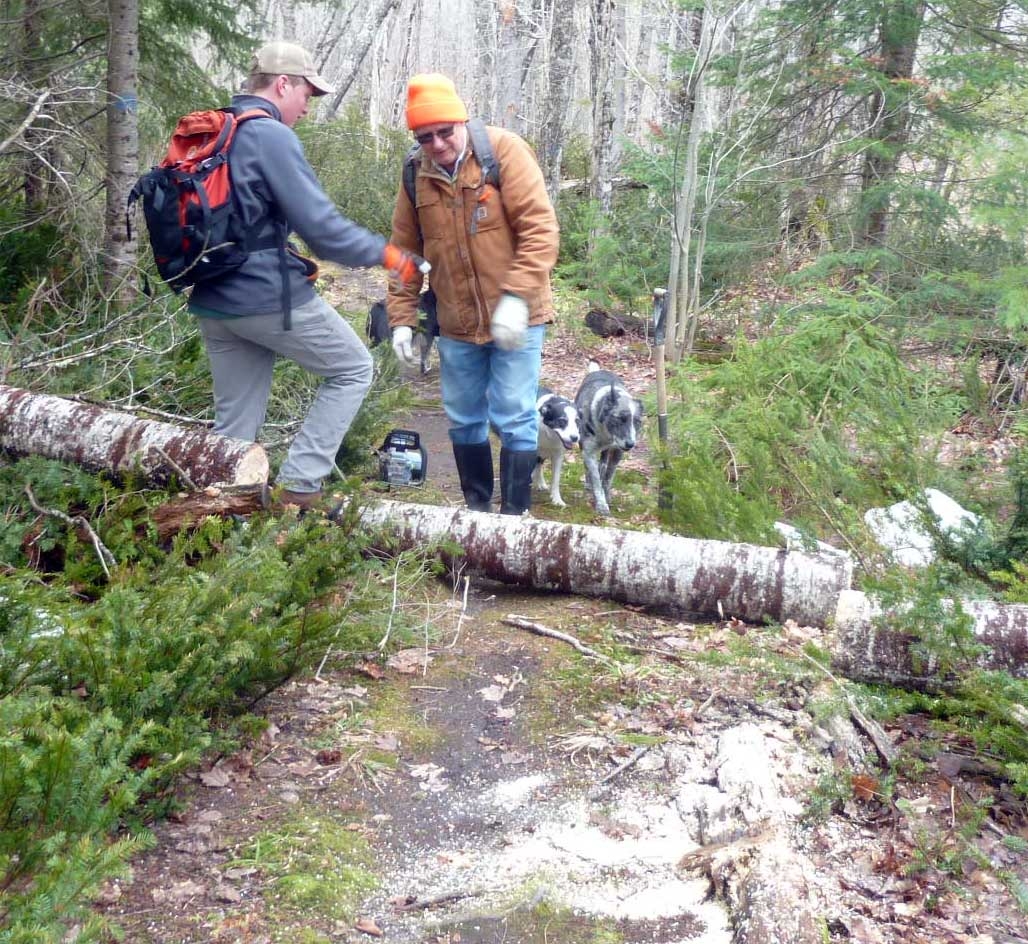
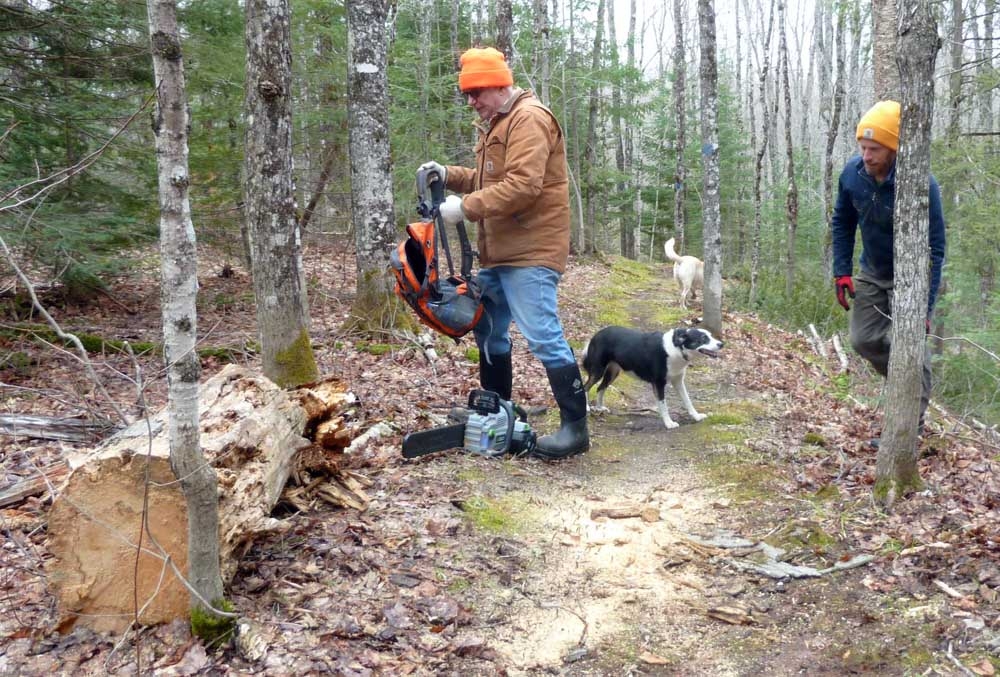
4 of us got to Boundary Road trails yesterday and cleared many dead-falls and leaners off the single track portion of the system. Was the most spring clearing that needed to be done here in the 10+ years we've been working here. Later we will return to blow off the sticks and blaze it. One fellow had a Ego saw there.
Last edited:
OP
ArlyA
Super Star Member
- Joined
- Mar 18, 2016
- Messages
- 14,490
- Tractor
- Outlander1000 6x6, Ego lawn mower and shopping for tractor
Was on the trails again yesterday and got the twigs blown off. Also blow culverts out. With just two of us working, hard to get photos. Will be out again on Saturday to blaze.


John_Mc
Elite Member
- Joined
- Aug 11, 2001
- Messages
- 4,812
- Location
- Monkton, Vermont
- Tractor
- NH TC33D Modified with belly pan, limb risers & FOPS. Honda Pioneer 520 & antique Coot UTV
@ArlyA do you just blaze trails with paint, or do you attach some kind of marker to some of the trees to flag the trail?
I help maintain trails in our Town Forest, at the privately-owned Little Hogback Community Forest, as well as on my own and neighbor's properties. The obvious trails are not really an issue (what were old logging roads and are still maintained in a manner to allow access via tractor or ATV for emergency or trail maintenance purposes. It would be hard for someone to lose the trail on those. However, we also have a few footpaths that are not as obvious. We've also discussed perhaps color-coding the trail markings, but haven't really made any decisions on that topic yet.
I help maintain trails in our Town Forest, at the privately-owned Little Hogback Community Forest, as well as on my own and neighbor's properties. The obvious trails are not really an issue (what were old logging roads and are still maintained in a manner to allow access via tractor or ATV for emergency or trail maintenance purposes. It would be hard for someone to lose the trail on those. However, we also have a few footpaths that are not as obvious. We've also discussed perhaps color-coding the trail markings, but haven't really made any decisions on that topic yet.

airbiscuit
Super Member
- Joined
- Aug 28, 2004
- Messages
- 7,919
- Location
- NW Wisconsin
- Tractor
- New Holland T2310 (40hp), Kubota L3010 GST, New Holland TC21DA *** Previously - Farmall H, 1941 John Deere B, Shibaura SD1500, John Deere 850, Bobcat 642, New Holland 1925
@ArlyA do you just blaze trails with paint, or do you attach some kind of marker to some of the trees to flag the trail?
I help maintain trails in our Town Forest, at the privately-owned Little Hogback Community Forest, as well as on my own and neighbor's properties. The obvious trails are not really an issue (what were old logging roads and are still maintained in a manner to allow access via tractor or ATV for emergency or trail maintenance purposes. It would be hard for someone to lose the trail on those. However, we also have a few footpaths that are not as obvious. We've also discussed perhaps color-coding the trail markings, but haven't really made any decisions on that topic yet.
John_Mc
Elite Member
- Joined
- Aug 11, 2001
- Messages
- 4,812
- Location
- Monkton, Vermont
- Tractor
- NH TC33D Modified with belly pan, limb risers & FOPS. Honda Pioneer 520 & antique Coot UTV
You mean someone actually watched that besides me?
airbiscuit
Super Member
- Joined
- Aug 28, 2004
- Messages
- 7,919
- Location
- NW Wisconsin
- Tractor
- New Holland T2310 (40hp), Kubota L3010 GST, New Holland TC21DA *** Previously - Farmall H, 1941 John Deere B, Shibaura SD1500, John Deere 850, Bobcat 642, New Holland 1925
These trail markers are kind of cool and not overpowering

airbiscuit
Super Member
- Joined
- Aug 28, 2004
- Messages
- 7,919
- Location
- NW Wisconsin
- Tractor
- New Holland T2310 (40hp), Kubota L3010 GST, New Holland TC21DA *** Previously - Farmall H, 1941 John Deere B, Shibaura SD1500, John Deere 850, Bobcat 642, New Holland 1925
BTW, how many trails do you have at Little Hogback Community Forest? Do you map them? (I use Huntstand to map my trails)
airbiscuit
Super Member
- Joined
- Aug 28, 2004
- Messages
- 7,919
- Location
- NW Wisconsin
- Tractor
- New Holland T2310 (40hp), Kubota L3010 GST, New Holland TC21DA *** Previously - Farmall H, 1941 John Deere B, Shibaura SD1500, John Deere 850, Bobcat 642, New Holland 1925
Can you talk about your experience about a forest preserve owned by shareholders? It sounds like it could be a cool concept, or an HOA nightmare?
Applied Forest Ecosystem Conservation
Applied Forest Ecosystem Conservation
OP
ArlyA
Super Star Member
- Joined
- Mar 18, 2016
- Messages
- 14,490
- Tractor
- Outlander1000 6x6, Ego lawn mower and shopping for tractor
Yes, we only paint blaze. It keeps the land owner happy and future sawyers who sadly locate that long lost screw. I can give you whole history of steel nails being used, then aluminum nails, then paint if anyone cares.@ArlyA do you just blaze trails with paint, or do you attach some kind of marker to some of the trees to flag the trail?
I help maintain trails in our Town Forest, at the privately-owned Little Hogback Community Forest, as well as on my own and neighbor's properties. The obvious trails are not really an issue (what were old logging roads and are still maintained in a manner to allow access via tractor or ATV for emergency or trail maintenance purposes. It would be hard for someone to lose the trail on those. However, we also have a few footpaths that are not as obvious. We've also discussed perhaps color-coding the trail markings, but haven't really made any decisions on that topic yet.
We started out using aluminum nails years ago putting up plastic blazes and got switched to paint. Lots of trail maintainers complained and refused to switch but we found it works fine, just got to repaint a few each year. Some folks can't change.
John_Mc
Elite Member
- Joined
- Aug 11, 2001
- Messages
- 4,812
- Location
- Monkton, Vermont
- Tractor
- NH TC33D Modified with belly pan, limb risers & FOPS. Honda Pioneer 520 & antique Coot UTV
I started mapping my own land and LHCF years ago using an old handheld aviation GPS and importing the tracks into Google Earth. (this was before every smart phone had a built in GPS and mapping apps were common. These days, I use my phone & Gaia GPS app. While the app will do it all, and has a desktop version that syncs to whatever I do on my phone, I still end up exporting the data and bringing it into Google Earth on my computer. I like the extra features available in Google Earth, and just have gotten used to it over the years. (When I tried their phone app, I did not like it. Haven't even looked at it in years.)BTW, how many trails do you have at Little Hogback Community Forest? Do you map them? (I use Huntstand to map my trails)
I have all sorts of layers I can turn on and off in Google Earth: trails, wetlands, various features of the obstacle course we put in (on our own property, not at LHCF), different stands in our forest management plan, areas where I did crop tree release or invasive plant removal under EQIP contracts, etc.
Here is a copy showing the trails at LHCF. One on a satellite photo, and one on a topo map (I imported the trail data into CalTopo, since their topo maps are cleaner than what I could find for free in Google Earth)
John_Mc
Elite Member
- Joined
- Aug 11, 2001
- Messages
- 4,812
- Location
- Monkton, Vermont
- Tractor
- NH TC33D Modified with belly pan, limb risers & FOPS. Honda Pioneer 520 & antique Coot UTV
I started mapping my own property and LHCF years ago using an old handheld aviation GPS and importing the data into Google Earth. This was before the days where everyone had smartphones with GPS built in, and apps that would do the mapping for you. Now, I do most of the data gathering in Gaia GPS. They have a pretty good app, and also have a desktop version that syncs automatically with what is on your phone. I still end up importing the data into Google Earth on my computer. I just find their interface and organizational tools much better than the smart phone apps (I'm not really a fan of Google Earth's smartphone app - though I have not looked at it in years.)BTW, how many trails do you have at Little Hogback Community Forest? Do you map them? (I use Huntstand to map my trails)
I also use the OnX Hunt app from time to time. Of course, after lerning my way around Gaia GPS and OnX, most of the state of Vermont's departments and many land conservation organizations have standardized on the Avenza app. I've tried that a bit, but don't really know my way around it very well.
I keep coming back to Google Earth for non-phone based use. I just like its flexibility and organizational tools better than what is available on phone apps. I also much prefer map-making on my computer to looking at my phone's tiny screen. The data regularly gets passed back & forth between Google Earth and my phone apps. In Google Earth, I have everything organized into folders or "layers" that I can turn on and off. On my own property, I have trails, wetlands, survey pins, forest stands from my forest management plan, areas in which I've done Crop Tree Release and invasive species removal (part of a couple of USDA EQIP grants). I have similar stuff at LHCF, though not as many layers as on my own property. The map is WAY too busy if everything is turned on, so I pick what I want to see, either on the screen or to print out for a hard copy. I have found this to be very helpful when laying out new trails or doing forest management work on the property.
Here are trail maps for LHCF. One is on a satellite photo, and one is a topo map (for the topo map I exported the trail data into CalTopo, since their topo map comes out a lot cleaner than whatever free versions I can find for Google Earth)


John_Mc
Elite Member
- Joined
- Aug 11, 2001
- Messages
- 4,812
- Location
- Monkton, Vermont
- Tractor
- NH TC33D Modified with belly pan, limb risers & FOPS. Honda Pioneer 520 & antique Coot UTV
It's been a great experience. The whole idea was to figure out how to protect/conserve a working forest that did not depend on someone with deep pockets just buying it and donating a conservation easement. It was also a way to get people into forest ownership and management who would not otherwise be involved. I already owned 144 acres of my own, but I thought this was a really interesting experiment in land ownership, and a way of preventing more forest land from being converted into growing the latest crop of McMansions.Can you talk about your experience about a forest preserve owned by shareholders? It sounds like it could be a cool concept, or an HOA nightmare?
Applied Forest Ecosystem Conservation
Happy to talk more about this, but don't want to get this thread too far off topic. Feel free to PM me, or if others are interested, I can start a new thread.
airbiscuit
Super Member
- Joined
- Aug 28, 2004
- Messages
- 7,919
- Location
- NW Wisconsin
- Tractor
- New Holland T2310 (40hp), Kubota L3010 GST, New Holland TC21DA *** Previously - Farmall H, 1941 John Deere B, Shibaura SD1500, John Deere 850, Bobcat 642, New Holland 1925
That is some interesting terrain. I love that concept of preserving larger tracts of forest. If you have a love of making trails, as I do, have ever considered making a cross trail where the elevation change isn't too extreme?

John_Mc
Elite Member
- Joined
- Aug 11, 2001
- Messages
- 4,812
- Location
- Monkton, Vermont
- Tractor
- NH TC33D Modified with belly pan, limb risers & FOPS. Honda Pioneer 520 & antique Coot UTV
We actually have a trail flagged for construction almost where you drew it. It starts a bit to the south of where you drew it (about near the "r" in Upper on the trail name, and ends where you drew the northeast end. We generally try to keep the regularly used trails at a 7% grade or less, especially if they will see vehicle traffic: pickups or tractors when harvesting firewood, or logging equipment when we do a timber harvest. This lets us use broad-based dips for erosion control, rather than waterbars: easy to get tractors through, and very low-maintenance (The "New Trail" was put in following these guidelines.)That is some interesting terrain. I love that concept of preserving larger tracts of forest. If you have a love of making trails, as I do, have ever considered making a cross trail where the elevation change isn't too extreme?
View attachment 5711583
The Upper Trail was on the property when we bought it. It was an old logging trail, and had some erosion problems, being situated at the bottom of a bit of a hollow or ravine. The problems are not as bad as they could be, because the bedrock is at or close to the surface there.
The dashed line at the north end of the property has mostly been abandoned. It was flagged by another member looking for a way to connect Upper and Middle Trails. He started out OK, but got impatient and dove right down the steep area through a Hemlock stand. Fortunately, it was never made in to a real trail. One of these days, we'll go through and re-flag a new footpath that works it's way down that very steep section very gradually. I doubt it will ever become a tractor-accessible path.
Last edited:
OP
ArlyA
Super Star Member
- Joined
- Mar 18, 2016
- Messages
- 14,490
- Tractor
- Outlander1000 6x6, Ego lawn mower and shopping for tractor
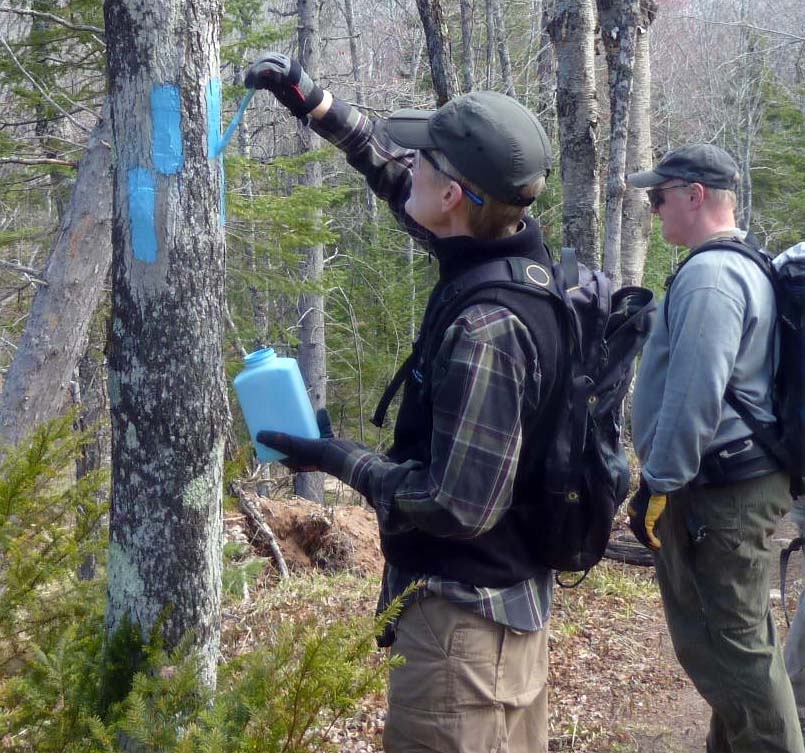
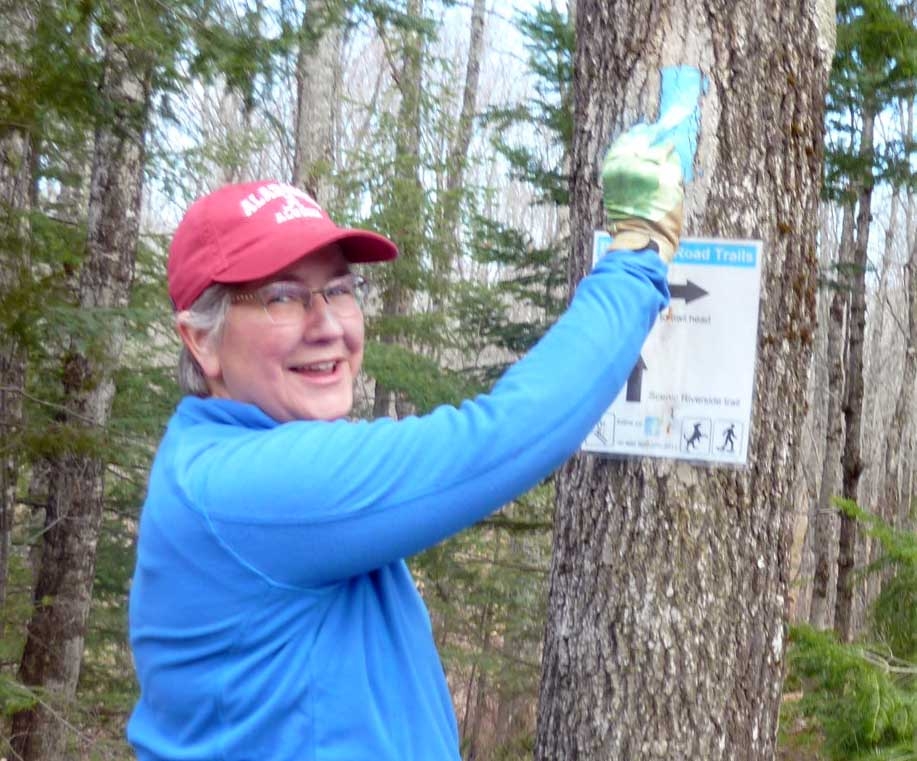
Trail blazing today but also some reblazing. Some fade while others look brand new. Fun day! 5 dogs were there to help..


Here are some similar links:

- Replies
- 0
- Views
- 623


