So what would you have done different with your new shop?

   / So what would you have done different with your new shop? #41  
Things I like in my shop-25x40 US Steel building. Electric-200amp, plenty of breakers, all wiring in conduit. Outlets every 4', 3 walls. each outlet is a double duplex box, each duplex outlet is on a separate circuit. So, down the south wall, the outlets are labeled A/B, A/B every 4', North wall is C/D. All 20amp. All overhead lights are plugged into outlets, 4' tubes, being replaced with LED. Also have a couple of high bay400 watt big lights, don't remember what kind.
Bathroom with hot water, I would not do with out that. 16x9 door with a man door at each end. 16' is big enough for a one car garage, not for 2. I have a 18'x3'x6'deep grease pit. I like it, but it is too deep. I might put a lift in my next shop(if there is one).
Concrete floors, with drains. heat in the floors if you never, ever let it freeze. Insulate and vapor barrier under the concrete. Big concrete pad out front. Parking and workspot when you can't get tin the shop.
Things I would change. BIGGER. have storage space outside for wood/metal/parts/equipment. I will probably go with more conventional construction next time so I can use the walls and be able to insulate.
 
   / So what would you have done different with your new shop? #42  
I am trying to figure out the room for the compressor and dust collector. Since the beginning I had planned on it being outside, in an attached shed. Just had a friend say that with mice and rain, the dust collectors do better inside a closet inside a building, not outside.

I would build my closets - one for each - outside the building proper. That way, 1. they don't take any room away from the shop, 2. you can install sound insulation between the shop wall and the closet and noise will be held to a minimum, 3. the little bit of dust leakage from the system will be held outside, 4. you can make them vermin tight - at least as tight as your shop-proper is anyway.
 
   / So what would you have done different with your new shop? #43  
Things . I have a 18'x3'x6'deep grease pit. I like it, but it is too deep.

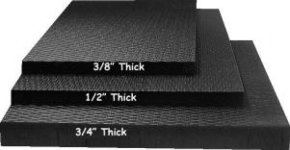
Have you considered putting a duckboard floor in the bottom of the pit to bring it up to a better height for working under a vehicle? Wouldn't need much, depending on your height and the duck board sections could be pulled up to let a taller person work if necessary - or to find the tool/part that inevitably drops in the wrong spot. The duckboards could also be covered with those stall mats they sell at the farm stores so small items won't drop through.
1 forecast.jpg
 
   / So what would you have done different with your new shop? #44  
Would you buy a roll up door or a "Panelized Door" I am looking at Panelized because it is inulated but also it can have windows. Downside is when up it is going to block my celing lights.

Roll up doors leave you with more ceiling space for lights, or access to the attic. Garage doors have a HUGE jump in price when you go taller then 7 feet. Both can have automatic openers operated by a remote control or a button. Garage style panel doors can be very attractive looking, but that's another big jump in cost. Neither seal very well or insulate very well, but you will probably have better results with a Garage style panel door.

When I add on to my house I will be building a new three car garage and I will use Garage panel type doors there. When I build my barn, I will be using roll up doors. My main door will be big enough to get my backhoe into there, so 14 feet height is needed, which is why I will go with 16 foot walls. I will have a workshop on one side as in the lean to wing and I wil be putting a roll up door there. I will also put roll up doors on the other end of the building so I can enter from either side, or drive right through it.

I want the main part of the building to be wide enough to drive down the middle of it, from end to end and have enough room on either side for parking tractors and implements. This is my goal.
 
   / So what would you have done different with your new shop? #45  
built a closet for my 60 gallon air compressor and piped air within the walls to provide for various connection points throughout the building
 
   / So what would you have done different with your new shop? #46  
Roll up doors leave you with more ceiling space for lights, or access to the attic. Garage doors have a HUGE jump in price when you go taller then 7 feet. Both can have automatic openers operated by a remote control or a button. Garage style panel doors can be very attractive looking, but that's another big jump in cost. Neither seal very well or insulate very well, but you will probably have better results with a Garage style panel door.

When I add on to my house I will be building a new three car garage and I will use Garage panel type doors there. When I build my barn, I will be using roll up doors. My main door will be big enough to get my backhoe into there, so 14 feet height is needed, which is why I will go with 16 foot walls. I will have a workshop on one side as in the lean to wing and I wil be putting a roll up door there. I will also put roll up doors on the other end of the building so I can enter from either side, or drive right through it.

I want the main part of the building to be wide enough to drive down the middle of it, from end to end and have enough room on either side for parking tractors and implements. This is my goal.

Good points there on door selection. Having that ceiling space where a panel door would otherwise have been can be valuable for sure. I have panel doors in my shop (I bought the property with the shop on it) and I have indeed found them limiting - not to the point where I've considered replacing them, mind you, but I would do roll-ups if I was building it again.
 
   / So what would you have done different with your new shop? #47  
built a closet for my 60 gallon air compressor and piped air within the walls to provide for various connection points throughout the building

Like electrical outlets, one will love having many compressed air outlets scattered around the building - inside and outside. Just remember, that also means more places to leak air.
 
   / So what would you have done different with your new shop? #48  
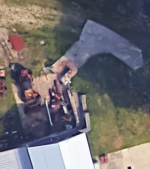
Oil pits aren't allowed here, but a friend's Dad has a shop building on a side hill, one leg of the driveway loops around as a ramp. When it gets to about 2' high, there is a level concrete section that runs perpendicular and meets the shop apron, with a gap in the middle.
Oil Ramps 2.PNG
Sorry the pic is a little weird, it's from google maps "3d".
 

Attachments

  • Oil Ramps.PNG
    Oil Ramps.PNG
    264 KB · Views: 182
   / So what would you have done different with your new shop? #49  
Oil pits aren't allowed here, but a friend's Dad has a shop building on a side hill, one leg of the driveway loops around as a ramp. When it gets to about 2' high, there is a level concrete section that runs perpendicular and meets the shop apron, with a gap in the middle.
View attachment 545707
Sorry the pic is a little weird, it's from google maps "3d".

Yes, they are a bit dangerous. I had a ramp like you show, built out over a driveway that was three or so feet lower than the one uphill that I could back out on and have a "pit" to service stuff. I don't have any slopes on my current place, however, so that isn't an option. It does work really well if you have the topography for it. Then there is this option for a "lift"
 
   / So what would you have done different with your new shop? #50  
I built my shop in June 2005 with metal frame, sides and roof 24x42 ft with 12 ft walls, two 10x10 ft rollup doors, one man door and one window. The slab was 6" thick, 4000 psi concrete with #4 rebar on 24" grid.

DSCF0078.JPG

Today I would choose a red iron metal building 40x40 ft with 15 ft walls, two man doors, several windows and skylights. There would be 20 ft wide x 14 ft tall doors centered on opposite walls (a pull-through design). The doors would be either two-piece sliding or hinged.
 
   / So what would you have done different with your new shop? #51  
I am also about to move into a new shop space, so the ideas here are helpful. I am primarily a woodworker, but I do a bit of metal work also... I have some experience with dust collection in my current shop, a 400sq/ft two car garage. Dust tubes will clog on you, so I would be fearful of putting them in the slab. I will put mine visible on the interior walls, so I can take them down to clear a clog if needed. Electrical will also be bolted to the walls in conduit, rather than inside a finished wall. There will be an outlet for every machine on a separate circuit, plus 110 receptacles for misc. tools and shop-vac, etc.

I don't think metalwork and woodwork mix well in the same shop. Sparks and a pile of sawdust can spell disaster, so I recommend separating your space with walls. I plan to move all my metalworking activities to a barn made from two shipping containers with an open area in the middle. Wood storage will be in one container and metal working in the open area or other container.

I can't really comment on the need for drains in the floor of a metal working shop, but for my purposes, I need a smooth level floor so my big heavy machines can be rolled around and remain stable and level. A level floor will also help you if you are adding any inflow/outflow extensions for any machines. I would also be pretty concerned about clogging up a drain with all of my dust...

I am going with a set of swinging double doors that will allow me to get my tractor in and out if I need to move something with my forks. I do not like a garage style door because it covers up my lights, and lighting is super important. I will put LED recessed can lighting in the new shop. I also agree with the suggestion of transom style windows that maximize wall space and still provide ventilation and light.

The dust collector and the air compressor are going just outside in a little shed. I will need to think about separating them to keep dust off the compressor, as has been suggested. I will be able to turn them on and off from the shop with either a remote control or a switch dangling from the ceiling. I am not sure how many air connections I will have for compressed air.
 
   / So what would you have done different with your new shop? #52  
I am also about to move into a new shop space, so the ideas here are helpful. I am primarily a woodworker, but I do a bit of metal work also... I have some experience with dust collection in my current shop, a 400sq/ft two car garage. Dust tubes will clog on you, so I would be fearful of putting them in the slab. I will put mine visible on the interior walls, so I can take them down to clear a clog if needed. Electrical will also be bolted to the walls in conduit, rather than inside a finished wall. There will be an outlet for every machine on a separate circuit, plus 110 receptacles for misc. tools and shop-vac, etc.

I don't think metalwork and woodwork mix well in the same shop. Sparks and a pile of sawdust can spell disaster, so I recommend separating your space with walls. I plan to move all my metalworking activities to a barn made from two shipping containers with an open area in the middle. Wood storage will be in one container and metal working in the open area or other container.

I can't really comment on the need for drains in the floor of a metal working shop, but for my purposes, I need a smooth level floor so my big heavy machines can be rolled around and remain stable and level. A level floor will also help you if you are adding any inflow/outflow extensions for any machines. I would also be pretty concerned about clogging up a drain with all of my dust...

I am going with a set of swinging double doors that will allow me to get my tractor in and out if I need to move something with my forks. I do not like a garage style door because it covers up my lights, and lighting is super important. I will put LED recessed can lighting in the new shop. I also agree with the suggestion of transom style windows that maximize wall space and still provide ventilation and light.

The dust collector and the air compressor are going just outside in a little shed. I will need to think about separating them to keep dust off the compressor, as has been suggested. I will be able to turn them on and off from the shop with either a remote control or a switch dangling from the ceiling. I am not sure how many air connections I will have for compressed air.

Sounds like you are on top of it. Great suggestions in this thread.
 
   / So what would you have done different with your new shop? #53  
If you're going to put PEX tubing in the floor for future radiant floor heating, and are worried about freezing, you can put in a propylene glycol antifreez solution and never have to worry about that.

I've seen some systems that use a water heater as the heat source, and domestic hot water. If you wanted to do both in a freezing situation, like turning off the heat in your shop, or maybe an ice melter system in front of the garage or a sidewalk, you'd have to put in a heat exchanger to isololate the glycol loop from the domestic/indoor loop. But it is very doable....
https://www.radiantec.com/installation-manuals/installing-the-indirect-system/


We used that in the in-floor radiant heating system in airplane hangars. It would stay turned off for months at a time. If we needed heat, we'd fire it up, and it would take about a day to get the concrete warm. But man, that was nice. If your car needed work, and the boss was in a generous mood, you could pull your snow-covered car into the hangar at the start of your shift, and 8 hours later, the snow was gone and the puddle was evaporated. Then you could work on it in your shirtsleeves laying on the warm floor when it was 0F outside.
 
   / So what would you have done different with your new shop? #54  
If you're going to put PEX tubing in the floor for future radiant floor heating, and are worried about freezing, you can put in a propylene glycol antifreez solution and never have to worry about that.

I've seen some systems that use a water heater as the heat source, and domestic hot water. If you wanted to do both in a freezing situation, like turning off the heat in your shop, or maybe an ice melter system in front of the garage or a sidewalk, you'd have to put in a heat exchanger to isololate the glycol loop from the domestic/indoor loop. But it is very doable....
https://www.radiantec.com/installation-manuals/installing-the-indirect-system/


We used that in the in-floor radiant heating system in airplane hangars. It would stay turned off for months at a time. If we needed heat, we'd fire it up, and it would take about a day to get the concrete warm. But man, that was nice. If your car needed work, and the boss was in a generous mood, you could pull your snow-covered car into the hangar at the start of your shift, and 8 hours later, the snow was gone and the puddle was evaporated. Then you could work on it in your shirtsleeves laying on the warm floor when it was 0F outside.

You might also want to consider one of the diesel/kerosene on demand water heaters. They are very efficient and you do what, buy diesel anyway. The new ones are not pressure demand but have a thermal switch to sense internal water temperature, when the temperature drops inside the heater, it comes on for a moment to heat the water again so it will never freeze. You will also need a circulating pump and a storage tank from which to store warmed water so that you are not constantly running the heater. I have a similar system in my home so I have virtually instant hot water at all of my appliances, some are 45 feet from the water heater.
 
   / So what would you have done different with your new shop? #55  
Here is a playlist for a girl building her new woodworking/metal fab shop. She's not yet finished, just insulated.
Building a Shop - YouTube
 
   / So what would you have done different with your new shop? #56  
It sounds like everyone says it but definitely build it bigger than you think you need or at a very minimum build it in a manner that allows for easy expansion. Metal buildings are easy to make longer. I built my shop 8 years ago and thought it was slightly overkill at the time and I have added on to it twice already and am thinking about adding on again.

Definitely put in a basic bathroom with a toilet and sink.

I am a huge fan of lots of overhead doors. My shop has three 12' wide doors across the front essentially giving me three bays. I see people with shops bigger than mine with only one or two doors. That often means you have to move things around to get things in and out of the shop. I guess it depends what you use your shop for but with lots of doors you can access frequently used things and get them out of your shop without having to move stuff out of the way first.
 
   / So what would you have done different with your new shop? #57  
Build two.

One for equipment parking and storage. No utilities except lighting and a few outlets.

Second for working on stuff, without everything else being in the way. Heated and cooled, etc.

Bruce
 
   / So what would you have done different with your new shop? #58  
Build two.

One for equipment parking and storage. No utilities except lighting and a few outlets.

Second for working on stuff, without everything else being in the way. Heated and cooled, etc.

Bruce

Good idea but they still fill up. I have three. A 50x50 that is my "working" shop that is insulated, a 30x50, and a 30x40 that are just storage. All are full. I find the two smaller shops I use for storage that are not insulated and sealed well or regularly swept out get nasty. MY main shop has spray foam and it stays clean. The other two things get so dusty in there it is terrible. You can take a vehicle out of one and wash it off and six months later you can't even tell what color it is.
 
   / So what would you have done different with your new shop? #59  
Here is a playlist for a girl building her new woodworking/metal fab shop. She's not yet finished, just insulated.
Building a Shop - YouTube

I'm watching this without the sound on and trying to do other things at the same time, so I'm sure I'm missing a lot of why she is doing what she is doing. Overall, it's a very well build building and her video could be used for teaching others how to frame. So far, my biggest issue is how she did the gable eaves. They should never be done that way.

I've never seen a thin strip of house wrap, or whatever they used, installed behind the OSB, and the folded over it before. I'm really not sure what that accomplished?

I would not have relied on house wrap tape for the top of the windows like she did, but overall, it's much much better then 90% of how new houses are done. I really like Zip Tape and use it for everything now. House wrap tape will fail fairly quickly.

And now that I finished watching all of her videos, my biggest question is where did she get so much money to spend on a work shop? That foam alone cost a fortune. Who foams interior walls?
 
   / So what would you have done different with your new shop? #60  
And now that I finished watching all of her videos, my biggest question is where did she get so much money to spend on a work shop? That foam alone cost a fortune. Who foams interior walls?

Here is her bio;
I am an obsessed DIYer and Woodworker. I'm not professional or have any training, so I just pick the project I want to tackle and figure it out step by step.

I picked up my first tool in January of 2013. I couldn't afford to buy the things I wanted around my home, so I decided to try my hand at making them instead. I was hooked after my first project so I just never stopped.

I put out a video as well as a written tutorial on all the projects I do to improve my home and workshop. You can find my website at Wilkerdos.com

Being a pretty girl in a typically male hobby or profession has made her YouTube famous. She actually produces these videos for a living, I'm guessing.

She has 602,000 subscribers, not sure what her monthly take from YouTube is but... I know she gets free tools, perhaps she gets paid as well by manufacturers?

Here is a professional woodworker with only 200,000 subscribers and he's building an incredible shop as well.

Paul Sellers
- YouTube


Most of your questions were addressed in the videos, she foamed the interior wall to keep the woodworking and metal fab areas separate.

EDIT; forgot about Frank Howarth. This guy does amazing work and puts out better content than you'll ever see on TV. frank howarth
- YouTube


Yeah, I don't watch TV, I watch YouTube :laughing:
 

Tractor & Equipment Auctions

2006 Dodge Ram Pickup (A56858)
2006 Dodge Ram...
2013 Audi A4 Sedan (A55853)
2013 Audi A4 Sedan...
MANIFOLD TRAILER (A58214)
MANIFOLD TRAILER...
2021 CATERPILLAR 299D3 XE SKID STEER (A60429)
2021 CATERPILLAR...
208789 (A60430)
208789 (A60430)
Massey Ferguson 1745 Hesston series (A53317)
Massey Ferguson...
 
Top