Honda quad question

/ Honda quad question #81  
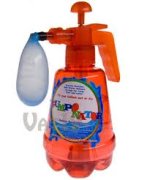
I bleed my brakes from the caliper up. I use a pressurized pump container that is designed to blow up water balloons that I modified. Turkey baster out from the resevoir.

I do the same thing. Sometimes it's the only way to get brakes bled.
 
/ Honda quad question #82  
So I started trying to bleed the bubbles out, and just when it ought to be coming around, I notice inside the master cylinder when I pull the brake handle I see something squirting up from inside the master cylinder. Not air, I am sure pressure is bleeding past the rubber cup inside the master cylinder.

I have done many many of these master cyls.

What you see is normal. Don't take apart the M/C if it was working before. The M/C has 2 chambers, one
to put pressure on the fluid, and one to suck in more fluid from the reservoir. If you put the rubber
deflector back in the M/C while hand-bleeding, you will not get the geyser of fluid shooting up.

If you DO take apart the M/C, the hard part is getting the internal snap ring out. A rebuild kit will usually
have a new rubber boot, 2 seals, one piston, a spring, and a new internal snap ring. Aftermarket makers
are plenty. About $20.

In contrast, try bleeding the brakes on a shifter go-kart.....no reservoirs at all.
 
/ Honda quad question #83  
What you see is normal. Don't take apart the M/C if it was working before. The M/C has 2 chambers, one
to put pressure on the fluid, and one to suck in more fluid from the reservoir. If you put the rubber
deflector back in the M/C while hand-bleeding, you will not get the geyser of fluid shooting up.
Exactly and the faster you pull the lever the higher it will squirt. If you pump it slowly it shouldn't be bad. Otherwise just sit the cover on the top and watch the level. Takes time but not a biggie.
 
/ Honda quad question #84  
Exactly and the faster you pull the lever the higher it will squirt. If you pump it slowly it shouldn't be bad. Otherwise just sit the cover on the top and watch the level. Takes time but not a biggie.

X3 - as stated it is totally normal. Those little buggers seem like they can hold 10x more air then brake fluid.....
 
/ Honda quad question
  • Thread Starter
#85  
OK I understand you guys are saying this little squirt is "normal"? Seems like pressure is bleeding backwards, and there is a slight stepped or crunchy feeling at the end of the lever stroke.

Not sure if I mentioned in, but I went through a quart of brake fluid, bleeding and trying to get the air out, or even a SLIGHT bit of lever pressure. Starting to wish I had never touched it now. At least the old "muddy" fluid stopped the bike. The squirt does not go high enough to exit the master cylinder, so I see no reason to put the top back on, it's just an indicator, to me, that pressure is getting past the rubber seals inside.

I would LOVE to have some sort of power bleed system. The ones I remember from auto repair days, sat on top of the master cylinder, and pumped it in from there.

I am not sure how you made the reverse bleed device. If you pump fluid in from the bottom, what happens when it overflows?
 
/ Honda quad question #87  
Here was my starting point.

images.jpg
 
/ Honda quad question
  • Thread Starter
#88  
OK I am starting to get ideas. Thanks. Hopefully it's just air in my system. Will report back.
 
/ Honda quad question #89  
I use a mityvac. I think Harbor freight has a clone of it. You just put it on the vent screw on the caliper and squeeze it. It'll draw the fluid from the master down to the caliper. It has a reservoir to collect the brake fluid so you don't make a mess and you don't loose it. Works well.
 
/ Honda quad question #90  
I had the ATC250SX for a few years, and it ran great. Never changed the jetting, but I never tried starting it below
40F.Vermont is COLD.

Anyway, did you just change the low speed, or also the mid and main? The main needle on the CV carb may have
had multi position settings, if I recall. This is essentially the same carb you see on most of those 80s thumpers.

Virtually all of these carbureted ATVs can benefit from a richer low-speed jet, esp if made after 1997.

Good fix, AL.

Both my neighbor and I bought one in the fall of 85. The serial numbers were less than 20 apart but when it came to the motor it was night and day. When it came to cold starting his would flood unless you turned off the choke right after starting. Mine would need the choke no matter how warm it was outside for a good 5 minutes. I can't remember what size the slow jet was but I did go up one and then readjusted the mixture screw. I didn't have to change the clip as mid revs the engine seamed to be fine. I had to reduce the main jet from a 130 down to a 120, it's easy to identify using the plug if it's rich or lean. There's an order to what to adjust first. Without a kit with lots of jets it's a slow process. I personally think my problem was more the main jet not allowing the spark plug to get to the correct temp leaving it dark and sooty. My original attempt to fix it was by changing the heat range of the plug, it helped but not as much as it really needed. Rejetting the carb was a lot more work but a correctly jetted Honda will run forever.
 
/ Honda quad question
  • Thread Starter
#91  
Tomorrow I will give it one more try, bleeding that is, and I will rig up some sort of gravity fed reverse flow. The logic, to me, is sound. The bubbles are tiny any since bubbles migrate upwards naturally, I figure it's worth a try.

I will update. I was going to pull apart the master cylinder but have since learned they can be a bear to take apart, so I am hesitant, and hopeful it's a bleed issue. I will see.

I will post results.
 
/ Honda quad question #92  
I can't remember what size the slow jet was but I did go up one and then readjusted
the mixture screw. I didn't have to change the clip as mid revs the engine seamed to be fine. I had to reduce
the main jet from a 130 down to a 120, it's easy to identify using the plug if it's rich or lean. There's an order to
what to adjust first. Without a kit with lots of jets it's a slow process.

You are right, it is a lot of work. BTDT. Most folks don't have the patience, even if they know how. There
is also the "redneck repair" where you carefully increase the aperture of the jet using the tiny round files
normally used for torch nozzle cleaning. You can only make them bigger, however. My 96 TRX300 starts
and runs great, 4y after the big rebuild.

RE Honda brakes, when all else fails, replacement wheel and master cyls are quite reasonably priced. I have
also successfully sustituted new Chinese hand brake/master cyls, as well as Chinese rear m/cs.

One bleeding problem I have found on older neglected quads is that crystallized or dirty old fluid can cause
restrictions in the brake lines. Fluid may pass thru them, but air bubbles hang up. Sometimes you need
to clean out or replace the hoses.

I have successfully "gravity-bled" some brakes, where you do not even open the bleeder at the
wheel cyl at all. You let the air bubbles naturally rise to the m/c. This does not always work, AND
there can not be any restrictions. I do not use any special tools or pumps.
 
/ Honda quad question #93  
If the caliper piston is out one ting you can do is leave the bleeder open for a little while (just make sure the reservoir doesn't run low). Gravity will make the brake fluid run from the mater down to the slave. As it does it will help get the major pockets of air out of the line. Then tighten the bleeder and then push the piston in as far as it will go. This will push most of the fluid back up to the master. Any air trapped in the master will get pushed out. From there you should be able to bleed it. It can be messy though. With a quad you would need to do it to both calipers and when you push one piston in you'll need to put a c-clamp or something else to keep it from coming out when you push the other in (assuming they use the same master and brake hose).
 
/ Honda quad question
  • Thread Starter
#94  
If the caliper piston is out one ting you can do is leave the bleeder open for a little while (just make sure the reservoir doesn't run low). Gravity will make the brake fluid run from the mater down to the slave. As it does it will help get the major pockets of air out of the line. Then tighten the bleeder and then push the piston in as far as it will go. This will push most of the fluid back up to the master. Any air trapped in the master will get pushed out. From there you should be able to bleed it. It can be messy though. With a quad you would need to do it to both calipers and when you push one piston in you'll need to put a c-clamp or something else to keep it from coming out when you push the other in (assuming they use the same master and brake hose).

No calipers, it has drum brakes.

I rigged up 2 different systems today, with limited success. One, I got off youtube, where I placed an open container of brake fluid well above the MC and connected to bleeder fitting. Opened the fitting, and slightly jiggled the brake lever to release tiny air bubbles. This worked very marginally.
The second was I used the same setup, but with a sealed plastic water bottle containing brake fluid, and with the line still connected to the bleeder screw.
I squeezed the bottle to provide back pressure up to the MC. This worked much better and I saw a lot more air come out than I suspected was in there.

I actually now have about 30-35% of brake pressure in the front, so obviously, there is still air in there. I like the reverse bleed methods because it sends air bubbles the direction they naturally want to go. I am just not sure they will ALL get past the rubber cups inside the MC, to the reservoir.

At least I am making SOME progress. What a PITA this has been. I rebuilt the entire brake system on an old Heald Hauler, that I restored, last year, and I thought that was tough to bleed. It was simple compared to this.
 
/ Honda quad question
  • Thread Starter
#95  
I have looked at the vacuum types, and the only problem I have with those, is the possibility of emptying the reservoir like I did before and caused all this crap to happen in the first place. Thus I am doing the reverse flow methods. I would like to find a method to cause a bit more pressure than I can make by squeezing the water bottle. That was very productive this morning, but there is still a bit more.
 
/ Honda quad question #96  
You can also try cracking the line fittings loose at each junction while applying brake pressure. Sometimes bubbles of air tend to gather around restrictions in the lines.
 
/ Honda quad question
  • Thread Starter
#97  
I thought of that but I hate the mess brake fluid makes on stuff.
 
/ Honda quad question #98  
The problem I have had with vacuum bleeding (on cars anyway) is that when you crack open the bleeders after attaching the suction line, air gets sucked in through the threads of the bleeder. I spent a lot of time pumping the first time I tried this before I figured out what was going on... I just couldn't stop getting bubbles! :laughing:
 
/ Honda quad question #99  
The problem I have had with vacuum bleeding (on cars anyway) is that when you
crack open the bleeders after attaching the suction line, air gets sucked in through the threads of the bleeder.

That is why I do not do it either.

When a brake system is neglected, but still working, and you introduce air into the system accidently, I have
found that difficult bleeding is usually due to crud in the system making tiny bubbles unable to move.
The crud is in the lines (as mentioned above), the m/c, and/or the wheel cylinders. Could be all three. There
is no avoiding complete disassembly when this happens.

I just drained/replaced the fluid in my 88 Samurai dumptruck, and 3 of the 4 bleeder nipples would not pass
fluid. So I removed them entirely, and let the wheel cyls drain, while adding fluid to the reservoir. You can
get away with this as long as the system is under positive pressure, slight tho it was. The small orifice in the
wheel cyls and the positive pressure keeps air from getting in. The nipples were corroded badly.
 
/ Honda quad question #100  
I actually now have about 30-35% of brake pressure in the front, so obviously, there is still air in there. I like the reverse bleed methods because it sends air bubbles the direction they naturally want to go. I am just not sure they will ALL get past the rubber cups inside the MC, to the reservoir.

At least I am making SOME progress. What a PITA this has been. I rebuilt the entire brake system on an old Heald Hauler, that I restored, last year, and I thought that was tough to bleed. It was simple compared to this.

You got more now at least. The small reservoir does make things tougher. Curious, can you pump the brake up by pulling the lever a few times? When I got my 4 wheeler it was beat and the lines were completely empty for years. I do recall fighting to get the air out but was eventually successful with pumping it up and cracking the bleeder while under pressure. The air should go out first. This did take patience and just opening the bleeder a tiny bit so air would be pushed out and fluid would just barely dribble. Then I would close the bleeder and pump it up again. It's been solid for years now.

Sorry if I'm telling you something you already tried. One more thing, make sure you have the shoes adjusted properly. I think you mentioned it working before getting air in so just another thought.
 

Marketplace Items

2010 Deere 318D (A60462)
2010 Deere 318D...
2012 International WorkStar 7300 AWD Altec DC47TR Insulated Digger Derrick Truck (A60460)
2012 International...
2019 Freightliner M2 106 AWD Altec DM47BTR Insulated Digger Derrick Truck (A60460)
2019 Freightliner...
2014 Ford Explorer AWD SUV (A61569)
2014 Ford Explorer...
1998 POLAR TANK (A60736)
1998 POLAR TANK...
Colombo Twin Master (A60462)
Colombo Twin...
 
Top