
Yes. My Yanmar 5' tiller. You don't have to 'burn' it off. (I'm assuming it's plastic twine that you have). Just give it some heat and it will soften and melt so that you will get open clumps of the stuff that fall right off. Try it out on a bunch of balled up twine & see how little heat it takes. BTW: I had help, drive 30', stop raise the tiller, helper cleans it off, keep going. I didn't have to go very deep, just enough to accumulate the stuff. Weeds and grape vines came off, too.
You are using an out of date browser. It may not display this or other websites correctly.
You should upgrade or use an alternative browser.
You should upgrade or use an alternative browser.
Removing poly twine from fields
- Thread starter Bloemie
- Start date
- Views: 15080
-
- Tags
- bailer twine plough
More options
Who Replied?
/ Removing poly twine from fields
#21

bigtiller
Super Member
- Joined
- Feb 1, 2006
- Messages
- 7,526
- Location
- central Iowa
- Tractor
- John Deere 2720 John Deere 3039R John Deere Z545R
It was a new garden spot. All I could see was freshly mowed 3" tall grass.Was that with a rototiller straight, plow first? What was your process and any lessons learnt? I did a test patch with my woods rotototiller and spent 30 min cutting it loose. Will try the linoleum knife!
Process...was to till it like any other garden.
Lessons learnt...don't till old feedlots unless you have lots of time to kill, a sharp knife and like laying on the ground.
30 minutes...that sounds about right, if your using an old pocket knife. Times will shorten if you clamp a 12" long broom stick to the handle of a linoleum knife to help keep your hands away from the tines.

Try these in your utility knife.

Long handle utility knives are available.
Here's one:

Bruce
Long handle utility knives are available.
Here's one:
Equalizer® Urethane Cutting Knife with 3/4
Designed for the extra-long dashes found in today's vehicles Available in 18 or 24 Heavy duty knives have all replaceable parts and a Phillips screw to secure blade tightly Made of high quality aluminum with a steel retaining block for the blade Uses standard utility knife blades...
www.autobodytoolmart.com
Bruce
IndyIan
Veteran Member
How about a disc plow? Maybe will cut it up in short enough lengths not to bother you?
oldnslo
Super Member
I would question disc plow or heavy offset disc effectiveness since suspect twine would catch and wrap vs cut cleanly all the time. No actual experience though.

workinonit
Elite Member
Go rent a verticutter. It will cut the twine and it sounds like the turf probably needs it done anyway.
sixdogs
Super Star Member
- Joined
- Dec 8, 2007
- Messages
- 15,853
- Location
- Ohio
- Tractor
- Kubota M7040, Kubota MX5100, Deere 790 TLB, Farmall Super C
I've turned many farmyards into high-end lawns. Tillers and cultivators work the best assuming you have killed all the grass with glyphosate (Roundup) and have worked the ground. If not, forget it.
First I run my C shank cultivators through the dry ground and this picks up much of the longer pieces. Multiple passes work better. S tine cults are probably too light. The twine is tough and doesn't degrade so long pieces are easy to hook with heavier cultivators.
Then I run a rear rototiller through the dry and worked ground and this picks up most of what's left. Do it a couple times or more.
The tiller doesn't have much in the way of seals for the twine to ruin but I take it off frequently with this tool I made.
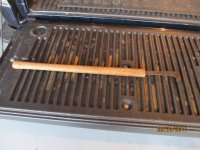
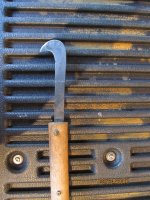
I got the shank from Smoky Mountain Knife Works and put it in a broken splitter handle at a slight backward angle. It gets twine off a tiller in seconds. I did a post on this tool once--- post 579 in this thread.

 www.tractorbynet.com
Here are my cultivators but I use 1 3/4" points and not shovels. The narrow spacing gets all the trash out. This is what the dirt needs to look like for best results. Sod is a waste of time.
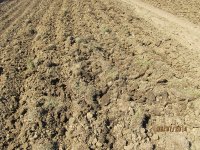

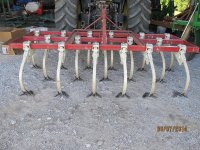
Good luck. This is not difficult. I can get nearly every piece of twine and it's no big deal.
First I run my C shank cultivators through the dry ground and this picks up much of the longer pieces. Multiple passes work better. S tine cults are probably too light. The twine is tough and doesn't degrade so long pieces are easy to hook with heavier cultivators.
Then I run a rear rototiller through the dry and worked ground and this picks up most of what's left. Do it a couple times or more.
The tiller doesn't have much in the way of seals for the twine to ruin but I take it off frequently with this tool I made.
I got the shank from Smoky Mountain Knife Works and put it in a broken splitter handle at a slight backward angle. It gets twine off a tiller in seconds. I did a post on this tool once--- post 579 in this thread.
Show What Tool You Made*
What keep that blade from walking off the tires ?:confused: proper alignment. also if you notice the tires have a crown, centrificle force will force the blade to the highest point of the tire, witch is smack in the middle.
www.tractorbynet.com
Here are my cultivators but I use 1 3/4" points and not shovels. The narrow spacing gets all the trash out. This is what the dirt needs to look like for best results. Sod is a waste of time.
Good luck. This is not difficult. I can get nearly every piece of twine and it's no big deal.
Last edited:

Little Red Tractor
Platinum Member
My first thought would be IF and only IF you can do so safely, burn the field off in sections, then disc it with a good heavy disc harrow. Other than that, you're in for a long and tough haul.
tjandrews
Silver Member
Agree with the "lazy" comment, but not about there being no advantages to poly over sisal.Poly is nice because the mice won't eat it but I cannot think of any other advantage and it becomes a real disadvantage when some 'idiot' (I use that term lightly) is too lazy to pick it up and dispose of it properly.
The main one is consistency. The last sisal I used varied in thickness from nearly rope to string. It was impossible to set my old baler to tie reliably with it, and when it did tie the twine frequently wouldn't hold. I had not wanted to switch to poly because my father had tried it years before, when it first came out, and it wasn't as good as sisal in his baler. But then one year I was forced to try it when a flood at the warehouse that supplied my supplier's twine ruined all the sisal, but not the poly. It worked so well in the baler that I never looked back.
The second advantage is cost. Poly is MUCH less expensive for me to use than the equivalent sisal, and I don't have extra cash laying around to waste.
To avoid the OP's problem, I simply pick up after myself. Yes, some slips by me from time to time, but not so much that I can't just pick it up when I find it.
tjandrews
Silver Member
Around here, at the time of year when it's dry enough to burn, the county imposes a "burn ban" to prevent it.My first thought would be IF and only IF you can do so safely, burn the field off in sections, then disc it with a good heavy disc harrow. Other than that, you're in for a long and tough haul.
Besides, it seems to me that burning the field would melt the poly, turning it into an even more impossible-to-remove mass.

shaggyman
New member
- Joined
- Oct 1, 2020
- Messages
- 6
- Tractor
- Ford 800
Too bad a little foresight wasn't used in the past. I ALWAYS remove the twine or netting before feeding.
Plastic twine is not good for cow innards.
Plastic twine is not good for cow innards.

jonathansfather
Member
- Joined
- Jul 11, 2013
- Messages
- 25
- Location
- Liberty, WV
- Tractor
- 1968 Farmall 140, 1948 Ford 8N, 1974 MF150, Case 31 Hoe
I pasture a couple of horses on a small-acreage farm in west-central WV. Occasionally will find some orange poly bale twine. First thing, I cut it so as to prevent the horses getting a hoof caught in it. If the twine is abundant, I've simply marked that spot to put out a bale (with twine removed) and a bale feeder right over that spot. The leftover hay will decompose and create a nice, thick (3-5") cover over that twine mess and you can seed with pasture grass and clover. Each year, then, the twine will become buried deeper. Hope this helps. good luck,I bought an old dairy farm and the previous owner used poly baler twine and left in in the fields. This stuff is now so embedded in the sod, that even dragging a box blade through it can stop my 45hp tractor. When I do pull it out, it usually because some parts snapped and chunks remain. Rotary tiller just gets jammed up and I cut tons from the rotary mower.
I am at the point of thinking I need to till and replant but wondered if anyone had tried renmoving this stuff. If so, moldboard or disc or both?
Last edited:
tjandrews
Silver Member
I did too, back when we still had cows, even when we used sisal. Only thing that makes sense.Too bad a little foresight wasn't used in the past. I ALWAYS remove the twine or netting before feeding.
Plastic twine is not good for cow innards.
But we sold all the cows a few years back. Now that we are in our 70's, they're just too much work for what we got out of them. We sell our hay to local horse/cow/goat/sheep owners who come to the barn, and take it away. Eliminates the hassle of what to do with all that used twine, but also eliminates the advantage of having used twine available for other things so we don't waste the unused stuff.
Bison
Platinum Member
It is due to lazy uncaring a-hole farmers who cant be bothered to remove twine from the bales when feeding.I bought an old dairy farm and the previous owner used poly baler twine and left in in the fields. This stuff is now so embedded in the sod, that even dragging a box blade through it can stop my 45hp tractor. When I do pull it out, it usually because some parts snapped and chunks remain. Rotary tiller just gets jammed up and I cut tons from the rotary mower.
I am at the point of thinking I need to till and replant but wondered if anyone had tried renmoving this stuff. If so, moldboard or disc or both?
I bought a 1800 acre ranch , twine troughout the place, its everywhere but the worst was in the old corrals, manure 5' deep and more twine than one could throw a stick at. After 3 loads the beaters were covered and had to be cleaned, it took hours to do. In the end i just lit it on fire.
After 30 years cleaning up i seem to be winning the battle but i'm afraid i will never get rid of it all.
Cultivating is best option as lots of twine will be caught by the shanks and then walking the field to pick whats left
MT Kioti
Member
Ospreys are fascinated by poly bailing twine and will bring it back to their nests from miles away. Problem is that they and their babies get caught it it and eventually get wound up and die. Sometimes, wildlife workers will remove hundreds of pounds from a single nest. Nasty Stuff.
https://hs.umt.edu/osprey/documents/balingtwine.pdf

 www.owlresearchinstitute.org
 www.raptorview.org
https://hs.umt.edu/osprey/documents/balingtwine.pdf
Osprey & Baling Twine | owlresearchinstitute
When discarded baling twine is left in a field or pasture, Osprey will pick it up to use as nesting material, lining the nest and building it up. This can have devastating consequences for the birds.
www.owlresearchinstitute.org
Osprey Bailing Twine Project
Osprey Bailing Twine Project - Raptor View Research Institute - Missoula, Montana
sequoyah101
Silver Member
- Joined
- Nov 13, 2009
- Messages
- 165
- Location
- East Central Oklahoma
- Tractor
- CaseIH 50A, CaseIH JX95, CaseIH JX80, Case 321F, Case CX90, Allis 190XT, Daewoo DD80L Dozer, Schaeff SKL831 Loader, Komatsu PC40-7 Trackhoe, JCB 210S TLB, JD750, JD820, Kubota FR3680, Kioti Mechron
Note: Good herdsmen don't just throw hay out for the cows. They unwrap the bale, stow the twine and dispose of it properly. I keep a little barrel on the front end loader for twine trash.I bought an old dairy farm and the previous owner used poly baler twine and left in in the fields. This stuff is now so embedded in the sod, that even dragging a box blade through it can stop my 45hp tractor. When I do pull it out, it usually because some parts snapped and chunks remain. Rotary tiller just gets jammed up and I cut tons from the rotary mower.
I am at the point of thinking I need to till and replant but wondered if anyone had tried renmoving this stuff. If so, moldboard or disc or both?
You are probably stuck with this stuff for a very long time. I still find it in spite of lots of chiseling, tilling, aerating, mowing, baling and discing. The best thing I have found is that if it is not on the surface, LEAVE IT ALONE. Others have mentioned:
1. It eats bearings if it is long enough to pick up and wrap. It usually burns into melted poly and you can't just pull it out, you have to disassemble and clean.
2. If you ever pick it up into the front hubs of a FWD tractor it will eat the seals. Not just an expensive repair and if not caught you will run a dry planetary that will make an even more expensive repair.
3. It takes at least an hour to get it out of the tiller as you know. I have laid under the thing with a knife, hook and pliers more than I care to.
4. If you chop it up maybe it won't wrap around axles and shafts but you will have a whole bunch of little bits to pick up and may not chop it all up
5. After nearly 10 years the problem is getting buried and picked up. It is a royal PITA!
I don't usually reply but this situation irritates the snot out of me. Someone did this to my fields while i was trying to do him a favor and he crapped on me.
I have a friend that runs over 500 head of cows. He picks up every bit of his twine and bales right at 2,000 bales a year. He also is plagued by former owners on his various places who left their twine in the field. It takes time to feed and check cows. You need to look at every one of them every day if you can. Only coca cola cowboys drive by and dump hay.
If you are leaving twine on the fields you are a lazy ass herdsman and a coca-cola wanna-be cowboy leaving a permanent problem for yourself or someone else. If you can't do any better than that you don't need cows or deserve the land you are supposed to take care of.
And that is what I think about twine on the field.
sequoyah101
Silver Member
- Joined
- Nov 13, 2009
- Messages
- 165
- Location
- East Central Oklahoma
- Tractor
- CaseIH 50A, CaseIH JX95, CaseIH JX80, Case 321F, Case CX90, Allis 190XT, Daewoo DD80L Dozer, Schaeff SKL831 Loader, Komatsu PC40-7 Trackhoe, JCB 210S TLB, JD750, JD820, Kubota FR3680, Kioti Mechron
You called it and your are dead right:It is due to lazy uncaring a-hole farmers who cant be bothered to remove twine from the bales when feeding.
I bought a 1800 acre ranch , twine troughout the place, its everywhere but the worst was in the old corrals, manure 5' deep and more twine than one could throw a stick at. After 3 loads the beaters were covered and had to be cleaned, it took hours to do. In the end i just lit it on fire.
After 30 years cleaning up i seem to be winning the battle but i'm afraid i will never get rid of it all.
Cultivating is best option as lots of twine will be caught by the shanks and then walking the field to pick whats left
It is due to lazy uncaring a-hole farmers who cant be bothered to remove twine from the bales when feeding.

Elviscaretaker
Gold Member
You are right, it actually wraps around the axles. But, I found not going deep and a few passes helped not wrap as much then I went over with my box blade with the rippers extended and the box not dropped all the way. Perfect, no. But it did help a lot just a time waste when it should have been put in the garbage or at the least into a single pile. Every time you think you got it all. there's more. Then at least I also found a crap load of metal while doing that. A metal detector and 2.5 years later I'm almost metal/twine free in my fields.I would question disc plow or heavy offset disc effectiveness since suspect twine would catch and wrap vs cut cleanly all the time. No actual experience though.

yozzause
New member
- Joined
- May 22, 2023
- Messages
- 2
- Tractor
- LS 80hp Mtron
Its great stuff for cutting into seals

