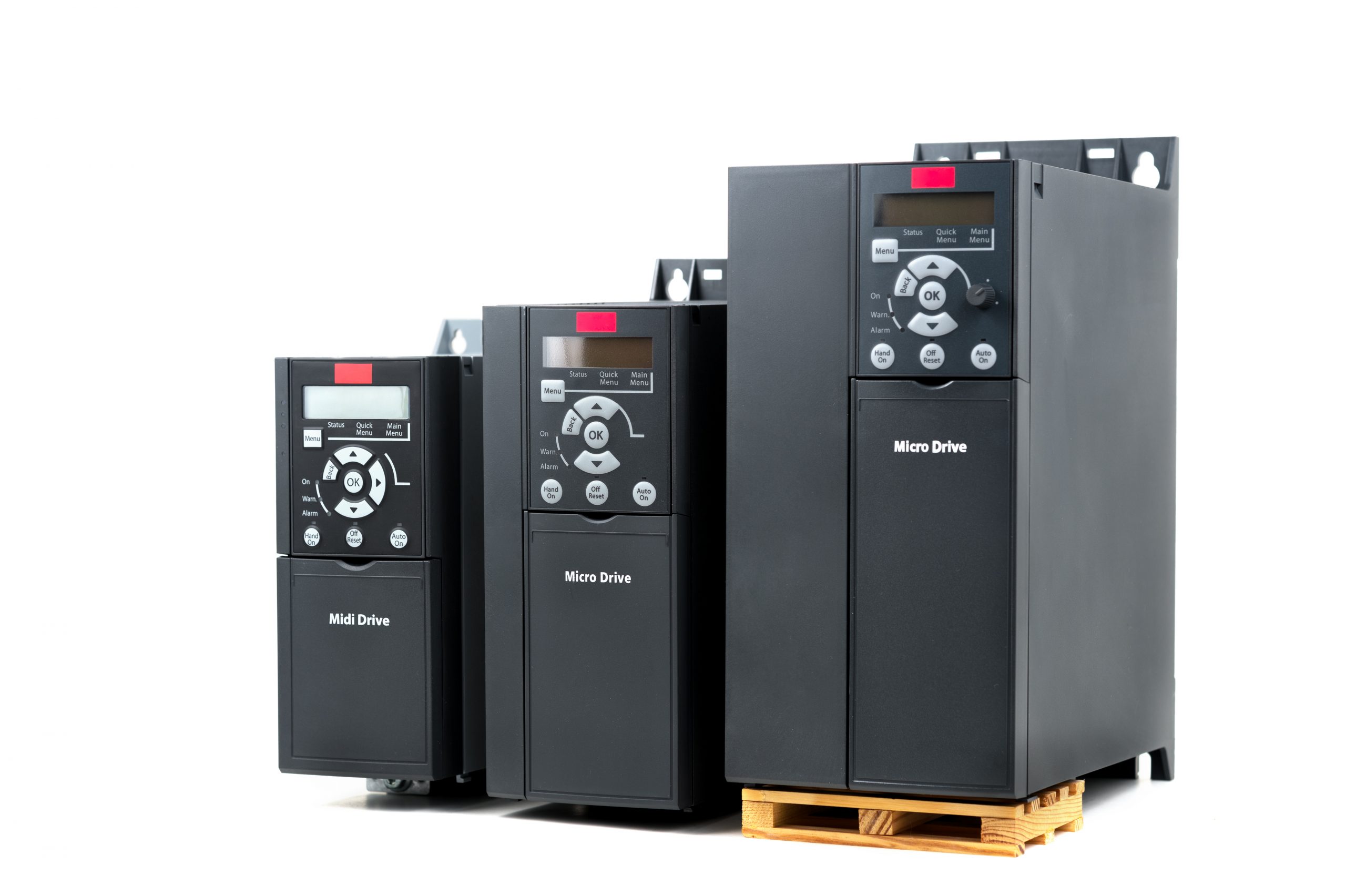
Variable Frequency Drive questions

/ Variable Frequency Drive questions #1  

newbury

Super Star Member
Joined
Jan 8, 2009
Messages
14,845
Location
From Vt, in Va, retiring to MS
Tractor
Kubota's - B7610, M4700
I might have posted this before -but-
I've 6 pieces of used 3 phase woodworking equipment (up to 5hp) I bought at a auction. Our son (a maintenance/electrical type) was going to help me build and hook up to a rotary phase converter. He never got around to it. At that time VFD's in the power range required were running about $1K and up. And I was told that I would need a VFD for each machine or have to go through a pain of reprogramming the VFD.
VFD prices seem to have dropped.
Is there some way I could just hook up a VFD big enough for the maximum size motor and plug the equipment in one at a time?
I'm a 1 person shop so running 1 thing at a time is fine.
 
/ Variable Frequency Drive questions #2  
It depends on the VFD. They generally don't like running a large range of loads. But some will. So you really need to check. There are all sorts of cheap VFDs on ebay. If you have a 7hp 3 phase motor kicking around you can easily build your own rotary phase converter. They are simple and there are plenty of plans online available for free.
Eric
 
/ Variable Frequency Drive questions #3  
I'm a fan of VFDs, but they aren't the easiest items to get up and running sometimes. I think that some VFDs are easier to program than others, and some have the ability to store several different profiles. Often times buying a cheap VFD gets you a manual that is tough to decipher and has errors in it. (BTDT) I really like the many options of VFDs, like soft start and braking options that I think have value for reducing the wear and tear on equipment.

However, if you have a wide range of HP motors, using just one VFD isn't going to be optimal, and you are likely better off with a rotary phase converter, but you will miss out on things like variable speed control. As @etpm writes above, you can certainly build one yourself, but the cost really depends on what you have lying around. (E.g. I don't happen to have a 7HP 3 phase motor lying around, so it would be pricey for me.)

Whether you could switch several similar HP motors on one VFD without reprogramming it gets a bit into whether they are all the same motor, and what their driven loads look like. Not always simple.

Of course, there's another option which is to just replace the motors with standard 240V motors, but you may not want to do that if you are trying to restore old machines to OEM condition.

All the best,

Peter
 
/ Variable Frequency Drive questions #4  

I have one of these for running a 60A machine, quieter than motorized phase inverters. Relatively expensive. You can run multiple machines with these.

Small VFD's are cheap these days can easily power a small manual mill, drill, or lathe. Just get one per machine and you get digital motor speed control for each machine. Prices start around $120

 
/ Variable Frequency Drive questions
  • Thread Starter
#5  
Small VFD's are cheap these days can easily power a small manual mill, drill, or lathe. Just get one per machine and you get digital motor speed control for each machine. Prices start around $120

Your link shows that it would be $635 for one VFD to drive my 18" planer (5HP). The other 5 machines would be $200 to $300/ machine.
I think that some VFDs are easier to program than others, and some have the ability to store several different profiles.
Could you provide a link to some that store different profiles?

And could someone provide a link to explain why it seems I could set up a 3 phase line with a RPC to provide power for all my machines but I can't set up a 3 phase line with a VFD to provide power for all my machines.

/edit - I thought I had the problem solved when our son was going to build me a RPC, even got a 10HP 3 phase motor. But I don't work well with electricity.
When I was about 5 years old I grabbed some bare 120V wires and darn near fried myself.
 
Last edited:
/ Variable Frequency Drive questions #6  
Your link shows that it would be $635 for one VFD to drive my 18" planer (5HP). The other 5 machines would be $200 to $300/ machine.
Or you could spend $3K on a single 1ph to 3ph converter that provides 3ph output to run all three.

No free ride anywhere. I guess you could buy the $635 one and move it between machines...
 
/ Variable Frequency Drive questions #7  
Your link shows that it would be $635 for one VFD to drive my 18" planer (5HP). The other 5 machines would be $200 to $300/ machine.

Could you provide a link to some that store different profiles?

And could someone provide a link to explain why it seems I could set up a 3 phase line with a RPC to provide power for all my machines but I can't set up a 3 phase line with a VFD to provide power for all my machines.

/edit - I thought I had the problem solved when our son was going to build me a RPC, even got a 10HP 3 phase motor. But I don't work well with electricity.
When I was about 5 years old I grabbed some bare 120V wires and darn near fried myself.
The reason a rotary phase converter would work with any/all of your machines is that it is making a fixed frequency into whatever load it faces. A VFD responds to the motor/load characteristics to try to provide the requested frequency/motor speed. While you can unbox a VFD set the voltage/frequency/HP and connect it to a motor, the VFD will do a better job of speed/frequency/voltage control if it "learns" about the specific motor, and its load.

The often not talked about item with VFDs is whether or not the motor is "VFD ready" or "inverter ready". This means a motor that has better than normal insulation (F/G/H), and usually windings and rotor that are designed for the high-frequency harmonics that can occur with VFDs.

Vintage motors are not inverter ready, so I recommend babying them when using VFDs. Mine have input and output filters on them and are tuned to one particular motor per VFD.

The high frequency harmonics (voltages) from a VFD can damage the windings in an older motor. The farther the VFD is from the motor, the bigger the chance of getting damaging harmonics. VFDs located at a distance from their motor (not recommended!) usually have load reactors to reduce the harmonics to try to attenuate the problem. (VFDs may have line reactors to damp harmonics going back out toward the voltage supply. Not normally an issue for home users, but if you have five VFDs powered up, it might be an issue.)

One final item: VFDs need to be powered up regularly to keep their capacitors working; somewhere between monthly and yearly depending on who you believe.

TL;DR if you connect a VFD to an older motor, you are likely to get a longer life out of the motor if you "tune" the VFD to that particular motor. That means that one VFD per motor is your best bet. (Or go for a phase converter.)

All the best,

Peter
 
/ Variable Frequency Drive questions #8  
There is no reason you cant use a VFD sized for the biggest motor on any of the smaller ones.

As said.....you can literally unbox it....set it at 60 hertz, and set the voltage and use it. It would be just as good (actually better) than a RPC.

What makes a VFD nice is you can custom taylor some of the settings. Like accel/deceleration....to start something slowly if it has high inertial load. OR even braking.....and you can also set things to protect the motor. Like over-current, or frequency limits, etc. But you would have none of this with a RPC anyway.

I have both. A VFD that currently is only used on an electric motor we bolt to a logsplitter when we want to split indoors. (5-min swap to go from gas to electric or vice versa). The VFD is wired with a female 3ᴓ plug. And I have ran other 3ᴓ stuff off of it without swapping any parameters. But currently its just for the splitter.

I also have a RPC that runs the mill and lathe. But sometimes if others are helping me in the shop I am using both of them at the same time. And that is the biggest drawback to the VFD. Swapping it from machine to machine and only able to use one at a time.
 
/ Variable Frequency Drive questions
  • Thread Starter
#9  
<snip>
The farther the VFD is from the motor, the bigger the chance of getting damaging harmonics. VFDs located at a distance from their motor (not recommended!) usually have load reactors to reduce the harmonics to try to attenuate the problem. (VFDs may have line reactors to damp harmonics going back out toward the voltage supply. Not normally an issue for home users, but if you have five VFDs powered up, it might be an issue.)

<snip>

Peter
What's "located at a distance from their motor" 10 feet? 50 feet? Any good links for further reading?
 
/ Variable Frequency Drive questions #10  
Your link shows that it would be $635 for one VFD to drive my 18" planer (5HP). The other 5 machines would be $200 to $300/ machine.

Could you provide a link to some that store different profiles?

And could someone provide a link to explain why it seems I could set up a 3 phase line with a RPC to provide power for all my machines but I can't set up a 3
 
/ Variable Frequency Drive questions #11  
This one looks like it would work for you. 4.5KW 6HP VFD Driver Inverter 1phase AC220V 21A 1000Hz Spindle Motor Controller 712640469078 | eBay
It says it has automatic current sensing. $259. VFDs have come a long way since I last shopped for one 3 years ago. You still may need to program this for each motor but I don't know. What ponytug posted is true, especially about older motors and VFDs. Because of the way they work, especially the less expensive ones, voltage spikes can be quite high and they might cause arcing inside the motor. When a motor is operated in a high humidity environment arcing in older motors is more common. Motors running on VFDs also tend to run a little warmer. A VFD chops up the power into square waves so the output must be smoothed out with capacitors so that it approximates a sine wave. The sorta sine wave output from cheaper units is really composed of a bunch of steps which are smoothed somewhat so that they are not quite square but are also not a smooth sine wave. This can cause the motor to run much warmer. I, personally, have had good luck with inexpensive VFDs running older motors. Some folks don't. And they are better these days. Though a Rotary Phase Converter does not deliver perfect 3 phase power it will, when properly balanced with capacitors, do a good job for pretty cheap. I use one in my shop to power CNC machines. One machine has a FANUC brand control and these controls are notorious for needing clean 3 phase power and will shut themselves off if the power isn't good enough. Through the years I have had for machines with FANUC controls running off my big RPC and they have never had a problem because my RPC is well balanced. You don't need one that well balanced and so it would be an easy build. Interestingly, you can use a smaller RPC, power a couple machines with it, and as long as they are running a third, more powerful machine can be started and run. This is because the motors already running will act as generators to help the new motor to start. There are limits to this scheme because the voltage will become more unbalanced and the wiring will need to be able to handle the current. If you had a 7 or 7.5 hp 3 phase motor you could even probably get away with a rope start RPC.
Eric
 
/ Variable Frequency Drive questions
  • Thread Starter
#12  
If you had a 7 or 7.5 hp 3 phase motor you could even probably get away with a rope start RPC.
Eric
Thanks, I've seen videos of that for years.
But my understanding of electricity includes:
5 volts, like USB, pretty safe
12 volts, like a car battery, be careful
120 volts watch out!
240 volts - mistakes can easily lead to major injuries
 
/ Variable Frequency Drive questions #13  
What's "located at a distance from their motor" 10 feet? 50 feet? Any good links for further reading?
That's one of those "it depends", and that means the particular VFD, its settings, the wiring, what kind of power supply to the VFD you have, whether there are reactors on the input / output, and the particular motor. "It depends..."

I would do a 10' run to a VFD, but I would find another way to do one with a motor 50' away. I would leave the long runs like down a well to experienced professionals.

All the best,

Peter
 
Last edited:
/ Variable Frequency Drive questions #14  
Thanks, I've seen videos of that for years.
But my understanding of electricity includes:
5 volts, like USB, pretty safe
12 volts, like a car battery, be careful
120 volts watch out!
240 volts - mistakes can easily lead to major injuries
I get that. If you buy a VFD you will need to program it. You may already know how to program stuff. If you are not familiar with programming then it will take you a little longer to set up a VFD. You do not need to know how to do any type programming if you can follow directions. You also don't need to understand electricity to make and wire a VFD if you can follow directions.
Eric
 
/ Variable Frequency Drive questions #15  
There are ramp up & ramp down settings on the better VFDs that depend on the inertia of your load and if set incorrectly can cause issues like overloading and erroring out the vfd at startup or overrunning and potentially causing the motor to act as a generator at shutdown and what the vfd does/doesn't do with that current. If you do a single vfd for all the equipment, you'll want to make sure you have conservative settings here to accommodate all the equipment. I think you'll also want a "sensorless vector" type as to my understanding it will be smoother/better with less tuning for a variety of motors.

I have several Hitachi WJ200-022SF 3hp sensorless vector models and I've been extremely happy with them.

I can second the comment above from personal experience that motors that are not vfd rated do not like being operated very far out from 60hz, but I'm assuming you're not needing much in the way of speed control for your application of getting single speed motors running on single phase.
 
/ Variable Frequency Drive questions #16  
VFDs are motor dependent. It's not likely you'll be able to have a single VFD for the shop because each motor will have different energy and load specs. However, 3ph motors can run from about 30hz up to 120hz. That's how you change the motor speed. I bought two when I first got my Mill. One was required for the Mill and the other was required for the Table Feed. Obviously, they had to be able to run at the same time, so I needed two VFDs. I've since replaced the 3ph table feed with a modern 120v style and added table lift as well. My VFDs were less than $100 each and used common 240v single phase wiring.

I thought about going with an RPC, but they are large, clumsy and VERY loud as well as expensive. They don't like being turned on and off. And you'll need a lot of 3ph wiring to get it to each machine. The box and breakers alone will most likely cost more than several VFDs.
 
/ Variable Frequency Drive questions #17  
VFDs are motor dependent. It's not likely you'll be able to have a single VFD for the shop because each motor will have different energy and load specs. However, 3ph motors can run from about 30hz up to 120hz. That's how you change the motor speed. I bought two when I first got my Mill. One was required for the Mill and the other was required for the Table Feed. Obviously, they had to be able to run at the same time, so I needed two VFDs. I've since replaced the 3ph table feed with a modern 120v style and added table lift as well. My VFDs were less than $100 each and used common 240v single phase wiring.

I thought about going with an RPC, but they are large, clumsy and VERY loud as well as expensive. They don't like being turned on and off. And you'll need a lot of 3ph wiring to get it to each machine. The box and breakers alone will most likely cost more than several VFDs.
The VFD dont care as long as the VFD is sized large enough for the motor.

Hook a smaller motor to it and it wont care.

Sure, you can custom taylor a VFD for a specific application. Change ramp up and ramp down times, have dynamic braking, custom speed settings, over current or under voltage settings, remote start/stop or speed controls, etc etc.

But you dont have to do all that. Set it for 60hz.....push start to start, push stop to stop. Then its basically no different than a RPC and can be used on just about any motor that is the same or less HP rating of the drive.
 
/ Variable Frequency Drive questions #18  
The VFD dont care as long as the VFD is sized large enough for the motor.

Hook a smaller motor to it and it wont care.

Sure, you can custom taylor a VFD for a specific application. Change ramp up and ramp down times, have dynamic braking, custom speed settings, over current or under voltage settings, remote start/stop or speed controls, etc etc.

But you dont have to do all that. Set it for 60hz.....push start to start, push stop to stop. Then its basically no different than a RPC and can be used on just about any motor that is the same or less HP rating of the drive.
Agree on most points. My point of ramp up/down settings is if you try to run default vfd settings on a high inertia application say a flywheel run mechanical punch/press or a large lathe chuck you're asking for problems
 
/ Variable Frequency Drive questions #19  
Agree on most points. My point of ramp up/down settings is if you try to run default vfd settings on a high inertia application say a flywheel run mechanical punch/press or a large lathe chuck you're asking for problems
Yep....others have mentioned that too. And I even mentioned it in post #8.

Just trying to debunk the false info of those that keep saying a VFD cannot be used on more than one motor (not at the same time)....and that it has to be specifically programmed to each individual motor. And that simply isnt the case.

Its just a powersource. If your 3-phase equipment has no special requirements for soft starting and stopping, or need custom speed controls or start/stop switches wired right to VFD, there there is NO reason you cannot have a "universal" VFD that can be swapped to several different things
 
/ Variable Frequency Drive questions #20  
At the old power plant our coal feeders from the bunkers to the furnace had to run at the same speed. The front side two conveyors. One was a few feet long and the other took it straight to the cyclone in the furnace. On the backside it took three conveyors. So for each cyclone (14 total) that run had to remain constant or you would have coal backing up if one conveyor was running slower. So they had 1 VFD that ran 2 or 3 motors in each feeder run. We did run them through separate O/L relays. The short run motors were often 1.5 HP and longer uphill were 2 H.P. This replaced the original D.C. motor system that was in use up until a couple years before I hired on. We eventually swapped them all to 2 H.P. for convenience since they were all the same frame size.
 

Marketplace Items

2007 Oshkosh S-Series TMMB 11 Yard Front Discharge Concrete Mixer Truck w/ Tag Axle (A59230)
2007 Oshkosh...
2015 Nissan Altima Sedan (A59231)
2015 Nissan Altima...
HYDRAULIC THUMB FOR MINI EXCAVATOR (A58214)
HYDRAULIC THUMB...
2015 Ford Escape SUV (A59231)
2015 Ford Escape...
2019 KENWORTH T680 TANDEM AXLE SLEEPER (A59905)
2019 KENWORTH T680...
2024 Bobcat T770 (A53317)
2024 Bobcat T770...
 
Top