Grading GC1720 - Deadheading hydrostat?

/ GC1720 - Deadheading hydrostat? #1  

Nacademus

Gold Member
Joined
Sep 10, 2018
Messages
255
Location
Rural, Ohio
Tractor
Massey Ferguson GC1720
Hi everyone,

I have an overgrown acre and half that I need to put drainage in and grade.

Yesterday, I started to clear some of that land with a walk-behind string trimmer. After that, I decided to use my box blade to scrape and pull some topsoil to a low spot that I think is letting water from a nearby ditch into my yard.

I had the ripper teeth down and was in low gear. I started pulling and it was doing great. I wasn't all the way down but just took a couple passes to soften the soil. On the final pass where I tried to fill the box, I pulled it and must have either hung up on something or bit too much of the ground with it. The tractor stopped and the forward pedal started to push my foot back up. The wheels weren't spinning or anything-I was in 2wd.

I stopped cold and felt the engine load up. The box was barely full. I feel like this tractor should at least be strong enough to dig in when stuck. It just stopped going and labored with no sign that the torque was going anywhere.

I was able to go backwards and take a light bite at it but whenever I tried to take a little more, it just didn't have any oomph to break loose or anything.

I am in low gear. I even try using less of the forward pedal but it didn't help-stopped cold.

Could my tractor have some sort of power loss or something? Anyone else experience this? I am wondering if this is supposed to happen or not. Maybe my PRV started diverting when it couldn't go anymore. But again, the box was not that full and couldn't have hung up on a root where I was, I checked.

Why would my foot pedal press back up? I didn't do it too long and it only happened a couple times. I am just afraid that I could have possibly caused harm to the tractor or if maybe it is out of spec. Maybe I am expecting too much from it? Who knows? My box blade is only a 4ft RK BB. The soil is dry and not particularly thick or dense. No stones. I'm somewhat worried by this performance.
 
Last edited:
/ GC1720 - Deadheading hydrostat? #2  
Mine (1715) will spin all 4 wheels in low range and dig its self into holes when it is restrained from forward motion....

Dale
 
/ GC1720 - Deadheading hydrostat?
  • Thread Starter
#3  
Mine (1715) will spin all 4 wheels in low range and dig its self into holes when it is restrained from forward motion....

Dale

Right. Mine used to spin the wheels and dig itself in, too while I was box blading my gravel driveway. I had a lot of hard packed stone to loosen and move, too. Something can't be right with this. Its got me worried. I have 52h on it.
 
/ GC1720 - Deadheading hydrostat? #4  
If the angle of the box blade is too aggressive, it will actually compress the rear tires, effectively jamming them in position. 4WD changes the angle of the pull.
 
/ GC1720 - Deadheading hydrostat? #5  
The pushing back of the pedal under load is a normal function of a HST. Linkage styles vary the amount of pushback that you feel.

Weæ±*e you in high range or low range? Reason for asking is that my Branson may or may not spin in high range but will always spin tired in low range.
 
/ GC1720 - Deadheading hydrostat? #6  
Any chance your wheels spun inside of the tires. This is fairly common if your rear tires are filled with rimguard and the air pressure is too low in the tire. If not the case, and likely isn't, it would seem your PRV is set too low or is defective. Of course the tires should spin, especially in 2wd. And they should spin in 4wd unless you were on some rough concrete and in high range. In high range the PRV will often open before tires spin, but Not in LO like you had it. Yes, you have a problem that needs to be investigate. Start with the PRV. But it would not hurt to look at the wheels and tires. Especially if loaded with rimguard. Rimguard is slimy.
 
/ GC1720 - Deadheading hydrostat?
  • Thread Starter
#7  
I thought about them spinning in the rims but I don't think they were.

I was in LOW range and 2WD. It stopped and had so much resistance that it pushed my pedal almost all the way back up to the highest position.

Could having done this these couple times ruin my tractor? I know for a fact that my Cub Cadet 3205 would have kept going until it ripped its rear end out. This kind of let me down.
 
/ GC1720 - Deadheading hydrostat?
  • Thread Starter
#8  
If the angle of the box blade is too aggressive, it will actually compress the rear tires, effectively jamming them in position. 4WD changes the angle of the pull.

The blade wasn't that aggressive. In fact, I had the rear of the blade leveled to be slightly higher than the front to let more soil out as it's pulled along.
 
/ GC1720 - Deadheading hydrostat? #9  
Nacademus, what you describe IS too aggressive with scarifiers. Don't use the same angle when using just the back blade as with the scarifiers. Lengthen the top link when using the scarifiers. When they bite in, they will pull the boxblade into the dirt. There is enough pressure that it will cause the weight transfer (think of a weight distribution hitch) to clamp down on the rear wheels, stopping them dead. The angle of the scarifiers is important. The boxblade can be "tuned" so that scarfiers pull the unit into the material, so no additional weight is needed, but still not enough to bring the tractor to a stop. Been there, done that.
 
/ GC1720 - Deadheading hydrostat? #10  
Could having done this these couple times ruin my tractor? I know for a fact that my Cub Cadet 3205 would have kept going until it ripped its rear end out. This kind of let me down.
Very unlikely any damage could occur. The Relief Valves are set up so that it doesn't happen. An advantage of hydraulic over gear systems.
 
/ GC1720 - Deadheading hydrostat?
  • Thread Starter
#11  
Nacademus, what you describe IS too aggressive with scarifiers. Don't use the same angle when using just the back blade as with the scarifiers. Lengthen the top link when using the scarifiers. When they bite in, they will pull the boxblade into the dirt. There is enough pressure that it will cause the weight transfer (think of a weight distribution hitch) to clamp down on the rear wheels, stopping them dead. The angle of the scarifiers is important. The boxblade can be "tuned" so that scarfiers pull the unit into the material, so no additional weight is needed, but still not enough to bring the tractor to a stop. Been there, done that.

Honestly. That makes sense now that you explain it that way-wonderful analogy. In my head, I didn't consider that the 3PT was rigid in position with the lever untouched and only freely travels upward.

The weight distribution hitch analogy is a good one.

What is odd, though, was that these scarifiers are not adjustable and really only contact about an inch, inch and a half BARELY into the soil. I could still almost see the each whole scarifier tooth as it wasn't fully bit in the dirt that much. The box was nowhere near full. It's weird. I should have taken a picture-if I did, I bet most of you would be surprised. Oh, and there are only THREE scarifiers on my BB. Maybe the rear blade hung up on something I just didn't see.

King Kutter 4 ft Box Blade BB 48 XB

I still think it if it was actually hooked and stopped cold, it should have kept eating, digging in. Just sort of petered out on me. :(

There MUST have been some sort of force, like you said comparing its operation like a WD hitch. I just couldn't identify it at the time.

I built my own hydraulic pressure gauge from parts on Amazon-just haven't gotten around to using it. I will warm the tractor up tonight and check it.

Here is what I used to make my own hydraulic gauge-in case anyone else wants to make one and save some money.

Hydraulic Liquid Filled Pressure Gauge 0-3000 PSI
https://www.amazon.com/gp/product/B019465ZC8/ref=ppx_yo_dt_b_asin_title_o00_s00?ie=UTF8&psc=1
$10


3/8" NPT Thread Hydraulic Coupler Set ISO 7241-B (Coupler set with dust caps-assure your tractor has 3/8 or not and get what fits)
https://www.amazon.com/gp/product/B07FVLY3BQ/ref=ppx_yo_dt_b_search_asin_title?ie=UTF8&psc=1
$19-but a single male can be found for $10


I sourced a small 3/8" to 1/4" npt adapter from a local store (Rural King) ~$5

My total investment was about $35 but could be done for $10 less. I wanted to keep the other coupler in the set as a spare, anyways.

I like to try and make my own things when I can. Gives me a little project and something to look forward to in the mail . ^_^
 
/ GC1720 - Deadheading hydrostat? #12  
The boxblade/scarifier angle really doesn't affect larger tractors. The SCUTs have smaller tires. The 3pt arms are at the same level as the rear axle (or slightly above). Even if the box is full, my GC has no problems spinning the rears, if they don't spin, adjust the angle, it's easier than trying to maintain a height manually with the 3pt lift lever. Also try pulling in 4WD, it also affects the angle of the boxblade. Fronts will start spinning first as you lose traction when the boxblade loads up.
 
/ GC1720 - Deadheading hydrostat? #13  
Honestly. That makes sense now that you explain it that way-wonderful analogy. In my head, I didn't consider that the 3PT was rigid in position with the lever untouched and only freely travels upward.

The weight distribution hitch analogy is a good one.

What is odd, though, was that these scarifiers are not adjustable and really only contact about an inch, inch and a half BARELY into the soil. I could still almost see the each whole scarifier tooth as it wasn't fully bit in the dirt that much. The box was nowhere near full. It's weird. I should have taken a picture-if I did, I bet most of you would be surprised. Oh, and there are only THREE scarifiers on my BB. Maybe the rear blade hung up on something I just didn't see.

King Kutter 4 ft Box Blade BB 48 XB

I still think it if it was actually hooked and stopped cold, it should have kept eating, digging in. Just sort of petered out on me. :(

There MUST have been some sort of force, like you said comparing its operation like a WD hitch. I just couldn't identify it at the time.

I built my own hydraulic pressure gauge from parts on Amazon-just haven't gotten around to using it. I will warm the tractor up tonight and check it.

Here is what I used to make my own hydraulic gauge-in case anyone else wants to make one and save some money.

Hydraulic Liquid Filled Pressure Gauge 0-3000 PSI
https://www.amazon.com/gp/product/B019465ZC8/ref=ppx_yo_dt_b_asin_title_o00_s00?ie=UTF8&psc=1
$10


3/8" NPT Thread Hydraulic Coupler Set ISO 7241-B (Coupler set with dust caps-assure your tractor has 3/8 or not and get what fits)
https://www.amazon.com/gp/product/B07FVLY3BQ/ref=ppx_yo_dt_b_search_asin_title?ie=UTF8&psc=1
$19-but a single male can be found for $10


I sourced a small 3/8" to 1/4" npt adapter from a local store (Rural King) ~$5

My total investment was about $35 but could be done for $10 less. I wanted to keep the other coupler in the set as a spare, anyways.

I like to try and make my own things when I can. Gives me a little project and something to look forward to in the mail . ^_^

You do know that the pressure generated by your hydrostatic transmission is seperate from the hydraulic pump driven off of the camshaft of your engine that runs your implements like the FEL and 3pt hitch right? Hydrostat pressure's can easily be 5000 PSI and can only be measured at ports on the transmission pump made for this purpose. As for what the PRV should be set for varies tractor to tractor depending on size. As the tractors get bigger the pressures get higher, But 5000 to 6000 is fairly common. In your smaller tractor it may be less. You will need the workshop manual to know where to install it. And of course the PRV for the hydrostat is seperate from the PRV for your loader and 3pt.
 
/ GC1720 - Deadheading hydrostat?
  • Thread Starter
#14  
You do know that the pressure generated by your hydrostatic transmission is seperate from the hydraulic pump driven off of the camshaft of your engine that runs your implements like the FEL and 3pt hitch right? Hydrostat pressure's can easily be 5000 PSI and can only be measured at ports on the transmission pump made for this purpose. As for what the PRV should be set for varies tractor to tractor depending on size. As the tractors get bigger the pressures get higher, But 5000 to 6000 is fairly common. In your smaller tractor it may be less. You will need the workshop manual to know where to install it. And of course the PRV for the hydrostat is seperate from the PRV for your loader and 3pt.

No. I did not know. I did not anticipate that. Surely it doesn't feel like its applying all the pressure to locomotion that it can. Thanks for teaching me that-I honestly never thought to check.

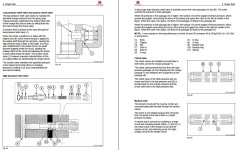
It seems that there are actually 2, high pressure relief and low. Are these what specifically govern the functions of the range selector?

hyd.jpg
 
/ GC1720 - Deadheading hydrostat? #15  
No. I did not know. I did not anticipate that. Surely it doesn't feel like its applying all the pressure to locomotion that it can. Thanks for teaching me that-I honestly never thought to check.

It seems that there are actually 2, high pressure relief and low. Are these what specifically govern the functions of the range selector?

View attachment 620959

Your interested in the High pressure relief valve. The low pressure deals with the "makeup oil" coming from the charge pump. Since you don't actually Have a charge pump per se, on the hydro, your tractor uses a circuit from the gear pump up on the engine (your implement pump) for the charge pump function. This is pretty common on smaller tractors.

The "range selector" has nothing to do with your hydrostat. It is simply an old fashioned gear two speed in your case transmission that is behind the hydrostatic transmission. So you have the high pressure hydro pump. that is variable displacement controlled by the swash plate that is attached in your case directly to your pedals, and that is followed by the hydraulic motor driven by this variable displacement pump. The output shaft of the hydraulic motor is attached to the input shaft of the old fashioned non synchronized 2 speed gear transmission. This is your "range" transmission, from there it goes to the final drive reduction near each rear wheel, and there is a "transfer case" like take off to drive the propeller shaft headed up front to the front differential/axles.
 
/ GC1720 - Deadheading hydrostat?
  • Thread Starter
#16  
Thanks for the explanation! I am going down a rabbit hole trying to learn all I can. Its kind of fun for me.

I am most familiar with residential lawn equipment and their HSTs - which follow the same principle but obviously differ substantially in overall driveline orientation. I have learned that the transmission in my tractor uses the HST to modulate speed and torque output as it enters a series of gearboxes and gear reductions before the power meets the ground-as well as incorporating various take-offs to run other auxiliary demands (4wd, secondary hydro, etc).

Cheaper lawn tractors tend to shortcut much of the demand for extra utility and robustness by making the HST and its swash plate characteristics more directly a part of the the torque conversion itself and places it more aft in the drivetrain - comparatively, anyway. Since the demands on them are probably much less in these residential cases, they can more directly drive the wheels with maybe only a couple gears assisting with turning the axles via reduction.
 
/ GC1720 - Deadheading hydrostat? #17  
Thanks for the explanation! I am going down a rabbit hole trying to learn all I can. Its kind of fun for me.

I am most familiar with residential lawn equipment and their HSTs - which follow the same principle but obviously differ substantially in overall driveline orientation. I have learned that the transmission in my tractor uses the HST to modulate speed and torque output as it enters a series of gearboxes and gear reductions before the power meets the ground-as well as incorporating various take-offs to run other auxiliary demands (4wd, secondary hydro, etc).

Cheaper lawn tractors tend to shortcut much of the demand for extra utility and robustness by making the HST and its swash plate characteristics more directly a part of the the torque conversion itself and places it more aft in the drivetrain - comparatively, anyway. Since the demands on them are probably much less in these residential cases, they can more directly drive the wheels with maybe only a couple gears assisting with turning the axles via reduction.

Exactly. People often think of hydrostats and try to think of them in the same way as an automotive automatic transmission. They aren't really the same at all. And by calling them "ranges" the manufacture doesn't help dispel this notion. Yes the range selector is just a gear shifting mechanism for an unsynchronized gear transmission.
 
/ GC1720 - Deadheading hydrostat? #18  
Thanks, I am getting edgumakated. I also have limited experience with HST on my Cub Cadet RZT-L54 and Husqvarna YTH24V48.


Jim.
 
/ GC1720 - Deadheading hydrostat? #19  
Nacademus
If I read the description correctly you only have one high pressure relief that works for forward and reverse. If this is try can you tie a chain to a tree and the front axle and see if the tractor will spin in reverse on similar footing?

If same problem then I would invest in the fittings and gauge or if still under warranty talk to your dealer and have them check it out for you.
 
/ GC1720 - Deadheading hydrostat? #20  
You do know that the pressure generated by your hydrostatic transmission is seperate from the hydraulic pump driven off of the camshaft of your engine that runs your implements like the FEL and 3pt hitch right? Hydrostat pressure's can easily be 5000 PSI and can only be measured at ports on the transmission pump made for this purpose. As for what the PRV should be set for varies tractor to tractor depending on size. As the tractors get bigger the pressures get higher, But 5000 to 6000 is fairly common. In your smaller tractor it may be less. You will need the workshop manual to know where to install it. And of course the PRV for the hydrostat is seperate from the PRV for your loader and 3pt.

I believe on MF GC 17XX (05 to 20) series with ISEKI 3 cylinder diesel, all implements are are run off the pump in HST....

Dale
 

Marketplace Items

THREE POINT ATTACHMENT (A58214)
THREE POINT...
2018 Dodge Ram 3500 (A53317)
2018 Dodge Ram...
2017 Ford F-550 4x4 Ext. Cab Mason Dump Truck (A59230)
2017 Ford F-550...
2015 AMERITRAIL MANIFOLD TRAILER (A58214)
2015 AMERITRAIL...
2015 VOLVO VNL760 SLEEPER (A59905)
2015 VOLVO VNL760...
2013 Land Rover Range Rover Sport 4X4 SUV (A55853)
2013 Land Rover...
 
Top