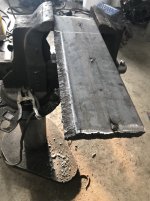
Firewood processor project.

/ Firewood processor project. #41  
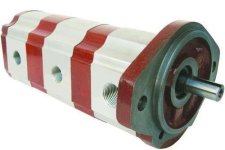
You havent explained your plans very well, but I will throw in my .02cents anyways. My first suggestion is forget the priority flow controls and divider valves. get yourself a double or even a tripple pump and mount it on a gear box to run off your pto. I will guess you plan on having a conveyor to feed the logs, as well as maybe a conveyor to move the split wood. You can run both off a smaller pump. Depending on what motor you plan on using for your saw, it will need a good amount of flow and pressure to have any real cutting power. This can be ran off the second pump, and the third pump can run the splitter portion. Use a unloader valve to connect the oil supply thru a powerbeyond on the saw CV to feed oil to the splitter cyl to speed up cycle times. This will not effect saw function, but will speed up the splitting cyl. You can set the unloading pressure to where if you need highpressure for splitting, the saw fluid will dump to tank and only the splitting pump is supplying oil to the splitting cyl to reduce hp requirements of your tractor. The control valve for the saw can be connected to a sequence valve so that when the saw is activated, the log clamp will close and the saw lift cyl will extend, lowering the saw into the wood and the saw will start running. One lever working all three functions.

You didnt say or I missed it, what kind of motor do you plan to use for the saw. And to answer one of your questions, you will need a motor spool control valve or your motor wont last long. If you need the saw motor to stop fast, then add a brake valve to the saw motor. For chain speed you dont want to pick a fast running motor, you want to pick a motor that has lots of torque. Bigger motors have more torque than the smaller ones. Use the bigger motor, even tho it requires more oil to get the same speed of the smaller motors. Cutting speed isnt measured in rpms at the motor shaft. Its measured by how fast the chain moves in linear feet persec. This is a factor of chain pitch, sprocket tooth count, and rpms of the sprocket. Your chain speed can be increased simply by going to a larger sprocket. This is why you need the bigger cuin motor with the most torque to saw the wood. I would also forget trying to find a f11 hyd motor. Yes they turn super rpms, but what everybody overlooks is that they need massive amounts of pressure to maintain that speed while cutting. They dont have the torque without that high pressure and will stall in a cut. Yes those motors are used in all kinds of forestry cutting equipment, but those machines usually have 4800-5000psi hyd systems. You start running those kinds of pressures off you 80hp tractor, you are going to run out of hpower. If you insist on using a f11 type motor, I have a new one I will sell you for $500.
 
/ Firewood processor project.
  • Thread Starter
#42  
Hi thank you for your 2 cent, I appreciate!

I have explain my project a little bite, mostly the type of wood, the quantity I need to process per year, budget, the kind of processor
"inspire" me . Message # 28. But it's true I have not a plan of the design of the processor yet. I need to do some research still and
need some "2 cent" from people before to go to the drawing table. I will post some detailed plan when I have some.

For now, I think that the first "饕auche" of the processor will not have a saw cylinder, may be. I will operate the saw with an arm. I will may be install
a saw cylinder later and I will sketch my plan with this possibility.

I plan to use a gear motor for the saw. Thank you for the F11 but like you said is not necessary.

Maybe this one:

1.53 cu in Salami 2.5MB25R-R55S3 Hydraulic Motor | High Speed Hydraulic Motors | Hydraulic Motors | Hydraulics | www.surpluscenter.com

What do you think?

I plan to build a log infeed convoyer with a belt. I know it's more fragile but it's lighter and less complicated.

But I plan to built a log table like that:

tajfun-live-deck-rn3000-1.jpg

With roller with teeth, and I like that it's build on a trailer.

The processor is transported with the tractor 3 point.

The pump is not an easy question. My plan is to use 2 pto pumps on the same shaft. because I can't find a tandem pump that is big enough.
Or is very expensive.

Surplus center don't have many pump with tandem option. they only have two pump option with a too small second pump.

Do you have a website that sell triple or double pump like you discribe?

I think that you can mount this kind of pump if you have a long shaft.

3-500x500.jpeg

I didn't picture exactly what is your idea about the hydraulic circuit.

Like How can I have 3 actuator with one sequence valve?

DR9-4708-page-001-2.jpg
Or maybe the valve of the motor saw have a "button" that, when the saw is lowering the motor start? like in this video at 1min 05sec:

Processeur a bois RR 2�T - YouTube
 

Attachments

  • DR9-4708.pdf
    151.6 KB · Views: 114
/ Firewood processor project. #43  
My advice is to forget the hydraulic feed on the saw. Unless you want a slower operation than possible or huge money on hydraulic "intelligence"( pressure sensor and electro-propotional valve). Its not possible to have an efficient operation with just a feed cylinder. It will either be too slow, or it will stall on the 1st knot it will encounter
 
/ Firewood processor project. #44  
/ Firewood processor project. #45  
Hello

Greetings to all self-builders.
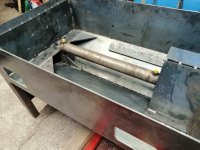
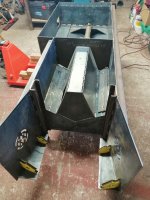
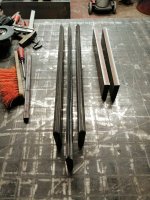
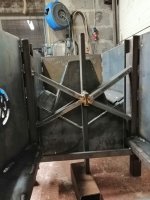
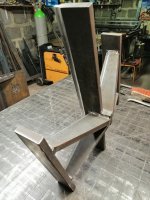
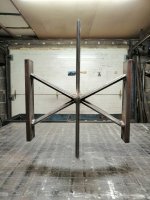
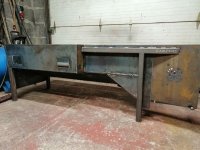
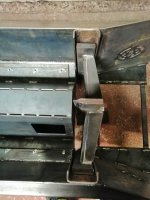
I also put some pictures of building my own firewood processor.
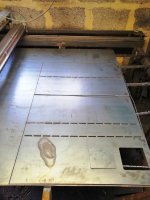
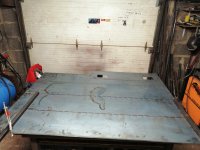
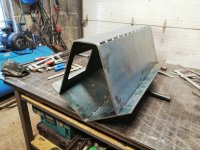
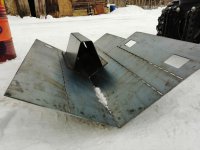
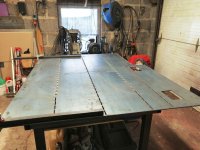
I hope that will work :).IMG_20190126_102351.jpgIMG_20190127_130332.jpgIMG_20190126_113409.jpgIMG_20190126_111501.jpgIMG_20190126_102411.jpg
 

Attachments

  • IMG_20190127_164656.jpg
    IMG_20190127_164656.jpg
    200 KB · Views: 119
  • IMG_20190127_145656.jpg
    IMG_20190127_145656.jpg
    232.1 KB · Views: 122
  • IMG_20190127_140411.jpg
    IMG_20190127_140411.jpg
    171.5 KB · Views: 112
  • IMG_20190127_140400.jpg
    IMG_20190127_140400.jpg
    185.9 KB · Views: 116
  • IMG_20190127_130342.jpg
    IMG_20190127_130342.jpg
    220.6 KB · Views: 104
/ Firewood processor project.
  • Thread Starter
#47  
Thanks polemidis for the advice.

this motor have a faster RPM but maybe not enough torque.

�.7 cu in Parker MGG2��3�-BA1A3 Hydraulic Motor | Parker | Brands | www.surpluscenter.com

I will make some calculation later.

For the hydraulic feed saw, what if you have a proportional hydraulic valve and control
the cylinder with the lever of the valve slowly or faster dependably the wood you cut? What do you think?

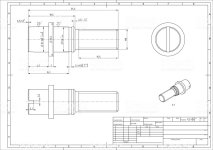
Also I saw that you use FREECAD for project, I wonder what was the step between
your drawing and the reality? like, did you make a "blueprint" for the measurement?

istockphoto-983906876-1024x1024.jpg

Do you have some advice about this part?


Also is someone know what kind of hydraulic symbol is this? :

Screen Shot 2019-02-16 at 9.59.24 PM.png


VIRX1 Good that you joined the club. :drink:

Do you have some plans? what will be your option? What is the power source of your processor?
Did you have figure out the hydraulic part?
Can you detailed your project? Look like a very good start anyway. :thumbsup:
 
/ Firewood processor project. #48  
No plans, I look at the Internet how the machines work and put them together with my ideas and opportunities
Of course, Youtube is a great help :).
I plan to use the tractor's own hydraulics initially.
Before building the splitter frame, I first tried to start the saw on the tractor. Don't know how long it works, the future will show.
Hüdraulikasae katsetus. - YouTube
Hydraulics valves put in series to use different operations on one pump.
 
/ Firewood processor project.
  • Thread Starter
#50  
Cool saw, did you build it? What motor are you using?
 
/ Firewood processor project. #51  
Yes it is self built.
I used the pump, made an additional return hole on the lid so that the oil could go back more easily. When the oil is pushed in pressure side the pump starts to run as an engine.
I don't know how long the shaft seal is working, but it worked for me right now.
Pumbast mootori tegemine. - YouTube
 
/ Firewood processor project. #52  
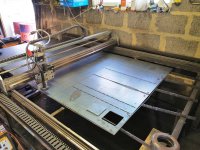
I can make blueprints, Freecad can produce technical drawings. I just didn't because its not that complicated machine it was easy to measure the distances right on the cad file. But of course, most of the steel is cut on my CNC, so I do not need drawings for that, It goes from the CAD, to the CAM to the CNC.

Millet you are 4hours away from me. You are welcome anytime to come and see my machine, and my customers machine (the winch feed type) I just received most of the hoses, so it may be fully functional in the next few weeks. We plan to push the machines to the limits for the test drives :)
 
/ Firewood processor project.
  • Thread Starter
#53  
Thanks for the invitation I never went to the US but who know, I might come with my CAD drawing :D

But speaking of tool, I plan to use some tool like an angle grinder, lincoln stick welder, drill press... what is the most useful tool that I might need?
A plasma cuter? a belt grinder?
 
/ Firewood processor project. #54  
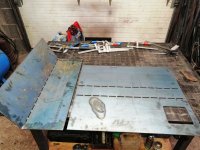
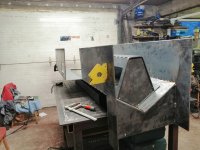
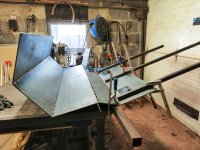
Today I welded the ax together.
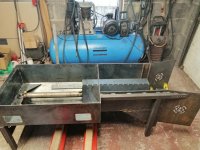
Here are some pictures of how the project has gone.
IMG_20190217_154317.jpgIMG_20190217_154324.jpgIMG_20190217_154331.jpgIMG_20190217_154402.jpgIMG_20190219_202057.jpgIMG_20190219_202104.jpgIMG_20190220_202353.jpgIMG_20190221_204410.jpgIMG_20190221_204205.jpgIMG_20190221_204130.jpgIMG_20190221_204031.jpgIMG_20190221_202751.jpgIMG_20190221_202739.jpgIMG_20190221_204455.jpg
 
/ Firewood processor project. #55  
That plasma table would be nice. A little neater than my handheld torch. What does the beam and cylinder look like? IMG_1363.JPG
 
/ Firewood processor project. #56  
Hi thank you for your 2 cent, I appreciate!

I have explain my project a little bite, mostly the type of wood, the quantity I need to process per year, budget, the kind of processor
"inspire" me . Message # 28. But it's true I have not a plan of the design of the processor yet. I need to do some research still and
need some "2 cent" from people before to go to the drawing table. I will post some detailed plan when I have some.

For now, I think that the first "饕auche" of the processor will not have a saw cylinder, may be. I will operate the saw with an arm. I will may be install
a saw cylinder later and I will sketch my plan with this possibility.

I plan to use a gear motor for the saw. Thank you for the F11 but like you said is not necessary.

Maybe this one:

1.53 cu in Salami 2.5MB25R-R55S3 Hydraulic Motor | High Speed Hydraulic Motors | Hydraulic Motors | Hydraulics | www.surpluscenter.com

What do you think?

I plan to build a log infeed convoyer with a belt. I know it's more fragile but it's lighter and less complicated.

But I plan to built a log table like that:

View attachment 591789

With roller with teeth, and I like that it's build on a trailer.

The processor is transported with the tractor 3 point.

The pump is not an easy question. My plan is to use 2 pto pumps on the same shaft. because I can't find a tandem pump that is big enough.
Or is very expensive.

Surplus center don't have many pump with tandem option. they only have two pump option with a too small second pump.

Do you have a website that sell triple or double pump like you discribe?

I think that you can mount this kind of pump if you have a long shaft.

View attachment 591790

I didn't picture exactly what is your idea about the hydraulic circuit.

Like How can I have 3 actuator with one sequence valve?

View attachment 591791
Or maybe the valve of the motor saw have a "button" that, when the saw is lowering the motor start? like in this video at 1min 05sec:

Processeur a bois RR 2�T - YouTube
Sorry for not replying sooner. I wrote out a long post trying to explain a few things then lost it. I am not going to try and rewrite it. To answer about the sequence valve. A SV can have more than one spool that are activated according to the pressure setting of each spool. Each spool will operate as soon as the spool before it reaches a set pressure point. The SV is supplied oil from one main control valve.

To touch on the hyd motor you linked to. Nothing wrong with it,if you can supply enough oil to turn it fast enough to get the desired chains speed. It will take a lot of oil, but it would be a mean saw motor. You also mentioned a .7cuin motor. I would consider that a minimum size motor to use. I know of several folks that have chosen the motor, some like it and some have swapped it for a bigger motor. How well it works for you will depend on type and size of wood you want to cut and what you consider a decent cutting speed. My suggestion is to select a gas powered chains saw that you would like to replicate cutting speed, torque and hp and work back from there. It takes some math but you can match those gas saw numbers using hyd and selecting the correct parts. Compare chain speed, not engine rpms. The chain is whats doing the cutting. Also take into consideration that a chainsaw rated to turn 13000rpms will only pull about 9000rpms when deep in the cut. Also a chainsaw uses a small, usually 7pin sprocket to pull the chain. A hyd motor turning 4500rpms using a 14pin sprocket will give the same chains speed as the faster running gas saw.Take the chain pitch and multiply by 2. Multiply the above number by the number of teeth of the saw sprocket.Multiply that number by the saw R.P.M.The final answer will be the chain speed in inches per minute, just divide by 12 to convert to feet per minute. The feet per minute is the speed you are trying to match when compareing your hyd saw to your gas saw, not the rpms of the motors. Once you reach your chosen chain speed, dont be surprised if the hyd saw has better torque/hp numbers than the gas chainsaw. Unless you go with to small a hyd motor just to reach chainspeed.
 
/ Firewood processor project. #57  
Another consideration is horsepower. If for example you're trying to match the performance of a 6 horsepower gas chainsaw, the equation is HP = PSI * GPM / 1714. Say the pressure drop across your motor is 2000 PSI, you would need approx 5.2 GPM to generate 6 HP. Knowing that, pick a motor displacement and sprocket size that gives you the chain speed you want given it needs to flow at least 5.2 GPM.

These are hypothetical numbers. Pump and motor efficiency, line loss, etc all factor in...to what degree I have little experience so I would add some margin and tunability to the design to be safe.
 
/ Firewood processor project. #58  
Power (the rate of doing WORK) is dependent on torque and rpm.
Torque and rpm are the measured quantities of engine output.
Power is calculated from torque and RPM, by the following equation: HP = Torque x RPM ÷ 5252 Torque is the power, hp is the speed. The torque and hp curve will always cross at 5252 rpms. Torque is measured from the center of a rotational shaft. Increaseing the size of the rotation by increaseing sprocket size will reduce the effective torque being supplied. In other words, if you increase the sprocket size from 7pins to 14pins, you will reduce the available torque. The larger sprocket will increase the speed, but available hp will stay the same. Since you are trying to increase chainspeed by going to a larger sprocket, you would need to increase the psi being supplied to the hyd motor to maintain the torque numbers of the hyd motor as measured at the shaft. torque numbers of your hyd motor are usually given for a predetermined recommended psi and flow. The hyd motor will also have a rpm for a given flow. The rpms are a factor of motor size and flow. Since the size of the motor is usually given in cuin or cc for how much oil it takes to make one rotation, you can use the motor size to determine how much flow you need to reach a desired rpm. I havent comfirmed this, but I believe most of the processor manufacturers that are using gear motors for chainsaws, will overflow the recommended flow to achieve the desired speed for their saw motors. The motors they choose probably have upgraded seals and shaft bearings instead of bushings to handle the extra flow. thats just my opinion and I have not verified it. I did Talk with a engineer with Pocline and he assured me that their off the shelf axial piston motors could handle extra oil flow without anything detrimental happening to the hyd motor. Thats is up to a certain amount of course.

Now with all that rambling being said, bottom line is this. A given size hyd motor will produce a given amount of torque at a given amount of pressure. That hyd motor will turn at a given rpms using a given amount of flow. It is also a given that you can increase torque by increaseing pressure and increase rpms by increaseing flow.. The question is, will the hyd motor handle the extra pressure and flow before becoming unreliable. It is also a question of do you have the engine hp needed to pull a hyd pump that will produce the desired pressure and flows one wishes to reach.
 
/ Firewood processor project. #59  
Torque is the power, hp is the speed.

I understand what you're saying and generally agree, but torque is by definition a measure of force, horsepower is a measure of power (force * distance...in this case angular velocity/RPMs).
 
/ Firewood processor project. #60  
I understand what you're saying and generally agree, but torque is by definition a measure of force, horsepower is a measure of power (force * distance...in this case angular velocity/RPMs).

I think we are in agreement. What I was trying to point out that simply looking at published torque numbers can be misleading if you dont understand how changing out sprocket size on a shaft will effect the final torque numbers, (output), or actual torque needed to perform the intended operation. Torque of a engine is measured at the engine shaft and final output is effected by the final gearing. A sprocket is a form of gearing. With that said, if you choose a gas powered chainsaw to model your hyd saw after and you use the published numbers of the gas engine to determine your hyd motor size, you must allow for the sprocket size to choose your actual hyd motor to equal matching performance. And example would be a chainsaw that produces 10lbft of torque with the 7pin sprocket, to match the performance the hyd motor would need to produce 20lbft torque with the 14pin sprocket, that number being measured at the shaft.

You also have to consider the mechanic disadvantage of the gas engine versus the fluid advantage of the a hyd motor. As the gas saw is cutting, it is limited by the amount of air and gas the engine can combust and produce power. This is usually provided by the throttel of the saw and is usually at wot, maximum torque and hp, when starting the cut. As a result, the gas engine can only get slower as it is consuming power. On the other hand, the hyd motor is getting its power from a fluid drive that starts out at minimal power and pressure and as the load increases, the pressure increases. Limited only by the relief settings and the hyd pumps supplying the power, and of course the engine pulling the pump. The hyd saws torque can actually increase as the load is increased. When I say increase, minimal power is being produced to simply run the hyd saw, it is not until a load is applied and pressure increases, that the actual torque output of the hyd motor is realized.
 

Marketplace Items

2014 PETERBILT 367 6X4 TRI/A  SLEEPER TRUCK TRACTOR (A59908)
2014 PETERBILT 367...
1995 Jeep Wrangle 4x4 Soft Top (A62613)
1995 Jeep Wrangle...
2019 Ford F-150 4x4 Crew Cab Pickup Truck (A60460)
2019 Ford F-150...
CAT FORKS W/ QUICK CUPPLER ATTACHMENT (A60736)
CAT FORKS W/ QUICK...
3ft Metal 5-Point Star Art (A55853)
3ft Metal 5-Point...
2014 Ford Escape SE SUV (A61569)
2014 Ford Escape...
 
Top