Shipping Container for Olive Mill

/ Shipping Container for Olive Mill #1  

rox

Veteran Member
Joined
Aug 26, 2004
Messages
2,129
Location
Salon De Provence - France
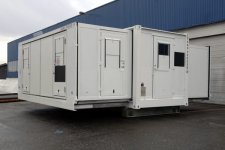
My husband and I would really appreciate your help and advice on our Olive Press/Mill Project. We looked at many options and it looks like we are going to go with converting a 40 High Cube shipping container into the building to house the press. After 3 years we then intend to build a regular building probably on the same site, and move the container and use it for storage. Cost is the driving factor as just the cost for the press is going to be about $85,000, plus delivery and installation etc. Add to that the cost of a building and you can see how we need to economize to start with.

Here is a link to the site and starting photos- In Picasa make them full screen to see the labels
http://picasaweb.google.com/ProvenceOliveOil/Smaller#
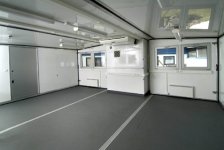
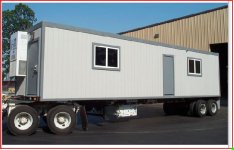
We are going for a simple conversion as shown in the pic that has a couple windows and doors. I started off trying to find an expandable container but at $240,000 a pop had to drop that idea real quick. 2 photos of expandable containers are shown, one exterior one interior.

Here are a couple links to Sea Box a company that modifies containers
http://www.seabox.com/v3/modified/examples/
http://www.seabox.com/v3/modified/gallery/

I will start with several posts in order to break out the different pars of the project. In this way all you great TBNers can respond to sections of the project more easily. It took me hours to write this thing up so I could present it nice and organized.
 

Attachments

  • ContainerWithWindows.JPG
    ContainerWithWindows.JPG
    48.2 KB · Views: 254
  • ExpandableContainer1.jpg
    ExpandableContainer1.jpg
    44.5 KB · Views: 349
  • ExpandableContainer2.jpg
    ExpandableContainer2.jpg
    45 KB · Views: 309
  • Press.JPG
    Press.JPG
    30 KB · Views: 329
/ Shipping Container for Olive Mill
  • Thread Starter
#2  
Part 2 of the project The Site
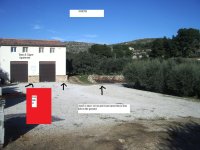
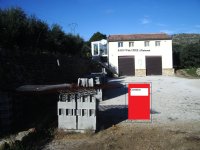
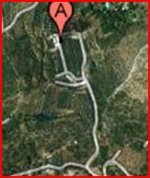
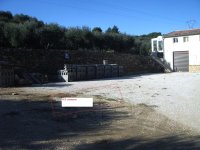
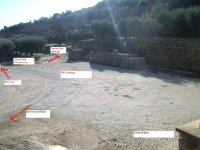
The site is nicely situated with good drainage and ready access to sewer, water and electric. You can see the pics. Perhaps I don稚 know what I don稚 know but if you have any comments or suggestions on the site please offer them. We are thinking to just bring in the container and plunk it down. Well kind of. I guess we should raise it up a little bit to prevent rainwater entering. I am looking for suggestions here. I did see a photograph of a container on wheels.
The olive crates are pretty heavy when filled like about 50lbs. It would be nice to be able to use a dolly to move them into the container building. Our neighbor has a mini excavator with forks so maybe there is an opportunity there to fork them up into the building.

I am going to try to get away with not installing a toilet as we have a nice one in the barn. We値l see if that flys or not, I think it will. I think we will have to connect to our sewer system as we will legally need a sink in the building. We will need to bring in water as well. We will also need floor drains as there tends to be a lot of mess during milling. This information is pertinent to the site I think.
 

Attachments

  • North2.JPG
    North2.JPG
    155.7 KB · Views: 183
  • North1.JPG
    North1.JPG
    153.3 KB · Views: 199
  • N_E1.JPG
    N_E1.JPG
    159.7 KB · Views: 219
  • SatelliteView.JPG
    SatelliteView.JPG
    16.6 KB · Views: 219
  • W_NW1.JPG
    W_NW1.JPG
    164.3 KB · Views: 192
  • SW1.JPG
    SW1.JPG
    200.9 KB · Views: 207
  • West1.JPG
    West1.JPG
    199.6 KB · Views: 178
  • West2.JPG
    West2.JPG
    206.9 KB · Views: 186
  • West3.JPG
    West3.JPG
    210.7 KB · Views: 336
/ Shipping Container for Olive Mill
  • Thread Starter
#3  
Part 3 of the Project the Container Building shell & cutting into it-
Since the measurements of the mill are given in meters I値l give the dimensions of the container in meters also. Since we have space the outside, the external dimensions are not as important as the inside dimensions so I will only provide the inside dimensions.
Interior Length= 12 M (Meters)
Interior Width = 2.33 M
Interior Height = 2.65 M

Cost- We have a quotation of a single use 40ft high cube container for 3,600 Euros
The single use ones mean it was only shipped one time, they are like brand new, nice paint good floors etc.

Windows and doors and holes-
3cm for electricity
3cm for water
10cm to evacuate olive paste residue
25cm to evacuate leaves
12cm cut in floor for drain
245cm wide for a roll up door
------------------------------
486 Euros is the price quoted to cut the holes

90cm wide x 200cm Tall for a Man Door
100cm x 100cm for a window
--------------------------------------
390 Euros is the price quoted to cut the holes
But actually we feel we need 4 windows

Installation Price
A Window 150 Euros
A Man door 150 Euros

I am inclined to think we need two roll up doors, 4 windows and one man door plus the cuts to bring in utilities and the holes needed to excrete the olive waste, leaves, paste, water. We would have a door company install the doors, man and overhead.

What tools are needed to cut out the openings? This is a complete mystery to us and we are hoping for a lot of input here. Exactly how is this done? What tools are used etc.
 
/ Shipping Container for Olive Mill
  • Thread Starter
#4  
I'm sorry I got his one out of order, jeesh
Part 1 of Project Flow chart of olive mill- How does it work from olive intake to olive oil output. Please see the flow attached. Additionally I値l list the steps below-
  • Olives enter in crates
  • Olives are weighed on a floor scale
  • Olives are dumped into a DLE. A machine that removes the leaves and twigs, washes the olives and then augers them up to the hopper for crushing. The leaves exit the building via a pipe.
  • Olives enter the hopper and pass on to the crusher, they are crushed pitts and all, producing olive paste.
  • The olive paste moves to the maloxer which is kind of like a kneading machine, the olive paste is kneaded to tease out the olive oil from the meat of the fruit.
  • The paste and oil move into a centrifuge which spins everything and the paste is extruded into a pipe with a pump and is pumped outside. The oil water mixture is moved to a decanter. (On the flow chart and schematic the decanter is not shown. Shown is a Florintine Vase which we won稚 be using.)
  • The decanter separates the oil from the water. The water exists via a pipe to the outside.
  • The olive oil is weighed. Interestingly the volume is oil is not determined volumetrically, instead the volume is determined by weighing the oil. They know that xx kilos of olive oil = xx liters of oil.
  • The residue olive pasted is pumped outside the building and must be pumped into something. There are a lot of environmental laws on this. What the mills typically do is pump it into a fertilizer spreader and spread it out in their fields. The only fertilizer spread we have is a cone shaped one so I don稚 know if that has enough capacity or not. Plus my husband needs the wagon (connected to the PTO) on the back of the tractor to bring in the olives so we have an unresolved issue on how to deal with the residue olive paste.
  • The waste water from the DLE. This isn稚 very much but we still have to eliminate it. Initially I am thinking of a dry well.
  • The waste water from separating the oil and water mixture. This is kind of toxic water and needs to be handled correctly, there are regs on this. It can be used to spread on your fields as weed control, but we won稚 need weed control in November when the harvest is. We do have 3 plastic tanks at 1,000 liters each and we may just pump it into one of these tanks.
 

Attachments

  • MillFlowChart.pdf
    431.5 KB · Views: 266
/ Shipping Container for Olive Mill
  • Thread Starter
#5  
Part 4 of the Project the Container Building Insulation and walls & ceiling
Insulation - We need the building insulated but don稚 have a clue. Please be specific. With your recommendations. If it requires us attaching 2 x 4痴 to the walls then what tools and screws do we need to do that? We can get the Styrofoam board type of insulation can we just glue that on? What about vapor barriers? Needed not needed? Remember this is a container so it is steel. We intend to use the building only for about 6 weeks a year but they can be cold months. We will not store our olive oil in it, we have an excellent olive work room in our basement. Don稚 forget we intend to abandon this container in about 3 years and build a proper building at which time we would use it to store farm implements probably.

Walls and ceiling- We need to cover the walls on top of the insulation with something. The regs say it has to be more or less a sealed type of thing. If we didn稚 insulate then our plain steel walls would meet regs.
 
/ Shipping Container for Olive Mill
  • Thread Starter
#6  
Part 5 of the Project the Container Building Floors
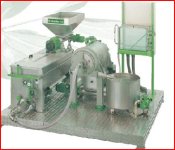
By regs the floor must be bowl shaped, in other words they want it to slant down towards the center to a drain. The floor is really important as there is always olive oil spills and leaves and junk that gets on it. I am thinking maybe just concrete. We need a floor drain down the center, like a channel. Slope from the sides to the center drain. Was just at a mill 2 days ago and saw this, the channel is about 2 inches wide. I assume the question of how we cut into the floor, which is steel covered by plywood is going to be answered in Part 3. If we wanted concrete floors how do you go about building the forms? Where the press equipment will be bolted into the floor there we want it pretty level with just a slight slope. In the pic it shows the press on a steel pallet but we won稚 be having it that way that we will be having it bolted to the floor. How thick a floor do you think we need? The press equipment will weigh about 2,000 kilos I think.

If we don稚 do concrete and instead go to tile, how does that slope get in there with tile on a plywood sub floor?
 
/ Shipping Container for Olive Mill
  • Thread Starter
#7  
Part 6 of the Project- Electric, plumbing and heating.
I知 not to worried about this part as we have a good friend who is a retired electrician. The regs say no electric on the walls or floor, all electrical outlets must be in the ceiling. Plumbing will be pretty minimal with just the floor drains, a hose bib or 2 inside and a sink. I think locally we can find the experts.
 
/ Shipping Container for Olive Mill
  • Thread Starter
#8  
Part 7 of the Project- The Mill (press)
It is gonna be tight we know width wise, but we are willing to squeeze for a couple years. Please see the attached schematic which is not 100% correct as we will eliminate the Florintene vase, the oil receiving tub off the centrifuge, and install in line with the centrifudge a decanter which will be about the same size as the centrifudge I think. This is shown in the flow chart in the part 1 thread.
 

Attachments

  • SchematicOneLinePress.pdf
    388.9 KB · Views: 221
/ Shipping Container for Olive Mill
  • Thread Starter
#9  
Part 8 of the Project Delivery of the container-
Fortunately for us another neighbor owns a moving company, quite a large one, and we will ask them to bring over a lift truck to move the container off the truck and set it in place. They have containers at their business, I have seen them. They also have olive trees and need pressing so we will do some kind of a deal I知 sure.
 
/ Shipping Container for Olive Mill #11  
Rox, as soon as you mentioned cutting out the floor and pouring concrete the container idea seemed to resemble a monster in the making.

By the time the modifications to the container are made[estimate the cost's, double and add 50% and chances are it will be right on] you may want to consider building your own building.

Add in the container dimension limitations and I'd seriously look at other options.:D
 
/ Shipping Container for Olive Mill #12  
I'm looking forward to this thread. I know nothing about the production of olive oil. Rox, I have to agree with Egon if you're doing more than putting a few windows and a door in the container you might want to rethink it. As far as the styrofoam insulation I've installed it against metal before using construction adhesive. Keep in mind though I had it fitting pretty snug within the framework.
 
/ Shipping Container for Olive Mill
  • Thread Starter
#13  
Container it is going to be guys. Have had quotes from 5 contractors, converting the barn, building a shell etc. The very best price we got was 30,000 euros for a shell 6m x 10 m with a concrete slab, no windows nor doors, plubming or electric. Really just a shell. Can't beat the cost of the container with mods. Plus a container we can move and use or else just resell. 5 quotes are enough we have been working on this since last September. Even got a quote on a metal pole barn, same $$$. Container it is going to be for 3 years.
 
/ Shipping Container for Olive Mill #14  
rox:

I have to agree with Egon that I think costs are going to balloon on making the modifications you want on the shipping container.

OTOH, if you are dead set on a container, here are some thoughts.

1. You can get containers with full-size doors on both ends. This eliminates the need for any roll-up doors. You may even be able to get one with full doors on the ends and a man door in the middle.

2. If you are only going to use it for a few weeks per year and only for 3 years, don't bother to insulate it. Sure, there will be heat losses, but most insulation has a payback time of several years. The cost of the insulation will be much more than the savings on heating costs for this kind of limited use. Just jet a salamander heater and use it as needed. This also saves on interior finish since the metal walls are probably OK as is.


3. Try to support the container high enough to run your pipes and drains on the surface under it--much easier to install. Give yourself about 18" of clearance so someone can crawl under to repair the plumbing under it as necessary. Insulate the pipes under the container and I doubt they will freeze. If necessary, block air flow under the container. See if the container is strong enough that you can use your tractor to build a dirt and gravel ramp into and out of the container at each end, both to support the container ends and to provide a path in and out. You may need a dirt mound crossways in the middle of the container.

4. The bowl-shapped floor is going to be a major issue. The least expensive thing I can think of is concrete with a steel-trowel finish. It is smooth and slick and they may let you get away with just that. Instead of a V-shapped floor with a central channel, think about dividing the floor into "cells" say four 10' long by 8' wide cells, each with a slight funnel shape and a drain in the center.
 
/ Shipping Container for Olive Mill
  • Thread Starter
#15  
CurlyDave, thank you. I spent a long long time putting all my materials together and organizing it give as much information up front to the members in the hopes of getting back practical feedback. Maybe it got lost because I misplaces Part 1 but the cost of the container is 3,600 Euros much less than the best price 30,000 shell.

I'll like a roll up door simply becasue someone will be inside working 24/7 during the harvest and it freezes at night here in November even we get snow sometimes during the day. I think a roll up door is going to be nicer to operate than pushing the heavy doors open and closed. Many times and hour the door is going to be opened as olives are brought in and oil is taken out. Figure a batch takes an hour. Depending on price we might get 2 roll up doors, one for an end and one in the middle.

You have me worried now about the floor. Why is it a big deal? I don't know, what I don't know Dave. I don't think it is practical to do the idea of of dividing the floor into cells and a drain for each. We will be moving around on a hand cart 60 liter tanks of oilive oil that weighs my guess 120lbs. Lots of times at the mills they like to just slide them on the floor, kind of pull them across the floor. And don't forget those 50lb crates of olives we will have to push around to get in position to dump. Typically you bring in the olives into the mill to warm up a bit before pressing so there is going to be a lot of movement of crates of olives on the floor. Floor drains are an impediment to dragging things across so one long channel down the center is what I have seen. What are your thoughts on why this is going to be hard to do/build? I am thinking plain concrete also but maybe someone has a better idea.
 
/ Shipping Container for Olive Mill
  • Thread Starter
#16  
I just told my hsuband about your post about not getting the payback on the insulation and putting in walls and a ceiling just to heat the thing for about 6 weeks for 3 years. This was like a Eureka moment for us :) We went and looked up salemander heaters and this is not going to work. Olive oil is flamable and they are not going to let us have heat with an open flame, we will probably just do electric heaters and they will have to be off the floor. Plus the equipment will be generating heat.

My husband wants to know what do you think about that insualtion that is like bubble wrap and has like aluminum foil on both sides. You jsut tape it up. Do you think there would be any merit in that?

Already i am getting payback for my time investment of the postings. Hey maybe don't even bother insulating, we never thought of that.

I can't wait for Eddie Walker to find my Topic since he already built a container cabin. I'm thinking he is going to have experience to share.
 
/ Shipping Container for Olive Mill #17  
Oh boy This thread will go on for a while.
I think what you want to do can be done. Start with holes in the floor or anywhere else. The safest way is to drill holes at the corners, start wit a 6mm drill and make bigger to 12mm. Then use a swazall , saw with reciprocating blade sticking out the front , to cut the lines. There are all purpose blades that will work on metal and wood. For windows and doors you may use 2-4 blades per opening. The corner holes should be inside the cut lines so the cuts are square and clean when all is done. Side note , probably no structural hit for windows but the big roll up doors take a look at the container structure. It may need some reinforcing around the opening.
Now to the tapered floor. piece of cake. Concrete is leveled off by screeding. That is a process of running a support board at each end of the pour and then running a screed board across the top of the support boards. In your case you want the floor to taper from the sides to the middle. Concrete pour wants to be 2 inch minimum and the taper wants to be maybe 1/4" per foot( your turn to convert) . Spray up a 2 x4 or metric equiv with diesel , place it in the middle of the container the long way , need something to hold it down temporarily, nails, screws, double sided tape. This will be the center drain when the 2 x 4 is removed later . At the sides of the container run another guide board higher so as to create the pitch to the middle from each side.
When you pour the concrete you level it out with another board riding on the upper edge and the center. Each side separate. When the concrete has been generally leveled the upper board is pulled our and a couple of shovel fulls of concrete used to fill the space. The concrete previously leveled can be used as a base to level that little bit. The middle drain board is pulled out the next day. If you have never poured concrete before it would be really good to hire a mason to help you. You can do the floor drain hole before or after. If you do it before you need to block it off so it does not fill up with concrete. Also the concrete has to be finished . If you are going to tile it then not too smooth a finish.
Do you need a taper the long way or a couple of drains in the trench.
Can't type any more right now.
 
/ Shipping Container for Olive Mill #18  
Salamander and other units that burn fuel are probably not right for food processing. Look at radiant heaters , either propane or electric. You may not have a high enough ceiling . But they heat people with no fumes. The gas models vent out side. Insulating might be better motor heat and people moving might be enough if there is no wind.
I would look at some kind of hard board or quilted batts. Something that will not fray and dump pieces all over the food. You said the sides of the container are wood inside? Might be enough for limited use.
 
/ Shipping Container for Olive Mill
  • Thread Starter
#19  
6Sunset6- Many thanks I am checking back every few minutes to get ideas. This is a very big deal for us, we finally just today made up our minds when we received the final quote on a building. It has been in the works for a long time and thought about even longer. So I am above anxous to get feedback and ideas. I don't think my husband and I would do the concrete work ourselves that is to heavy of work for us, were over 40 after all. :) Well more thhan that but I'm not going to say how much more ha-ha.

Can anyone give me an estimate of how many cubic meters of concret would be require. I forget how you measure concrete, is it cubic feet? Since virtually everything here is built out of cement block or cement forms there are a lot of concrete craftsmen. We have 3 concrete plants within about a 3 mile radius so at least if I knew how much this job would take I could get an estimate on the crete cost.
 
/ Shipping Container for Olive Mill
  • Thread Starter
#20  
Salamander and other units that burn fuel are probably not right for food processing. Look at radiant heaters , either propane or electric. You may not have a high enough ceiling . But they heat people with no fumes. The gas models vent out side. Insulating might be better motor heat and people moving might be enough if there is no wind.
I would look at some kind of hard board or quilted batts. Something that will not fray and dump pieces all over the food. You said the sides of the container are wood inside? Might be enough for limited use.

We will have good high ceilings as we are buying a High cube 2.6 M high or 8 1/2 feet high, course the floor will take away some of that. The containers are steel inside and painted and have a steel floor that has plywood on top of the steel floor. They are real nice inside actually.
 
 
Top