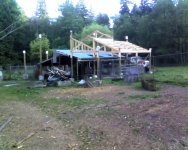
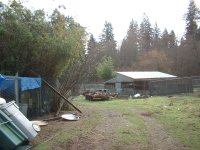
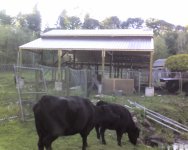
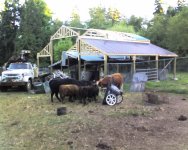
My Horse Barn in Progress

/ My Horse Barn in Progress
  • Thread Starter
#21  
Looks like you got things well under control,as well that dog does too.We built a barn that size when we lived over in MO., be we cheated and had a neighbor that builds tobacco bards do the framing and the roof. Went with a metal roof. We used 1x10 pine boards for the siding. One, it looked better when it was stained and two, it priced out about equal if I did the work, and I work for free. I used pipe clamps to get the boards tight, but they still shrank, so I ended up ripping 2" bats to cover the gaps.

Nice looking horses, but how come the bell boot on the paint? What do you use the horses for? We used to do competitive trail with NATRC. Wife's horse is too old (32) and my horse is gettin there (20) and too fat.

I thought about board and batten, but ended up opting for T1-11. I know a lot of people don't like it, but I've had good luck with it in the past. The trick is to seal every edge, including (or rather, especially) the ones I cut, before nailing it on the walls. By doing that, flashing and caulking properly, and keeping it up off the ground, I've never had any rot problems.

My wife is a dressage rider. The paint is just a buddy-horse borrowed from a friend. His feet were a mess when he showed up, hence the bell boots.

If anyone has a nice fancy warmblood they need to get rid of, please let me know! My wife's in the market for an upgrade.
 
/ My Horse Barn in Progress #22  
About 20 yrs. ago I built a Pole Barn 40'x40' , a work shop 24'x24' and a smaller 16'x 12' building on our farm and used T1-11 - I used a semi transparent stain and have never been sorry...They look great ! I stained them all again after 15 yrs. - only because they were a little dull, I used my compressor , a paint tank and air gun.
 
/ My Horse Barn in Progress
  • Thread Starter
#23  
About 20 yrs. ago I built a Pole Barn 40'x40' , a work shop 24'x24' and a smaller 16'x 12' building on our farm and used T1-11 - I used a semi transparent stain and have never been sorry...They look great ! I stained them all again after 15 yrs. - only because they were a little dull, I used my compressor , a paint tank and air gun.

Good to know! I'm planning to do this one about the same way, though I may end up using an opaque stain or paint. The air gun seems like a must though.
 
/ My Horse Barn in Progress #24  
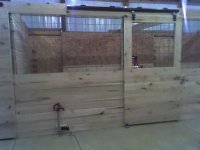
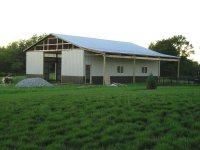
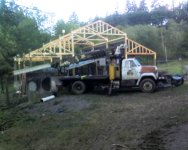
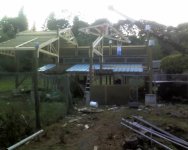
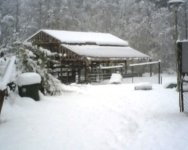
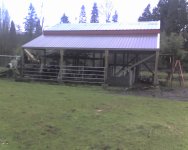
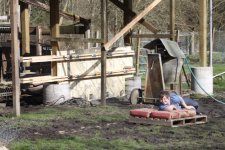
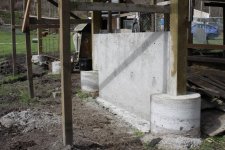
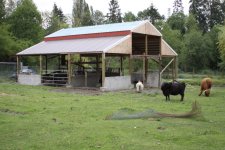
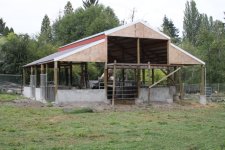
Looks like some pretty good progress. Here are a few pictures of our barn same size 36x48 with a 10' lean to. Some lessons I have learned

1. Put a water shut off to the barn.
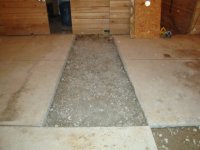
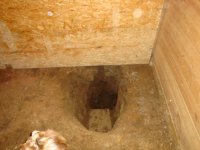
2. If there are any Tee's in the water line make sure they are either outside or put an access to them ( I had to break up concrete in our barn and get to a tee that busted last winter, you can see the hole I dug by hand on the stall side, I rented a mini excavator for the side where the concrete was.)
3. On the stall fronts I would make an opening big enough for your bucket to get into for loading sawdust or cleaning. I only have 4' doors and it is a pain.
4. Horses will chew anything.

We had a lot of fun building ours it was a kit from Menards. We had to put up 28' 6x6 for the center posts and that was pre tractor, it would have been a big help. We used the truck and about 50' of tow strap. We have 3 stalls and one tack room on one side and hay storage on the other with a center isle.
 

Attachments

  • 03-08-08_1901.jpg
    03-08-08_1901.jpg
    59.3 KB · Views: 921
  • DSC00128.JPG
    DSC00128.JPG
    143.3 KB · Views: 687
  • DSC00130.JPG
    DSC00130.JPG
    125 KB · Views: 1,576
  • P1011707.JPG
    P1011707.JPG
    612.7 KB · Views: 1,253
/ My Horse Barn in Progress
  • Thread Starter
#25  
Looks like some pretty good progress. Here are a few pictures of our barn same size 36x48 with a 10' lean to. Some lessons I have learned

1. Put a water shut off to the barn.
2. If there are any Tee's in the water line make sure they are either outside or put an access to them ( I had to break up concrete in our barn and get to a tee that busted last winter, you can see the hole I dug by hand on the stall side, I rented a mini excavator for the side where the concrete was.)
3. On the stall fronts I would make an opening big enough for your bucket to get into for loading sawdust or cleaning. I only have 4' doors and it is a pain.
4. Horses will chew anything.

We had a lot of fun building ours it was a kit from Menards. We had to put up 28' 6x6 for the center posts and that was pre tractor, it would have been a big help. We used the truck and about 50' of tow strap. We have 3 stalls and one tack room on one side and hay storage on the other with a center isle.

Very nice, and thanks for the lessons. I'll try to learn from your pain. Sorry you had to deal with that broken tee. Hopefully I can avoid such problems, but I did put in a ball valve where I teed into the water supply way back at the well head just in case.
 
/ My Horse Barn in Progress
  • Thread Starter
#26  
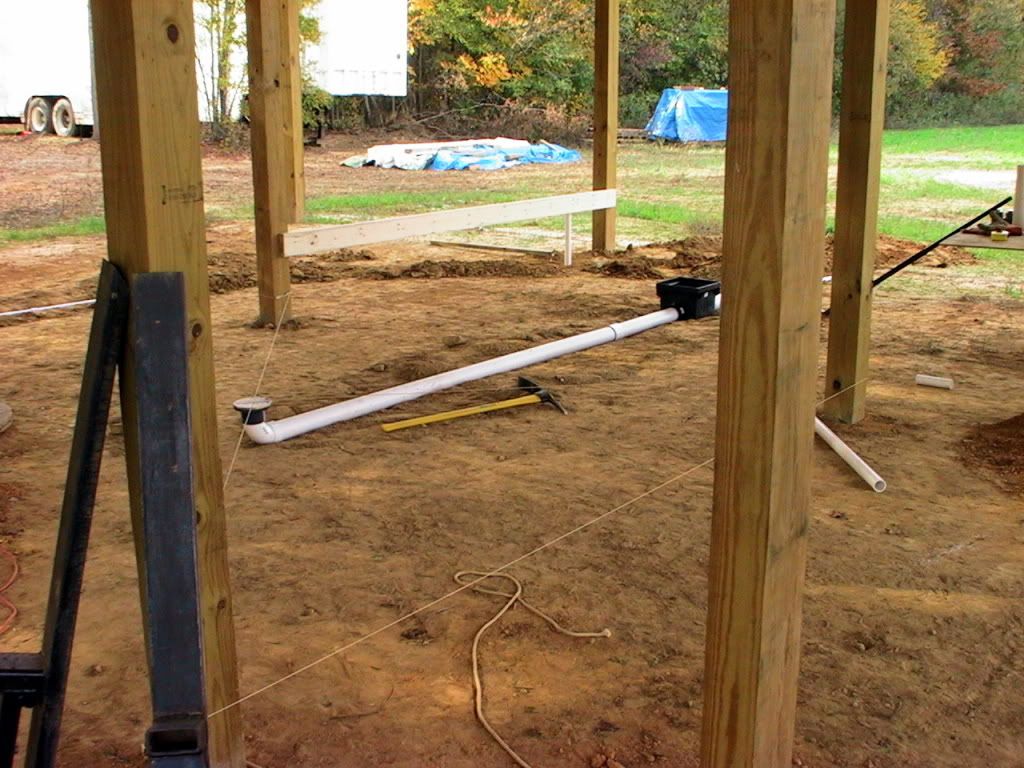
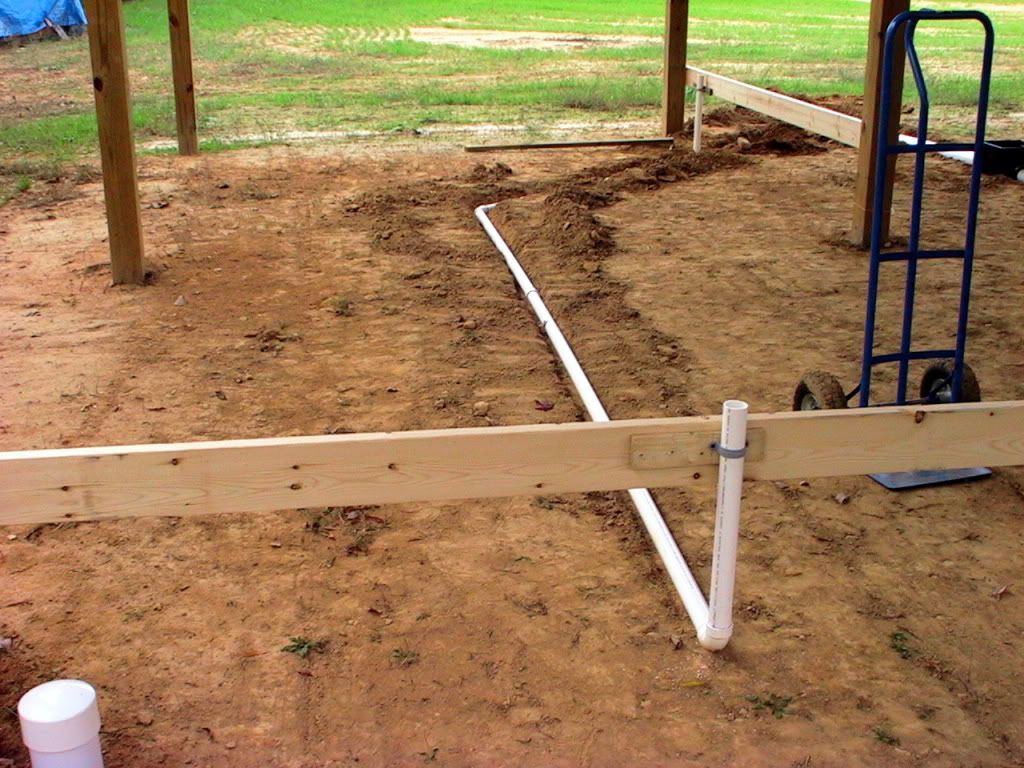
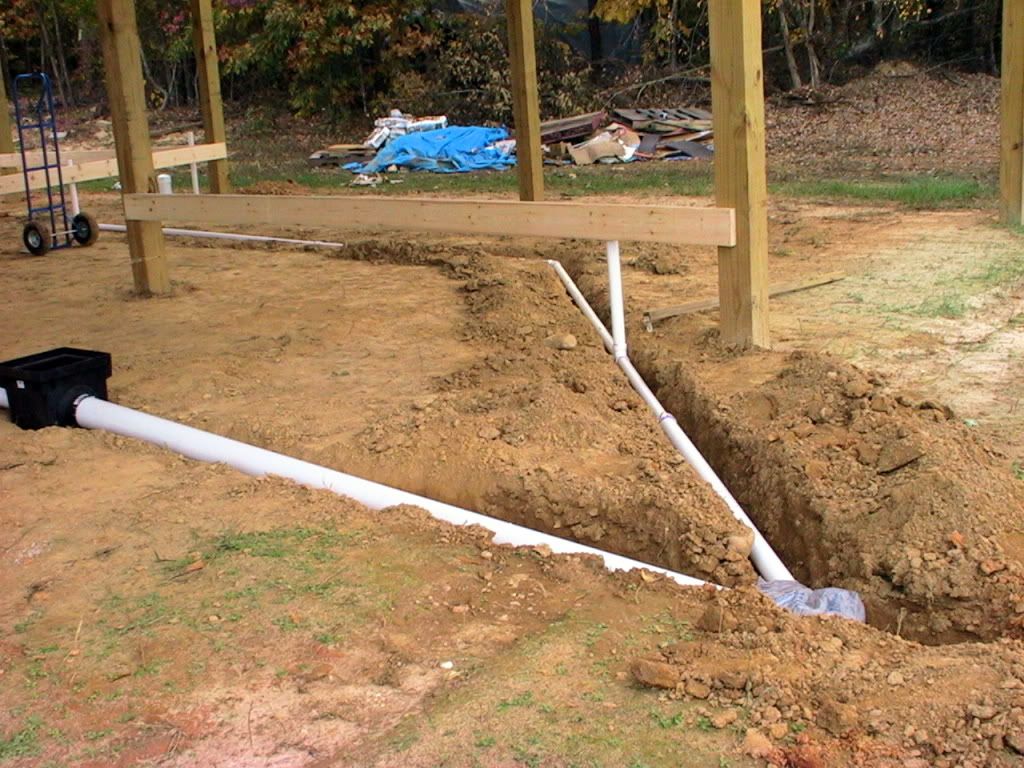
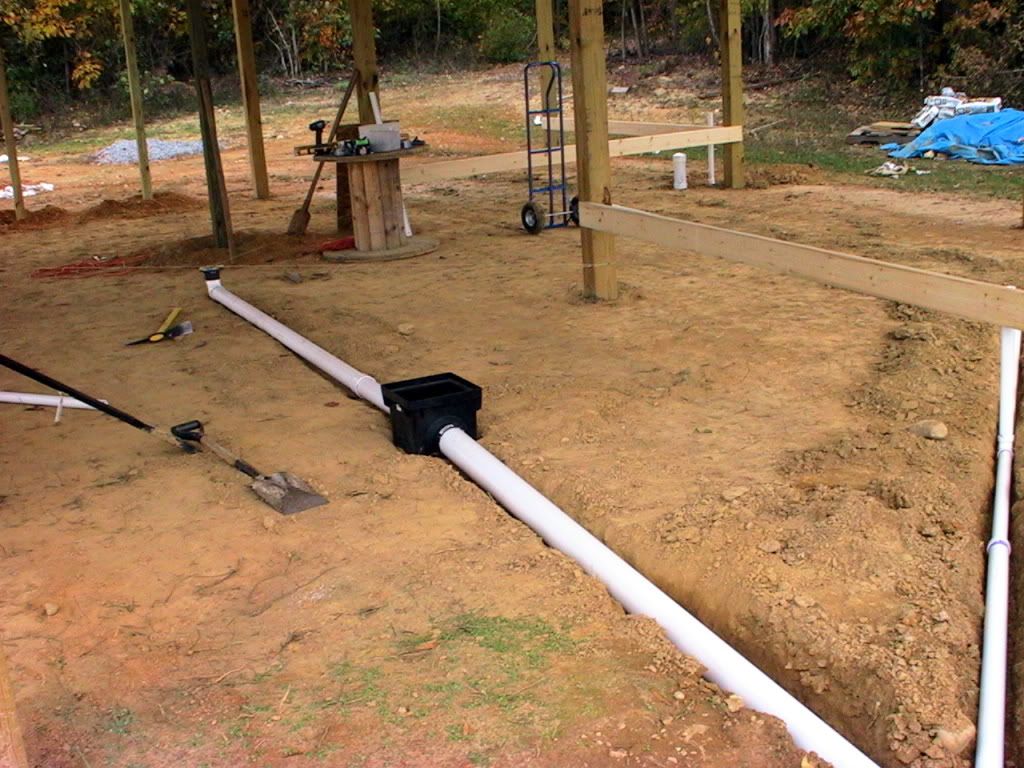
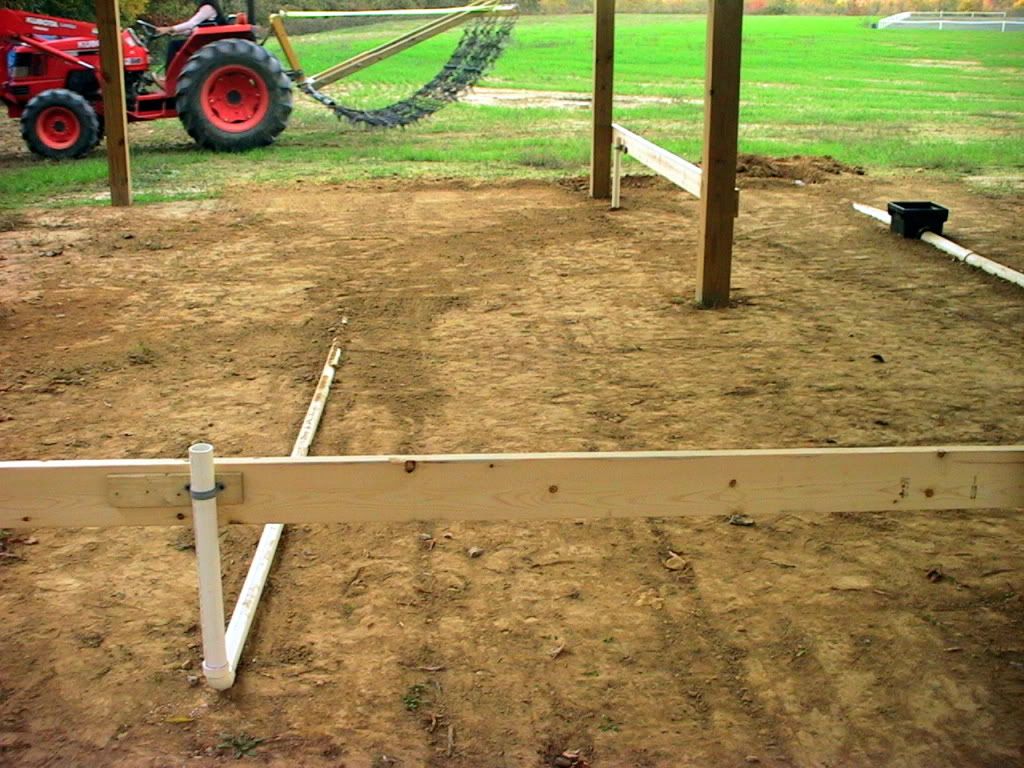
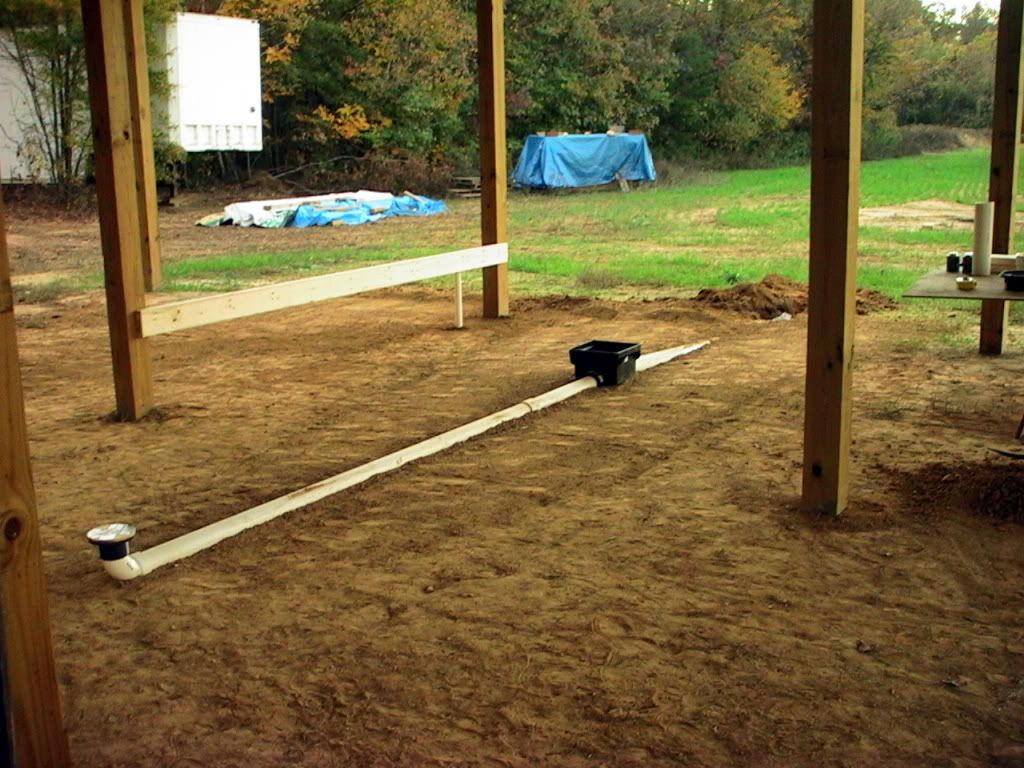
Step 7: Under-slab plumbing

Well, it's been a while since I updated my progress, so here's the latest.

Since this barn will have a concrete floor with sinks, a toilet (eventually), and a couple of floor drains, there's some plumbing to do before the slab goes down.

The tractor wasn't much help here since it's mostly just hand digging. I put in a 12" square catch basin in the wash rack with a smaller 6" round floor drain out in the aisleway nearby. I also roughed in sinks in the two tack rooms. The toilet drains into a separate system and is currently capped off underground outside of the barn. Eventually I'll install a septic system for it and hook it up.

IMG_3576.jpg

IMG_3579.jpg

IMG_3578.jpg

IMG_3580.jpg

IMG_3584.jpg

IMG_3583.jpg

IMG_3600.jpg

IMG_3598.jpg
 
Last edited:
/ My Horse Barn in Progress
  • Thread Starter
#27  
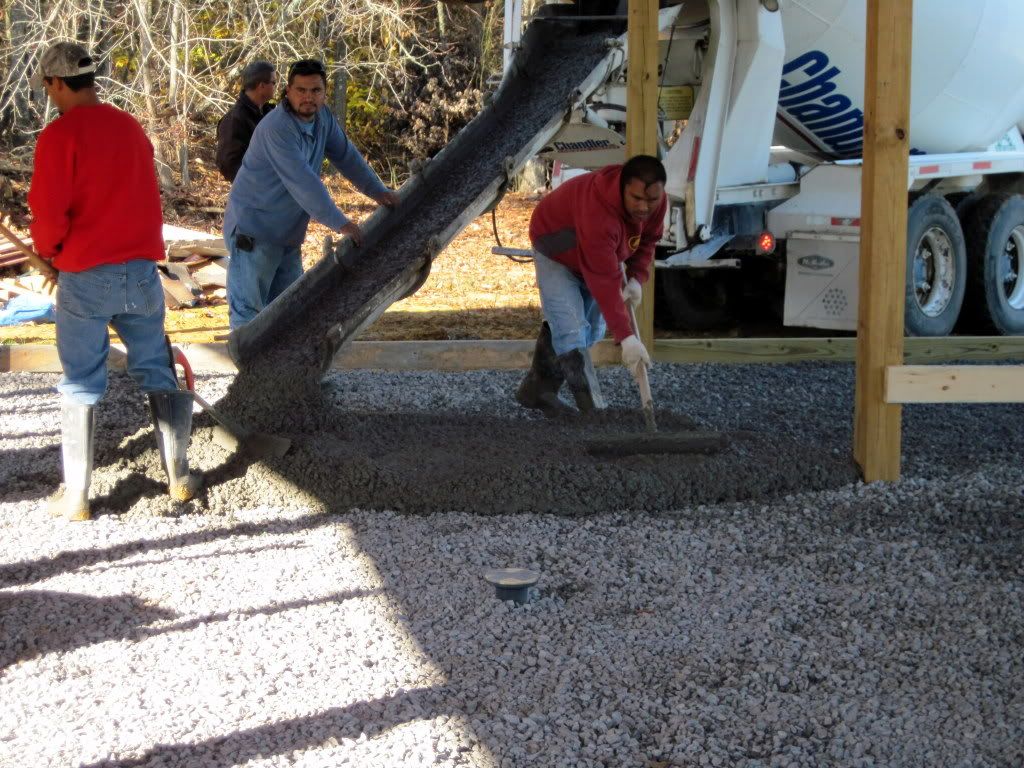
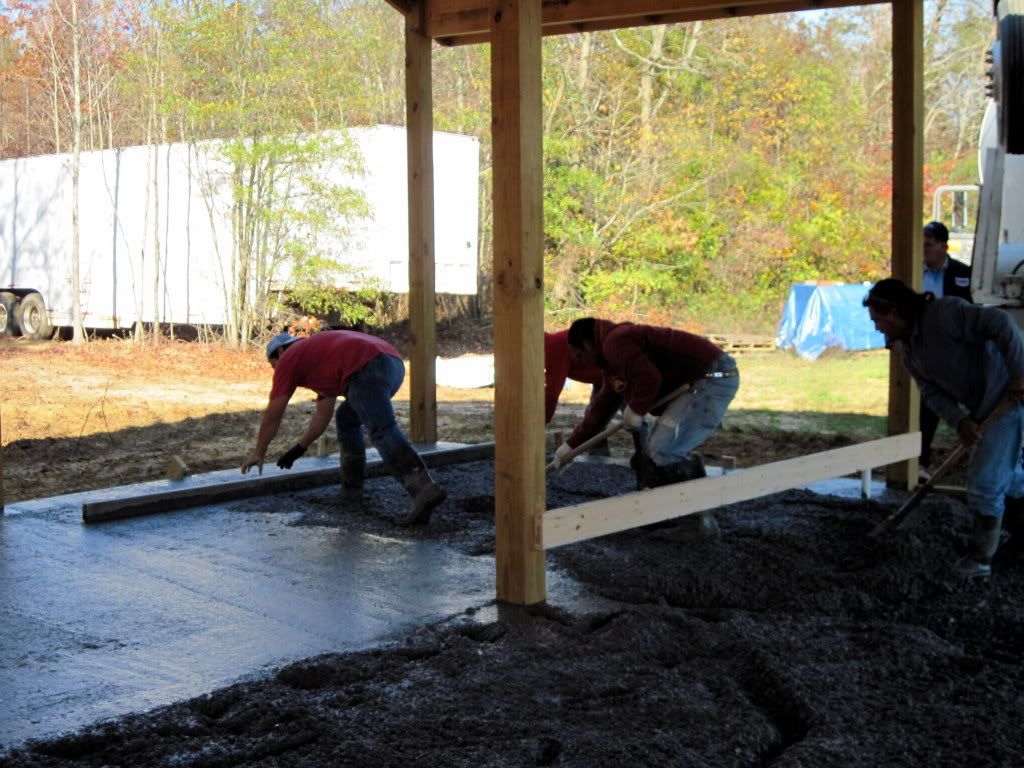
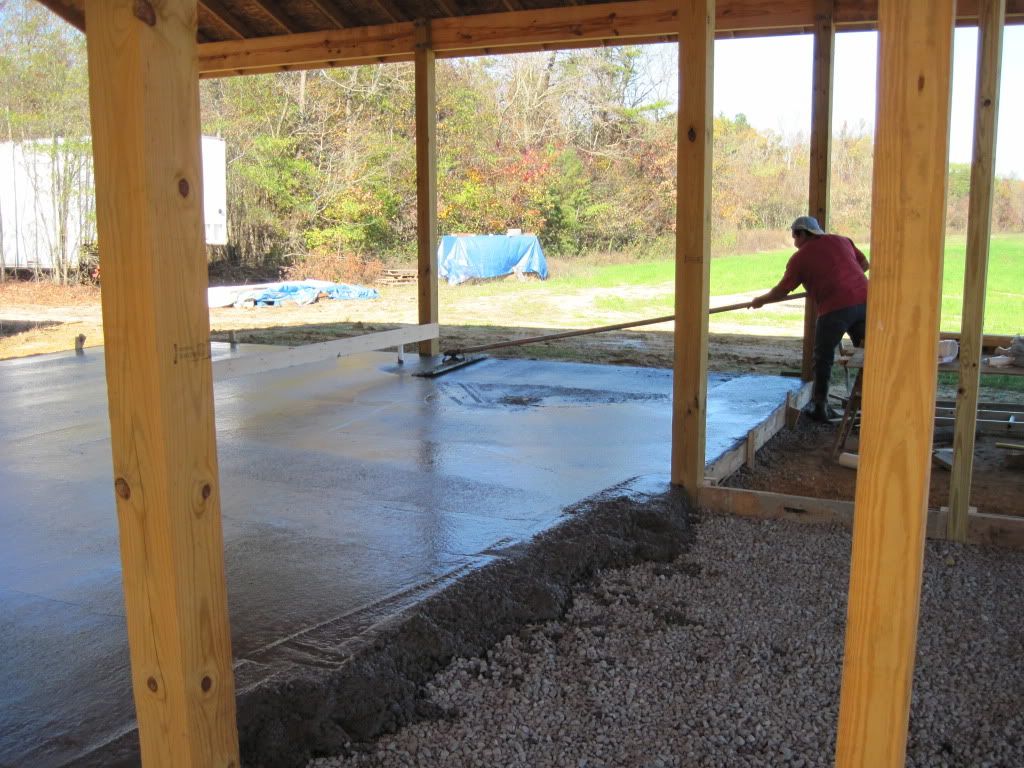
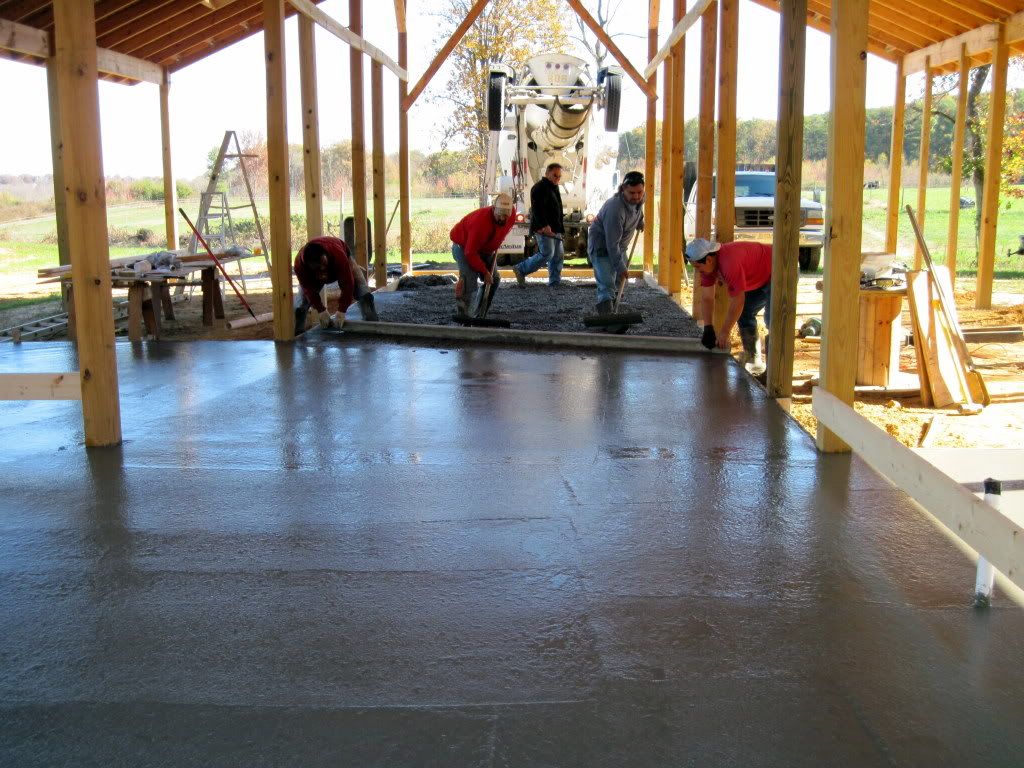
Step 8: Slab

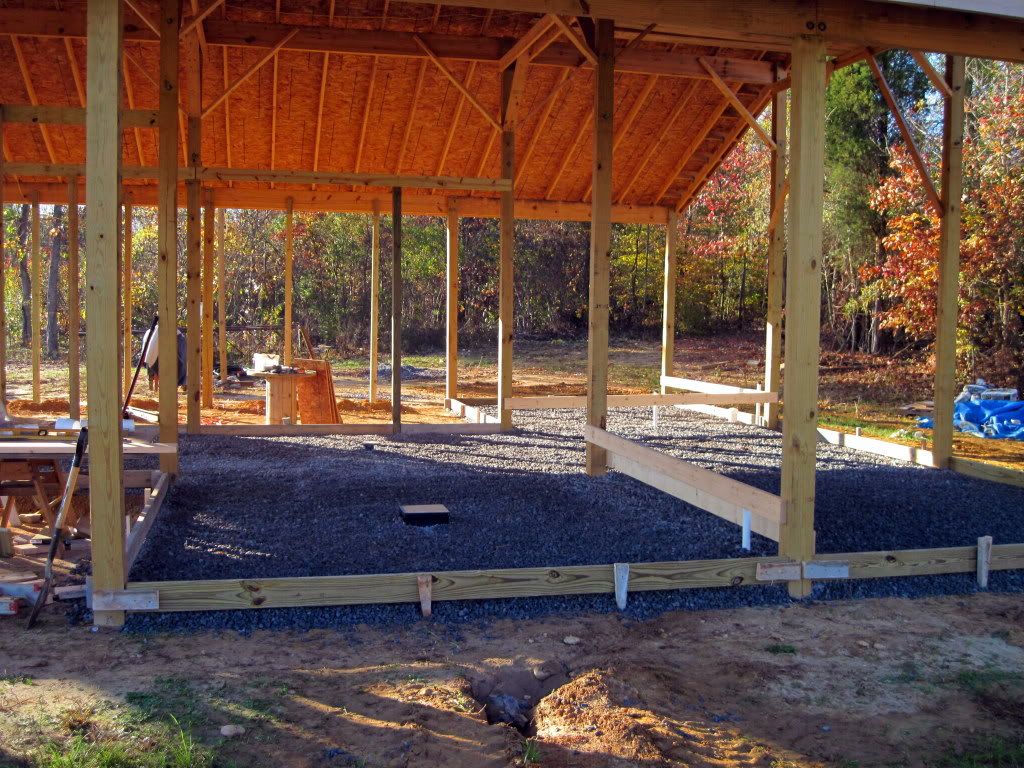
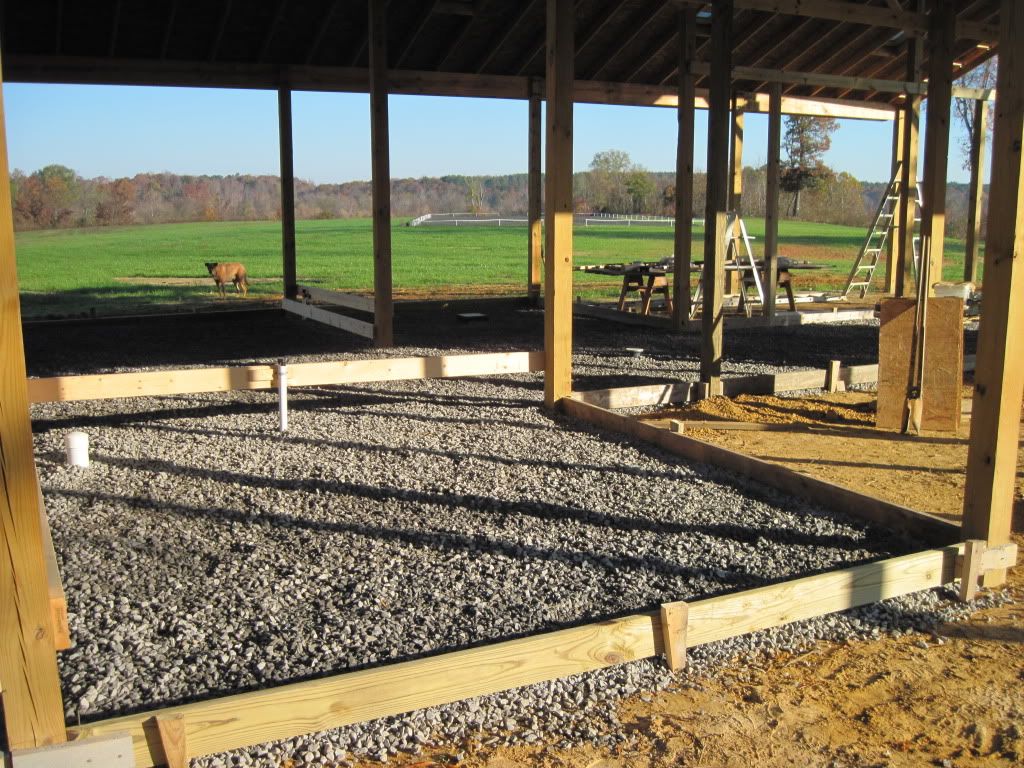
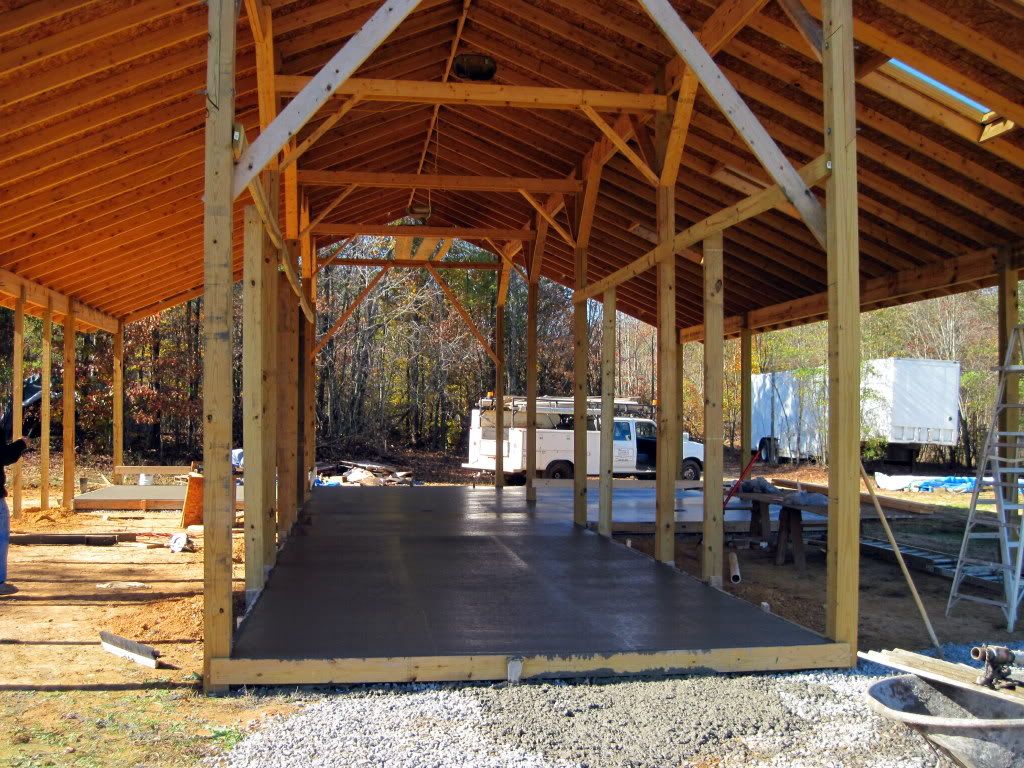
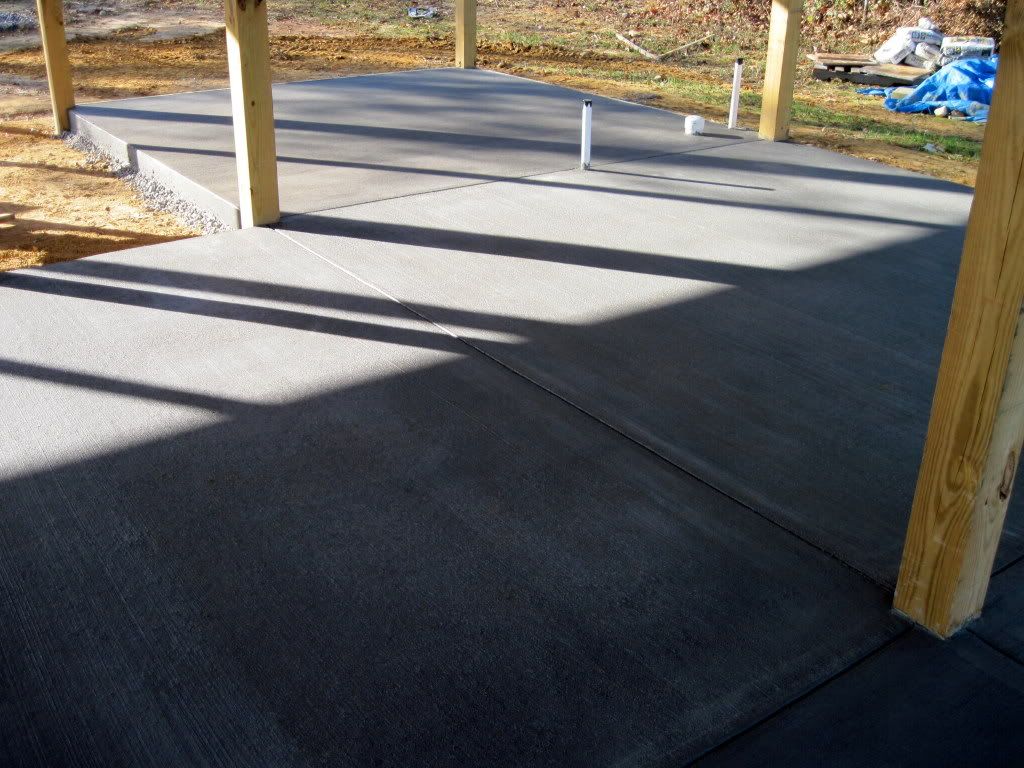
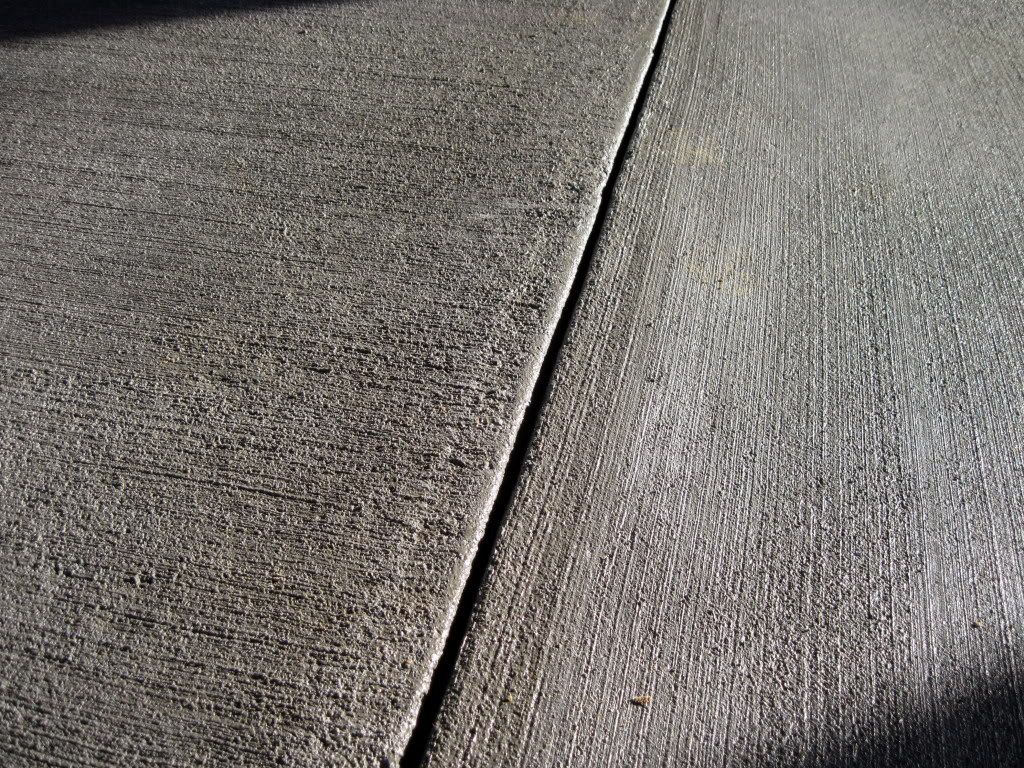
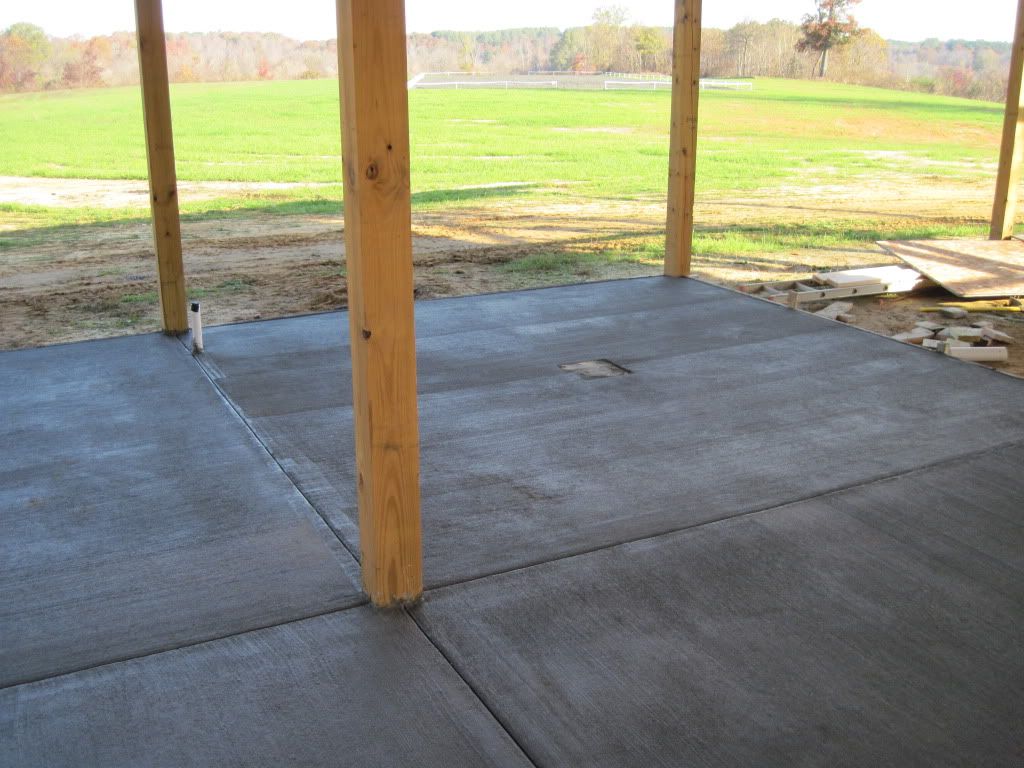
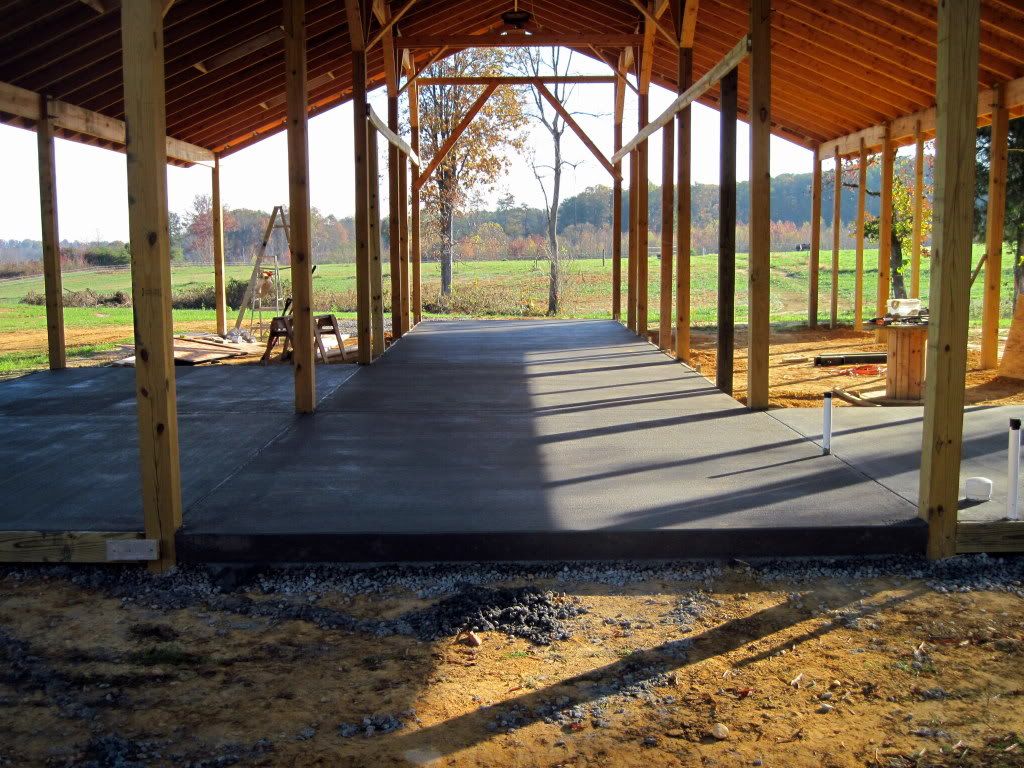
The slab is the first step where I actually hired somebody else to do the work. With a little over 1000 square feet of concrete to spread, screed, float, and texture, I figured it was better left to the experts (and those who's backs can handle the work). I ended up putting a little over 4" of 4000psi concrete with fiber in it over a base of 4" of packed stone.

The guys did a really nice job. They made it look so easy, and did a great job of sloping down to the drains. I'm really glad I hired them to do it. The edges and joints and broom finish look really nice.

IMG_0174.jpg

IMG_0177.jpg

IMG_0189.jpg

IMG_0196.jpg

IMG_0203.jpg

IMG_0209.jpg

IMG_0220.jpg

IMG_0223.jpg

IMG_0226.jpg

IMG_0227.jpg

IMG_0229.jpg
 
/ My Horse Barn in Progress
  • Thread Starter
#28  
Step 9: Exterior wall framing

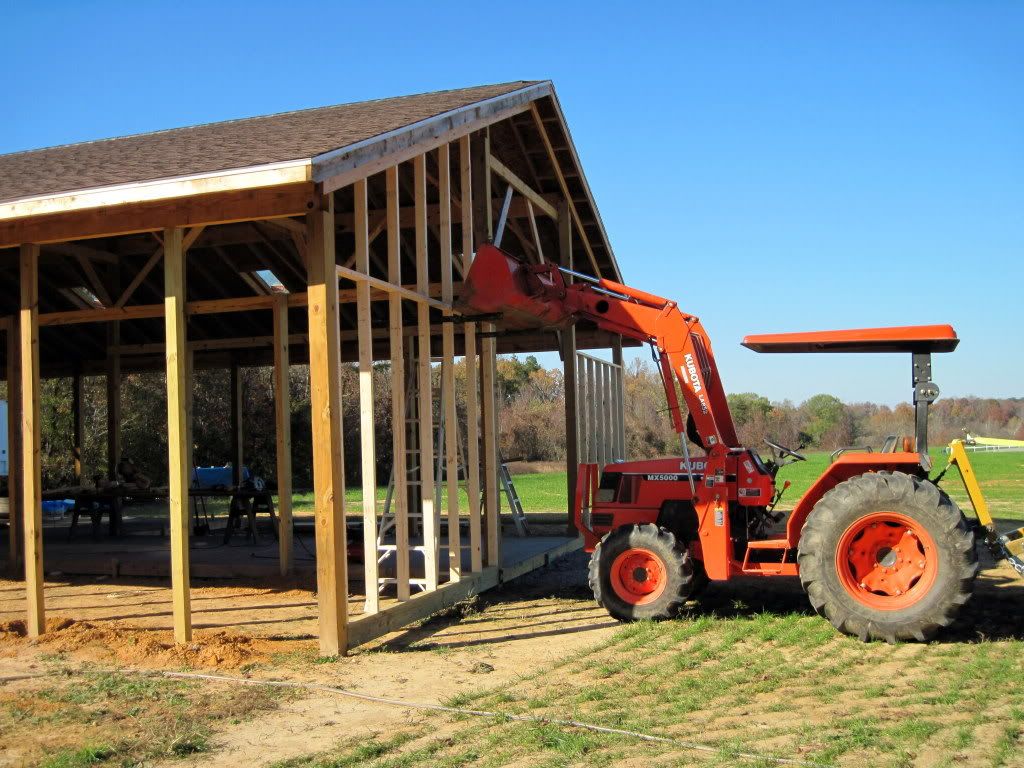
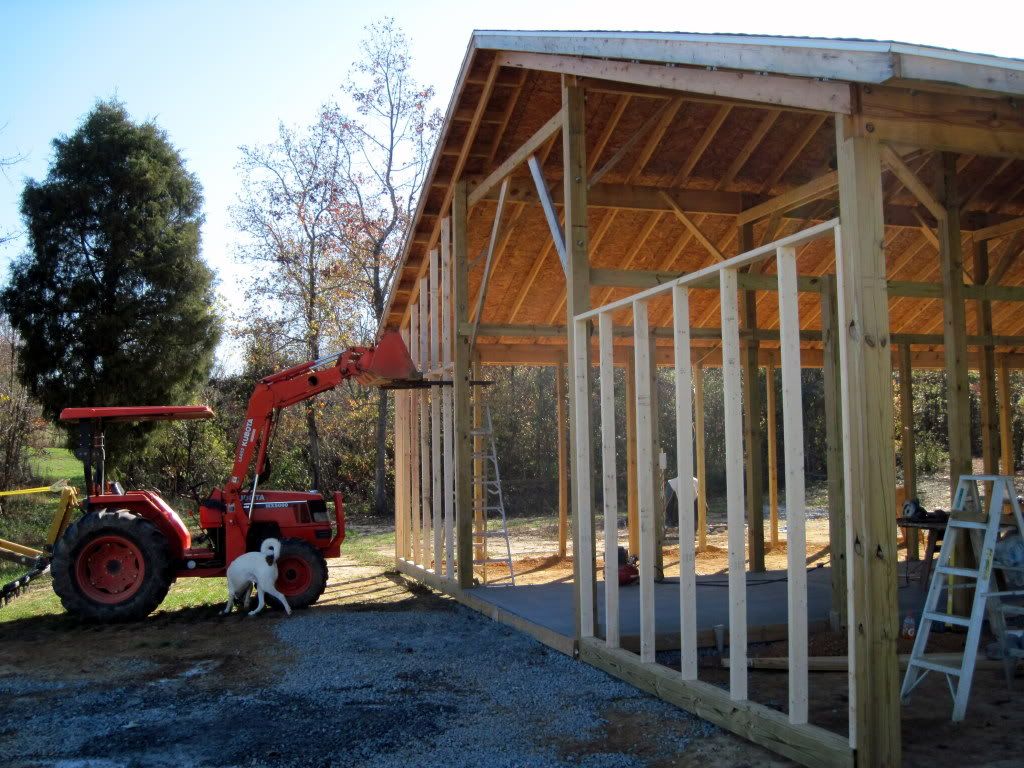
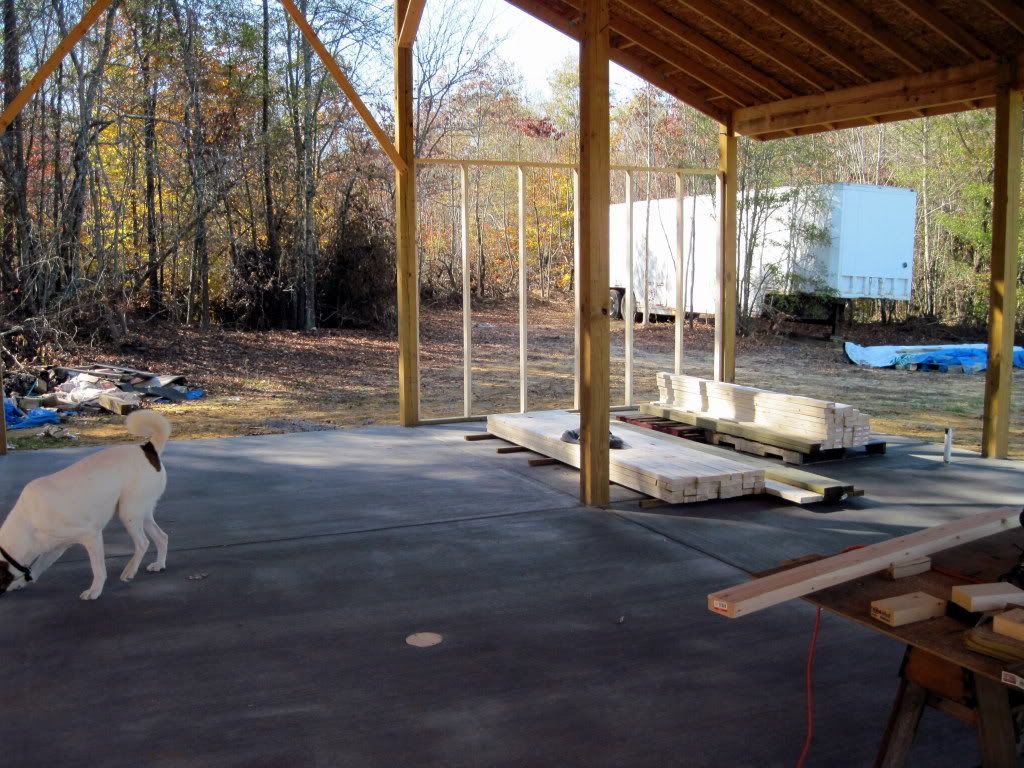
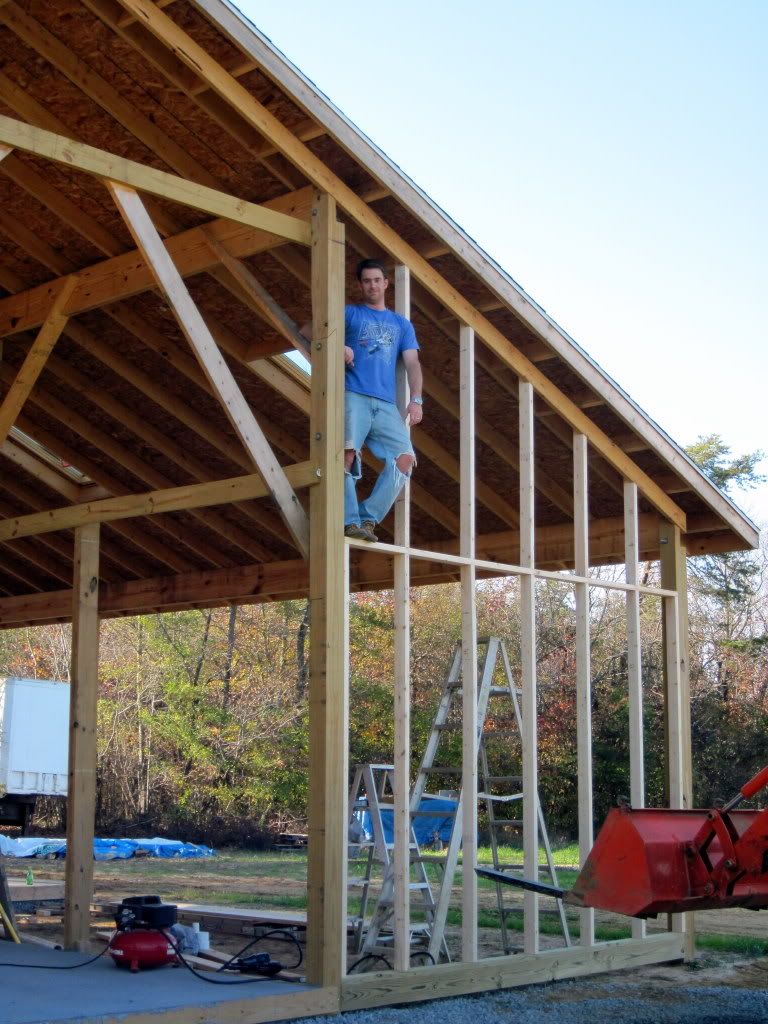
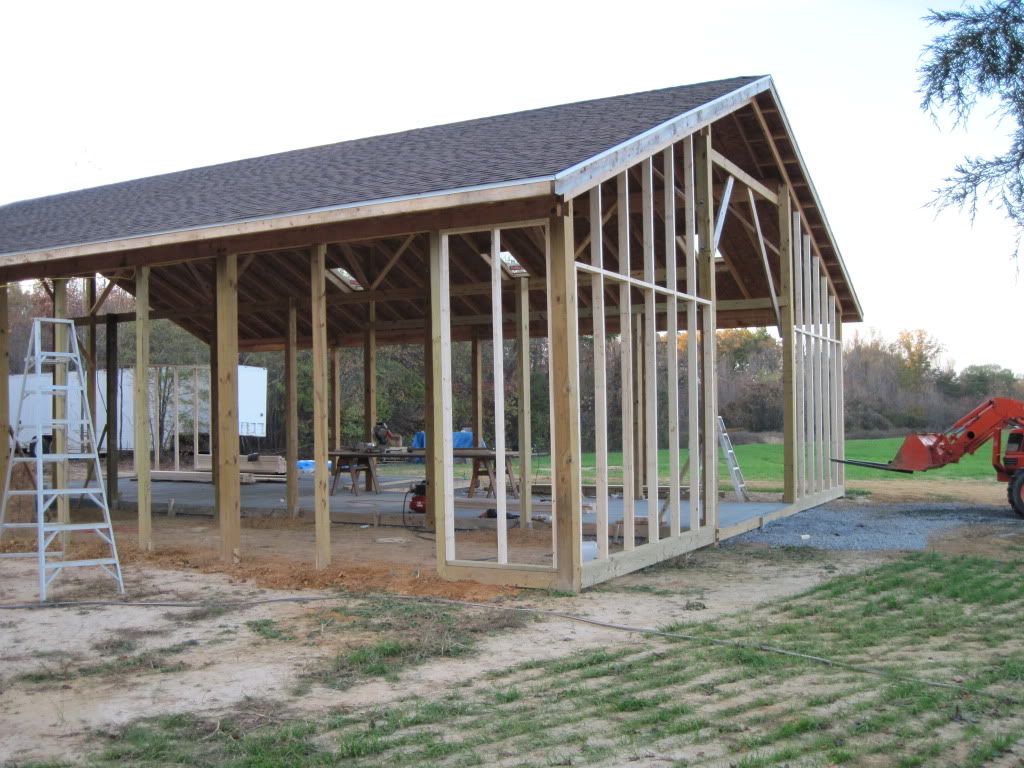
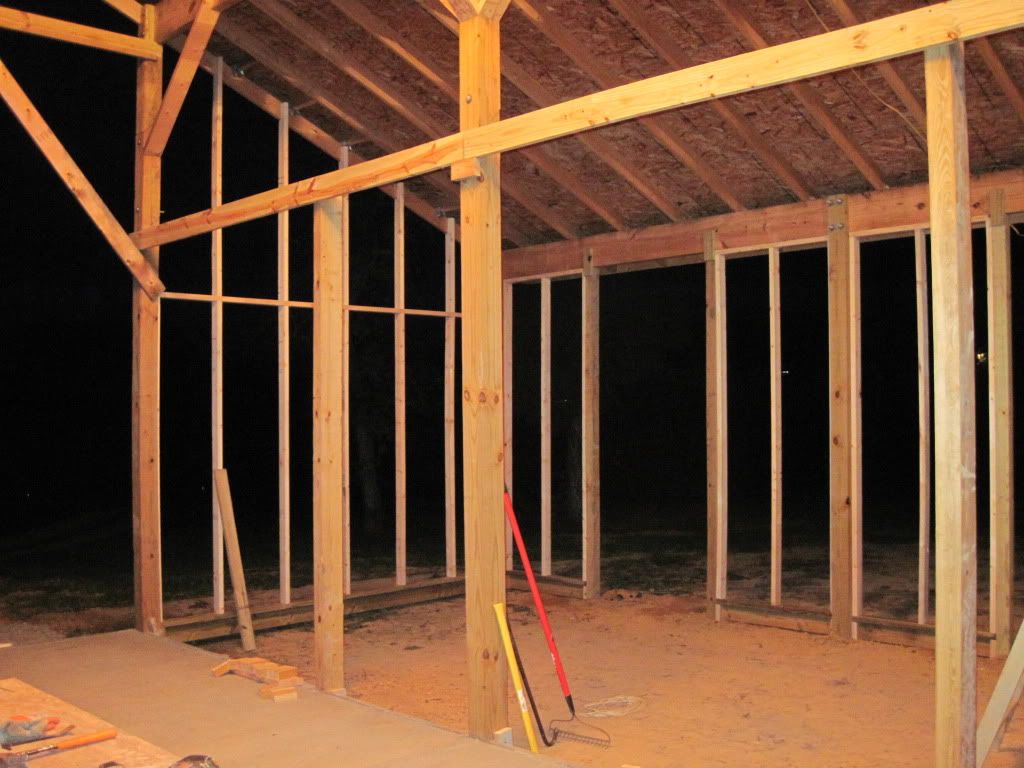
Now I'm to the point of framing the exterior walls. I'm using vertical studs flush with the outside of the posts so I can have T1-11 on the outside and horizontal T&G boards on the inside. I got a little help from the wife so far, but otherwise it's back to just me again.

IMG_0235.jpg

IMG_0236.jpg

IMG_0237.jpg

IMG_0240.jpg

IMG_0244.jpg

IMG_0247.jpg

IMG_0250.jpg

IMG_0254.jpg
 
/ My Horse Barn in Progress #29  
Looks real nice!
 
/ My Horse Barn in Progress
  • Thread Starter
#30  
Step 10: Exterior Sheathing

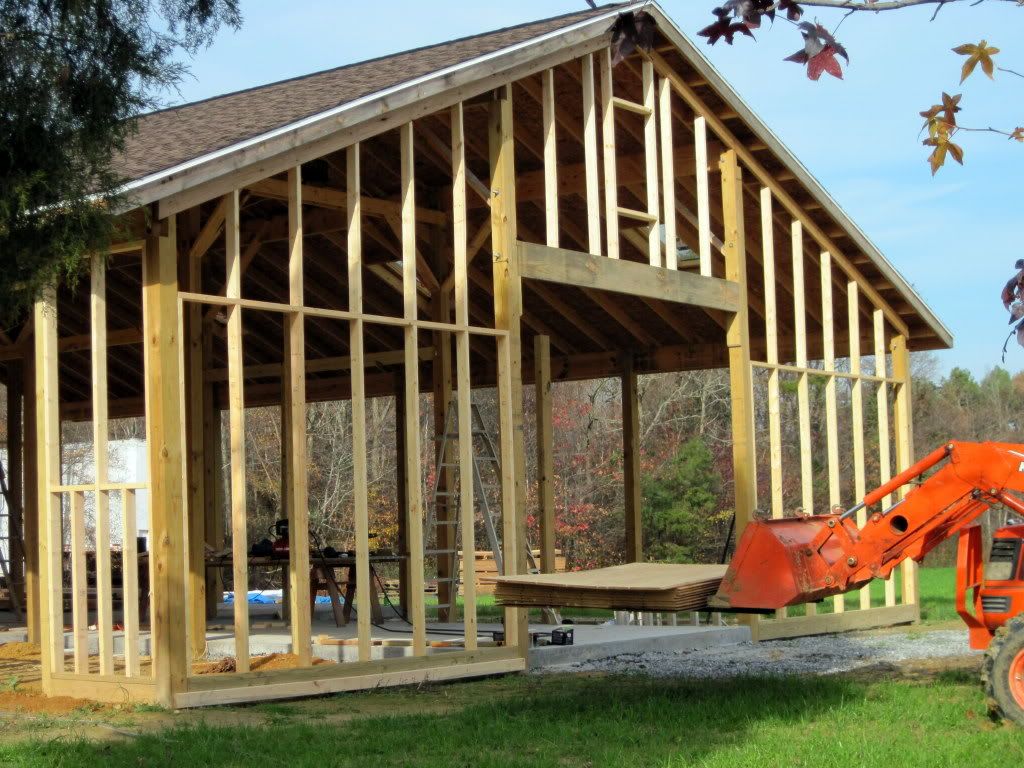
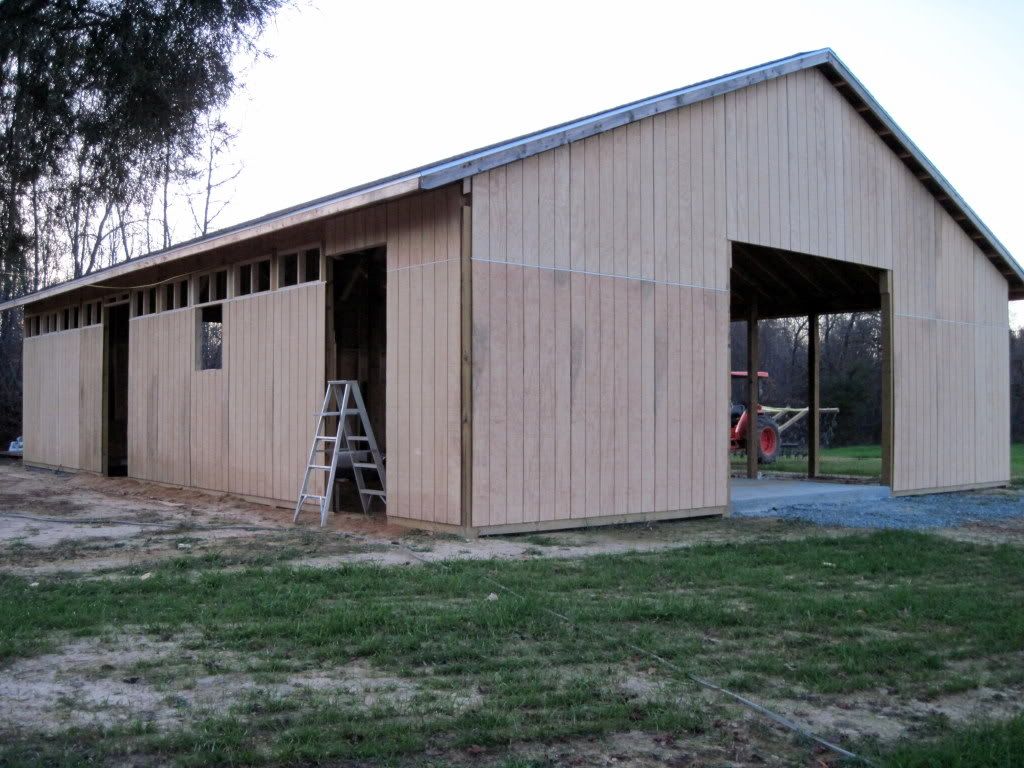
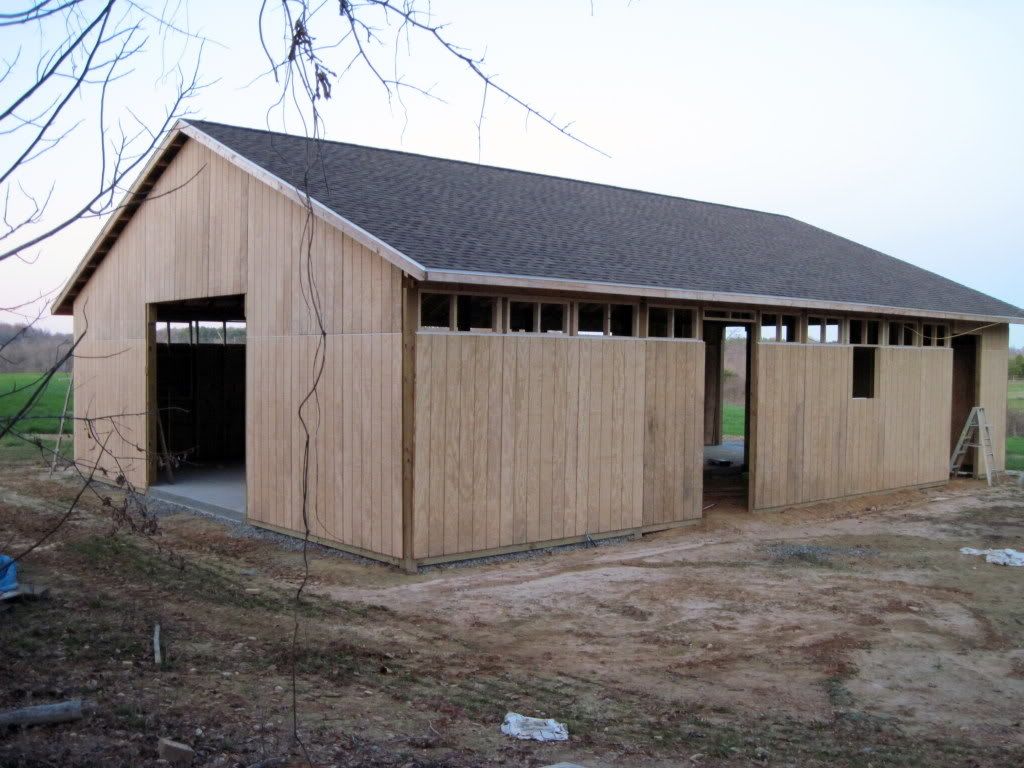
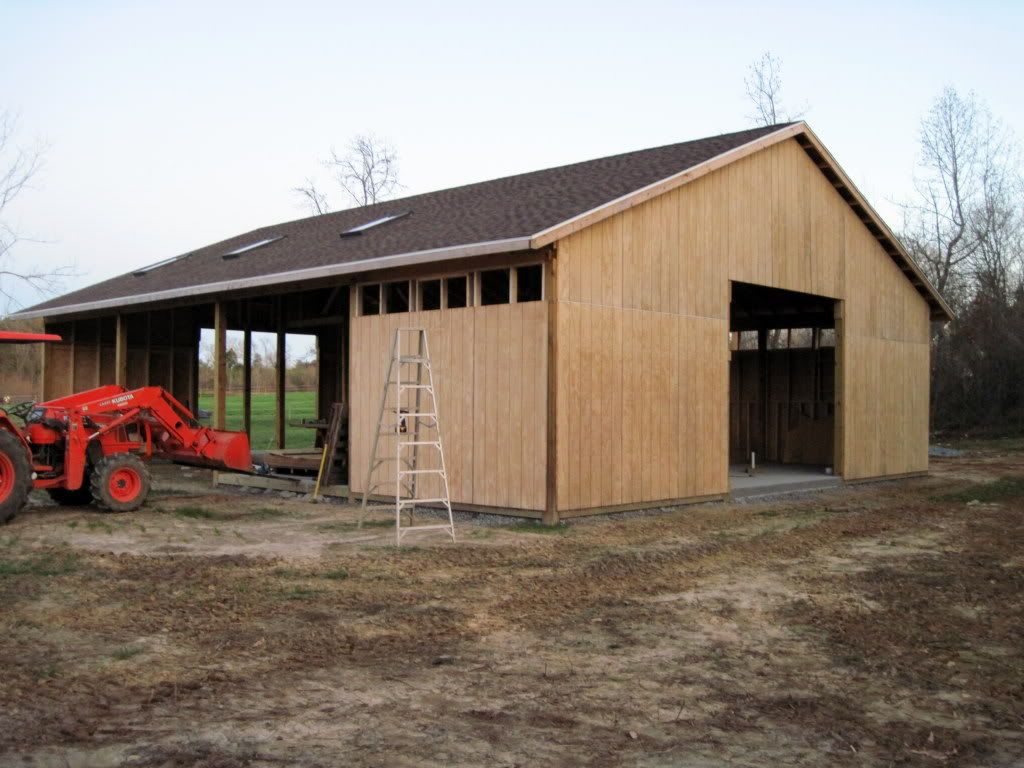
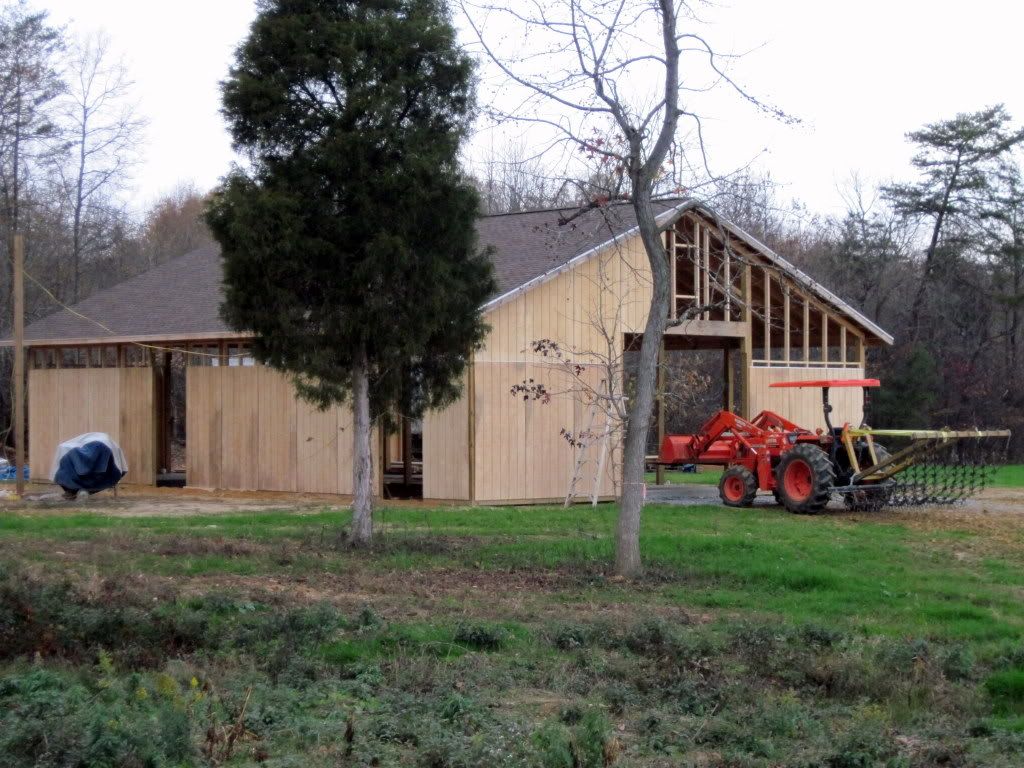
Okay, so I'm not technically finished with Step 9 yet, but I have a good reason for not finishing the framing on the north side of the barn. I still have about 3" of dirt followed by 3" of rock screenings to add to the stalls to raise the floor level up closer to the aisleway. However, it's too wet and soft to bring in a dump truck, so I have to postpone that step until it dries out for a bit. Since it involves something in the neighborhood of 40,000 lbs. of material, there's no way I want to move all that in a wheelbarrow, so I want to make sure I continue to have tractor access to the stalls. Hence, I'm postponing finishing off the north wall.

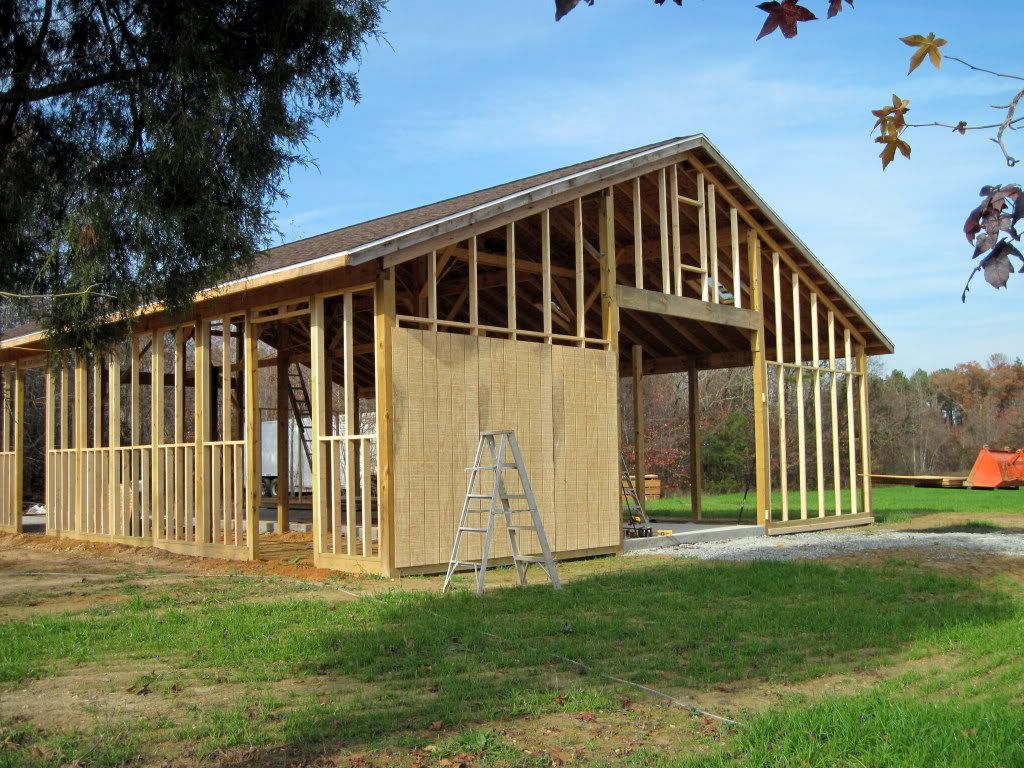
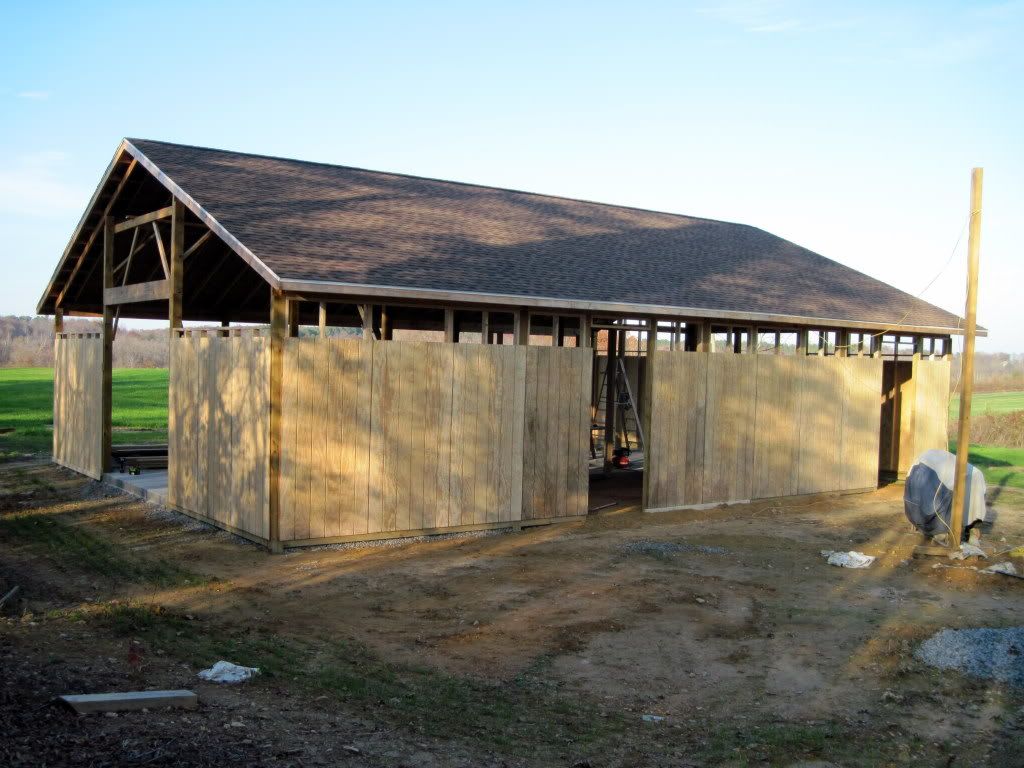
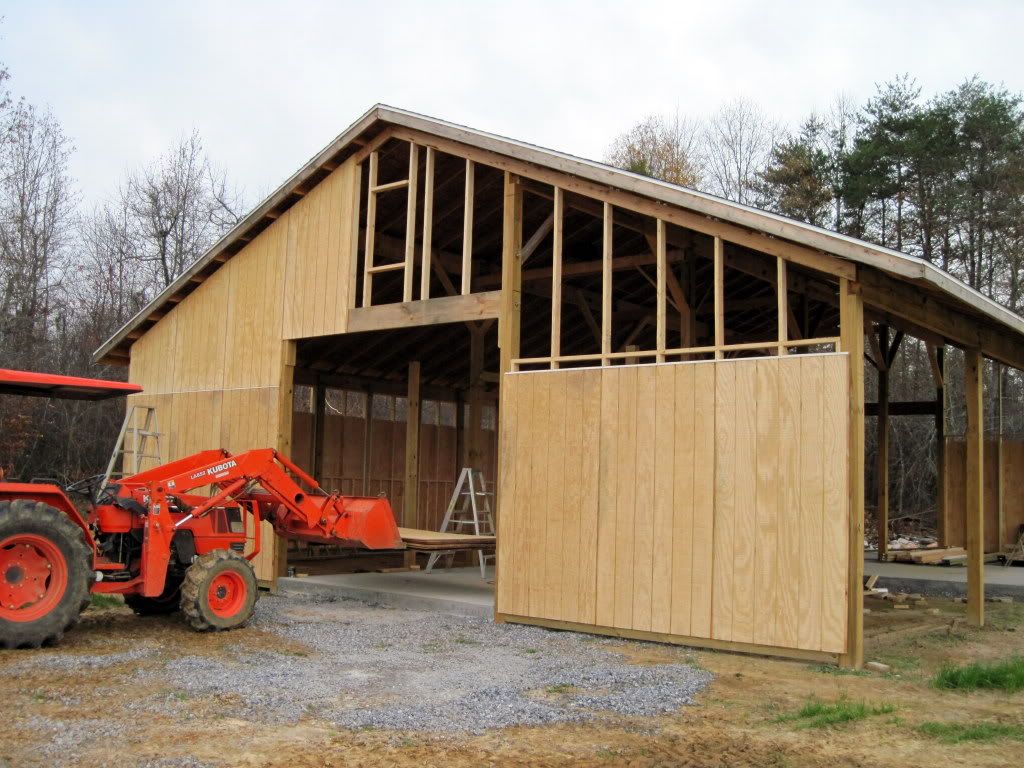
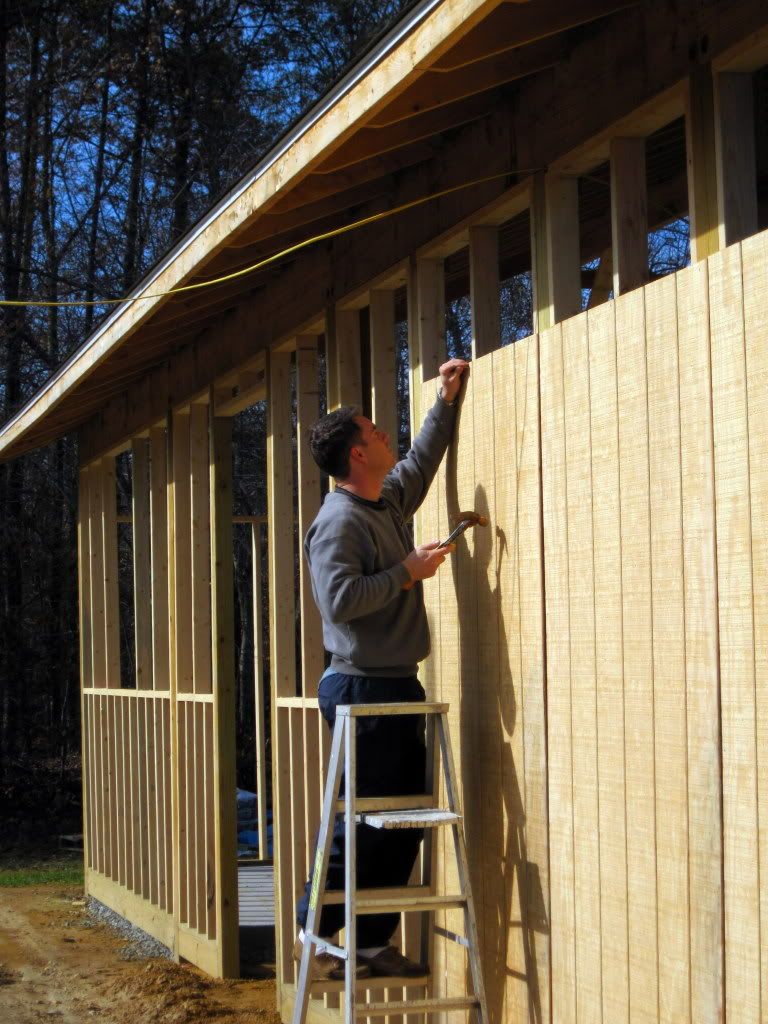
In the meantime, I've gotten started on the T1-11 sheathing on the other three sides. I put a PT 2x6 as a "skirt" around the entire perimeter of the barn. The T1-11 then overlaps the top of the 2x6, leaving about 4" of PT wood between the ground and the bottom of the T1-11.

Since T1-11 is subject to rot/delamination due to water infiltration, I've been sealing all edges of the sheets with polyurethane prior to installation. I also sealed the front of the sheets near the top where the z-flashing will overlap just in case wind-driven rain gets up under there. I figure none of these areas will end up getting painted once the sheets are nailed in place, so better to do it ahead of time.

To do the upper row on the gable ends, I load a good-sized stack of T1-11 onto the bucket forks (5 or 6 sheets or more - enough that I can stand on the very edge of the stack without worrying that it's going to tip up on the other side). Then I raise it eight or ten feet in the air and use it as a work platform. It's still not trivial getting full sheets of T1-11 in place while standing on a bouncy platform, but it's a whole lot easier than trying to carry one of those sheets up a ladder.

Sorry, no action shots of the top row, but here are a few pics of my progress.

IMG_0300.jpg


IMG_0303.jpg


IMG_0304.jpg


IMG_0313.jpg


IMG_0331.jpg


IMG_0337.jpg


IMG_0343.jpg
 
/ My Horse Barn in Progress #31  
When you finish, and you're bored, you can come build me one just like it.:D
 
/ My Horse Barn in Progress #32  
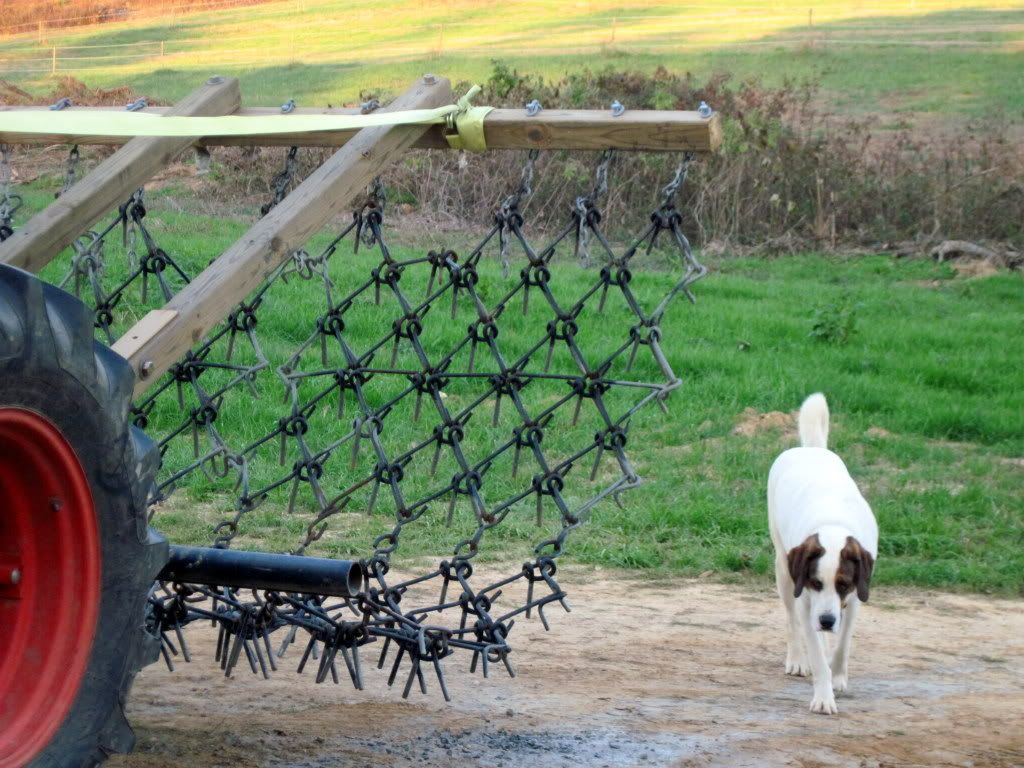
Nice looking setup. Wish I had thought my shop through more like this. I also liked your setup for the drag harrows. Do you have any better pictures of it you could post?
 
/ My Horse Barn in Progress
  • Thread Starter
#33  
Nice looking setup. Wish I had thought my shop through more like this. I also liked your setup for the drag harrows. Do you have any better pictures of it you could post?

Thanks. The drag harrow setup was pretty easy. I bought a cheap 3PH carry-all, some 4x4s, some big bolts, some short lengths of chain, and a couple of ratcheting strap-ties. At some point I'll probably switch the straps for chains or cables so they don't rot away, but it works really well.

I posted some pics on this thread:
http://www.tractorbynet.com/forums/attachments/150448-ideas-homemade-3-pt-hitch.html
 
/ My Horse Barn in Progress #34  
Thanks, Tom. I realize the new code requires a ground, but I'm not required to get any of this permitted since this is an agricultural building on a registered farm. Therefore, I'll pretend it's still 2007 and put a couple of ground rods at the barn location.

I'm jumping ahead of what I've read so far, but as long as it's installed as a primary service (2 ground rods & tie the neutral and ground busses together) it will meet NEC requirements.
 
/ My Horse Barn in Progress #35  
Here are some pix of the 25 year old phesant barn we've been remodeling into the new cattle barn.

Barely got the roof on the first year before the rain and snow hit.

Now 2 years and 48,000# of concrete later, we're about 1/2 way done.
 

Attachments

  • Barn 024.jpg
    Barn 024.jpg
    153.6 KB · Views: 332
  • Barn 020.jpg
    Barn 020.jpg
    136.6 KB · Views: 338
  • Barn 005.jpg
    Barn 005.jpg
    128.4 KB · Views: 404
  • Barn.jpg
    Barn.jpg
    328 KB · Views: 391
  • Barn 110.jpg
    Barn 110.jpg
    98.4 KB · Views: 293
  • Barn 068.jpg
    Barn 068.jpg
    137 KB · Views: 332
  • Barn 032.jpg
    Barn 032.jpg
    122.3 KB · Views: 373
  • Barn 029.jpg
    Barn 029.jpg
    104.3 KB · Views: 279
  • Barn 117.jpg
    Barn 117.jpg
    71.2 KB · Views: 358
  • Barn 119.jpg
    Barn 119.jpg
    104.3 KB · Views: 329
  • Barn 123.jpg
    Barn 123.jpg
    236.2 KB · Views: 282
  • Barn 141.jpg
    Barn 141.jpg
    228.6 KB · Views: 351
  • Barn_023.JPG
    Barn_023.JPG
    235.5 KB · Views: 414
  • Barn_034.JPG
    Barn_034.JPG
    240.6 KB · Views: 848
/ My Horse Barn in Progress
  • Thread Starter
#36  
Here are some pix of the 25 year old phesant barn we've been remodeling into the new cattle barn.

Barely got the roof on the first year before the rain and snow hit.

Now 2 years and 48,000# of concrete later, we're about 1/2 way done.

I can certainly appreciate how much work you've done, Cyril! I don't know if having an old barn to start with makes things better or worse.

As far as the electrical entrance goes, common sense tells me I should be fine if I just treat it like new service and ground it at the barn with a couple of rods and tie the ground and neutral busses together, as you said. However, I've had three different electricians I know tell me that according to the most recent NEC (2008 I think), ground and neutral have to be tied together in one place and one place ONLY - the main service entrance to the house. ALL outbuildings have to maintain a separate ground and neutral if they are tied into the main panel at the house. Additionally, for any outbuilding, you have to install ground rods at the outbuilding location and tie them to the ground in the sub-panel out there (but NOT to the neutral). I think the rationale is that if a whole bunch of things went wrong all at once, you could possibly be sending return current through the ground (literally - through the soil). Apparently according to the 2008 code, the (separate) ground from the house even has to be oversized as much as the rest of the wires for long runs! The rationale there is that if there's a fault where return current flows through the ground wire (as it's supposed to do), the higher inductance of the small wire means that it will take a few extra milliseconds for the current to build to a point that it trips a breaker or other protective device.

As far as I'm concerned, most of my life has been spent before 2008, and if a shared ground/neutral was good enough then, it's good enough for me now.

By the way, the rules may be different in your state depending on whether or not they've adopted the most recent NEC/IEC. Or if I've got it wrong, along with my three electrician friends, let me know!

Josh
 
/ My Horse Barn in Progress #37  
I can certainly appreciate how much work you've done, Cyril! I don't know if having an old barn to start with makes things better or worse.

As far as the electrical entrance goes, common sense tells me I should be fine if I just treat it like new service and ground it at the barn with a couple of rods and tie the ground and neutral busses together, as you said. However, I've had three different electricians I know tell me that according to the most recent NEC (2008 I think), ground and neutral have to be tied together in one place and one place ONLY - the main service entrance to the house. ALL outbuildings have to maintain a separate ground and neutral if they are tied into the main panel at the house. Additionally, for any outbuilding, you have to install ground rods at the outbuilding location and tie them to the ground in the sub-panel out there (but NOT to the neutral). I think the rationale is that if a whole bunch of things went wrong all at once, you could possibly be sending return current through the ground (literally - through the soil). Apparently according to the 2008 code, the (separate) ground from the house even has to be oversized as much as the rest of the wires for long runs! The rationale there is that if there's a fault where return current flows through the ground wire (as it's supposed to do), the higher inductance of the small wire means that it will take a few extra milliseconds for the current to build to a point that it trips a breaker or other protective device.

As far as I'm concerned, most of my life has been spent before 2008, and if a shared ground/neutral was good enough then, it's good enough for me now.

By the way, the rules may be different in your state depending on whether or not they've adopted the most recent NEC/IEC. Or if I've got it wrong, along with my three electrician friends, let me know!

Josh

We haven't adopted the 2008 NEC yet. The data I'm giving you is per previous versions of the NEC. The basic rule here is if you have a ground from the main panel to subpanel (4 wire) the ground and neutral MUST be seperated. If you have no ground between the main panel and subpanel (3 wire) the ground and neutral in the subpanel must be bonded.

The purpose of ground rods is to remove transient voltages. Transient voltages are induced into the structure or wiring system from outside the power system to the structure. Examples could be a lightning strike near the structure or induced voltages from nearby high power lines. You can think of them as being similar to the static charge you build up when you rub your feet across a carpet. Although transient voltages can be much greater than what you get from a carpet.

The purpose of bonding the ground and neutral together is to create short circuit fault protection within the system. Ground rods cannot create short circuit fault protection. (It's fun with new apprentices to tie a 20 amp breaker directly to a ground rod with #8 wire and make the apprentice explain why the breaker is not tripping! Simple Ohms law on a 25 ohm ground rod shows that current flow does not exceed 20 amps) To put it simply, bonding the neutral and ground is what keep you from getting electricuted when something shorts.

The purpose behind not bonding the neutral and ground in a 4 wire feeder from main panel to subpanel is because the neutral is the return current path in the system and if the ground wire is bonded at both ends it creates a parallel return path for the current and 1/2 of the return current will be on the ground wire between the panels. Basically, your grounding circuit now has voltage on it!

The 2008 NEC may have removed this option because too many electricians don't understand how the grounding system works and wire subpanels incorrectly creating an unsafe system. If you treat your panel as a main panel with your 3 wire feed, bond your neutral and ground, and set your ground rods as planned - it will be fine.


I sometimes think that building the barn from scratch might have been easier as I have had to disassemble the old barn at the same time that I am constructing the new. Also since this is currently my ONLY barn, I have had to try to maintain the usability of it at the same time.

FYI - my barn is 42ft wide by 36ft long. Very close to the size of yours. I related very quickly to how much work is involved in the project you took on. Unfortunatly my ground inside the barn won't support a cement truck until I have all the footing walls in and dig out 6-12" of soft material and fill to subgrade with crushed rock. Which on the low side is about 33" above existing grade. As a result, I have approx 60 tons (2000 bags) of concrete to mix and poar by hand before I will be able to resort to a truck for the floor. Thank God for cement mixers!!

Your barn looks beautiful. Keep up the good work and keep the pictures comming. I'm jellous of your floor and walls! Right now where the cattle come to the feeder in what will be one of the back stalls, I have about 8" of mud! I ran out of weather before I got the center in the back done and I have water flowing accross the center of main floor with about an inch of mud there. At least I got the uphill side done and with pallets on the ground for the hay to sit on it stays dry and I don't have to pack it five hundred feet to feed any more. I'm suppose to bring in another 6-1/2 ton in a couple of weeks, but it's wet enough now that I don't know if they will be able to get it back there and into that barn. I might be back to packing it on top of the car again. I have a 30x36 maintainance bulding near my front gate where I used to store it. Looks like I might have to make room to store it there again for the winter.
 
/ My Horse Barn in Progress
  • Thread Starter
#38  
We haven't adopted the 2008 NEC yet. The data I'm giving you is per previous versions of the NEC. The basic rule here is if you have a ground from the main panel to subpanel (4 wire) the ground and neutral MUST be seperated. If you have no ground between the main panel and subpanel (3 wire) the ground and neutral in the subpanel must be bonded.

The purpose of ground rods is to remove transient voltages. Transient voltages are induced into the structure or wiring system from outside the power system to the structure. Examples could be a lightning strike near the structure or induced voltages from nearby high power lines. You can think of them as being similar to the static charge you build up when you rub your feet across a carpet. Although transient voltages can be much greater than what you get from a carpet.

The purpose of bonding the ground and neutral together is to create short circuit fault protection within the system. Ground rods cannot create short circuit fault protection. (It's fun with new apprentices to tie a 20 amp breaker directly to a ground rod with #8 wire and make the apprentice explain why the breaker is not tripping! Simple Ohms law on a 25 ohm ground rod shows that current flow does not exceed 20 amps) To put it simply, bonding the neutral and ground is what keep you from getting electricuted when something shorts.

The purpose behind not bonding the neutral and ground in a 4 wire feeder from main panel to subpanel is because the neutral is the return current path in the system and if the ground wire is bonded at both ends it creates a parallel return path for the current and 1/2 of the return current will be on the ground wire between the panels. Basically, your grounding circuit now has voltage on it!

The 2008 NEC may have removed this option because too many electricians don't understand how the grounding system works and wire subpanels incorrectly creating an unsafe system. If you treat your panel as a main panel with your 3 wire feed, bond your neutral and ground, and set your ground rods as planned - it will be fine.


I sometimes think that building the barn from scratch might have been easier as I have had to disassemble the old barn at the same time that I am constructing the new. Also since this is currently my ONLY barn, I have had to try to maintain the usability of it at the same time.

FYI - my barn is 42ft wide by 36ft long. Very close to the size of yours. I related very quickly to how much work is involved in the project you took on. Unfortunatly my ground inside the barn won't support a cement truck until I have all the footing walls in and dig out 6-12" of soft material and fill to subgrade with crushed rock. Which on the low side is about 33" above existing grade. As a result, I have approx 60 tons (2000 bags) of concrete to mix and poar by hand before I will be able to resort to a truck for the floor. Thank God for cement mixers!!

Your barn looks beautiful. Keep up the good work and keep the pictures comming. I'm jellous of your floor and walls! Right now where the cattle come to the feeder in what will be one of the back stalls, I have about 8" of mud! I ran out of weather before I got the center in the back done and I have water flowing accross the center of main floor with about an inch of mud there. At least I got the uphill side done and with pallets on the ground for the hay to sit on it stays dry and I don't have to pack it five hundred feet to feed any more. I'm suppose to bring in another 6-1/2 ton in a couple of weeks, but it's wet enough now that I don't know if they will be able to get it back there and into that barn. I might be back to packing it on top of the car again. I have a 30x36 maintainance bulding near my front gate where I used to store it. Looks like I might have to make room to store it there again for the winter.

Thanks for the clarification, Cyril. That's good to know.

I can't imagine mixing 60 tons of concrete from bags!! You must be so sick of it already. I know around here you can go to some of the ready-mix places and buy concrete a yard at a time. They send you home with a big bumper-pull mixer full of it. Then you bring back the trailer when you're done, and either turn it back in or fill it up again for another load. You pay a little more than you would for a concrete truck, but it should be way less than you'd pay by the bag. I don't know if that's an option where you live, but if so it could save some wear and tear on your back.

I'm starting to deal with a lot of mud now too, but thankfully it's all on the outside of the barn. I'll be glad when I'm done backfilling and grading and have the gutters in place.

My wife and I just decided this morning to go ahead and bring in the gravel for the driveway to the barn now, rather than after the barn is done. That should hopefully allow us to drive up to it without sinking in the mud. The only problem is, I need things to dry out before I can get a dump-truck out there.

Since we had no good option for hay storage, we ended up buying a used 48' furniture van trailer. It works pretty well and is close to the barn. We can fit about 300-400 square bales in it. Someday, when the barn's done, I'll build a real hay storage shed nearby.
Thanks again for the electrical advice, and for comiserating. It's always good to know when somebody has it worse than you do!! LOL. Looks like you're over the hump though. There's light at the end of the tunnel for both of us.

Josh
 
/ My Horse Barn in Progress
  • Thread Starter
#39  
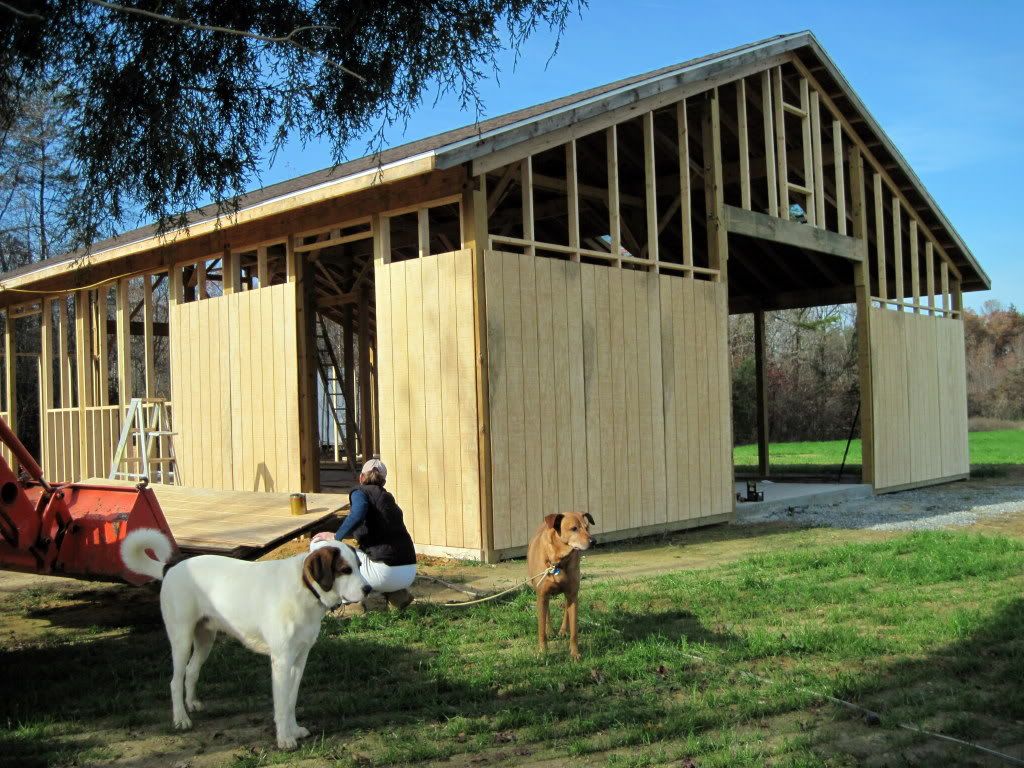
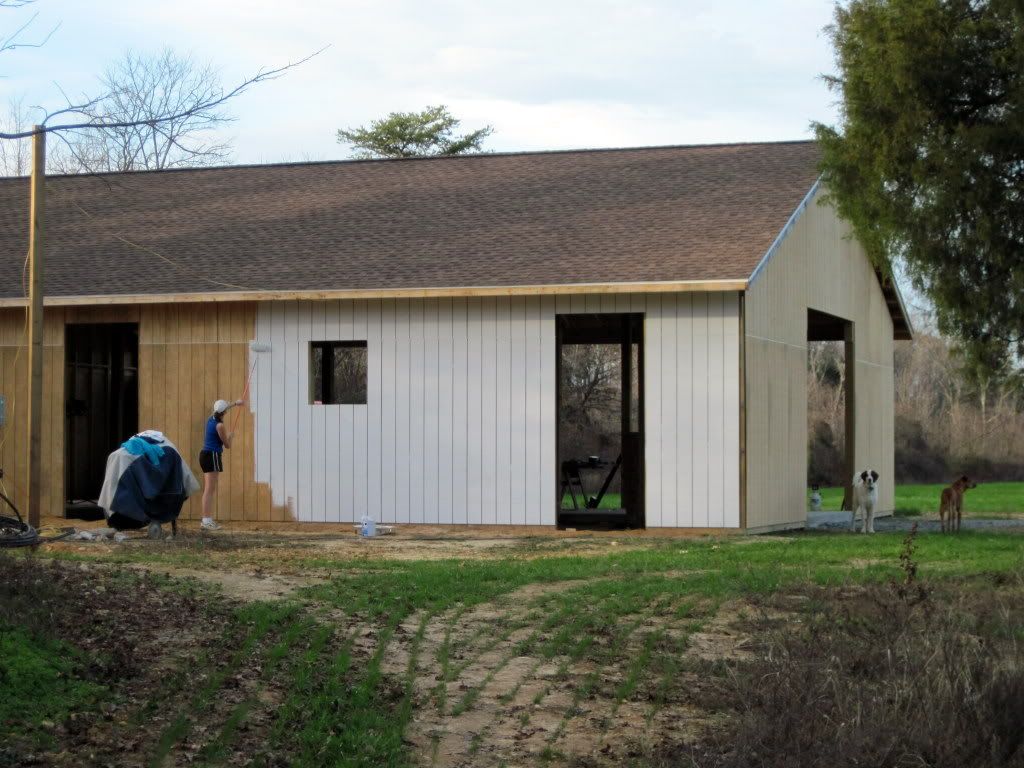
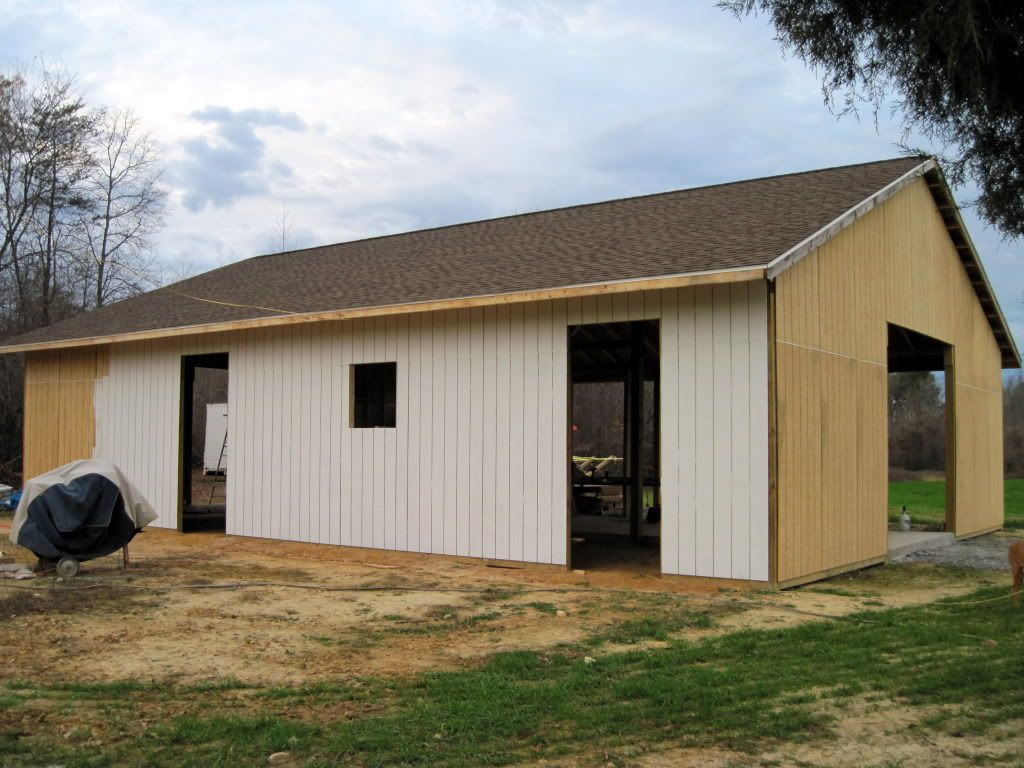
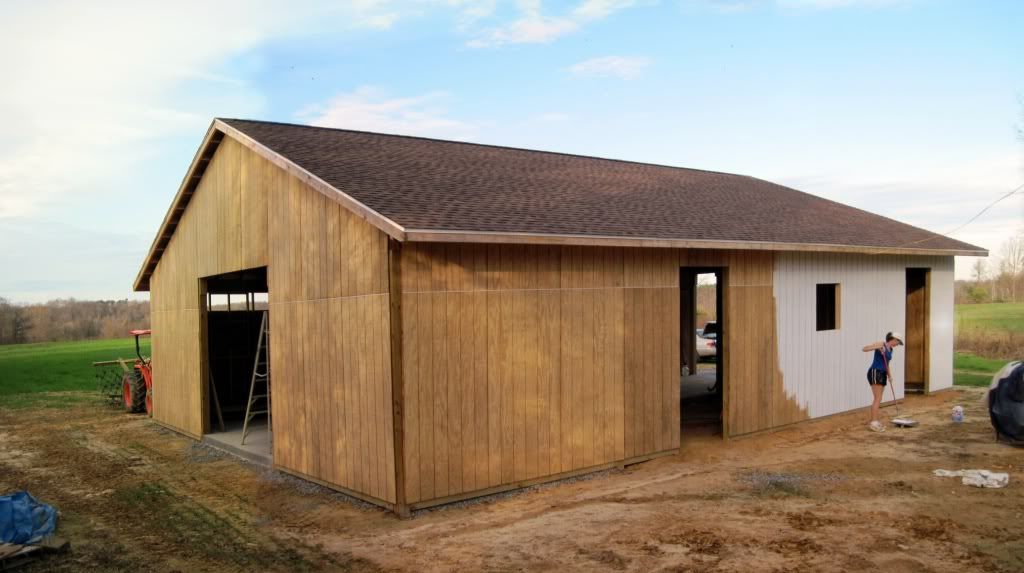
Here are some more recent pics of the progress. I've now got the sheathing completely done on three sides, and partly done on the fourth. I'm still waiting on the weather to stay dry long enough to get a load of rock screenings to finish off the horse stalls. After that, I shouldn't need to drive the tractor into the stalls anymore, so I can finish off those final walls. In the meantime, the wife has started priming the T1-11 that's already up. Hopefully we'll get enough warm, dry weather to finish the paint in the next few weeks.

I have several window openings framed out, but I still need to cut out the holes and install the windows. It's a little tricky installing windows in T1-11. At this point I'm planning to just nail the window flanges to the outside of the T1-11, peel and stick the flashing, then cover the perimeter with some well-caulked wood trim. Anybody have any suggestions/improvements to this plan?

IMG_0392.jpg

IMG_0394.jpg

IMG_0395.jpg

IMG_0401.jpg

IMG_0409.jpg

OutsideBarnPanorama.jpg
 
/ My Horse Barn in Progress #40  
your build looks great!

Id suggest you get a air less sprayer it will save you in the long run save a lot of time and it gets paint in to the wood cracks with out braking your back

tom
 
 
Top