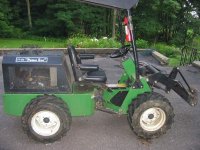
Why a fire extinguisher?

   / Why a fire extinguisher? #1  

coolconnection

Gold Member
Joined
Oct 6, 2008
Messages
334
Location
Ohio
Tractor
Massey Ferguson GC1723
OK why a fire extinguisher? Is there pretty much a root cause for the PT catching fire? Could it be from the chintzy clear fuel hose? Should this hose be replaced? Or is it mostly from the engine? These robin engines are rated pretty good in quality control. Now don't drill me, I see some of the problems people have had but the engines are rated better than honda and B&S. So where is all or most of the fires coming from? If I can prevent one from happening that would be good.

Thanks
 
   / Why a fire extinguisher? #2  
I've only heard of one PT fire that I recall. But, when you think of a gas engine, with a five gallon gas tank and 10 gallon hydraulic tank only inches away from it on the PT 422/425, in the same engine compartment, not counting the gas line, hydraulic lines, etc., it is a prudent measure...

PTRich had added a fire extinguisher to my Kohler-powered PT-425 when I got it. I'm glad it's there, and even more glad that I've never needed to use it.

EXAMPLE: When I was clearing my lot, the contractor had a hydraulid line burst on a 20-ton excavator, spraying fluid onto the muffler and caught on fire -- only minutes after we'd set fire to a huge brushpile about ten feet away from the excavator and got it roaring. Th eexcavator was being used to feed that fire....

Luckily I had a 13,500 GPH pump sitting at the pond, and a 1" PVC hose run to the site -- just in case. We put the engine fire out with the water, but could not put out the fire from all the hydraulic fluid that it dumped underneath when all the adjacent hoses burned...

We pumped thousands and thousands of gallons of water onto that excavator and the adjacent brush pile for the next three hours or so, just to keep the fire under control long enough for the contractor to rush to another site site and haul back a larger excavator to help move this disabled one. He had a little Komatsu dozer on site, but it wouldn't budge the excavator. When he returned with larger excavator, they used it to pull while the little dozer pushed and finally moved the disabled one. Then the dozer was able to use dirt to put out the hydraulic fluid fire.

I have no idea how much water we pumped that scary afternoon, but we dropped the water level in a 4-acre pond by about 4"...

If I hadn't had the pump and water line pre-positioned, the excavator would likely have been a total loss. As it was, I understand it cost about $15K to repair it.

Better safe than sorry...
 
Last edited:
   / Why a fire extinguisher? #3  
At least a couple of PTs are known to have burned up. With the green machines, you have a gasoline powered piece of equipment with a very hot air cooled engine running in a semi closed environment, which often has oily or dry grass clippings trapped in inaccessible places. The PT mufflers get hot enough to ignite dry grass.

There is no shutoff valve of any kind on the high mounted fuel tank. The tank outlet is at the lowest point, which means you have running gasoline if there is a leak in the line or a fitting comes loose. It is extremely easy to spill gas when refueling due to the high mounted tank.

Why wouldn't you have a fire extinguisher?
 
   / Why a fire extinguisher? #4  
My PT had a near fire prior to my ownership,. It was electrical, happened at the starter solenoid.

Not that I would call it a history of issues with the PT, but Sedgwood caught on fire from elecrical as well.

While anything is possible, I worry more about fire from electical than oil. Kinda dumb having so many junction boxes on the 1800 series imo.

Also, who thought putting the extinguisher on the engine compartment? I guess if the engine goes up maybe the extinguisher will blow up and put the fire out.
 
   / Why a fire extinguisher? #5  
The plastic clear fuel line is recommended by PT to be replaced every year. I put a regular gas line in its place.
 
   / Why a fire extinguisher? #6  
Any of these mowers used for DOT work, etc require an extinguisher.

Ken
 
   / Why a fire extinguisher?
  • Thread Starter
#7  
Thanks for all the replies. I kept seeing in different threads about people adding the fire extinguisher but really no reason why. I did read the one thread about the PT that caught fire and how he brought it back to life but that was the only one. I think when it comes time to replace the fuel line with a new one I might put in an inline fuel shut off valve. Now it makes sense to me why an extinguisher is prudent. So what type of extinguisher would be best to use and what location have you all installed yours in?

BobRip do you still change your fuel line every year with a new one or is the replacement line really not necessary to replace every year?

Thanks for all the replies it is well appreciated.
 
   / Why a fire extinguisher? #8  
Mine's mounted on the right FOPS/ROPS post. It is a general-purpose, Type ABC, good for either electrical or flammable liquids.

PTRich had just used duct tape to tape the wall-mounting bracket to the post. I've simply refreshed that duct tape, and wrapped the whole post with electrical tape (similar to the way we used to tape the handles on baseball bats), since I also ran wires to canopy-mounted lights up the inside of each upright.

BTW, in this pic you can see the proximity of the clear (actually opaque white) plastic gas tank to the Kohler engine on my 2001 model. The hydraulic tank is under the seat, at the front of the rear tub, but there's several hydraulic lines in the engine compartment itself, where they attach to the pumps, rear wheel motors, front PTO solenoid valve, etc.

The newer PT's moved the engine farther back, with all the pumps in front -- but unfortunately, that puts the hot muffler up front, closer to the gas tank. On the Kohlers, the exhaust is on the rear of the engine, above the PTO and steering/lift/tilt/Aux PTO pump. The tram pump is on the other end of the engine, underneath the gas tank.
 

Attachments

  • Picture 040_800.jpg
    Picture 040_800.jpg
    80.1 KB · Views: 228
   / Why a fire extinguisher? #9  
EXAMPLE: When I was clearing my lot, the contractor had a hydraulic line burst on a 20-ton excavator, spraying fluid onto the muffler and caught on fire

I don't know very much about these machines, but I'm surprised that a hydraulic line was run near the exhaust. From the machines that I've seen, I've never noticed this. Was it a metal line or a rubber one?

From what I understand, excavator fires are mostly caused by operators not realizing how hot the machine is while feeding the fire. They are sitting inside an air conditioned machine and it's getting hotter and hotter outside the machine. Eventually, the hoses melt through and catch on fire, or some exposed grease on the outside of the machine ignites.

It does seem to be fairly common with excavators and this seems to be the most common reason that I've heard of.

Of course, it could just be coincidence that a hose broke while feeding the fire and the burn pile had nothing to do with the fire, but then again, maybe it was the cause.

As for keeping a fire extinguisher in a tractor, it's cheap insurance. A hot engine and some grease or oil is all it takes if conditions are right. Add some wind to feed it and it just keeps getting worse.

I have one on all my tractors. So far, I've never needed them.

Eddie
 
   / Why a fire extinguisher? #10  
I always carried a fire extinguisher in my old IH machine and I just kind of transitioned to adding one on my PT. I do a lot of mowing and brush hogging. In any tractor, grass and debris will build up in the engine compartment. Hey, bad things can happen. Besides, it looks cool, too. :p
 
   / Why a fire extinguisher? #11  
Thanks for all the replies. I kept seeing in different threads about people adding the fire extinguisher but really no reason why. I did read the one thread about the PT that caught fire and how he brought it back to life but that was the only one. I think when it comes time to replace the fuel line with a new one I might put in an inline fuel shut off valve. Now it makes sense to me why an extinguisher is prudent. So what type of extinguisher would be best to use and what location have you all installed yours in?

BobRip do you still change your fuel line every year with a new one or is the replacement line really not necessary to replace every year?

Thanks for all the replies it is well appreciated.

I don't know about the current models, but on my PT-425 there is no room to put a shut off valve on the bottom of the tank. Ideally, I would like a vacuum operated valve like found on motorcycles. If the engine quits, the fuel is shut off. An anti-spill rollover valve would be nice too.

Regarding the clear fuel line that Bob mentioned. I'm sure Bob got this from someone who got it from Power Trac, if he didn't get it directly. But personally, I have never heard that it should be replaced annually. The manuals don't say that at all. In fact, they don't say much of anything. This is typical Power Trac behaviour. Someone calls up and they say, "Oh you should replace that every --fill in the blank--." They told some people to replace the hydraulic hoses every two years, which is absurd and would cost a small fortune.

Does the clear fuel line need replacing periodically? You bet. Every year? I doubt it. Is a better quality line a good idea? Yes it is, and I have done that myself, but it took five years before it needed replacing. Just remember, the clear line serves a valuable diagnostic purpose. It lets you see bubbles in the fuel line, which help you diagnose the problems with the fuel system. If you don't have the clear line, make darn sure you retain a clear fuel filter. The bubbles in the line problem have become a real issue with today's hot running engines and gasohol fuels.
 
   / Why a fire extinguisher? #12  
Eddie,

As I recall, it was on the opposite side of the engine from the exhaust, but it was a high-pressure line that sprayed the entire engine compartment with fluid. When he opened the engine cover, everything inside it looked like it was on fire. According to the insurance investigator, the part that burst was one of those rubber hoses sheathed in a metal braid. (I've always called them Aeroquip hoses -- but I realize that is just a brand name). These flexible lines came off the pumps and connected to steel lines on the frame that ran toward the front of the machine. I think their purpose was to shield the main, metal lines from the vibration of the engine.

There was only a little fire extinguisher in the cab, and it slowed the down, but not before it had burned other lines, dumping more hydraulic fluid underneath the machine. There were literally puddles of burning hydraulid fluid underneath the machine. We were afraid it would catch the diesel fuel on fire and he'd just filled it that morning -- 200 gallons I think was the capacity.

I don't think it was the heat of the brushfire, for sure, because we'd just gotten it started -- he hadn't been working more than 30 minutes (max) when this happened. He was also operating it with the cab door open, so he was sensitive to the heat. At the time the operator noticed smoke, he actually had the boom out toward the fire, so the engine compartment was quite a ways away from the fire. He rotated the excavator almost parallel to the brushpile, before losing all pressure, then shut the engine down, and jumped out with the fire extinguisher in hand. But, he'd left it with the engine compartment pointed almost directly downhill, and it kept leaking fluid... gravity???

He emptied the fire extinguisher and while it smothered some of the flames, the burning oil underneath it kept reigniting the leaking fluid. He yelled at me to run and start the water pump, which I did, and by the time I got it started and back to the site (about 500 feet), he'd gotten the engine fire out but we still had to deal with all the fluid that had dumped onto the ground. I'm not sure how much fluid it held, but I'd guess at least 50 gallons -- it could've been far more. And, of course, water is almost worthless fighting an oil fire... but after it stopped draining out of the excavator, we were finally able to put the fire out underneath the machine, mostly by just flooding it, but the fluid that had run downhill from it kept burning. Then, we took turns for the next 2-1/2 hours or so, standing on a track, keeping the excavator wet down to cool it, so the diesel tank wouldn't catch fire, while also keeping the now-blazing brushpile fire from getting close enough to reignite anything.

108494974_d9be202d10.jpg


108497693_14102546b5.jpg


I got no pictures while all this was going on, but here's the scene from the next morning, after we'd gotten the excavator out of the way...

The tracks you see are where the little Komatsu dozer was spinning in the muddy mess we'd made, trying to push the disabled excavator out of the way... when it died, it locked the treads, and it had to be literally drug uphill away from the area... They brought a mechanic the next morning, and he had to remove a gear from each of the drive motors to get the tracks to "free-wheel" so they could then load it with the other excavator and dozer...

I spent the nite onsite, just keeping an eye on things, and the fire in the brushpile burned down. With my typical luck, they wouldn't issue me a burn permit for that second day (too dry and windy), so I ended up running the pump again, completely putting the fire out in the brushpile, and later paid about $5K to get it ground up with a tub grinder...

It wasn't exactly a small brushpile...

Sorry about the thread-jack....

139509751_f46d763db9.jpg


147314287_e1b23175f6.jpg


147312689_0c18373efe.jpg
 
   / Why a fire extinguisher? #13  
We had a brush pile that was 3 years in the making, 20 feet wide by 12 feet high by 100 feet long. My neighbors were all jonesing to light it up. I was scared witless because a burn of that size was out of my league, some people had told me to have it profesionally burned.

Well, one morning i woke up and my neighbor brought up his dozer, broke it into 3 piles. Next morning he showed up with a buddy and his little kubota, a 5 gallon backpack sprayer full of diesel and the propane tank.

Funny thing was the fire got so big neither my PT nor the kubota could keep up with the fires, so my neighbor ran down the hill and got his dozer.

Was a good day. still the piles smoldered / burned for another week.
 

Attachments

  • 1018080912_2.jpg
    1018080912_2.jpg
    651.9 KB · Views: 136
  • IMG_5086.JPG
    IMG_5086.JPG
    473.2 KB · Views: 144
   / Why a fire extinguisher? #14  
We had a brush pile that was 3 years in the making, 20 feet wide by 12 feet high by 100 feet long. My neighbors were all jonesing to light it up. I was scared witless because a burn of that size was out of my league, some people had told me to have it profesionally burned.

I know what you mean about the brushpile being too big to handle without professional help. I had the excavator and the small dozer onsite. The "plan" here was to use the excavator to "break" the long pile into two, where it dog-legged left in 3rd picture above, separating the end of the pile. We'd burn down there, and use the excavator to move brush off the larger, long pile onto the burn pile.

But, the excavator broke before we got the larger pile completely broken in two. That's one of the reasons we were fairly sure that the brushfire didn't ignite the excavator -- he was working with the engine compartment uphill away from the fire, rotating about 45 degrees to feed it. But, when he noticed the smoke from the engine fire, he rotatated the excavator almost 270 degrees to try driving back uphill away from the fire. But, by that time he'd lost all hydraulic pressure, so there he sat with the engine compartment now pointed downhill toward the blazing brush pile. I'd kept that end of the brush pile covered with plastic, and we'd just sprayed 2 gallons of diesel fuel on it and fired it off. It was mostly pines that had been removed and piled about 6 months earlier, in addition to many deadfall pines that had fallen years ago, and the treetops from where we had cut timber. It really made for a roaring fire.

As an aside, my brother sawed about 12,000 bd ft of lumber from the white pines (up to 32") that we removed from the house site... if that gives any indication of the amount of brush.
 
   / Why a fire extinguisher? #15  
I have fire extinguishers in my car, truck, house and shop oh and also my pt. I'd probably use it on a fire if one started and i could get to the extinguisher.

Most of the equipment fires i've seen have been from the engine stopping from lack of oxygen and being stranded in the burn pile. :-( It can happen pretty quickly and with a surprisingly small fire.
 
   / Why a fire extinguisher? #16  
Hmm- great question. Like cqaigy2, I have fire extinguishers in every vehicle, at multiple locations around the barn and the house. Given the propensity of any tractor to start fires, either from the tractor itself, or from mowing, it just seems prudent to have one on the tractor. With the fire experiences here, I wanted one in a location that I could get to easily, without having to reach over flames.

I think it is an open question if a 10lb dry powder extinguisher is sufficient. 20 gallons of oil, plus 12 gallons of diesel... or 12 and 5 for a 425. Anyway that you cut it, it is a sizeable piece of fuel.

Compared to a gasoline powered engine, one of the advantages of the Deutz engines is that nothing gets that hot. (Of course, we have Sedgewood's solenoid fire to remind us that fires can start for lots of reasons.) Oh, and I'm sure that you have put an after market spark arrestor on those gasoline engines, right? :)

My point being that there are all sorts of risk. You have to deal with the low hanging fruit, and let the rest go. Personally, I put a fire extinguisher in the low hanging fruit category.

We follow a strict protocol (from the California Department of Forestry) for when mow that includes wind, humidity and temperature checks prior to mowing. Actually, I use it as the guide for whether the tractor is allowed out of the barn. High fire danger means the tractor stays in the barn. The tractor can be in the barn for a lot of the summer out here.

By the way KentT, an acre foot is 325,851.53 gallons, so you pumped on just under 11,000 gallons of water. Good call to have that much water on hand. I can also see why you elected to have the rest of the pile chipped; I remember your detailed description of what a real chipper can do. Great posts!

All the best,

Peter
 
   / Why a fire extinguisher? #17  
So Kent, just an aside, did your brother bring up a mill to make his own lumber? If so, how did that go? I have been mulling over one of those chainsaw mills to make some rough stuff for projects.

As for the extinguisher, mine is so small I am not sure what I would get put out, but I guess it is better than nothing. It is just a standard extinguisher as well. Wonder if one of other types would be a better thing.

Finally, mine is subjected to vibration and direct sunlight all the time (and the heat from the engine). I wonder how often I should replace it.
 
   / Why a fire extinguisher? #18  
So Kent, just an aside, did your brother bring up a mill to make his own lumber? If so, how did that go? I have been mulling over one of those chainsaw mills to make some rough stuff for projects.

As for the extinguisher, mine is so small I am not sure what I would get put out, but I guess it is better than nothing. It is just a standard extinguisher as well. Wonder if one of other types would be a better thing.

Finally, mine is subjected to vibration and direct sunlight all the time (and the heat from the engine). I wonder how often I should replace it.

He has a fairly good sized Wood-Mizer bandsaw (not sure of the model), but it has a 25Hp engine and can handle 16 ft logs. He had someone haul these logs to his place, since there really wasn't a good place to set up his mill here, and this amount of logs didn't really warrant it, any way.

As far as fire extinguishers go, I'd think the General-Purpose Type ABC would be best, since they'd handle both flammable liquids and electrical fires -- the two risks. Mine has a guage on it that shows the charge.

I like the ROPS post location. It is handy, away from the likely fire (engine compartment), and yet not in the way at all. I initially thought of moving it and putting it on the hood, behind the seat -- but then thought -- "wait, that's most likely where the fire would be and I don't want to have the fire prevent me from getting the extinguisher..." So, I put a toolbox there instead, usually with oily rags in it, and complete with spray can of white lithium grease... :p:eek::eek:
 
   / Why a fire extinguisher? #19  
Not to digress further, but how do you find lifting the boot when you have the toolbox on top.

The 1850 lid is HEAVY. And it is awkward as you have to step over the tires to lift. One of these days I am going to blow a giblet for sure. I have mulled over one of those hydraulic car hood lifts... Probably need two or three...
 
   / Why a fire extinguisher? #20  
Not to digress further, but how do you find lifting the boot when you have the toolbox on top.

The 1850 lid is HEAVY. And it is awkward as you have to step over the tires to lift. One of these days I am going to blow a giblet for sure. I have mulled over one of those hydraulic car hood lifts... Probably need two or three...
The 425's hood is not nearly as big as yours, plus there's likely only 10-15 lbs of tools including the toolbox, if that. Couple screwdrivers of each type, set of sockets and ratchet, adjustable wrench, channel-lock pliers, dikes, bleed hose for the tram pump, spray grease, small hammer and punch, pins and clevises, rags, usually a pair of gloves, etc. Not really a set of tools to work with, but hopefully enough to make a "field repair" so you could limp back to somewhere to work on it.

You can tell the difference in lifting the hood, but it's still a one-hand operation. Plus, I don't have the dual wheels in the way, just a single one, reversed...
 

Tractor & Equipment Auctions

2014 Ford Escape Titanium SUV (A59231)
2014 Ford Escape...
2015 JOHN DEERE 35G EXCAVATOR (A52707)
2015 JOHN DEERE...
2016 Caterpillar 349FL Hydraulic Excavator (A56857)
2016 Caterpillar...
2018 CATERPILLAR 305E2 CR EXCAVATOR (A60429)
2018 CATERPILLAR...
78" ROCK BUCKET (A52706)
78" ROCK BUCKET...
2016 JOHN DEERE 35G EXCAVATOR (A60429)
2016 JOHN DEERE...
 
Top