Gordo 56
Silver Member
To see more post about Milligan's Gander Hill Farm click the following link http://milligansganderhillfarm.wordpress.com/
Scottish Highland Cattle
Posted on July 17, 2012 by Gordon Milligan

When we start to farm 3 years from now we want to have a pasture based farm. That is a farm that just feeds grass and hay to their livestock with out adding any grains, like corn or soybeans. Most beef sold in this country is corn finished which adds fat and gives meat more of it's marbling, it is unhealthy for the cows and its unhealthy for the people who eat them.We want to raise grass feed beef because all the healthy benifits it provides. Grass fed means the meat is lower in cholesterol and higher in antioxdiants including vitimins E and B, as well a A and has CLA's that are proven to fight cancer. Grass fed beef has a better balance of Omega 6 and Omega 3 fatty acids and has more protein and is lower in fat.
During this plannig stage of our farm we are exploring what animals we want to raise and what breeds are best suited for our land that we can grass feed from start to finish. All your heritage breeds of cattle fit that bill and were used in farming in early Europe and before 1960 here in America. Breeds like Salers, Dexter, Belted Galloway, Galloway, Pineywoods, Devon, Red Polled, and Scottish Highland cattle to name a few. They are smaller framed then todays cattle who are breed to be grain fed. Right now we think we have found a breed that we like and will be best suited for our land, Scottish Highland Cattle.

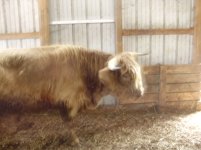
A Highland Bull
We like the looks of the Scottish Highlands, they are striking with their long coat of fur and the big horns. They are one of the oldest breeds in the world that date back to the sixth century and originated in the Highlands of Scotland. I am of Scotsh-Irish decent and like the idea of helping to keep the breed going. They where first brought to the US in 1893 by a New York state farmer who wanted to breed more hardiness and cold resistance to his cattle herd. They are said to be very hardy and do not need shelter in the winter even in very northern climates.

Highland cattle come in range of colours, red, black white, silver and dunn.
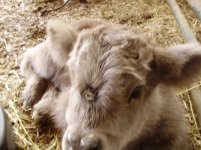
They make good mothers and rarley does a farmer have to pull a calf during birth. Highland cattle are very docile, and that is what I want when I turn 60 and start to raise them. I want a breed that is easy to handle and can be halter trained so they can be led.They also have more disease resitance then domestic cattle, and because of their long bangs over there eyes they don't have the face fly and pink eye problem that other breeds have.

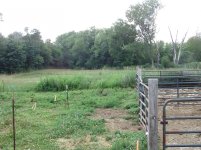
They eat foliage that other cattle would pass by and are said to get fat from it. They have been breed to survive on the sparse and rocky mountains of Scotland. Our pastures have not been grazed for over ten years and I have no plans to plow them up and replant. My cows will have to make do with what is already growing there which is Reed Canarygrass and weeds.
Highland beef is some of the best tasting beef and has nice marbling just from being grass feed and studies done by the National College for Food, Land, and Enviroment, a European Organazation says Highland cattle have lower levels of fat and cholesterol and higher levels of protien and iron content from their beef then all other cattle. They have less cholsterol then even chicken. The beef is so good that it is fit for royalty and is the prefered beef for the Queen of England who maintains a fold of Highlands at Balmoral Castle in Scotland.
So if Scottish Highland Cattle are good enough for the Queen of England, I think they will be good enough for us. In our next post we will be going to Royal M Farm, to talk to the owner Jay Mather, who raises a small herd of Scottish Highlands. We want a chance to see for ourselves what the cattle are like.
Scottish Highland Cattle
Posted on July 17, 2012 by Gordon Milligan
When we start to farm 3 years from now we want to have a pasture based farm. That is a farm that just feeds grass and hay to their livestock with out adding any grains, like corn or soybeans. Most beef sold in this country is corn finished which adds fat and gives meat more of it's marbling, it is unhealthy for the cows and its unhealthy for the people who eat them.We want to raise grass feed beef because all the healthy benifits it provides. Grass fed means the meat is lower in cholesterol and higher in antioxdiants including vitimins E and B, as well a A and has CLA's that are proven to fight cancer. Grass fed beef has a better balance of Omega 6 and Omega 3 fatty acids and has more protein and is lower in fat.
During this plannig stage of our farm we are exploring what animals we want to raise and what breeds are best suited for our land that we can grass feed from start to finish. All your heritage breeds of cattle fit that bill and were used in farming in early Europe and before 1960 here in America. Breeds like Salers, Dexter, Belted Galloway, Galloway, Pineywoods, Devon, Red Polled, and Scottish Highland cattle to name a few. They are smaller framed then todays cattle who are breed to be grain fed. Right now we think we have found a breed that we like and will be best suited for our land, Scottish Highland Cattle.
A Highland Bull
We like the looks of the Scottish Highlands, they are striking with their long coat of fur and the big horns. They are one of the oldest breeds in the world that date back to the sixth century and originated in the Highlands of Scotland. I am of Scotsh-Irish decent and like the idea of helping to keep the breed going. They where first brought to the US in 1893 by a New York state farmer who wanted to breed more hardiness and cold resistance to his cattle herd. They are said to be very hardy and do not need shelter in the winter even in very northern climates.
Highland cattle come in range of colours, red, black white, silver and dunn.
They make good mothers and rarley does a farmer have to pull a calf during birth. Highland cattle are very docile, and that is what I want when I turn 60 and start to raise them. I want a breed that is easy to handle and can be halter trained so they can be led.They also have more disease resitance then domestic cattle, and because of their long bangs over there eyes they don't have the face fly and pink eye problem that other breeds have.
They eat foliage that other cattle would pass by and are said to get fat from it. They have been breed to survive on the sparse and rocky mountains of Scotland. Our pastures have not been grazed for over ten years and I have no plans to plow them up and replant. My cows will have to make do with what is already growing there which is Reed Canarygrass and weeds.
Highland beef is some of the best tasting beef and has nice marbling just from being grass feed and studies done by the National College for Food, Land, and Enviroment, a European Organazation says Highland cattle have lower levels of fat and cholesterol and higher levels of protien and iron content from their beef then all other cattle. They have less cholsterol then even chicken. The beef is so good that it is fit for royalty and is the prefered beef for the Queen of England who maintains a fold of Highlands at Balmoral Castle in Scotland.
So if Scottish Highland Cattle are good enough for the Queen of England, I think they will be good enough for us. In our next post we will be going to Royal M Farm, to talk to the owner Jay Mather, who raises a small herd of Scottish Highlands. We want a chance to see for ourselves what the cattle are like.
Last edited:


 -robert