Scottish Highland Cattle

/ Scottish Highland Cattle #1  

Gordo 56

Silver Member
Joined
Mar 26, 2011
Messages
201
Location
Park Forest, IL
Tractor
Kubota L3000 DT
To see more post about Milligan's Gander Hill Farm click the following link http://milligansganderhillfarm.wordpress.com/

Scottish Highland Cattle
Posted on July 17, 2012 by Gordon Milligan
Scotch_Highland_Cattle.jpg
When we start to farm 3 years from now we want to have a pasture based farm. That is a farm that just feeds grass and hay to their livestock with out adding any grains, like corn or soybeans. Most beef sold in this country is corn finished which adds fat and gives meat more of it's marbling, it is unhealthy for the cows and its unhealthy for the people who eat them.We want to raise grass feed beef because all the healthy benifits it provides. Grass fed means the meat is lower in cholesterol and higher in antioxdiants including vitimins E and B, as well a A and has CLA's that are proven to fight cancer. Grass fed beef has a better balance of Omega 6 and Omega 3 fatty acids and has more protein and is lower in fat.

During this plannig stage of our farm we are exploring what animals we want to raise and what breeds are best suited for our land that we can grass feed from start to finish. All your heritage breeds of cattle fit that bill and were used in farming in early Europe and before 1960 here in America. Breeds like Salers, Dexter, Belted Galloway, Galloway, Pineywoods, Devon, Red Polled, and Scottish Highland cattle to name a few. They are smaller framed then todays cattle who are breed to be grain fed. Right now we think we have found a breed that we like and will be best suited for our land, Scottish Highland Cattle.

Hiland Bull.jpg
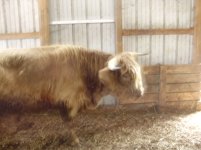
A Highland Bull

We like the looks of the Scottish Highlands, they are striking with their long coat of fur and the big horns. They are one of the oldest breeds in the world that date back to the sixth century and originated in the Highlands of Scotland. I am of Scotsh-Irish decent and like the idea of helping to keep the breed going. They where first brought to the US in 1893 by a New York state farmer who wanted to breed more hardiness and cold resistance to his cattle herd. They are said to be very hardy and do not need shelter in the winter even in very northern climates.

highland-cattle-lostine-cattle-co-e8d1cb500a488a65.jpg
Highland cattle come in range of colours, red, black white, silver and dunn.

They make good mothers and rarley does a farmer have to pull a calf during birth. Highland cattle are very docile, and that is what I want when I turn 60 and start to raise them. I want a breed that is easy to handle and can be halter trained so they can be led.They also have more disease resitance then domestic cattle, and because of their long bangs over there eyes they don't have the face fly and pink eye problem that other breeds have.
highland-cattle-scotland_35950_990x742.jpg
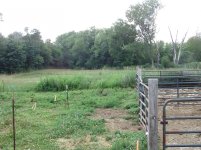
They eat foliage that other cattle would pass by and are said to get fat from it. They have been breed to survive on the sparse and rocky mountains of Scotland. Our pastures have not been grazed for over ten years and I have no plans to plow them up and replant. My cows will have to make do with what is already growing there which is Reed Canarygrass and weeds.

Highland beef is some of the best tasting beef and has nice marbling just from being grass feed and studies done by the National College for Food, Land, and Enviroment, a European Organazation says Highland cattle have lower levels of fat and cholesterol and higher levels of protien and iron content from their beef then all other cattle. They have less cholsterol then even chicken. The beef is so good that it is fit for royalty and is the prefered beef for the Queen of England who maintains a fold of Highlands at Balmoral Castle in Scotland.

So if Scottish Highland Cattle are good enough for the Queen of England, I think they will be good enough for us. In our next post we will be going to Royal M Farm, to talk to the owner Jay Mather, who raises a small herd of Scottish Highlands. We want a chance to see for ourselves what the cattle are like.
 
Last edited:
/ Scottish Highland Cattle #2  
We just started with a fold of 12 Highlands. They seem to love the brush more than the grass. Time will tell.
 
/ Scottish Highland Cattle #3  
I've seen a few of the Scottish Highlanders on a small place near Hygiene, Colorado... They've been there a few years at least. Not sure if they have more than a couple or three cattle though. They sure look fitting for the environment when winter hits... Not so sure about how they handle hot/dry weather (which is what we get in the summer in Colorado, at about 5,000 feet at the foot of the Rockies...)Tthey might like Colorado summers better at the higher elevations, though it's hard to say how they'd react to the thinner atmosphere.

Do your research, and great that there are some living near you so you can get firsthand experience/advice!
-Mitch
 
/ Scottish Highland Cattle
  • Thread Starter
#4  
We just started with a fold of 12 Highlands. They seem to love the brush more than the grass. Time will tell.

That is great, I would love to have that many. I am glad to hear they love brush more then grass. I might have more brush then grass on my farm. Do you raise other cattle besides the Highlands. How many acres do you have?
 
/ Scottish Highland Cattle #5  
I have one other beef critter, and a gaggle of assorted farm animals (llamas, alpacas etc.). I grew up on a small farm with up to 35 head of dairy cows at one point, my father still has 4 shorthorns, two are working steers, the other two are heifers about to be bred.

I have 25 acres at my place, approximately 15 is fenced. I'm running the cattle on 1-2 acres at a time and rotating them around the property. Thus far, they are chewing down about an acre every 5 days, but I'm still learning their consumption/pasture requirements.

I'm trying not to feed them any hay until winter, but I may run out of land before snowflies.
 
/ Scottish Highland Cattle
  • Thread Starter
#6  
I have one other beef critter, and a gaggle of assorted farm animals (llamas, alpacas etc.). I grew up on a small farm with up to 35 head of dairy cows at one point, my father still has 4 shorthorns, two are working steers, the other two are heifers about to be bred.

I have 25 acres at my place, approximately 15 is fenced. I'm running the cattle on 1-2 acres at a time and rotating them around the property. Thus far, they are chewing down about an acre every 5 days, but I'm still learning their consumption/pasture requirements.

I'm trying not to feed them any hay until winter, but I may run out of land before snowflies.

Thats good idea... doing the rotational grazing. I hope to do the same thing. keep in touch with me and let me know how it all works out for you.
 
/ Scottish Highland Cattle
  • Thread Starter
#7  
I've seen a few of the Scottish Highlanders on a small place near Hygiene, Colorado... They've been there a few years at least. Not sure if they have more than a couple or three cattle though. They sure look fitting for the environment when winter hits... Not so sure about how they handle hot/dry weather (which is what we get in the summer in Colorado, at about 5,000 feet at the foot of the Rockies...)Tthey might like Colorado summers better at the higher elevations, though it's hard to say how they'd react to the thinner atmosphere.

Do your research, and great that there are some living near you so you can get firsthand experience/advice!
-Mitch

Hi Mitch, thanks for your advise. The Highlands actually do quite well in Colorado, they don't mind the dry heat as much as the humid heat. Even so they have a lot of breaders of Highlands in Missouri just south of my farm and they seem to do fine there. Those are the breeders I will buy from.
 
/ Scottish Highland Cattle #8  

Attachments

  • Cattle 7-8-12e.jpg
    Cattle 7-8-12e.jpg
    461.2 KB · Views: 507
  • New Image.jpg
    New Image.jpg
    695.7 KB · Views: 285
  • cattle 7-8-12d.jpg
    cattle 7-8-12d.jpg
    542.7 KB · Views: 297
/ Scottish Highland Cattle
  • Thread Starter
#9  
Here's a thread I started a couple years ago about clearing some of the old farm land I bought. http://www.tractorbynet.com/forums/land-clearing/206188-clearing-some-new-land.html

And a pic of the herd (technically referred to as a fold).

Read that whole thread, what a great place you have. LOL I saw your other bovine critter, is that some kind of milking cow cross?

Now that you have had them a couple of years, are you glad you got them? Do they stay in the fences or do they escape now and then? Are they everything that they say about them? Sorry I ask alot of questions, I am just very interested.
 
/ Scottish Highland Cattle #10  
I've only had the highlands for 11 days. So far so good.

Went out this evening, had a new steer! Must have been born this morning, wasn't expecting this one!
 

Attachments

  • 2012-07-18_19-35-54_538.jpg
    2012-07-18_19-35-54_538.jpg
    635.6 KB · Views: 354
  • 2012-07-18_20-01-42_69.jpg
    2012-07-18_20-01-42_69.jpg
    654.3 KB · Views: 297
  • 2012-07-18_19-45-25_60.jpg
    2012-07-18_19-45-25_60.jpg
    236.4 KB · Views: 205
  • 2012-07-18_19-45-14_793.jpg
    2012-07-18_19-45-14_793.jpg
    225 KB · Views: 193
  • 2012-07-18_19-45-21_259.jpg
    2012-07-18_19-45-21_259.jpg
    234.4 KB · Views: 200
Last edited:
/ Scottish Highland Cattle #11  
We have some and they sure can clean up a place in a hurry. Attached are few pictures. Yes they love to eat brush or just about anything. We have one my granddaughter named Oreo because it's colored black white black. :) -robert
 
/ Scottish Highland Cattle
  • Thread Starter
#12  
He is so cute, I will keep intouch with you. I am interested in how it goes, I am about 3 years away from getting my fold.
 
/ Scottish Highland Cattle #13  
Here's a before and after pic. Same spot, 7 days of the Highlands mowing it down. Just moved them yesterday to their third pasture, they love the brush!:thumbsup:
 

Attachments

  • 1 Before.jpg
    1 Before.jpg
    886.5 KB · Views: 616
  • 2 After.jpg
    2 After.jpg
    960.7 KB · Views: 509
/ Scottish Highland Cattle #14  
Will eating weeds and brush have a negative effect on the way the beef tastes, compared with a high quality grass? Very interesting thread. I have also been looking at smaller framed cattle to put on my land. Been looking at Dexters, American Lowlines, and Mini Herefords.
 
/ Scottish Highland Cattle #15  
No. They're known for making excellent beef in minimal forage.
 
/ Scottish Highland Cattle #16  
So how much does a 300 lb yearling go for? I have been kinda interested in them, but two years ago got a pretty good deal on 2 yearling heifer Gelbvieh's at a dollar a lb. Now I have 4, and hopefully 2 more on the way this year.
 
/ Scottish Highland Cattle
  • Thread Starter
#17  
So how much does a 300 lb yearling go for? I have been kinda interested in them, but two years ago got a pretty good deal on 2 yearling heifer Gelbvieh's at a dollar a lb. Now I have 4, and hopefully 2 more on the way this year.

A dollar a pound was a great deal for the Gelbvieh heifer. Highlands I have seen for sale, a 300 lb heifer went from 500.00 for unregesterd to 1500.00 for a registered heifer. I have also seen deals where someone was selling their whole fold that went for less then what you could buy if you bought one at a time. With this drought in the midwest, you may beable to find a deal now.

If you have some pasture that is not ideal, Highlands would clean that up for you.
 
/ Scottish Highland Cattle #18  
Actually I have pretty good pasture, but having Highlands will open up some different options since tillable land here is at a premium(lots of steep ridges).

I googled them for Tn and found a breeder about an hour and a half away in Kingsport- American Highland Cattle Association

There is also a farm about 20min away that has always had them, but I don't know if they are for sale, so I will have to do some digging.
 
/ Scottish Highland Cattle
  • Thread Starter
#19  
← Older posts
Our Visit to Royal M Farm
Posted on July 28, 2012 by Gordon Milligan
My wife and I wanted to see for ourselves what Scottish Highland were like and have a chance to talk with in person a farmer who raises them to see if all they say about Highlands are true. This is part of our education process to becoming farmers. All the reading of farm books and magazines do not replicate to actually talking to a farmer who is doing what we want to do.

I looked on line and found the American Highlands Cattle Association and they had contact information for their members and we were surprised to find the Royal M Farm owned by Jay Mather was only a 25 minitue drive from our house here in Illinois. I was excited at the prospect of seeing these animals first hand, so I emailed Jay and said we were interested in raising Highlands and if he would care if we came out to see his cattle and have a chance to talk with him. To my surprise Jay emailed me back the same day and was more then happy to show us his cattle and to talk to us. He told me he had a small 5 acre farm with 4 highland cows.

Royal M farm 001.jpg
Royal M Farm

We drove out to his farm and met Jay and he told us his farm now was just a hobbie farm. He grew up farming and his family used to own 160 acre farm just a few miles from his current place. They raised Black Angus cattle and grew corn, soybeans and hay. His current farm had turkeys, chickens and Highland cattle. They turkeys and chickens were a 4-H projects his kids were doing. Jay told me he was part Scotch and him and his family liked going to Highland games and the organizers of the games wanted his highland cattle there for a exibit and was in the process working with the village to allow that to happen for the next games.

Jay said he does rotational grazing and had his pasture area sectioned off, but because of the severe drought we have been experiancing here in Illnois he was already feeding his cattle hay and some corn. He said he feeds the corn out of habit when they used to raise the black Angus cattle, but said you don't need to, the cattle do just fine on grass and hay alone.

Royal M farm 011.jpg
Jay uses permanet electric fence to section his pasture.

He said he has had the Highlands for only two years and only keeps three animals, but just a week before we got there one of his heifers had a baby bull calf. We were excited to see the new calf.

Royal M farm 004.jpg
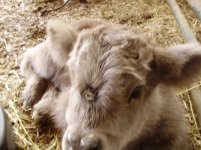
Moma and baby highlands

I have been telling my wife we plan to eat baby beef and she said how can you eat something so cute.

Royal M farm 003.jpg
Baby Bull Highland

I told her they won't be this small and cute when we eat them, I can see she wasn't to sure about it all.

Royal M farm 009.jpg
This is a picture of Jays Bull

I was kinda surprised to see how big the highlands were, I have read they are built smaller then most of the grain fed breeds, but they looked pretty big to me. When we petted the the baby calf the mother didn't seem to mind and the little calf was curious about us which I liked. Jay says they don't get excited too much and they are a pretty docile breed. He did say you still have to respect those horns, the cows have accidently horned him because he wasn't watching where he was going and they stick out so far.

Royal M farm 007.jpg
This picture of Jays other heifer, she is about 18 months old, that weighs about 600 punds. I told my wife this is the size we plan to eat, she was fine with that.

We really enjoyed our visit to Royal M Farm and talking with Jay, and I am still convinced that Scotish Highland cattle will be right for us. The only thing that concerns me is in the summer time with the high tempretures they have been having in Iowa this year, they don't do well with heat and humidity. I also wish they didn't have horns.
 
Last edited:
/ Scottish Highland Cattle #20  
Why can't they be polled?
I can see why this needs the horns for his "games".....so they look like the real deal, but your not interested in that. Perhaps you could leave the horns on the bulls but have the cows polled.
 

Marketplace Items

2016 Ford Explorer AWD SUV (A59231)
2016 Ford Explorer...
2022 BOBCAT T770 SKID STEER (A60429)
2022 BOBCAT T770...
2005 Komatsu HM-400 (A60462)
2005 Komatsu...
2018 CATERPILLAR 326FL EXCAVATOR (A60429)
2018 CATERPILLAR...
Land Pride RCR1260 (A53317)
Land Pride RCR1260...
KUBOTA L3901D TRACTOR (A59823)
KUBOTA L3901D...
 
Top