Pole Barn Advice

/ Pole Barn Advice #1  

ssuesens

New member
Joined
Aug 8, 2007
Messages
4
Location
Fort Worth TX
Tractor
Ford 1720 and MF TO30
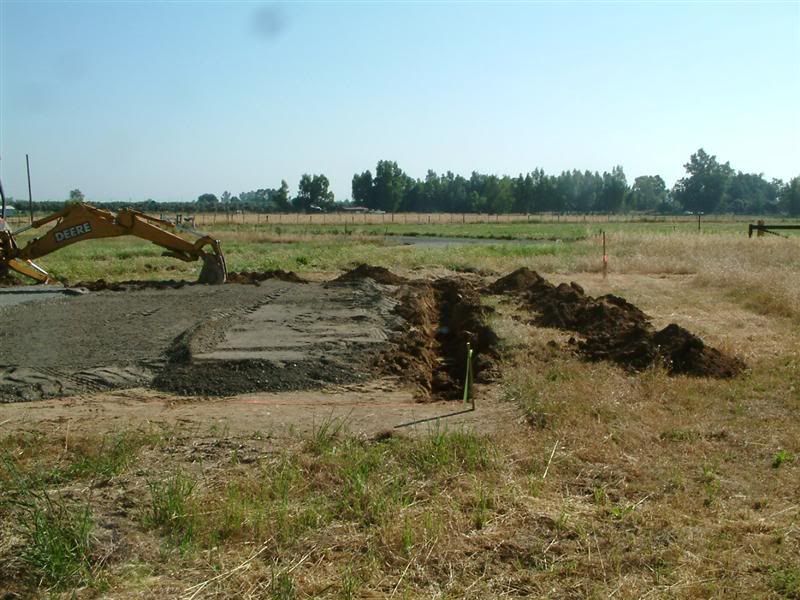
I've been watching this board for a year and finally have a project worth sharing. I'm putting up a 30 x 40 pole barn with an attached 30 x 16 loafing shed. For financial reasons :( I will be pouring a slab inside the barn sometime in the next year. Here are my two questions:

1. What type of flooring could I put in now which would be economical and not become a pain when I am able to pour the slab? I was thinking crushed granite or perhaps pea gravel. I'm hoping it can act as the base for my concrete. Any thoughts on the product or process would be greatly appreciated.

2. The barn will eventually become my workshop so I am thinking of adding insulation. Anyone have any experience with the spray foam insulation you see on some of the DIY shows? I believe there are open cell and closed cell products. Can this also be applied to the ceiling (corrugated tin)?

Thanks!!!
 
/ Pole Barn Advice #2  
SIR,
i suggest you build larger, because it will fill up
quickly. i have a 30X50 WICK building, and it should
have been larger. i had the company install insulation
in the roof while it was under construction. i installed
it in the walls myself, and it helps a lot. keeps it cool
in the summer, and warm in the winter. i do not know
much about the sprayed in insulation, but i have been
told if there is fire, you only have a few seconds to get
out of the building, before the fumes kill you.
good luck with your project.
accordionman
wlbrown
wright city, mo.
 
/ Pole Barn Advice #3  
HELLO,
forgot to comment on your floor question.
i suggest you use the gravel in the floor until
you can get a concrete floor. if you have some
heavy machines for your shop, consider making
the concrete slightly thicker than normal.
accordionman
wlbrown
wright city, mo.
 
/ Pole Barn Advice #4  
We have used large gravel compacted then a few inches of crushed lime on top. Once the lime dries out it is really hard for walking and driving over but jacks and the like will dig into it. Dads building has been like that for over 20 years and he hasn't had to do anything to it. My shop fl;oor has that for a base without so much lime. I pored it 24x40 with no expansion joints and it 8 years I have no cracks or shifting.
 
/ Pole Barn Advice #5  
Try crusher run, just 2 hrs North of you a company sells it, today it was $4.95 a ton, we use it on our roadways and in time that stuff packs hard! Then when you pour your floor you will have a great base.
 
/ Pole Barn Advice #6  
I agree with blueriver - crusher run (what we call agrilime around here) packs down good - especially if you settle it with a lawn sprinkler - and gets plenty hard. I've never had any problems with jacks settling, but then i also put a board under them to help spread the weight and limit "gouge points"
if you're going to put more than cars on the slab after it's poured, I'd go with 6" thick and use plenty of rebar & remesh.

as to insulation, the spray foams work good but are expensive. I'd check around for surplus EPS (styrofoam) and cut it to fit between the poles - then cover with plywood for the walls. Go with the 4X8 sheets of foil backed foam for the ceiling. (or the foil & bubble wrap stuff you can staple to the bottom of the purlins) and don't forget bug/rodent shields at the bottom of the walls or they'll burrow into whatever insulation you go with.
 
/ Pole Barn Advice #7  
Don't use pea gravel. i doesn't pack well.

I have been told to use clear crushed stone in my pole barn because it drains better then the limebased product.[called traffic bond in our area]

You can always call a local concrete co. and ask them what they recommend.

Shane
 
/ Pole Barn Advice #8  
Sorry spray insulation is good but $$$$$ i e-mail tigerfoam and gave them my measurements they said the price would be $10,000 yet that is alittle silly. So i went to Foam Insulation Kits by Fomo Foam - Official Site and figured out what i needed not what someone told me i need. The price came in at $7000.

I understand you don't need a vapour barrier with the spray foam. Also the ridge foam is good but once you start pricing that out you will so realize that is not to cheap either.

Shane
 
/ Pole Barn Advice #9  
ssuesens said:
I've been watching this board for a year and finally have a project worth sharing. I'm putting up a 30 x 40 pole barn with an attached 30 x 16 loafing shed. For financial reasons :( I will be pouring a slab inside the barn sometime in the next year. Here are my two questions:

1. What type of flooring could I put in now which would be economical and not become a pain when I am able to pour the slab? I was thinking crushed granite or perhaps pea gravel. I'm hoping it can act as the base for my concrete. Any thoughts on the product or process would be greatly appreciated.

2. The barn will eventually become my workshop so I am thinking of adding insulation. Anyone have any experience with the spray foam insulation you see on some of the DIY shows? I believe there are open cell and closed cell products. Can this also be applied to the ceiling (corrugated tin)?

Thanks!!!

Don't guess. Call around to concrete contractors and find out what type of gravel they recommend. Also ask if a plastic vapor barrier is needed.

I had a 24x42 ft concrete slab poured in June05. The contractor recommended a 6 mil thick Visqueen vapor barrier under the gravel.

My slab is 6" thick, 4000 psi concrete, #4 rebar criss-crossed on 24" centers.
 
/ Pole Barn Advice #10  
yes what you want to do is use #2 crushed stone. why? 1 it packs down w/ no compaction needed to like 97% 2 it drains water away good.
put a 6 mill poly under crete this will help w/ sweating. i would also use mesh
5x10' 6x6 10 ga sheets. this is much safer than rolls. if you wanna really do a nice job you can put foamular 150 board under it this will help w/ cold tranmission thru it. power trowel smooth and seal w/ a penetrating type sealer. i like UGL brand (drylock clear masonry treatment) it penetrates in and does not leave a a surface film. do not use a product that leaves a surface film they will be very slick w/ a little h20
dws
 
/ Pole Barn Advice #11  
Human nature being what it is, you'll find that most people who do not pour concrete at the begining, rarely ever get around to it. Gravel is a terrible floor no matter what you use. The rocks will work there way to the surface and you'll have to deal with them forever. If there are bigger rocks, you WILL twist your ankles on them. If they are small rocks, then there will be movement of them all the time. Once you start using the shop and storing stuff in there, it's just that much harder to getting concrete poured.

No matter what your budget is, pour concrete from the start. If you have to wait another year, then wait. Doing it any other way will just cost you more money over all. If it was me, I'd figure the size of building that you want to build, make sure it's what you really want, and pour the slab. Once it's poured, you can work on building it over time. Frame it and put a roof on one year, do the walls the next year and so on. There have been threads here where members have spent several years working on their barns. It's not a bad way to save some money to get the most you can with the best results possible.

Good luck,
Eddie
 
/ Pole Barn Advice #12  
flusher said:
Don't guess. Call around to concrete contractors and find out what type of gravel they recommend. Also ask if a plastic vapor barrier is needed.

I had a 24x42 ft concrete slab poured in June05. The contractor recommended a 6 mil thick Visqueen vapor barrier under the gravel.

My slab is 6" thick, 4000 psi concrete, #4 rebar criss-crossed on 24" centers.

The recommendations I have gotten are to put the vapor barrier on top of the gravel... this post caught my eye because it is contrary to that.

Which is right??
 
/ Pole Barn Advice #13  
The Great Vapro Barrier Debate.

I'm in the minority here in that I don't agree with those who think a vapor barrier keeps water our of a shop. My experience is that water does not go uphill, against gravity, through solid cement.

What a vapor barrier does do is to keep the moisture in the concrete and allow it to cure slowly. When you pour concrete, you want several things to happen. You want it to be as dry a mix as possible. This gives the cured product it's maximum strength. You also want it to have a certain amount of moisture, which it will when mixed, and to retain that mixture when poured. This can change in dry soils, or soils that wick moisture out of the wet conctret mix. If this happens, you will have an uneven mixture, which means a weaker pad when cured.

This means the concrete should be poured direction onto the plastic vapor barrier.

Eddie
 
/ Pole Barn Advice #14  
Perhaps putting it under the gravel is a regional practice I'm not familiar with.

The vapor barrier I'm familiar with always goes on top of the gravel, insulation (if any) on top of that, mesh/rebar on top of the insulation...
 
/ Pole Barn Advice #15  
My very minor 2 cents on this. Gravel blows. I spend a lot of time kneeling and on my back with my tractor and the gravel in my carport hurts, hurts hurts. I know nothing about rock and gravel (Except what I have learned here thanks to all of you) so maybe the stuff I have is not ground fine enough, but we have a big water problem here with our rain.
 
/ Pole Barn Advice #16  
EddieWalker said:
The Great Vapro Barrier Debate.

I'm in the minority here in that I don't agree with those who think a vapor barrier keeps water our of a shop. My experience is that water does not go uphill, against gravity, through solid cement.

What a vapor barrier does do is to keep the moisture in the concrete and allow it to cure slowly. When you pour concrete, you want several things to happen. You want it to be as dry a mix as possible. This gives the cured product it's maximum strength. You also want it to have a certain amount of moisture, which it will when mixed, and to retain that mixture when poured. This can change in dry soils, or soils that wick moisture out of the wet conctret mix. If this happens, you will have an uneven mixture, which means a weaker pad when cured.

This means the concrete should be poured direction onto the plastic vapor barrier.

Eddie

Eddie,

I have very direct experience contrary to your belief that water does not go through concrete . . . Remember, the issue is not water, but water vapor, which while obviously a form of water, behaves differently than standing water. Vapor responds to temperature gradients, moving when there is a temperature differential between ground temp and the airspace above. Molecular water easily passes through concrete. I manage a commercial building for a group of partners where the slab-on-grade did not have a vapor barrier installed during construction. The building has had perpetual problems with moisture condensing under plastic chair mats which are used in the office - so much moisture in fact, that the plastic mats actually turn a milky white. It's an unbelievable problem.
 
/ Pole Barn Advice #17  
I can't argue people personal obsevations, but in several years of this debate, the moisture in the building can almost always be credited with condensation. The believe the water turns to vapor and then passes through concrete from under a slab isn't something I belive is possible. There is an entire chain of events that would have to happen that nobody can explain.

Just because there is moisture in a building has nothing to do with whether there was a piece of plastic put under the slab when it was poured. In fact, a little known secret that those of you who think that piece of plastic keeps out moisture might not know is that the plastic sheet has holes in it. Just think about the utlity lines and explain why there isn't mosture around those areas?

I also did a little experiment with a piece of concrete and a puddle of water. It was told to me that concrete wicks moisture up from the ground through the concrete. I put a 4 inch thick piece of concrete in a water puddle that was an inch deep of water. Does anybody think the water worked it's way up the sides of that concrete to the surface? It does wick it's way up a bit, but not very much. Why can't standing water do this, but some of you believe that minute particles of vapor can?

It's all condensation.

Eddie
 
/ Pole Barn Advice #18  
flusher said:
Don't guess. Call around to concrete contractors and find out what type of gravel they recommend. Also ask if a plastic vapor barrier is needed.

I had a 24x42 ft concrete slab poured in June05. The contractor recommended a 6 mil thick Visqueen vapor barrier under the gravel.

My slab is 6" thick, 4000 psi concrete, #4 rebar criss-crossed on 24" centers.

Oops. My mistake. The plastic goes over the gravel, not under. Sorry about that.

There's the gravel covering bare ground

DSCF0033Medium.jpg


There's the Visqueen and rebar covering the gravel
DSCF0046MediumMedium.jpg
 
/ Pole Barn Advice #19  
eddie as I understand it, it is a swamp cooler effect. if the soil was warmer then the top of the slab, the slab would draw the moisture down to the ground through capalery convection? Since we like it 74+ and average ground temp is 68- subserface, evaperation trys to equlise it.
 
/ Pole Barn Advice #20  
If you plan to do something with the floor in 12-24 months, leave it dirt now. Do the floor when you can at that time. I have a machine shed dad built in 1964, it is still a dirt floor. Can find the grass roots..... You will be 6 inches too deep, and working in gravel, and improperly compacting it, and what about insulation, if you try to do a sub-grade floor now & wait to pour the concrete. Or you will be hauling material in now, only to scrape it out & redo. Just wait with the whole deal if you are going to wait. Work in the dirt for 12 months, it will remind you to get around to finishing it.

Do do something with the roof insulation as you build it. It is miserable & very expensive to add roof insulation to a metal building after it is up. Check into this. If you want an insulated building, do the roof as you build! Do not try to insulate later.

Walls you can insulate later, hanging batt is probably cheapest, sounds like you are on a budget & won't be doing any foam once you price it or you would just do the right isnulation from the beginning & save money now.

Concrete will pull water through the floor. Check with anyone with a grain bin in the upper midwest. Those with plastic are good, those without you throw away the bottom 3 inches or so of molded rotten wet grain plus you have a crust on the top of the grain that isn't too good from the vapor that travels up. Nothing to guess about there.

--->Paul
 

Marketplace Items

2017 Bobcat T770 Compact Track Loader (A61307)
2017 Bobcat T770...
40' 6 Door Shipping Container (A60352)
40' 6 Door...
Toro Zero Turn Lawn Mower (A56859)
Toro Zero Turn...
2015 C.GALLEGOS PNEUMATIC TRAILER (A60736)
2015 C.GALLEGOS...
2006 INTERNATIONAL L9227(INOPERABLE) (A60736)
2006 INTERNATIONAL...
Madvac CS500 Sweeper (A61166)
Madvac CS500...
 
Top