Mig or stick?

/ Mig or stick? #61  
Sodo

You are an individual who feels that no one is listening to your opinions and thus you "raise your voice" to try to ensure that you are heard. "Yelling" from the top of the mount does not help your cause it makes folks turn you off.
Try every so often to realize that you do not know everything. Folks do read your opinions and use or discard them as to how they view the value of what you write.

Put out your viewpoint and let it go. Quit trying to convert everyone to your viewpoint. Just because someone has a different view does not make them wrong just makes them wrong in your viewpoint. Constantly beating people and berating them do you no good and turn folks against believing you have anything to offer to the discussion.
Most likely you will not take advice on this subject as you are a know-it-all and refuse to acknowledged that others have valid opinions as well. Try to be less of a provocateur and more of a good "net-citizen." I think you will find folks take you more seriously.

Of course I am an optimist and am thus constantly disappointed so I don't expect you to take anything I post seriously.
You will note that I take my own advice and having put out my opinion in this post I will let it go.
Try it.
 
/ Mig or stick? #62  
Sodo,
You are an individual who feels that no one is listening to your opinions and thus you "raise your voice" to try to ensure that you are heard. "Yelling" from the top of the mount does not help your cause it makes folks turn you off.
Try every so often to realize that you do not know everything..

Ive seen this before. Its a method to try to keep the upper hand on a thread. Silvic dont be afraid of other opinions. Listen to them all and pick the ones that make sense. The message not the messenger. Id be interested if you had something useful ( about welding ) to offer other welders OTHER than simply trying to steer their attention.

I bet theres a silent majority who can see that I put a lot of thought into helping new welders develop their welding skills, by offering suggestions that they can do,( now ) on their projects.
 
/ Mig or stick? #63  
Observing the 'feud' about whether a novice welder should start with stick or MIG (which was not the OP's question), it is analogous with the learning to drive on manual or automatic car question.

Some folks say that one should learn to drive on a manual car, because if one can be good at that, then driving an automatic will be a lot easier and one will be a better driver. Others say that one should learn drive on an automatic, so that one can focus on all the other aspects of driving without the distraction of having to handle the gears. Once one has all those aspects of driving mastered, transitioning to manual will be relatively easy.

Both arguments have merit.
 
/ Mig or stick? #64  
Observing the 'feud' about whether a novice welder should start with stick or MIG (which was not the OP's question), it is analogous with the learning to drive on manual or automatic car question.

Some folks say that one should learn to drive on a manual car, because if one can be good at that, then driving an automatic will be a lot easier and one will be a better driver. Others say that one should learn drive on an automatic, so that one can focus on all the other aspects of driving without the distraction of having to handle the gears. Once one has all those aspects of driving mastered, transitioning to manual will be relatively easy.

Both arguments have merit.

I think that was before cell phones. :laughing:
 
/ Mig or stick? #65  
Obviously automatic is the proper vehicle to start with. And then convincing this new driver to learn stick (later) is really the best of all worlds. I suspect current, actively teaching, professional welding instructors think that way too. But I cant know this.

Obviously its better to NOT roll back into the car behind you when teaching a youngster to drive and automatic makes that possible. Theres so many subjects, safety, for one. Communicating with other drivers directly (thinking ahead; using blinkers). And by your actions, your driving style. Simply keeping the car in the lane.

Does a modern welding class REALLY start with stick? I can envision a few minutes with stick, just so the student will see how much faster success comes with MIG. And in case anyone has spent too much time on forums.

Frustration slows the process significantly and while forum posters may never see this; a welding instructor is in the catbird seat to re-evaluate old husbands-tales. Especially when its almost impossible to locate an item made by stick-welding anymore. You pretty much have to go to a farm or some old guys shop. And then you have to look past all the stuff hes MIGd for the past 30 years to find something with slag chips or marks from the chipping hammer.

Then theres the attitude (on forums) that the only real welder is the stick-welder. Newby welders dont even know how to identify stick-vs-MIG welds on manufactured items. Ive talked to people I thought could know better, who cant tell if a (good) weld was stick or MIG. They have a box-scraper that didnt fall apat so it musta been stick-welded, right? They think because the forums say MIG is weak, that everything must be built by stick (wrong). If you dont know how to tell, you will be 95% correct SIMPLY assuming anything mfd in the last 30 years is MIG. Wait thats only 1988.......perhaps 40 years.

So some poor feller, who just needs to get going, fix his stuff, start some projects, the stick-weld thing is like a blockade set in front of him. Which some observers enjoy, but not the guy whos stymied by it. Like watching a new driver start out on a hill, with a manual trans, and some easily angered driver on his butt honking, you have to chuckle, right? If the only vehicle to learn in, is a manual thats great. If an auto was available, thats nothing but FOOLISH, right?

Dont buy a MIG first! You have to learn the rites of passage. Which is bird-poop on your repairs for the next 3 years. While some 19 yo computer jockey is posting pics of great welds after 2weeks. All you have to do is suppose the computer nerds welds are weak, right? Keep in mind nobody posts pics of the bird-poop stick welds. Is anyone aware that bird-poop stick welds can be weak too? But there are no pics so it didnt happen.

Challenging long-held notions is worth merit (especially on forums). People can read and decide on their own in an open discussion. But not very well when there are members trying to quash the open exchange. And other members who only “know” what they read on forums have to back these guys up, pat them on the back. If youve hitched your wagon to an opinion leader whos wrong, then I guess you have to raise your voice, yell at the top of your lungs, right? Ive seen that insult bandied about as an attempt to discredit other views; primarily when the member has no on-topic advice to offer in exchange.

By my observation, this forum sells a lot of stick welders to members who could fix their stuff much better, faster with a MIG. And perhaps learn stick for sport, to be ready for fieldwork (windy day outside). Or A rusty repair where you cant get the angle-grinder in to get bare steel. Or for the forum prestige. Strangely I dont see this on weldingweb. Perhaps because this is a tractor subforum; less oversight allows some members to express their stick posturing (=posing). That aint good for members who came to learn, they just go to another forum.

All that said.....a Stick welder for $50 ain’t bad, especially if you think of it as a challenge that you WILL conquer. It can be done, and quicker with assistance. But you wont fix a mower deck with a stick welder (not soon). And - modern DC stick welders cost less than a (good) MIG and often have arc start assistance which is really helpful. But most people will be quickly productive on more projects with a MIG first.
 
Last edited:
/ Mig or stick? #66  
To get your state structural welding cert "WABO card". You first have to pass the SMAW test. Then you could take the wire feed test.
Since the 1970s I've run way more wire feeds than stick welding. I've been on jobs running 70-pounds of wire a day.
 
/ Mig or stick? #67  
Sodo, if you're curious about what gets taught (by me anyway) - my class generally starts with oxy/acetylene briefly. Several pro shops actually consulted with me on my curriculum and weld progression and weld testing. One thing in common, all wanted torch welding taught for learning about the puddle.

Then depending on machine availability, or depending what's available at home on the farm (or loggers), or where they work weekends and/or summertime - stick or mig is next. Then they rotate. Tig is also part of the course when they get farther along. Students rotate disciplines as needed and revisit welds they've learned.

A lot of time is spent on how to perform self-analysis of the weld and why it came out good or bad.

Bend tests and cutting welds apart are also part of the deal.

Students bring in items to be repaired, mig, tig and stick are used as needed (or desired).

Students build projects for themselves, mig, tig and stick are used as needed (or desired).

Community members and teachers bring in items for repair, mig, tig and stick are used as needed (or desired).

The class goals are for everyone to experience everything and come away knowing what they like, don't like, need, don't need, etc.

As they progress, students tend to specialize in what they like, and what they have at home or work.

One 7th grade student is in love with stick welding, which is good because that's all they use at home. His dad ordered him a 160 amp stick welder of his own after only his 4th day of class. His welds are dead straight and near perfect in the flat position. Pick it up again in the fall.

Two local pro shops, that do major league big money work, won't even consider an applicant who can't stick weld. They want well rounded employees with skills in multiple welding disciplines.

At my work, and online, many times the best welder is the one a person wants. For an actual job, that may not be the case. For the welds I do for money, I use the machine most appropriate for the job. Mig, tig, stick, flux core all have a place and time for what I do.

My first personally owned welder was a torch. Then a stick welder, then a small mig, then a large mig, then tig. Other people should do whatever order they like.
 
/ Mig or stick? #68  
At my work, and online, many times the best welder is the one a person wants. For an actual job, that may not be the case. For the welds I do for money, I use the machine most appropriate for the job. Mig, tig, stick, flux core all have a place and time for what I do.

My first personally owned welder was a torch. Then a stick welder, then a small mig, then a large mig, then tig. Other people should do whatever order they like.
In my opinion, the most important thing is to be comfortable with the equipment that you have available to you.
Most of the welding I do is with stick on an old Lincoln AC buzzbox. Why? Because that is what I have and it generally works. I have even done some exhaust work with it and I made less holes in the exhaust than I expected.
The neighbor has a nice Miller 211 that he runs on 120VAC. It is nice and I use it from time to time, but for most of what I do, I need 220VAC to get enough heat.
I also have a torch set, haven't welded with one in years, but there was a time when I brazed 2-3 AC linesets in with one every day, so I probably could if needed (and I need to soon as I have some aluminum that needs to be reconnected to the pool deck so we can install it.

Aaron Z
 
/ Mig or stick? #69  
There's a big difference between someone training to be a professional weldor and a home weldor who simply wants to repair things quickly. I would expect that a graduate of a welding program would be proficient in stick, MIG, TIG and gas welding and brazing. They need a broad skill set because they are in a trade that can present a variety of welding problems. People who do nothing but pipeline work are going to probably spend most of their time with stick welding, while people doing maintenance / repair work will use a variety of processes. But, if either weldor changes jobs - the most used processes will change too.

Let's separate the the best type of welding process by the the majority of work being done by the weldor. If the weldor is a guy at home in his garage or workshop, then I would suggest that a MIG is the best machine for that environment as it is quicker to learn and you can do adequate welding on steel in most cases, especially with thinner materials that are often encountered in home or hobby welding.

Someone with a farm, on the other hand may want to weld heavy materials outdoors in windy conditions. In that case either a stick or wire feed with self shielding wire would be a good choice. The stick machine can be the most cost effective to purchase, as a wire feed machine that will take 0.45 or heavier wire for thick materials is going to be more costly to purchase - but, if the weldor chooses wire feed process it can work just as well as stick.

Me? I have a 300 amp multi-process machine setup for MIG, a 180 amp TIG, and a tiny 140 amp 120 / 240 volt stick machine. I use the MIG and TIG about an equal amount and rarely use the stick. I got the stick machine to weld 650 feet of pipe fence and when that project was done, I put it in its storage case and haven't used it since. At this point, I will probably never use the stick as I have an implantable cardioverter / defibrillator and the electrophysiologist suggested that it would be better if I didn't do anymore stick welding. So, far I have had no problems with MIG or TIG, including some MIG work on 3/8-inch thick material with the welder cranked up fairly high.

I didn't find learning to weld with stick to be especially difficult, and spent about four hours practicing different position welding before doing the fence - including some mocked up fence rail / post joints I made with scrap pieces. The fence is still standing fifteen years later, no welds have cracked or broken, so I assume the welds were adequate. If you learn to watch the puddle as you weld with MIG, then puddle control is not that big of a problem with stick. The real problem (for me) with stick was getting used to the constantly shortening electrode and getting used to feeding the stick into the puddle so that the arc gap was consistent. However, that's not all that much different than feeding the filler rod into a TIG puddle and mastering continuously feeding the filler into the puddle while maintaining a consistent electrode distance above the metal.

In all of the processes, it comes down to watching and controlling the puddle while keeping a correct and consistant distance from the electrode to the work surface. I can see how learning stick first can be portable to other processes, but it's not like it's impossible to start on MIG and then use other processes as many of the technical considerations are the same regardless of the process - it's how you achieve the puddle control that changes. If you study the process and then practice - you can work it out.

I've found that the biggest problem people have with poor MIG welds is bad joint preparation and little, if any, metal cleaning prior to welding. I treat MIG welding like TIG welding and clean the joint area thoroughly to bare metal and then wipe everything down with alcohol. I make sure to bevel the joints as needed (by type of joint) to increase the wetted area and then make sure the machine is setup for best penetration. Depending upon the project, I may even do some test joints to verify I have the welder setup correctly. I keep a welding notebook for reference and if I repeat a type of joint or material setup in a new project, I will consult my notes for welding settings and results.

For the OP, you can repair your post pounder with either stick or MIG - both will work. Make sure the metal is clean and the joint is prepared correctly - then look into machine settings for the electrode you're using or the wire size. Personally, I'd probably use my MIG, but that's my preference as I generally have .035 wire in it and I know for a fact I can put together a pipe or tube with a cap on it and it will not come apart.

But, the same repair can be done with a stick machine and people who are practiced with that type of process will make welds that look good and will be structurally sound as well.

The question you need to ask yourself is which process am I personally better with - and use that process.
 
/ Mig or stick? #70  
Good discussion here.

For me the choice was easy... MIG. I have yet to have (and doubt I would ever tackle) anything so thick that I couldn't do it with 220v MIG. I also wanted a fast learning, easy way to get going on projects with a quick learning curve, and I am almost always in my garage or right outside where I can shield. On the contrary, I see TIG as my second welder someday. That and getting a few pointers early on in person from Shield Arc! Thanks again.

Notice I am buttering up SA! In case I ever do have a bigger job than I can handle :D :laughing:
 
/ Mig or stick? #71  
Some great posts!
Not really the topic of the OP, but on-topic to the MIG or Stick ‘title’. ;) ;)

There's a big difference between someone training to be a professional weldor and a home weldor who simply wants to repair things quickly.

Most certainly!

Tractor sub-forum serves members who have a broken item or a specific project. Most questions are in this realm, very few have pro-level questions or needs.
 
Last edited:
/ Mig or stick? #72  
Guess I'll chime in here...

As a little background I learned to weld in high school around 2001ish. We did the OA-stick-mig-tig route and I guess that's why I feel it's best (I will elaborate a bit later). My dad had a lincoln ac tombstone at home that I used a few times then he bought a little harbor freight 120 mig eventually specifically for sheet metal work and I didn't care much for it.

When I was around 20 was when I first got into industrial maintenance and have been doing it since. My first job they had a couple lincoln tombstones with the big crank on them and I did a ton of welding with that in the couple years I worked there. My next (and current job) had a giant 3 phase lincoln welder that I believe was a 3 phase motor coupled to a dc generator and I did a ton of welding with it. 7 or 8 years ago I bought a lincoln idealarc tig/stick machine for myself and have built quite a few home projects with it. A few years ago we got a mig at work (xmt with a wire feeder).

My point is, in high school I wasn't great at stick but could get by. I at that time thought mig was great, but until recently didn't have a lot of exposure to it so I became quite proficient with stick. I still feel far more confident in my stick welds as it's difficult to make a bad weld look good. That's the problem I see with learning (from knowing nothing about welding) with mig, and the main point of my story- If you don't know what you're doing you can easily make bad welds that look good and you think you are the greatest weldor in the world and you will tell your buddies to bring over their 25k gooseneck trailers over so you can repair the frame for them.

Some here may remember that a few months ago I purchased a miller multimatic 215 so I could have mig capabilities at home for thinner work where tig is just not practical. I am quite happy with it and it has the power to cover most of my needs but I have every intention of keeping my stick welder for thicker stuff just because I am still more confident in my stick abilities... maybe it's because I'm out of practice with mig, I'm not sure.

Also, correct me if I'm wrong, but mig was not developed for it's superior weld quality, it was because it's cheaper to run and faster so for production work there is a huge cost savings.

Wow that got long fast, If you made it through thank you for reading.
 
/ Mig or stick? #74  
I still feel far more confident in my stick welds as it's difficult to make a bad weld look good. That's the problem I see with learning (from knowing nothing about welding) with mig, and the main point of my story- If you don't know what you're doing you can easily make bad welds that look good and you think you are the greatest weldor in the world and you will tell your buddies to bring over their 25k gooseneck trailers over so you can repair the frame for them.

Similar risk for the lugnuts on this 25k gooseneck... perhaps more risk. Along withmany other aspects in the decision to couple a 25,000lb gooseneck and drive amongst the baby strollers etc. With all things mechanical there must be a certain modicum of correctness of all aspects, right? A weld done correctly is just one of them, and its not “ mig-or-stick” ? Keep in mind 99% of the trailers youll ever see are MIG’d except for the DIYs. Think about THAT for a moment.:shocked:

Where welding is concerned it can be a problem because usually only one set of eyes is watching the action. Even in a commercial welding shop. The welder has to make sure both sides of the weld joint are melting. There is a code word “ puddle control “ that is used by those - in the know - ? Who often speak as if puddle control is a dark art or a rite of passage. Or a pissing contest. Those who dont know to dont ask (to save face). And so it goes, the mystery continues.

Keep in mind many welders learn puddle control without instruction or even using the term, so it cant be that complicated. Although with (qualified) instruction welding will be stronger, successful, sooner. I never had an instructor and would like to know if there was anything Im doing that could be done better. My uphill welding could benefit from proper instruction!!!
 
/ Mig or stick? #75  
Sodo, the key point in what you are saying is "with proper instruction." I've been around enough people in life to realize not many people (those on this forum excluded) care to learn to do things right. They just want something that will make them think they know what they are doing... and mig welders provide that. When making my decision to buy my multimatic I read many reviews on other welders and I couldn't count how many people said "I've never welded in my life and the first time I tried this I laid a perfect bead!" Nobody ever said that about stick welding, I guarantee it... learning to stick weld will humble a person and seperate those who want to learn to weld from those that just want to "get something repaired."

So first someone weld their mower deck and it doesn't break so they must be pretty good... next their gate breaks- now they're REALLY good and they're ready to tackle anything!
 
/ Mig or stick? #76  
Guess I'll chime in here...

As a little background I learned to weld in high school around 2001ish. We did the OA-stick-mig-tig route and I guess that's why I feel it's best (I will elaborate a bit later). My dad had a lincoln ac tombstone at home that I used a few times then he bought a little harbor freight 120 mig eventually specifically for sheet metal work and I didn't care much for it.

When I was around 20 was when I first got into industrial maintenance and have been doing it since. My first job they had a couple lincoln tombstones with the big crank on them and I did a ton of welding with that in the couple years I worked there. My next (and current job) had a giant 3 phase lincoln welder that I believe was a 3 phase motor coupled to a dc generator and I did a ton of welding with it. 7 or 8 years ago I bought a lincoln idealarc tig/stick machine for myself and have built quite a few home projects with it. A few years ago we got a mig at work (xmt with a wire feeder).

My point is, in high school I wasn't great at stick but could get by. I at that time thought mig was great, but until recently didn't have a lot of exposure to it so I became quite proficient with stick. I still feel far more confident in my stick welds as it's difficult to make a bad weld look good. That's the problem I see with learning (from knowing nothing about welding) with mig, and the main point of my story- If you don't know what you're doing you can easily make bad welds that look good and you think you are the greatest weldor in the world and you will tell your buddies to bring over their 25k gooseneck trailers over so you can repair the frame for them.

Some here may remember that a few months ago I purchased a miller multimatic 215 so I could have mig capabilities at home for thinner work where tig is just not practical. I am quite happy with it and it has the power to cover most of my needs but I have every intention of keeping my stick welder for thicker stuff just because I am still more confident in my stick abilities... maybe it's because I'm out of practice with mig, I'm not sure.

Also, correct me if I'm wrong, but mig was not developed for it's superior weld quality, it was because it's cheaper to run and faster so for production work there is a huge cost savings.

Wow that got long fast, If you made it through thank you for reading.

Once you feel more comfortable with that new mig machine you will find yourself using it more than your stick or tig. I have done a lot of different types of welding, everything from nasty maintenance shipyards to precision mil spec. bench work and for general maintenance and fabrication I'll just grab the mig 90% of the time. I have one machine I keep set up with some .030 bare wire and I can weld some real thin sheet metal or 3/8'' plate just by turning a couple of knobs, simple, easy, fast and clean. And no chipping hammer and wire brush required.
 
/ Mig or stick? #77  
Once you feel more comfortable with that new mig machine you will find yourself using it more than your stick or tig. I have done a lot of different types of welding, everything from nasty maintenance shipyards to precision mil spec. bench work and for general maintenance and fabrication I'll just grab the mig 90% of the time. I have one machine I keep set up with some .030 bare wire and I can weld some real thin sheet metal or 3/8'' plate just by turning a couple of knobs, simple, easy, fast and clean. And no chipping hammer and wire brush required.
I don't doubt what you say one bit, I don't feel that mig is inferior in any way and it is far more convenient... that's why I bought one afterall. I just feel that someone with no welding knowledge and no instruction of any kind can quickly develop "beer muscles" with mig and not even realize that they aren't making sound welds.
 
/ Mig or stick? #78  
I'll agree that I'm probably seeing a lot more welds messed up by guys using mig welders than stick, probably for the same reason crappy carpenters can screw up more jobs with a nail gun than a hammer, too much ammo in the hands of an amature.
 
/ Mig or stick? #79  
Nailgun is another good analogy. You dont see it behind the drywall. You dont see the bad Stick welds cuz nobody shows them (no pics).

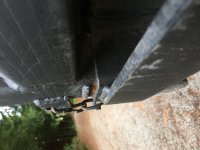
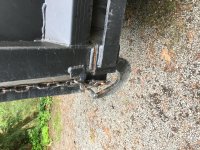
Heres one weld on my 20year old dump trailer. Poorly done, obviously. The whole trailer is MIG. It welds a stake into a pocket. The left side looks OK as well as the rest of the welds (there are hundreds).

42FDB62D-F879-4A16-99BF-990BF78ABA28.jpeg


B3F61FE1-832A-4349-B421-109F6EBF882E.jpeg

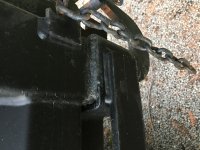
Heres the left side.

B156B8D9-94C9-4FBF-BA3F-F04B4F1FE5DE.jpeg

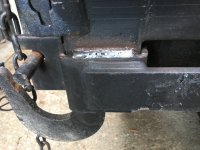
Miggin’ in the wind! Dangit. Not a critical weld, and hundred times stronger- paint will cure its ills. :D

23A7DEB5-B72F-4563-A583-542B97568EEF.jpeg

Its a little bit of a mystery how such an easy weld could be done so wrong,,,, dont you think? But consider a commercial welding situation. Friday afternoon or Monday morning. Or at 1:30pm after a liquid lunch. What percentage of welders are doing a poor job on 1% of their welds? Contrast this to the hobbyist who grinds a serviceable weld out simply because someone might see it. Or because hes unable to assess the serviceability of a weld.
 
/ Mig or stick? #80  
I’m not sure how a nail gun leads to a worse job other than the fact screws would be better. Nail gun to hammer I’m not understanding the point. I’m going to argue the other side of this one since the nail gun doesn’t beat everything out of wack. Also there’s a lot less chance of surface damage with a nail gun.
 

Marketplace Items

2016 Jeep Compass 4X4 SUV (A56859)
2016 Jeep Compass...
(INOP) 1981 CATERPILLAR 950 WHEEL LOADER (A59823)
(INOP) 1981...
207283 (A52708)
207283 (A52708)
24in pin on excavator tooth bucket (A61307)
24in pin on...
2020 PETERBILT 567 (A58214)
2020 PETERBILT 567...
(INOP) 2006 FORD F-150 XL EXT CAB (A59823)
(INOP) 2006 FORD...
 
Top