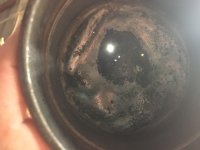
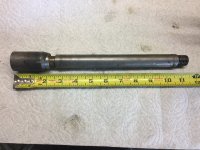
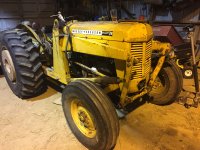
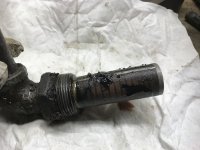
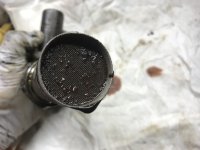
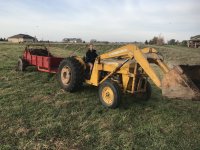
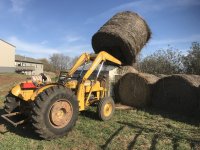
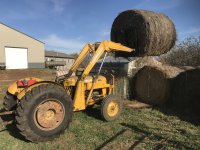
Great pics - thanks, seeing it makes things a lot easier than imagining!
That isn't a lot of matter on the screen - but I wonder if it has dropped off while the tractor's been parked and you've been removing the oil pick-up? There's not a lot you can do about it though.
What ideas can I think of for flushing out the reservoir? This is what I'd try ... although someone else can likely suggest a better method:
1. Park the tractor with the oil pick-up at the lowest point of the reservoir.
Temporarily refit the pick-up and add some of the old oil if you need to start up the engine.
2. Plug the hole temporarily - a water-pipe plug (NPT thread), tapered timber or plastic "cork" will be fine.
3. Pour in 4-5 litres/1 gallon diesel.
4. Using a piece of piping (3/8 or 1/2" copper plumbing pipe springs to mind) that will easily reach the bottom with one foot or so out the top, insert an air blaster into the protruding end, blast air profusely through the pipe, whilst moving the other end of the pipe in each direction around the bottom of the reservoir. A small bend near each end of the pipe may be beneficial. ***Keep your face well out of range of the backdraft***
5. When you believe the sediment has been sufficiently stirred up, release the plug and drain the contents into a tray. Allow to drain for several minutes, and contents of tray will also settle in this time.
6. Refit plug. It may be possible to pour clean diesel off the top of the tray back into the reservoir for a second flushing, or alternatively skip this step and go on to a final rinse with a couple litres or 1/2 gallon of clean diesel, and if it's clean when it drains out, rinse the diesel out with a litre of petrol, let it drain dry for an hour or so.
7. Seal pick-up fitting in place. Refill with fresh oil. ***Don't start engine yet.*** Release trapped air from pump intake if possible.
***If you are concerned with the remaining old oil that's still in the hydraulic system and don't want it to mix with the new oil you've just put in - remember all the cylinders, hoses, pump and the valve assembly are still full of old oil - read carefully and understand the following: -
You can minimise the old oil mixing with the new - but it might waste a little new oil. Disconnect the return hose at the reservoir and have an assistant hold it in an approx 2 gallon container. The next steps are critical for maximum effect. Remember when the engine starts, the oil is then pumped constantly.
I would, in very quick succession, with minimal delay between steps:
a. Start engine;
b. Bucket full up;
c. Bucket full forward;
d. Bucket full back;
e. Bucket full down;
f. Bucket half up;
g. Bucket full down;
h. Engine off.
i. Refit return hose to reservoir.
j. Replenish reservoir to correct level.
k. Start up again, check bucket function, also check for leaks and recheck oil level.
By this time the oil returning to the reservoir will be reasonably clean, and aside from removing hoses and cylinders, remaining old oil is quite difficult to remove. There won't be any sludge in it having already passed through the screen and thew filter, so I'd be confident 98% of oil will be new.
After allowing the old oil to settle for a few days, you'll be able to pour off some from the top, and get a better idea of just what was on the reservoir bottom. Keep us in the loop!