Is there a way NOT to float the 3ph

/ Is there a way NOT to float the 3ph #1  

Spiveyman

Platinum Member
Joined
Jul 3, 2007
Messages
709
Location
Central KY
Tractor
Ford 6610 II
OK, I did do a search and I couldn't find this out there. And please excuse the question if this is rediculous.

I finally found some lift arm pins I could use with an old land pride grater blade that was my grandpa's. It doesn't use the normal draw pins. Anyway, so I wanted to smoothe out a roadway on my farm where it crosses a small creek. There's a culvert there but the mud and rocks above it have baked and hardened into a nasty little rut. Last year was crazy wet, this year's the opposite.

This was my first experience with a grater blade and I wasn't getting much bite because the ground was so hard. I'm going to get a box blade, which will probably better address things like this in the future, but I just added bolt on cutting teeth to my FEL order, so the $460 for the TSC box blade is a little ways out.

I tried messing with the draft lever to see if I could get some pressure from the 3ph on the grater blade, but it seemed to float in all 4 positions. My question, is there a way to get downward force out of my 3ph? I have a Ford 6610 II if that matters. Maybe I don't understand what the draft lever does, but I thought I could get some downward force there. Instead I just made about 14,000 passed and eventually got the roadway smoothed out like I-75. :) OK so maybe that's not a great example around these parts.

As always, thanks for your help.
 
/ Is there a way NOT to float the 3ph #2  
Typically most tractors have a large internal one way hydrualic cylinder that rotates the lift arms. It relies on the weight of the arms to lower, so you probably can't get any down pressure on your tractor unless it is designed differently. I added a couple of old tractor weights to my box blade to help with this problem.


Dave
 
/ Is there a way NOT to float the 3ph #4  
Just use your FEL in curled down mode with the teeth down. Raise the front wheels off the ground and steer with your brakes to break up the hard soil. Then smooth it with your rear blade.

Ralph
 
/ Is there a way NOT to float the 3ph #5  
Your particular tractor doesn't have 3-point down pressure, but a few industrial tractors will have that capability. Usually the way folks overcome that lack of downpressure is by adding weight to the implement of choice.
 
/ Is there a way NOT to float the 3ph #6  
Besides adding weight, how you adjust your top link has much to do with the way the blade will bite.

MarkV
 
/ Is there a way NOT to float the 3ph
  • Thread Starter
#7  
Thanks for the info. I thought about adding weight to the blade, but didn't have time to fool with that last night. I have read about adjusting the tilt on a box blade to get more or less bite. The best option seems to be to use the FEL or wait for the box blade that is more ground engaging.

That will be interesting using the FEL like that and having to steer with the breaks, but I've had to do that with a little MF moving round bales on the 3ph with no front weights. :eek: Not the most comfortable feeling, but pretty cool that you can do that.
 
/ Is there a way NOT to float the 3ph #8  
Farmwithjunk said:
Your particular tractor doesn't have 3-point down pressure, but a few industrial tractors will have that capability.
Belarus is the only current production tractor that I knew about that still produced down pressure three point hydraulics. What current industrials have down pressure?
 
/ Is there a way NOT to float the 3ph #9  
JerryG said:
Belarus is the only current production tractor that I knew about that still produced down pressure three point hydraulics. What current industrials have down pressure?

They're a few years old, but I believe still a current model. (414E) My employer has a couple Cat industrial loader tractors with hydraulic pressure hitches. I'm fairly certain Case offers the same.
 
/ Is there a way NOT to float the 3ph #10  
Farmwithjunk said:
They're a few years old, but I believe still a current model. (414E) My employer has a couple Cat industrial loader tractors with hydraulic pressure hitches. I'm fairly certain Case offers the same.

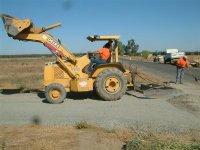
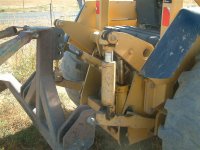
Like this JD industrial tractor, I suppose.
 

Attachments

  • DSCF0074 (Medium).JPG
    DSCF0074 (Medium).JPG
    85.5 KB · Views: 522
  • DSCF0084 (Medium).JPG
    DSCF0084 (Medium).JPG
    83.7 KB · Views: 393
/ Is there a way NOT to float the 3ph #11  
RalphVa said:
Just use your FEL in curled down mode with the teeth down. Raise the front wheels off the ground and steer with your brakes to break up the hard soil. Then smooth it with your rear blade.Ralph

This should be done with the FEL curled less than all the way. When it is curled all the way it will frequently damage your hydraulic cylinders.:(
 
/ Is there a way NOT to float the 3ph
  • Thread Starter
#12  
Makes sense, I've also heard to release the pressure on the bucket frquently to prevent damage. That was on another thread here at TBN.
 
/ Is there a way NOT to float the 3ph #13  
tallyho8 said:
This should be done with the FEL curled less than all the way. When it is curled all the way it will frequently damage your hydraulic cylinders.:(

+1

Read up on the threads here on that topic, and if you have an FEL owner's manual, read that. The current JD FEL owner's manuals indicate that you must use float and tilt the bucket no more than 40 degrees from horizontal. Of course using float eliminates what you were hoping for. Best bet is to get a bunch of weights for your rear blade, or that box blade you were thinking about.
 
/ Is there a way NOT to float the 3ph #14  
RalphVa said:
Just use your FEL in curled down mode with the teeth down. Raise the front wheels off the ground and steer with your brakes to break up the hard soil. Then smooth it with your rear blade.

Ralph

A certain recipe to damage the bucket rams. Been there, done that.
 
/ Is there a way NOT to float the 3ph
  • Thread Starter
#15  
So, does that mean that using a FEL even with cutting teeth is not the best option for digging out compacted dirt like this? Is it better to use 3ph implements for serious ground engaging activities and just use the FEL to clean up the mess so-to-speak with the loose dirt and rocks?

(Maybe it's a good thing my FEL is late getting here.)
 
/ Is there a way NOT to float the 3ph #16  
Spiveyman said:
So, does that mean that using a FEL even with cutting teeth is not the best option for digging out compacted dirt like this? Is it better to use 3ph implements for serious ground engaging activities and just use the FEL to clean up the mess so-to-speak with the loose dirt and rocks?

(Maybe it's a good thing my FEL is late getting here.)

It's a front end loader, not a front end digger. It is meant to scoop up stuff, not to be a bulldozer. That being said, you can dig and push with them, but with a good dose of common sense. I bent a set of rams on an International 574 with a front loader. I dumped the bucket way down, lifted the front axle in the air and scraped. It did a remarkable job...until i saw oil leaking from a ram, then saw the rams were bent. That was a $600 lesson. Most loader manuals state a small degree of angle for which it is safe to back drag.
 
/ Is there a way NOT to float the 3ph #17  
Spiveyman said:
So, does that mean that using a FEL even with cutting teeth is not the best option for digging out compacted dirt like this? Is it better to use 3ph implements for serious ground engaging activities and just use the FEL to clean up the mess so-to-speak with the loose dirt and rocks?

(Maybe it's a good thing my FEL is late getting here.)

I have teeth on the 4-ft bucket on my B7510HST but rarely use them to dig in undisturbed soil. Much better to use a plow, rototiller, middle buster or box blade to loosen the soil and then use the FEL to scoop it out. Here's a few shots of the excavation for a paver block walkway in front of my house done that way.
 

Attachments

  • DSCF0154 (Medium).JPG
    DSCF0154 (Medium).JPG
    116.7 KB · Views: 325
  • DSCF0157 (Medium).JPG
    DSCF0157 (Medium).JPG
    94.9 KB · Views: 305
/ Is there a way NOT to float the 3ph #18  
Nice screening on your ROPS, Flusher
 
/ Is there a way NOT to float the 3ph #19  
My question, is there a way to get downward force out of my 3ph?

Spivey,
Yes, there is a way but it takes some hydraulic modification. Not only that, but the upper lift arms may not be able to take the stress...although I'm not 100% sure about that.

The upper arms are what do the lifting of your 3pt. They are attached to the lower arms or "drag links" via a side link turnbuckle or hydraulic cylinder of some sort. So when the upper arms raise up, they bring the lower ones with them. On some tractors, the upper arms are on a spline and their position on the spline can be changed. I don't know about yours, but mine can do that.

Now, you could rotate the upper arms up by lifting the 3 pt all the way up. Then reposition the upper lift arms on that spline so they are lower or at the lowest point. Then if you had hydraulic side links, you extend the side links so they force the lower arms down to the ground, and the upper arms up. When the upper arms have gone all the way up, or the spline has come to it's end rotation, then the hydraulic cylinders will continue to push the lower arms down to the ground, depending on the length of their stroke.

When I installed my hydraulic side links I had that partially in mind. I got extra long hydraulic cylinders to be able to do that. Right now I can shove my boxblade down pretty close to the ground with the upper lift arms way up, but the boxblade is still a couple inches off the ground. I would have to relocate the upper arms on the spline to have it actually dig in, put I am very close to being able to do that as it is.

I did a thread on installing my side links and discuss the possibilities in it. It's an interesting idea.
You can visit it by clicking HERE to read more about it.
 
/ Is there a way NOT to float the 3ph
  • Thread Starter
#20  
Wow, that is awesome, but way out of my league. I am very impressed. Thanks for sharing that.
 
 
Top