You are using an out of date browser. It may not display this or other websites correctly.
You should upgrade or use an alternative browser.
You should upgrade or use an alternative browser.
More options
Who Replied?
/ How Would You Fix This Bridge?
#21

Engineer42
Veteran Member
Dang, was hoping a county or the state had done the guardrail, then you could hang the r&r on them. So much for that.We installed the guardrail ourselves. It was state surplus and we got it for cheap.
Yeah, that $50K estimate was a few years ago. Maybe double today.
I think your options are many, and all very costly. Sorry.

jigs_n_fixtures
Veteran Member
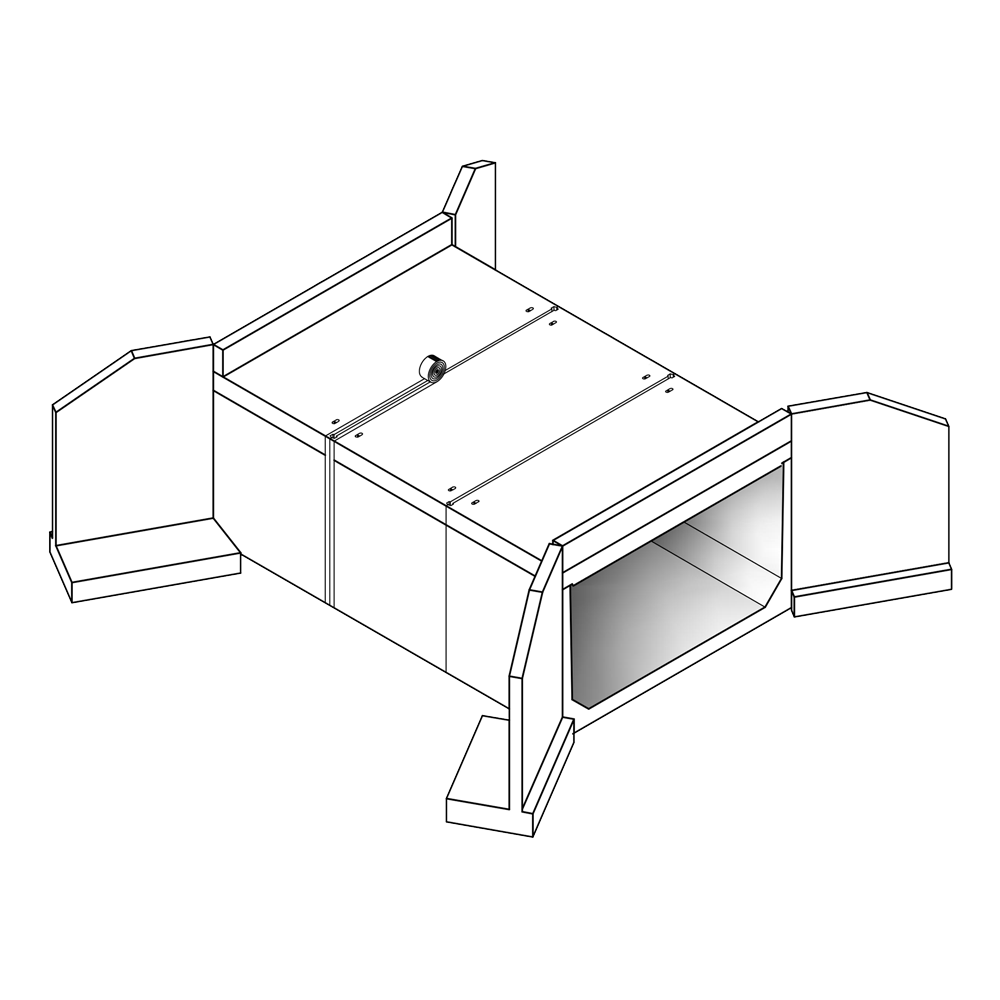
The cost is lower if you cast in place. Longer project time. But could be done half at a time to keep road access.Box culverts are going to be your cheapest option. All prefab. Dig and place.

dodge man
Super Star Member
They just did a box culvert by my house, smaller than the OP likely needs. It’s a township road but the county did the work more or less for no labor cost. I thought just the materials was $60k. I think an old rail car bridge would be cheapest assuming the ground on either side is stable. It would be a matter of putting it in place and a gravel ramp to get up on it.

Snobdds
Super Member
I highly doubt forming it in place is cheaper.The cost is lower if you cast in place. Longer project time. But could be done half at a time to keep road access.
Precast is so cheap these days...
I had a precast open bottom 16 foot concrete bridge put in, 1 block high for around $23000. That was preCovid. Now it likely would be twice that, but still a permanent option.
Again; it's dependent on the stream. If there are fish in it, those pesky regulations come into play.
As others have mentioned, adding to whatever is there without disturbing the stream banks likely is the cheapest option... especially for " a couple of 80 YO men."
Again; it's dependent on the stream. If there are fish in it, those pesky regulations come into play.
As others have mentioned, adding to whatever is there without disturbing the stream banks likely is the cheapest option... especially for " a couple of 80 YO men."
OP

bdhsfz6
Elite Member
- Joined
- Apr 11, 2015
- Messages
- 3,979
- Location
- Northeastern Pennsylvania
- Tractor
- Kubota MX5800 HST & L6060 HSTC Formerly L6060 HST B7100 HST, L2550, L3010 HST, L3430 HST
The stream (Navajo Creek) averages around 8' wide and 1 - 2' deep. The flow varies with rainfall. During high water events, the 6' pipe runs full.How wide is the stream, bank to bank upstream and downstream? Also how deep is the channel? Looking at your picture it appears that there is a fair amount of water going through, and the flow has been restricted at the bridge for quite some time. (113 years?)
While others mention regulations, I'd be more concerned with the new bridge blowing out. Paying to do it half assed twice is going to cost more than fixing it right once.
Concrete waste blocks are relatively cheap. Rent an excavator, go two blocks high if necessary and then you likely could go with the RR car. I've also seen them made with the steel from log truck trailers, and we trucked over them with 100,000 lb loads.
What you can't see in the picture is, the bridge is sloped upward toward the left of the picture. The right side is only 2' above stream level. When the pipe obstructs the flow, the water backs up and flows over the roadway on the low (right) side. This acts as a "safety valve" and is likely why the bridge has lasted so long.
The most severe event happened during Hurricane Ivan in 2004:

rScotty
Super Member
- Joined
- Apr 21, 2001
- Messages
- 9,985
- Location
- Rural mountains - Colorado
- Tractor
- Kubota M59, JD530, JD310SG. Restoring Yanmar YM165D
I'd agree with that - and that a precast box with wings is the right engineering solution too.I highly doubt forming it in place is cheaper.
Precast is so cheap these days...
Maybe because precast is cheaper in the rocky mountain states? - not suire of that, but does it matter/
Because it sounds to me like these good old boys own lots of land and are looking for the cheapest solution rather than the easiest or the best. Best is the easiest - carve a building lot off of a piece of their land and swap that for the work. By his own argument, (in message #16) a decent flood-rated bridge would increase their existing property value enough to make that attractive.
jigs_n_fixtures
Veteran Member
I used to prepare bid packages for highway construction projects, and specified box culverts with the option of either precast or cast in place, unless there was a very specific reason for limiting the choice to just one, such as distance from batch plants, or the need to keep the roadway closure or one way traffic to a minimum. The contractors always bid the cast in place.I'd agree with that - and that a precast box with wings is the right engineering solution too.
Maybe because precast is cheaper in the rocky mountain states? - not suire of that, but does it matter/
Because it sounds to me like these good old boys own lots of land and are looking for the cheapest solution rather than the easiest or the best. Best is the easiest - carve a building lot off of a piece of their land and swap that for the work. By his own argument, (in message #16) a decent flood-rated bridge would increase their existing property value enough to make that attractive.
The precast has the advantage that it is built offsite, and the contractor doesn't have to pay prevailing rate labor costs. But, it has downsides such as it requiring a well compacted, flat base, with the grade perfectly controlled for the entire length. Sealing the seams between segments can be difficult. And getting the wing walls attached well can also be an issue. And you have to mobilize something to the site with enough lift capacity to move and place the segments. And, I've seen two serious on the job injuries trying to place precast RCB segments. which is more of an issue with inexperienced contractors. The segments are big, heavy, and have a lot of momentum.
On a private job, the cast in place isn't at a disadvantage for labor costs. The base preparation isn't as critical. So long as the base is well compacted, it can have wibbles, and wobbles, and the floor of the box will still cast to grade, and not have any duckponds. You might run over a bit on concrete volume, smoothing out the wibbles and wobbles. But, the structure will work. If piping past the structure, and backfill erosion is a concern, you can cast in cutoff walls. If fish passage is a concern, you can cast a fish ladder into the floor. And, forming concrete is something pretty much any carpenter can handle. Or possibly the owner can handle.
If I was doing a design, I'd also consider steel arch pipe, or a cast in place concrete base with metal arch above. If fish passage is critical, then the concrete base with an integral fish ladder would be the way to go.
I'd also look at a bridge deck of some kind supported on shallow abutments back from the edges of the stream to avoid environmental issues. The shallow abutments are similar to a shallow daylight basement, open on the end away from the stream, with an enlarged footing on the stream side, on which the bridge deck rests, and the interior of the walls filled with gravels to provide a counterweight, and graded as the approach to the deck.
Plant some really fast growing ever greens and fertilize them often. Wait a few years until it gets really bad then fix.Very close. The main problem is, it can be seen from the main highway.
Or you could just make it a water crossing.

ruffdog
Super Star Member
- Joined
- Dec 31, 2011
- Messages
- 12,728
- Location
- America's Dairyland
- Tractor
- Bobcat Toolcat 5610G, Deere X744, Cub Cadet IH 982
If it is repaired or not, is there a liability issue being that many homeowners use that private bridge? If the bridge is not safe, whose fault is that?
OP
bdhsfz6
Elite Member
- Joined
- Apr 11, 2015
- Messages
- 3,979
- Location
- Northeastern Pennsylvania
- Tractor
- Kubota MX5800 HST & L6060 HSTC Formerly L6060 HST B7100 HST, L2550, L3010 HST, L3430 HST
I assume you're joking.Plant some really fast growing ever greens and fertilize them often. Wait a few years until it gets really bad then fix.
Or you could just make it a water crossing.
I'll be beyond caring about the bridge by the time the trees grow.
We discussed a low water crossing, but the DEP won't permit it. It may turn into one on it's own eventually when the bridge finally washes out. It isn't clear what the DEP would do then.
OP
bdhsfz6
Elite Member
- Joined
- Apr 11, 2015
- Messages
- 3,979
- Location
- Northeastern Pennsylvania
- Tractor
- Kubota MX5800 HST & L6060 HSTC Formerly L6060 HST B7100 HST, L2550, L3010 HST, L3430 HST
Good question. There are hundreds if not thousands of private bridges in the state. I've never heard of a liability case in court involving bridge maintenance, or lack there of. Not sure just who would be liable if something should happen.If it is repaired or not, is there a liability issue being that many homeowners use that private bridge? If the bridge is not safe, whose fault is that?
GrandpaSmurf825
Gold Member
- Joined
- Dec 3, 2025
- Messages
- 371
- Location
- Illinois
- Tractor
- Cub Cadet/Yanmar EX3200, Simplicity Cobalt ZTR
My local township replaced a couple small bridges using a used rail tank car for the culvert. It might be to large of diameter for your situation though. They will last for a long long time and are relatively easy to install. Although you might need a track hoe to do the work. For those who wonder, tank cars get removed from service because they might be damaged from a derailment or just a "sideswipe" incident in a yard and aren't viable for repair. Just a possible option. Good luck with it.
ruffdog
Super Star Member
- Joined
- Dec 31, 2011
- Messages
- 12,728
- Location
- America's Dairyland
- Tractor
- Bobcat Toolcat 5610G, Deere X744, Cub Cadet IH 982
$50k sounds like a lot of money but everything costs money now. Last Fall I had a new furnace/AC put in the house and it was $10k.
Good luck and keep us updated.
Good luck and keep us updated.
2manyrocks
Super Member
- Joined
- Jul 28, 2007
- Messages
- 9,630
The Center for Dirt and Gravel Roads is in Pennsylvania. Maybe they could help guide you through the regulatory requirements or suggest someone who could help at an affordable cost? https://dirtandgravel.psu.edu/general-resources/stream-crossing-replacements/

deezler
Elite Member
- Joined
- Jan 30, 2012
- Messages
- 4,016
- Location
- Southeast MI
- Tractor
- Cub Cadet 7305, Kioti CK3510seh TLB
@bdhsfz6 , thanks for sharing your situation.
Not to snoop too closely, but in looking at google maps, it seems you have 11 or 12 homesteads on the far side of the creek. $50k split amongst the whole group isn't worth it to everyone, to prevent a similar or greater loss in property value?!? One big monster storm and you guys could be stranded over there, that would be a scary scenario to me.
Too bad DEP knows about the issue already, as it would seem to be a pretty simple weekend job for a big excavator if no diversion or permits were obtained. Pre-cast box culvert is definitely ideal long-term repair solution, IMO.
Love the area. I grew up with a family weekend/summer home down in Newfoundland just up a hill from the Wallenpaupak creek. It felt like a mighty river when I was just a kid, and the neighbors told good tales about past floods washing out bridges!
Not to snoop too closely, but in looking at google maps, it seems you have 11 or 12 homesteads on the far side of the creek. $50k split amongst the whole group isn't worth it to everyone, to prevent a similar or greater loss in property value?!? One big monster storm and you guys could be stranded over there, that would be a scary scenario to me.
Too bad DEP knows about the issue already, as it would seem to be a pretty simple weekend job for a big excavator if no diversion or permits were obtained. Pre-cast box culvert is definitely ideal long-term repair solution, IMO.
Love the area. I grew up with a family weekend/summer home down in Newfoundland just up a hill from the Wallenpaupak creek. It felt like a mighty river when I was just a kid, and the neighbors told good tales about past floods washing out bridges!
jigs_n_fixtures
Veteran Member
You have to be careful working in the water. A local RV park, put a bridge over a 20-year event, high water slough on their property. The owner got fined $50K. The contractor who installed it got $50K and a five year ban from bidding public works projects. The engineer who designed and sealed the project got $50k against a $10k fee, and a five year probation status on his license. Now this is the Salmon River, which has five species which are critically endangered, endangered, or critical. So, the environmental folks were pretty upset.@bdhsfz6 , thanks for sharing your situation.
Not to snoop too closely, but in looking at google maps, it seems you have 11 or 12 homesteads on the far side of the creek. $50k split amongst the whole group isn't worth it to everyone, to prevent a similar or greater loss in property value?!? One big monster storm and you guys could be stranded over there, that would be a scary scenario to me.
Too bad DEP knows about the issue already, as it would seem to be a pretty simple weekend job for a big excavator if no diversion or permits were obtained. Pre-cast box culvert is definitely ideal long-term repair solution, IMO.
Love the area. I grew up with a family weekend/summer home down in Newfoundland just up a hill from the Wallenpaupak creek. It felt like a mighty river when I was just a kid, and the neighbors told good tales about past floods washing out bridges!

Railroad cars have age limits, so I suspect most of those available are aged out, not damaged.My local township replaced a couple small bridges using a used rail tank car for the culvert. It might be to large of diameter for your situation though. They will last for a long long time and are relatively easy to install. Although you might need a track hoe to do the work. For those who wonder, tank cars get removed from service because they might be damaged from a derailment or just a "sideswipe" incident in a yard and aren't viable for repair. Just a possible option. Good luck with it.
For example:
AI Overview
Railroad tank cars in general interchange service must generally be replaced or retired at 50 years of age. Cars built before July 1, 1974, were limited to 40 years, while newer cars or those with approved rebuilds (AAR Rule 88) can operate up to 50 years, with some specialized designs allowed to reach 65 year
And:

Over-Age Car Policy | Union Pacific
Over-Age Car Policy - Union Pacific has developed an Over Age Car policy in accordance with the Association of American Railroads' (AAR) Over Age Car guidelines. Please reference the Union Pacific policy and AAR guidelines below.
 www.up.com
Bruce

jyoutz
Super Star Member
I have seen the RR flat car bridges used for log trucks successfully. But for permanent use I would want the car to be placed on and anchored by concrete abutments.


