You are using an out of date browser. It may not display this or other websites correctly.
You should upgrade or use an alternative browser.
You should upgrade or use an alternative browser.
Grapple Grapple "jaws" won't close
- Thread starter gnawbone
- Start date
- Views: 59840
More options
Who Replied?
/ Grapple "jaws" won't close
#21


countrybumpkin
Elite Member
- Joined
- Jun 14, 2005
- Messages
- 3,251
- Tractor
- Kioti, kubota
Not necessarily , the cylinder is going to have fluid in the bore on the side of the plug , so if rod starts to move to the open or retracted position it's going to push oil out.

k0ua
Epic Contributor
Not necessarily , the cylinder is going to have fluid in the bore on the side of the plug , so if rod starts to move to the open or retracted position it's going to push oil out.
Agreed.

kennyd
Advertiser
Technically true, but if it continues to flow out...
countrybumpkin
Elite Member
- Joined
- Jun 14, 2005
- Messages
- 3,251
- Tractor
- Kioti, kubota
Technically true, but if it continues to flow out...
Absolutely hard as heck to help diagnosis a problem several states away. But we will eventually get it.

k0ua
Epic Contributor
Technically true, but if it continues to flow out...
OK, I see your point on that. If you continued to push fluid to the rod side an fluid continued to gush out of the cap side plug the seal leakage would be likely.
kennyd
Advertiser
OK, I see your point on that. If you continued to push fluid to the rod side an fluid continued to gush out of the cap side plug the seal leakage would be likely.
James, in reading the first post of this thread (and post #20)-that is what I assumed was happening, and I was just trying to get clarification from the OP on how the test was performed. Everyone else focused in on the valve being the culprit, but I didn't read the first post that way.

Mendonsy
Veteran Member
Yeah, that happens all too often, I'm sure everyone here understands.
countrybumpkin
Elite Member
- Joined
- Jun 14, 2005
- Messages
- 3,251
- Tractor
- Kioti, kubota
I really appreciate all of you hanging with me on this - I won't be able to get at it again until Tuesday PM - life gets in the way sometimes and today/tonight got 'captured' by my better half.
Dang it , just like a soap opera, Just when it gets good you have to wait a week to see what happens next.
I don't know if I made any progress today or not ...... I took the solenoid apart - just like the video Eric posted (thanks, Eric, it was very helpful) showed, cleaned it, blew it out with compressed air, put it back together and it doesn't work any worse than it did before I took it apart! It doesn't work any better, either.
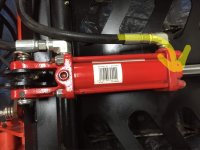
I video'd it half-assed working - it opens fine and, even though it closes, there is not enough force to pick up a limb or anything. I'm leaning toward it being a cylinder but then again WTH do I know .... :laughing:
It doesn't work any better, either.I video'd it half-assed working - it opens fine and, even though it closes, there is not enough force to pick up a limb or anything. I'm leaning toward it being a cylinder but then again WTH do I know .... :laughing:
Last edited:

MinnesotaEric
Super Member
Wait: did you switch hydraulic couplers to see if the problem follows the coupler or the hydraulics around to the function it got hooked up to? By doing this step, we're attempting to find out if there is something in the line restricting the hydraulic flow.
Did you confirm by jamming open the quick disconnects at various places, that you have hydraulic fluid flow? Again we're trying to determine if you have hydraulic flow.
Did you switch the electrical connectors around at the solenoid? And then switch solenoid windings from side to side? This step we're using the none-good electrical stuff on the side with the problem to determine if the problem is electrical in nature.
All of these things are asked in order to slowly eliminate possibilities and zero in on the fault. If you did these things, report your findings.
Did you confirm by jamming open the quick disconnects at various places, that you have hydraulic fluid flow? Again we're trying to determine if you have hydraulic flow.
Did you switch the electrical connectors around at the solenoid? And then switch solenoid windings from side to side? This step we're using the none-good electrical stuff on the side with the problem to determine if the problem is electrical in nature.
All of these things are asked in order to slowly eliminate possibilities and zero in on the fault. If you did these things, report your findings.
Last edited:
I did some of what you mentioned. In the video you can see the T connectors where the hoses come from the 3rd function - I switched those 2 and when I pushed the button to open the jaws, they opened - which I thought was odd - but when I pushed the 'close' button the jaws stayed open. I had to unhook the hoses at the QD and manually relieve pressure in the hoses to get to close. When I switched the hoses back then it operated like it does in the video.
I did not switch any electrical connections.
I did not switch any electrical connections.

EverythingAttachments
Elite Member
I don't know if I made any progress today or not ...... I took the solenoid apart - just like the video Eric posted (thanks, Eric, it was very helpful) showed, cleaned it, blew it out with compressed air, put it back together and it doesn't work any worse than it did before I took it apart!
I video'd it half-assed working - it opens fine and, even though it closes, there is not enough force to pick up a limb or anything. I'm leaning toward it being a cylinder but then again WTH do I know .... :laughing:
I could see it being a cylinder if only one was acting funny, but it's very unlikely to have 2 bad cylinders.
Have you tried picking up anything with it? Just watching, the cycling appears normal at idle.
Travis
Last edited:

hunt4570
Super Member
- Joined
- Feb 10, 2015
- Messages
- 5,990
- Location
- South Carolina
- Tractor
- Grand L3540 ,724 loader, bucket, grapple and now forks also! And just for OP.. a pool!
Wait: did you switch hydraulic couplers to see if the problem follows the coupler or the hydraulics around to the function it got hooked up to? By doing this step, we're attempting to find out if there is something in the line restricting the hydraulic flow.
Did you confirm by jamming open the quick disconnects at various places, that you have hydraulic fluid flow? Again we're trying to determine if you have hydraulic flow.
Did you switch the electrical connectors around at the solenoid? And then switch solenoid windings from side to side? This step we're using the none-good electrical stuff on the side with the problem to determine if the problem is electrical in nature.
All of these things are asked in order to slowly eliminate possibilities and zero in on the fault. If you did these things, report your findings.
Eric.. how the heck do you "jam open" the quick disconnects?
EverythingAttachments
Elite Member
Ted explains how the lids work in this video just after the 17min mark.
Travis,
I did not have the engine running fast but it was not at idle, either. Yes, I have tried to pick up some limbs from a white pine tree but once the lids encounter any resistance the stop closing. I couldn't even get them to close on a load that would have been 1/2 the amount that would 'fit' in the grapple.
Also, the behavior you see in the video is the same - doesn't matter what the RPM is and I've tried them all!
I did not have the engine running fast but it was not at idle, either. Yes, I have tried to pick up some limbs from a white pine tree but once the lids encounter any resistance the stop closing. I couldn't even get them to close on a load that would have been 1/2 the amount that would 'fit' in the grapple.
Also, the behavior you see in the video is the same - doesn't matter what the RPM is and I've tried them all!
Last edited:
I used a punch - but I could only do it one time and then the pressure was to high for me to push in the pin/ball. So, I'd shut it town, hit both buttons on the joystick, start it up, the try the other one. Both were getting enough pressure that I couldn't 'bleed' them twice without shutting down.
EverythingAttachments
Elite Member
Ok, we're just trying to help you troubleshoot.
The valve could possibly be plumbed incorrectly. Is your 3pt lift working as it should?
The grapple is opening and closing as it should in the video. We just need to figure out why it's not getting enough pressure from your valve.
Travis
The valve could possibly be plumbed incorrectly. Is your 3pt lift working as it should?
The grapple is opening and closing as it should in the video. We just need to figure out why it's not getting enough pressure from your valve.
Travis

