Oil & Fuel Diesel for Dummies

/ Diesel for Dummies #1  

N80

Super Member
Joined
Aug 2, 2005
Messages
6,940
Location
SC
Tractor
Kubota L4400 4wd w/LA 703 FEL
I'm a new tractor owner and have never owned a diesel anything. And while I don't have any intention of doing any engine work, I would like to understand some basic principles of how the engine works. As background, I have a fair understanding of gasoline engines and used to do some basic engine stuff myself like installing aftermarket headers and carbs and stuff like that.

I understand that a diesel creates combustion from the heat of compression. I understand that fuel is injected at the top of the compression stroke by an injector and that compression ratios are much higher than those in gasoline engines. I guess the main thing that I don't understand is the fuel injector system. In a gas engine the fuel is injected during an intake stroke along with air. But if a diesel injects the fuel at the top of the compression stroke it must have to inject the fuel against tremendous pressure. What generates the pressure within the fuel system to do that? Is it some sort of pump? What drives the pump, is it electric or mechanically linked to the engine? How is the timing of the fuel injector controlled, on a gasoline engine the valve timing coordinates intake of gas and air? Also where is the fuel injector located and what does it look like? (I have a Kubota L4400, but I'm not really looking for exact location, just generally where are they located.) There seems to be a virtual octopus of high pressure lines and hoses on the right side on my engine.

Also, the engine obviously still has valves for air intake and exhaust. In these small tractors with straight 3 or 4 cylinders, is it a single overhead cam that drives the valves? Is the cam belt or chain driven?

Finally, I understand that a glow plug is used for cold starts. Is there a glow plug in each cylinder?

Thanks for any pointers you smart folks can provide.
 
/ Diesel for Dummies #2  
I'll try.

Very high pressure for fuel injection is created within the fuel injection pump. The fuel injection pump is mounted to the engine and is gear driven to inject fuel at the exact right time. The fuel injector is oriented and looks pretty much like a spark plug. One for each cylinder and fuel is injected downstream of the intake valve either directly or indirectly into the combustion chamber. Each injector has a metal high pressure line to it and usually a low pressure line away from it. The cam is usually in the block with pushrods to operate overhead valves. The cam is driven by the crank by a gear and then the cam gear in turn drives the injection pump. This way the timing of valves and fuel injection jives with piston position. The above setup is the most common and oldest way of doing it.

Then realize that the diesel does not use a throttle plate. When you ask for more rpms you are only adding more fuel. Each time the piston sucks air it is getting a wide open throttle gulp of air regardless. The way to shut a diesel off is to stop the fuel flow.

There is a glow plug for each cylinder of most diesels. Some diesels use intake air heaters which is a heated metal grid, and some use nothing at all like my old 1972 international diesel which started fine down to 35 with no trouble. The glow plugs also look like spark plugs but have electrical connections instead of fuel lines.
 
/ Diesel for Dummies
  • Thread Starter
#3  
Thanks, that helps a lot. But, I asked one question wrong. I know where the actual injectors are located and what they look like, what I guess I was trying to ask is where is the injection pump and what does it look like?
 
/ Diesel for Dummies #4  
<font color="blue"> it must have to inject the fuel against tremendous pressure </font>
That is correct.
<font color="blue"> What drives the pump, is it electric or mechanically linked to the engine? How is the timing of the fuel injector controlled </font>
The pump is gear driven off the front of the engine. Just like the cam works by being set on certain timing marks along with the rest of the gears in the front timing cover.

<font color="blue"> where is the fuel injector located and what does it look like? </font>
It sound like you know some about gas engines. Look on the diesel engine where the spark plugs would be on a gas engine. They look to be all metal, but instead of wires going to them, a small steel line goes from one injector to the next.

<font color="blue"> In these small tractors with straight 3 or 4 cylinders, is it a single overhead cam that drives the valves? Is the cam belt or chain driven?</font>
All of the small diesel tractor that are spoken about on TBN are cam in block as far as I know. Everything is gear drive, no chains or belts.

As for the glow plugs. Most modern small diesels that have glow plugs have one for each cylinder, but there are some that use only one. Some use other types of heating systems.
 
/ Diesel for Dummies #5  
There are a couple of different styles of injection pumps be it inline or rotary but they look pretty much the same. To find your pump, follow the metal injection lines from the injectors to what looks like a distributor cap. Where the metal lines all stop together is the pump. It will be round and about the size of an alternator. The low pressure rubber lines will also lead from the fuel tank and filter to the inejction pump. It will be near the front of the engine.
 
/ Diesel for Dummies #6  
Fuel injected gasoline engines in newer cars have a computer controling the timing of the injection of the charge as well as the amount of fuel injected. On newer tractors that meet tier II emission regulations, is this also the case, or do they retain the basic mechanical controls described above?

All the fuel injection systems operate under very high pressure -- thousands of psi. This is needed not only to overcome cylinder pressure, but also to atomize the fuel for efficient combustion.
 
/ Diesel for Dummies #7  
Just to add a bit to the pressure thing.....I'm not sure of your model, the other guys seem to have covered it pretty well. The pressures your dealing with could be up to 30,000PSI. I dont think yours would be that high though because of the injector pump design, but even 20,000 will cut you. My point is, that if you are doing any work on it, and think it may have a fuel leak, dont feel for it with your hands.The fuel can enter your skin and poison you. We used to recomend using a peice of thick paper to trace the lines looking for a leak.
 
/ Diesel for Dummies #8  
</font><font color="blue" class="small">(
The way to shut a diesel off is to stop the fuel flow.
)</font>

Or cut off the air flow. Both of which really applied to older engines. Newer stuff, being all electronically controlled, cutting off the juice will stop the process also.
 
/ Diesel for Dummies #9  
HGM . . . Diesel injection pressures are two to three thousand PSI, not twenty to thirty thousand.

Still enough to cut into you but not quite as high as you said.

Another post above suggested gas used the same injection pressures . . older gas engines inject fuel into the intake manifold, and they have fuel pressures in the 40-90 psi range.

There is a brand new technology from Bosch - gasoline direct injection - that injects gas right into the combustion chamber like a diesel. It will use pressures at 750-1500PSI. This technology promises 8-10% increases in power and economy. This system is not presently on sale in the US but it's coming.

Our company is authorized Bosch automotive system service for Western MA.
 
/ Diesel for Dummies #10  
Yes, on this system I believe your right. I thought about that after I posted. The newer DI and common rail systems are the ones I was commenting on. They are up to 30,000PSI out of the nozzle. Sorry for the confusion, I think my point on safty was clear though. /forums/images/graemlins/grin.gif
 
/ Diesel for Dummies #11  
Compression pressure @ TDC in a modern Indirect Diesel Injection system like Kubota's when the engine is cold is around 450-500psi.

The inline fuel injection pump is providing pressure of around 3,000 psi to a pintle fuel injector nozzle which is approximately 6X higher pressure than the air inside the combustion chamber.

The compressed air in the combustion chamber temperature has been raised above the ignition temperature of #2 diesel fuel so that when the injector opens, the fuel immediately ignites as it is sprayed into the hot compressed air in the combustion chamber. The injector nozzle is situated inside the precombustion chamber leading into the combustion chamber as it is an indirect diesel injection system (IDI) as opposed to a direct injection (DI) system where the injector nozzle sprays directly into the combustion chamber on top of the piston crown.

The inline pump is mechanically driven and timed by the engine crankshaft, similar to the camsaft.

The timing of the injection event into the diesel engines 360* of crankshaft rotation is specifically important as the injector begins to spray after the intake and exhaust valves have been closed and the piston is still rising upwards. This crank shaft angle of injection is a very short period of time and the diesel fuel spray coming out of the injector into the combustion chamber must first mix and then ignite to provide power. The degrees of crankshaft rotation when the injection, mixture, and ignition of the fuel into the hot air is very short and the timeframe is also extremely short on the order of a couple of milliseconds.

In gasoline engine, the fuel and air are already mixed prior to entering the combustion chamber, however in diesel engines the fuel and air have to mix while inside the combustion chamber, prior to ignition.
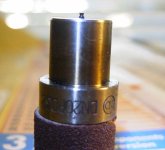
Attached is a photograph of a Denso Pintle Injector nozzle.
 

Attachments

  • 784188-densonozzle.jpg
    784188-densonozzle.jpg
    30.8 KB · Views: 306
/ Diesel for Dummies #12  
As you can see in the photograph of the single hole pintle nozzle of that Kubtoa diesel fuel injector, there is only one outlet of around 200 microns diameter. That is due to the lower rpm operation of this design of engine and the lower power output.

A high speed modern direct injection fuel injector nozzle has 5 or 6 holes with super tiny laser cut fuel passages in the tip, each about 150 microns for a different wider spray pattern that increases the speed with which fuel-air mixture occurs. The injection pressure in a HSDI engine is also about ten time higher than the injection pressure in your Kubota engine.

If you'd like to know more about what is happening, purchase this book, Bosch Diesel Engine Management, it is a good read:

http://www.bentleypublishers.com/product.htm?code=h011

Robert Bosch

Diesel Engine Management, 3rd Edition

Your Complete Guide to Diesel Engine Components & Systems

Diesel-Engine Management maintains the BOSCH hallmark of presenting complex technical information in a clear and concise format. Diesel-Engine Management's primary focus is fuel-injection systems and components—topics range from engine efficiency, turbochargers and timing devices to high-pressure delivery lines, nozzle holders and temperature sensors—and is fundamental reading for automotive mechanics, technicians, educators, instructors, students and enthusiasts.
Systems covered:

* PE inline fuel injection pumps and governors
* All variants of VE..F, VE..EDC, and VE..MV (VP29, VP30) distributor injection pumps and VR (VP44)
* PF single-plunger fuel-injection pump
* Unit Injector System (UIS)
* Unit Pump System (UPS)
* Common-rail fuel-injection system
 
/ Diesel for Dummies #13  
With the compressed air in the Kubiota's IDI combustion chamber being around 500 psi prior to the injection event, and the fuel injection event being around 3,000 psi, it is apparent that the fuel will enter the combustion chamber instead of the air entering the injector! /forums/images/graemlins/blush.gif

However, once the injection event is initiated and fuel-air mixture and concurrent ignition occurs, the combustion chamber pressure then rises to over 20,000 psi @ 1,200*C, so the closing and sealing the injection nozzle is just as important as closing the valves! /forums/images/graemlins/wink.gif
 
/ Diesel for Dummies
  • Thread Starter
#14  
Great info, and thanks to everyone.

Skypup, I'm having a hard time visualizing the pre-combustion chamber. Where is it in relation to the valves and combustion chamber? Is it just a scalloped out area within the cylinder head?
 
/ Diesel for Dummies #15  
Many times, a precombustion chamber is a tall and narrow extension of the main chamber. On cars, they were usually in the head. Honda was early in using them, calling the design stratified charge, and using a rich mixture in the prechamber coupled with a leaner main charge to reduce emissions.
 
/ Diesel for Dummies #16  
Sir Harry Ricardo patented the "Ricardo IDI PreCombustion Chamber for diesel engine head design in 1931. There are a couple of different variations of the original design in use today, but they all are basically the same thing.

Here is a link to a site with some info on him and a pic of his IDI diesel head design which is still in use today:

http://www.oldengine.org/members/diesel/Misc/Ricardo.htm


Kubota's design is the same thing with some variation of the intake tract leading up to the IDI chamber to improve "air swirl" and decrease emissions by resulting in better high speed mixture of the fuel charge with the intake air.
 
/ Diesel for Dummies #17  
Sir Harry Ricardo was an extremely fascinating person with an extremely inquisitive mind.

His personal description of the combustion event as it occurs inside a diesel engine combustion chamber is one of my personal all time favorites, be sure to download the attached PDF file and read his stream of consciousness description, it is first class!!! /forums/images/graemlins/wink.gif

Let me know if you can see his point of view in your mind?
 

Attachments

  • 784255-Sir Harry Ricardo.pdf
    11.3 KB · Views: 411
/ Diesel for Dummies #18  
Thanks for posting a link to Sir Ricardo's description. It was a very interesting read. I really enjoyed seeing it from Sir Ricardo's perspective.
 
/ Diesel for Dummies #20  
<font color="blue"> Skypup, I'm having a hard time visualizing the pre-combustion chamber. Where is it in relation to the valves and combustion chamber? Is it just a scalloped out area within the cylinder head?
</font>

Normally, although there are many different similar designs, the IDI pre combustion chamber is a small 50cc or so in the head where the fuel injector is located. The actual combustion chamber is below this, similar to an automotive gasoline engine combustion chamber, ie the actual combustion chamber is on top of the piston's flat crown.

A direct injection diesel engine is completely different as there is no pre combustion chamber, instead the entire combustion chamber is contained within a depression into the top of the piston crown, sorta like a small bowl, and the injector is located directly over in the center of the cylinder head.
 

Marketplace Items

2006 CATERPILLAR 320CL EXCAVATOR (A59823)
2006 CATERPILLAR...
(12) UNUSED FUTURE-FT LJ B12-8'X4' PROTECTION MATS (A60432)
(12) UNUSED...
KIVEL 48" PALLET FORKS 3500 LB CAP (A60430)
KIVEL 48" PALLET...
(15) WOOD PALLETS (A60432)
(15) WOOD PALLETS...
WINCH CABLE DRUM (A58214)
WINCH CABLE DRUM...
2020 CATERPILLAR 336 EXCAVATOR (A60429)
2020 CATERPILLAR...
 
Top