Battery Longevity

   / Battery Longevity #121  
My question is -- can a fully charged battery - in fact - be a dead battery?
I like to use the analogy of an electrical system to a hydraulic system where volts can be comparable to pressure (psi) and amps are comparable to flow (gpm). Imagine a 100 foot high dam holding back a large lake with a 3/4 inch valve at the bottom of the dam to let water out. If you were to put a pressure gauge on that valve it would read 43 psi (1 foot of water head creates .43 psi of pressure). Now take a 100 ft long garden hose, put a valve and pressure gauge on the lower end, fill it full of water and somehow hold the other end 100 ft up in the air. That pressure gauge will also read 43 psi. Open each valve for a minute and close it again and read the each of the pressures. The dam will have flowed a lot more water and still read 43 psi while the hose had emptied out maybe a gallon or two then stopped flowing and now reads 0 psi. Using this analogy it is easy to visualize how a bad battery with diminished storage capacity can show a full charge and not have the capability of flowing enough amps to run your starter.
 
   / Battery Longevity #122  
Grumpycat, I did not use voltmeter whilst actually trying to start, but did test right after and battery volts dropped dramatically. 13.6 to about 9.5V. This was my first clue that battery was bad! At first I thought it just ate another switch, but pondered on it for a day or so and gave further tests to show that the switch was still working. Then I used my HF load tester - of which I still don't understand how it is supposed to function, - but it showed in the fail zone on the "fully" charged battery that wouldn't run the starter on the genny. Thus leading me to believe a failed battery was the culprit. This is what confounded me: a fully charged battery not juicing the starter?? I thought it was probably a toasted battery but just wanted confirmation on my unqualified tests. This small battery doesn't even list on it the CCA's it's supposed to produce? My tester goes down to 300, but.... Thanks for the quantified reply. Greg
 
   / Battery Longevity #123  
It's the nature of lead acid battery to self discharge over time. Dat yer first problem.
Second problem is how battery connects individual cells together wid nothing but friction rather than cells being soldered like in old days. Over time dem connections grow crud between surfaces, dat limit current flow.
Voltages you seein indicate 2 cells in dat battery no longer employed. Best to just change out battery. You don't good chance you blow out regulator on machine for extra expense.

Battery be whole lot happier if workin den just sittin around easy enough to do with some tail light bulbs and couple boards you can buy on ebay for few bucks. One board loads bulbs onto battery till voltage drops to preset level and den disconnects load. Second board watches battery voltage and turns charger on at preset voltage and back off at full voltage.
 
   / Battery Longevity #125  
goeduck, My tester looks exactly like the one you have. I bought it at a pawn shop and did not get the instruction sheet. Now I do, Thanks for posting that. It works as I thought it should, but prior to reading the instructions I was just guessing. Now I understand this simple tool much better.

(removed), Yes my battery is just dead, even though it shows on multimeter and my big charger that it's fully charged. Put a load to it and nada, zip. I ordered a replacement today. Will get it in tomorrow. I just hope with these new high winds we're getting today that power won't be shut off before tomorrow. Doesn't bother me so much, but it irks the wife!
 
   / Battery Longevity #126  
Easy way to unirk wife, tell her you read up on old Civil Defense shelter generator, bicycle frame wid generator attached. Sit on bike, peddle and make electrons. Tell her she can peddle while you do other jobs.

5 bucks says wife forget all about electric.
 
   / Battery Longevity #127  
Easy way to unirk wife, tell her you read up on old Civil Defense shelter generator, bicycle frame wid generator attached. Sit on bike, peddle and make electrons. Tell her she can peddle while you do other jobs.

5 bucks says wife forget all about electric.

Obvious solution!:laughing:
 
   / Battery Longevity #128  
That's a "very" good one (removed)!! I LOL reading it, but 5 lousy bucks won't even come close to covering any divorce payments; so thanks again, but I'll just pass on that thought.
 
   / Battery Longevity #129  
I bought a Princess Auto (HF like) Carbon Pile tester. Went snap, crackle and pop the first time I used it. Went back to an element style tester.
 
   / Battery Longevity #130  
Carbon real funny joke by Mother nature, sort of like Sperm Whale oil. Carbon shrinks when heated unlike most other materials. Electrical resistance changes as is compressed too.
Carbon dust will make a normal woman into full blown mass murderer when she gotta clean it up too.
 
   / Battery Longevity #131  
My bet is that one of your cells is shorted out or partially shorted. With the bad battery connected, you will probably see the voltage drop dramatically when attempting to start.

There are some problems that even a good quality desulfating charger cannot solve.
 
   / Battery Longevity #132  
Yes John_Mc, that's what I believe happened. I just changed it for a new one from Napa (more pricey than I thought though). I'm going to try using the damaged, but not totally dead one, as a power source for my dc fuel transfer pump. Maybe I can still use it for awhile and maybe not. I will find out. Greg
 
   / Battery Longevity #133  
Yes John_Mc, that's what I believe happened. I just changed it for a new one from Napa (more pricey than I thought though). I'm going to try using the damaged, but not totally dead one, as a power source for my dc fuel transfer pump. Maybe I can still use it for awhile and maybe not. I will find out. Greg

Not positive about this, but I've heard that charging batteries with a bad cell can cause problems - you end up overcharging the other cells until the charger either gives up, or sees that that battery is up to its expected voltage. The overcharging can cause out-gassing of Hydrogen Sulfide (H2S): a colorless, highly toxic, corrosive gas. Overcharging can cause the battery to burst as well, leaking, or even spraying battery acid all over the place.

If it has a bad cell, I'd be inclined to retire the battery. Using it in a situation involving fuel is probably not a great idea. If you really want to see if it has any useful life remaining, take it someplace that can thoroughly test the battery and let you know its condition. Most auto parts stores can do this, as can many auto mechanics' shops.
 
   / Battery Longevity #134  
You're probably right John_Mc, it's not worth the risk of future problems by messing around with this battery. I'll just dispose of it and avoid causing anything else to go wrong. Trying to be frugal (cheap) isn't worth an incident. Thanks for helping me to think this through completely. Greg
 
   / Battery Longevity #135  
My bet is that one of your cells is shorted out or partially shorted. With the bad battery connected, you will probably see the voltage drop dramatically when attempting to start.

There are some problems that even a good quality desulfating charger cannot solve.

Not doubting just trying to understand. If one cell is shorted out, why would the battery come up to the correct voltage? I would think it would be 2 V low.

I would have guess stratified or sulfated
 
   / Battery Longevity #136  
You're probably right John_Mc, it's not worth the risk of future problems by messing around with this battery. I'll just dispose of it and avoid causing anything else to go wrong. Trying to be frugal (cheap) isn't worth an incident. Thanks for helping me to think this through completely. Greg

Good choice !!
 
   / Battery Longevity #137  
Not doubting just trying to understand. If one cell is shorted out, why would the battery come up to the correct voltage? I would think it would be 2 V low.

I would have guess stratified or sulfated

Not sure how it happens. I think the charger just overcharges the remaining cells, since it is trying to bring the whole battery up to a certain target voltage. I had a battery that would measure about 12.4-12.5 volts when put on the charger overnight. When I tried to start the 12 HP engine, there was not enough juice to turn it over. If I charged it back up, and then disconnected the charger, it would measure about 10.5 V the next day. I later recharged the battery and measured the voltage while trying to crank the engine. As soon as the switch was turned to start, the battery dropped to 10.5 volts. Tested at a local auto parts store and they said "shorted cell". (I'm told a very heavily sulfated battery can short out one or more cells. If it's bad enough, a smart charger with a desulfation circuit will not be able to bring it back. That was the case with this one, despite trying for an extended period - with battery kept ousdie and away from anything it could damage if it burst.)

I've since purchased a load tester, so I can get a better idea of a battery's condition without bringing it somewhere.
 
Last edited:
   / Battery Longevity #138  
Not positive about this, but I've heard that charging batteries with a bad cell can cause problems - you end up overcharging the other cells until the charger either gives up, or sees that that battery is up to its expected voltage. The overcharging can cause out-gassing of Hydrogen Sulfide (H2S): a colorless, highly toxic, corrosive gas. Overcharging can cause the battery to burst as well, leaking, or even spraying battery acid all over the place.

If it has a bad cell, I'd be inclined to retire the battery. Using it in a situation involving fuel is probably not a great idea. If you really want to see if it has any useful life remaining, take it someplace that can thoroughly test the battery and let you know its condition. Most auto parts stores can do this, as can many auto mechanics' shops.

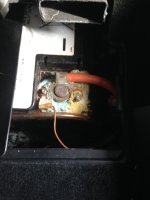
Not just an "I heard" but hard fact. One bad cell causes others to overcharge because the only practical means of limiting charge is voltage. The charging algorithm says, "I need to see 13.8V and I'm going to hammer it until I do."

This is a Mercedes-Benz Original Equipment Bosch AGM with a bad cell which M-B's much touted bad battery algorithm missed. Battery is under front passenger seat and is installed before the carpet. Carpet must be cut to access battery for the first time, has perforation, owner's manual says as much.

ML320_Battery.jpg
 
   / Battery Longevity #139  
Not doubting just trying to understand. If one cell is shorted out, why would the battery come up to the correct voltage? I would think it would be 2 V low.

I would have guess stratified or sulfated

The other 5 cells are forced up to 13.8V before the charging algorithm backs off. They get overcharged.
 
   / Battery Longevity #140  
Not just an "I heard" but hard fact. One bad cell causes others to overcharge because the only practical means of limiting charge is voltage. The charging algorithm says, "I need to see 13.8V and I'm going to hammer it until I do."

This is a Mercedes-Benz Original Equipment Bosch AGM with a bad cell which M-B's much touted bad battery algorithm missed. Battery is under front passenger seat and is installed before the carpet. Carpet must be cut to access battery for the first time, has perforation, owner's manual says as much.

View attachment 679702

That's the first time I've seen an AGM battery with corrosion on the terminals.
 

Tractor & Equipment Auctions

2021 KUBOTA SVL75-2 SKID STEER (A60429)
2021 KUBOTA...
Case 950 8 Row Air Planter (A56438)
Case 950 8 Row Air...
Honda utv cart (A56859)
Honda utv cart...
2011 DOOSAN G25KW GENERATOR (A55745)
2011 DOOSAN G25KW...
2014 CATERPILLAR TL642C TELESCOPIC FORKLIFT (A60429)
2014 CATERPILLAR...
207277 (A52708)
207277 (A52708)
 
Top