
You are using an out of date browser. It may not display this or other websites correctly.
You should upgrade or use an alternative browser.
You should upgrade or use an alternative browser.
Progress!
- Thread starter Torvy
- Start date
- Views: 39790
More options
Who Replied?
/ Progress!
#1
OP
Torvy
Super Member

Larry Caldwell
Super Member
Be sure to clear enough space around buildings that falling trees won't land on the building, after a decade of growth. People forget trees grow. Then there are the hippiedippie nature children who have to leave that big tree in the front yard.

ponytug
Super Member
Our front porch was originally built around a 24" 50' bay tree. One night, my wife nudges me and says "What was that noise?", Me: "What noise?" I say. Silence. More silence. "CRACK!, whoosh."
The tree broke about 8' up, and slowly laid itself down lengthwise on the deck, filling the entire deck. I took me all morning to cut it up and clear it. Only a small single dent in the house gutter. We were incredibly lucky. Had the tree broke lower down, or fallen any other direction, it would have been very expensive.
Yes, being in trees is wonderful, but the potential for damage from storms or fire is enormous.
All the best,
Peter
The tree broke about 8' up, and slowly laid itself down lengthwise on the deck, filling the entire deck. I took me all morning to cut it up and clear it. Only a small single dent in the house gutter. We were incredibly lucky. Had the tree broke lower down, or fallen any other direction, it would have been very expensive.
Yes, being in trees is wonderful, but the potential for damage from storms or fire is enormous.
All the best,
Peter
OP
Torvy
Super Member
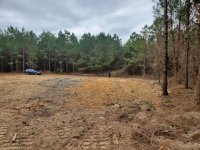
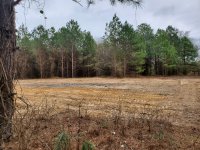
Thanks, Larry. They dropped about 70 trees. For right now there is only about a 20 foot perimeter. I can manage individual trees once I am on the property. I want to plant at least one tree for every tree I remove. I have plenty of space between the county road and my buildings to safety replant a visual barrier of sorts. I will probably plant some that are denser and shorter than the Loblolly in my 'forest'. Once those are established, we will expand the distance and sell some timber.
OP
Torvy
Super Member

EddieWalker
Epic Contributor
A Texas State Biologist told me that if you went back in time a couple hundred years, East Texas would look completely different. A lot less trees, more space between the trees, and less brush. This is the main reason turkeys don't do well here.
When people moved here, they cleared the land, farmed it, then abandoned the farms and let the land grow back up. From your pictures, your land looks like mine. Super thick. It will take a thousand years for Mother Nature to get it back to where it is supposed to be. Wildfires will clear the understory, the big trees with choke out the small trees, and the native grass will cut down on the weeds.
Ideally, you want to remove 75% to 90% of all the trees on your land if you want it to be "natural"
When people moved here, they cleared the land, farmed it, then abandoned the farms and let the land grow back up. From your pictures, your land looks like mine. Super thick. It will take a thousand years for Mother Nature to get it back to where it is supposed to be. Wildfires will clear the understory, the big trees with choke out the small trees, and the native grass will cut down on the weeds.
Ideally, you want to remove 75% to 90% of all the trees on your land if you want it to be "natural"
OP
Torvy
Super Member
Interesting. I wanted the pines for both their beauty and occasional income and/or craft uses. But we had to remove enough for the buildings. I will be cleaning out the underbrush and many of the deciduous trees. We have a few big oaks we will keep.
I look at natural and native differently than some people. Even before people made an appearance, things changed over time. If the climate and the soil will support it and as long as it is not virulent or noxious, I will try some additional species of trees in some places.
I have some open space due to utility easements. We don't want pastures or much in the way of fields. Just an acre or less of food plot. A few paths through the woods and fences to keep our dogs out of the business of others.
I look at natural and native differently than some people. Even before people made an appearance, things changed over time. If the climate and the soil will support it and as long as it is not virulent or noxious, I will try some additional species of trees in some places.
I have some open space due to utility easements. We don't want pastures or much in the way of fields. Just an acre or less of food plot. A few paths through the woods and fences to keep our dogs out of the business of others.

arizona98tj
Gold Member
Trying to figure out your turkey comment. You say that the turkeys don't do well because there are now too many trees and brush in your area?A Texas State Biologist told me that if you went back in time a couple hundred years, East Texas would look completely different. A lot less trees, more space between the trees, and less brush. This is the main reason turkeys don't do well here.
EddieWalker
Epic Contributor
The turkey issue has a lot of layers to it. There are no turkeys where I live, and there hasn't been any for decades. The demise of wild turkeys is blamed on farming, chemicals and fire ants. The state has been working on ways to reintroduce turkeys to East Texas for a very long time with total failure. About ten years ago, the tried a new method of mass release of birds in an area of ten square miles or more. First they find an area with habitat that they feel will support turkeys. Then they get all the landowners in that area to agree to allow them to monitor and track the turkeys on their land. Basically allowing them onto their land whenever they want to observe them. Once they block in that 6,400 acres or more, then they will release a hundred birds at a time, over several years. Predators take out quite a few of them right away. Then fire ants are blamed for killing chicks when they first hatch. Those that survive are increasing in numbers, but there is a huge drop from the initial release.Trying to figure out your turkey comment. You say that the turkeys don't do well because there are now too many trees and brush in your area?
Once an area that has been cleared is left alone, it becomes overgrown with trees right on top of each other. Inches apart, and so thick that it is impossible to get through them. Slowly, as they grow, some of those areas will open up a little, but still too thick for an understory to develop. It is not uncommon to have thousands of trees growing on a single acre. I don't know what the ideal number of trees per acre is for wildlife, or what it was hundreds of years ago, but I'm guessing it should be in the dozens of trees per acre instead of thousands.
Wild Hogs do best in super thick woods. Deer struggle and tend to be at the edge of it, where possible. Deer numbers here vary from one per 40 acres in the thicker areas, to four times that many in more open areas, or even more. On my land, I'm creating open pastures of several acres, with wooded areas that open between the bigger trees with small pockets of thick areas. Since doing this, my deer numbers have increased dramatically. I have two pet turkeys and I've thought about getting more and letting them free roam over my place once I get it fenced. I would love to see flocks of turkeys, and in all reality, the only way it's going to happen is if I make it happen.

JethroB
Veteran Member
- Joined
- May 19, 2020
- Messages
- 2,344
- Location
- Really Deep Southeast
- Tractor
- Kubota L5460 HSTC Cab, MF 135 Diesel
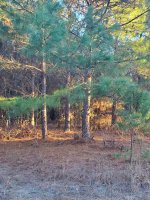
I wish my pines were as clean underneath as yours. About 10-12 years old? Nice.After picture...
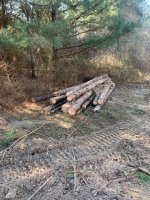
This is just a start, but very exciting. Need the trees down to build the building where our tractor will live!
A prescribed controlled burn every couple of years will keep them that way. Mine are waaay overdue.

jyoutz
Super Star Member
Nothing hippie dippie about wanting a shade tree in the yard. But it should be a sound tree free of root and stem decay and a healthy live crown. It is a good idea not to leave a forest within tree height of the house.Be sure to clear enough space around buildings that falling trees won't land on the building, after a decade of growth. People forget trees grow. Then there are the hippiedippie nature children who have to leave that big tree in the front yard.
jyoutz
Super Star Member
That is true for areas with a history of lightening strikes. Most of the interior west is that way. East Texas is in a humid area, so I doubt that the forests were as open historically as the ponderosa pine forests that I manage. Loblolly pine isn’t very fire tolerant and historically grew in the areas that experienced less fire, and long leaf pines grew in the fire prone areas of the Southeast. But loblolly has been planted in many locations where it didn’t naturally occur, because it grows fast.A Texas State Biologist told me that if you went back in time a couple hundred years, East Texas would look completely different. A lot less trees, more space between the trees, and less brush. This is the main reason turkeys don't do well here.
When people moved here, they cleared the land, farmed it, then abandoned the farms and let the land grow back up. From your pictures, your land looks like mine. Super thick. It will take a thousand years for Mother Nature to get it back to where it is supposed to be. Wildfires will clear the understory, the big trees with choke out the small trees, and the native grass will cut down on the weeds.
Ideally, you want to remove 75% to 90% of all the trees on your land if you want it to be "natural"
JethroB
Veteran Member
- Joined
- May 19, 2020
- Messages
- 2,344
- Location
- Really Deep Southeast
- Tractor
- Kubota L5460 HSTC Cab, MF 135 Diesel
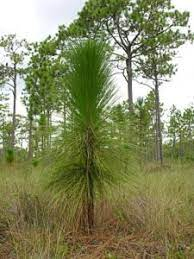
The long leaf pine is making a comeback after being nearly decimated by logging in the southeast in the late 1800’s - early 1900’s when more settlers & the railroads came in. There are incentives to plant long leaf over the loblolly and slash pine and the sawmills say that’s what they will want in the future. Beautiful and unusual tree when they are young.
jyoutz
Super Star Member
AgreeThe long leaf pine is making a comeback after being nearly decimated by logging in the southeast in the late 1800’s - early 1900’s when more settlers & the railroads came in. There are incentives to plant long leaf over the loblolly and slash pine and the sawmills say that’s what they will want in the future. Beautiful tree when they’re young.
View attachment 729474
ultrarunner
Epic Contributor
- Joined
- Apr 6, 2004
- Messages
- 29,807
- Tractor
- Cat D3, Deere 110 TLB, Kubota BX23 and L3800 and RTV900 with restored 1948 Deere M, 1949 Farmall Cub, 1953 Ford Jubliee and 1957 Ford 740 Row Crop, Craftsman Mower, Deere 350C Dozer 50 assorted vehicles from 1905 to 2006
After never seeing a wild turkey there was a population explosion...
Flocks as many as 30 in residential neighborhoods perched on roof tops and trees... This kind of peaked 20 years ago and then coyotes first appeared and numbers increasing...
Always had a few red and gray foxes but never coyotes...
When turkey population boomed mountain lion sightings coincided but rare.
Deer seem to do well anywhere and decimate landscape right up to planters on your front porch.
Racoons, skunks, possum , etc hace always been around this part of Oakland
Flocks as many as 30 in residential neighborhoods perched on roof tops and trees... This kind of peaked 20 years ago and then coyotes first appeared and numbers increasing...
Always had a few red and gray foxes but never coyotes...
When turkey population boomed mountain lion sightings coincided but rare.
Deer seem to do well anywhere and decimate landscape right up to planters on your front porch.
Racoons, skunks, possum , etc hace always been around this part of Oakland
3Ts
Elite Member
Long Leaf Pines are an interesting topic and have an ecology all their own. For the Long Leafs to do well requires periodic prescribed burns. The burns control the undergrowth and competition from hardwood trees. The timing of the burns is critical and depends on the weather and the "leaf" litter on the ground. If the litter is to thick and collected around the base of the tree, the fire could kill the roots - even though the trees are resistant to fire. Even the seedlings after 1 to 2 years are fire resistant.
Long leaf are slower growing than short leaf pines so the commercial interest is in the short leaf. There is a Long Leaf Alliance that is promoting the long leaf pines and there are some private landowners that want to see the long leaf pines restored, without them I doubt there'd be much interest in the long leaf pines. Note: long leaf pines are much better poles than short leaf and do command a higher price, but it takes a long time to grow them.
Long leaf are slower growing than short leaf pines so the commercial interest is in the short leaf. There is a Long Leaf Alliance that is promoting the long leaf pines and there are some private landowners that want to see the long leaf pines restored, without them I doubt there'd be much interest in the long leaf pines. Note: long leaf pines are much better poles than short leaf and do command a higher price, but it takes a long time to grow them.
Larry Caldwell
Super Member
Turkeys are not native to Oregon, but ODFW has had great success establishing a stable population of the Rio Grande strain. They favor open fields where they can see predators coming with plenty of time to take to the air. Turkeys don't have the fastest takeoff in the world.The turkey issue has a lot of layers to it. There are no turkeys where I live, and there hasn't been any for decades. The demise of wild turkeys is blamed on farming, chemicals and fire ants. The state has been working on ways to reintroduce turkeys to East Texas for a very long time with total failure. About ten years ago, the tried a new method of mass release of birds in an area of ten square miles or more. First they find an area with habitat that they feel will support turkeys. Then they get all the landowners in that area to agree to allow them to monitor and track the turkeys on their land. Basically allowing them onto their land whenever they want to observe them. Once they block in that 6,400 acres or more, then they will release a hundred birds at a time, over several years. Predators take out quite a few of them right away. Then fire ants are blamed for killing chicks when they first hatch. Those that survive are increasing in numbers, but there is a huge drop from the initial release.
Once an area that has been cleared is left alone, it becomes overgrown with trees right on top of each other. Inches apart, and so thick that it is impossible to get through them. Slowly, as they grow, some of those areas will open up a little, but still too thick for an understory to develop. It is not uncommon to have thousands of trees growing on a single acre. I don't know what the ideal number of trees per acre is for wildlife, or what it was hundreds of years ago, but I'm guessing it should be in the dozens of trees per acre instead of thousands.
Wild Hogs do best in super thick woods. Deer struggle and tend to be at the edge of it, where possible. Deer numbers here vary from one per 40 acres in the thicker areas, to four times that many in more open areas, or even more. On my land, I'm creating open pastures of several acres, with wooded areas that open between the bigger trees with small pockets of thick areas. Since doing this, my deer numbers have increased dramatically. I have two pet turkeys and I've thought about getting more and letting them free roam over my place once I get it fenced. I would love to see flocks of turkeys, and in all reality, the only way it's going to happen is if I make it happen.
It drives me nuts that the tree huggers don't realize how environmentally hostile trees can be. A closed canopy fir forest is one of the most sterile habitats there is. The trees kill understory vegetation, leaving nothing for herbivores to eat. I found it entertaining when The Nature Conservancy logged 15,000 acres in Eastern Oregon because the trees were killing endangered plant species.
Sorry to hear about your fire ant problem. Invasive species are going to change life on the planet. Unless it is somehow contained, English ivy will eventually kill all the forests in the PNW, because it chokes out new seedlings, and that is just one of the invasive species that has moved in.
Larry Caldwell
Super Member
Nothing wrong with having a shade tree in the yard as long as the tree is shorter than the distance to the house. Putting a tall tree next to a house is stupid.Nothing hippie dippie about wanting a shade tree in the yard. But it should be a sound tree free of root and stem decay and a healthy live crown. It is a good idea not to leave a forest within tree height of the house.
OP
Torvy
Super Member
Putting any tree next to a house could be ill-advised as roots damage foundations.Nothing wrong with having a shade tree in the yard as long as the tree is shorter than the distance to the house. Putting a tall tree next to a house is stupid.
However, the odds of a healthy forested tree falling on a house is not that great. Can it happen? Sure. A meteorite can fall on your house, too. Solo trees are less protected and more likely to topple. I would be more concerned with being inside the range of branches falling.
Here are some similar links:


- Replies
- 44
- Views
- 8K


