Mahindra 2545 on sand

/ Mahindra 2545 on sand #61  
Have to agree with wagne223, you need to hang a heavy implement off the back of the tractor asap. I know you loaded water into your rears... maybe that's enough, but why chance it. A 600+ lb implement hanging off the 3-pt give you huge leverage to counter full buckets of sloppy clay like that.

If you lift a rear wheel, it means you're putting nearly the entire tractor, loader, and dirt weight on the front axle alone. If your front wheels are down in a ditch, and you have to reverse, think about how much strain that is on the front drivetrain. No bueno.

If you want to search here and elsewhere, you can easily find threads and pics of peoples exploded front axles. Even worse if Mahindra sees you didn't use rear ballast, warranty might not cover any repairs. Keep your machine planted down!
 
/ Mahindra 2545 on sand #62  
Have to agree with wagne223, you need to hang a heavy implement off the back of the tractor asap. I know you loaded water into your rears... maybe that's enough, but why chance it. A 600+ lb implement hanging off the 3-pt give you huge leverage to counter full buckets of sloppy clay like that.

If you lift a rear wheel, it means you're putting nearly the entire tractor, loader, and dirt weight on the front axle alone. If your front wheels are down in a ditch, and you have to reverse, think about how much strain that is on the front drivetrain. No bueno.

If you want to search here and elsewhere, you can easily find threads and pics of peoples exploded front axles. Even worse if Mahindra sees you didn't use rear ballast, warranty might not cover any repairs. Keep your machine planted down!
Yes, counterweight - distinguished from ballast - is often beneficial. However it is not true that it avoids or lessens abusive stress in all cases. When you think the physical situation thru you can see this.

For instance, in the example given you will back out of the ditch with the rears staying down on the ground - but that rear ground contact could be quite light. ... Perhaps only 1% of the weight of the entire load (counterweight, ballast, tractor, and bucket load). So what is supporting the rest of the weight as you back up? What is providing virtually all the motive force? In this case isnt the counterweight actually enabling abuse to the front end? What about all other cases of backing up?​
Realize that the cases where you stand the tractor on its nose trying to back up without counterweight actually limit stress that would be camouflaged and sometimes intensified by having a counterweight. Without the counterweight you are forced into a less stressed method.

Realize also that without counterweight you can apply more downforce with the loader. This is handy for backdragging, shaving a thin depth, and often digging. Front tire ballast can be a plus here too and without the penalty of its weight being suspended on the front axle.​

Your analysis of stress situations must not be burdened by simplism.
 
/ Mahindra 2545 on sand #63  
Ugh, we've been over this so many times before here. You're not explicitly wrong, but the clear conclusion is that in nearly all cases, rear counterweight reduces weight on the front axle. The rear axle is the pivot point for this load. Unless you still lift the rears off the ground, like you mention. But this is much harder to do with a big ol' counterweight on the rear of the tractor.
 
/ Mahindra 2545 on sand #64  
Yes, counterweight - distinguished from ballast - is often beneficial. However it is not true that it avoids or lessens abusive stress in all cases. When you think the physical situation thru you can see this.

For instance, in the example given you will back out of the ditch with the rears staying down on the ground - but that rear ground contact could be quite light. ... Perhaps only 1% of the weight of the entire load (counterweight, ballast, tractor, and bucket load). So what is supporting the rest of the weight as you back up? What is providing virtually all the motive force? In this case isnt the counterweight actually enabling abuse to the front end? What about all other cases of backing up?​
Realize that the cases where you stand the tractor on its nose trying to back up without counterweight actually limit stress that would be camouflaged and sometimes intensified by having a counterweight. Without the counterweight you are forced into a less stressed method.

Realize also that without counterweight you can apply more downforce with the loader. This is handy for backdragging, shaving a thin depth, and often digging. Front tire ballast can be a plus here too and without the penalty of its weight being suspended on the front axle.​

Your analysis of stress situations must not be burdened by simplism.
No one can argue the math, and geometry of your statement, however, one can argue that for safety keeping the rear of the tractor on the ground is important. Even if it is only 1 percent.


This is an inexperienced operator, operating in unstable conditions (soft sand). The OP needs a proper counterweight on this machine.

We all know the largest danger on a tractor is a rollover. And we all know rollovers usually occur on soft or sloped ground with a load in the bucket.
 
/ Mahindra 2545 on sand #65  
Pripyat, just so this does not get lost in a derailment,

PLEASE HANG A BOX BLADE OR BALLAST BOX ON THE 3PH.

We dont want to read about your tractor accident.
 
/ Mahindra 2545 on sand #66  
Have to agree with wagne223, you need to hang a heavy implement off the back of the tractor asap. I know you loaded water into your rears... maybe that's enough, but why chance it. A 600+ lb implement hanging off the 3-pt give you huge leverage to counter full buckets of sloppy clay like that.

If you lift a rear wheel, it means you're putting nearly the entire tractor, loader, and dirt weight on the front axle alone. If your front wheels are down in a ditch, and you have to reverse, think about how much strain that is on the front drivetrain. No bueno.

If you want to search here and elsewhere, you can easily find threads and pics of peoples exploded front axles. Even worse if Mahindra sees you didn't use rear ballast, warranty might not cover any repairs. Keep your machine planted down!

Yes, counterweight - distinguished from ballast - is often beneficial. However it is not true that it avoids or lessens abusive stress in all cases. When you think the physical situation thru you can see this.

For instance, in the example given you will back out of the ditch with the rears staying down on the ground - but that rear ground contact could be quite light. ... Perhaps only 1% of the weight of the entire load (counterweight, ballast, tractor, and bucket load). So what is supporting the rest of the weight as you back up? What is providing virtually all the motive force? In this case isnt the counterweight actually enabling abuse to the front end? What about all other cases of backing up?​
Realize that the cases where you stand the tractor on its nose trying to back up without counterweight actually limit stress that would be camouflaged and sometimes intensified by having a counterweight. Without the counterweight you are forced into a less stressed method.

Realize also that without counterweight you can apply more downforce with the loader. This is handy for backdragging, shaving a thin depth, and often digging. Front tire ballast can be a plus here too and without the penalty of its weight being suspended on the front axle.​

Your analysis of stress situations must not be burdened by simplism.

Ugh, we've been over this so many times before here. You're not explicitly wrong, but the clear conclusion is that in nearly all cases, rear counterweight reduces weight on the front axle. The rear axle is the pivot point for this load. Unless you still lift the rears off the ground, like you mention. But this is much harder to do with a big ol' counterweight on the rear of the tractor.

No one can argue the math, and geometry of your statement, however, one can argue that for safety keeping the rear of the tractor on the ground is important. Even if it is only 1 percent.


This is an inexperienced operator, operating in unstable conditions (soft sand). The OP needs a proper counterweight on this machine.

We all know the largest danger on a tractor is a rollover. And we all know rollovers usually occur on soft or sloped ground with a load in the bucket.
I didnt address safety in my post because that was not part of the post I responded to. I viewed the OPs stated tractor use and alarm at lifting a rear as indication of his appreciation of the safety issue. Ill say that counterweight held low is never a danger of side rollover unless its so heavy it hampers steering control and instigates some compounding mistakes. However as an effect on mechanical stress it has some pluses and minuses according to the specific - usually loader related - situation.
 
/ Mahindra 2545 on sand
  • Thread Starter
#67  
I 100% agree with everything stated thus far. All my implements that I got for free didn't have any pins. I got the tractor home, went to hook up the box blade, and realized I couldn't. I went to tractor supply and picked up an assortment the next day. I haven't had the rear unloaded since the day after I got my tractor, the day I got some pins. :D

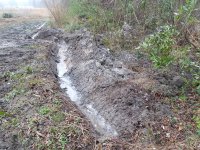
I take equipment safety seriously and would never remove ROPS and hope I never have to rely on it. I have done plenty of research on tractor safety and understand the dangers surrounding rollover, hydraulics, and rotational forces (PTO). Lifting that load without counterweight was careless, I really just wanted to see how well the tractor dug into the pile (without water in wheels) but once I got the scoop I figured I would go ahead and put it on the pile. That was the only load I lifted that day.. Other than scooping a 6" trench which I don't think really counts.

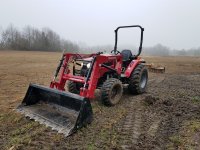
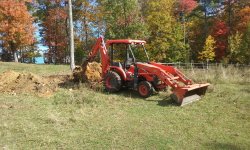
Anyway, the first pictures were straight from the dealership, I had not altered the air pressure in the tires. The one with the rake is 75% water fill, I think I did 20 in fronts, 15 in rear. If Mahindra had put a recommended tire pressure in the manual I would have gone with that..
 
/ Mahindra 2545 on sand #68  
I 100% agree with everything stated thus far. All my implements that I got for free didn't have any pins. I got the tractor home, went to hook up the box blade, and realized I couldn't. I went to tractor supply and picked up an assortment the next day. I haven't had the rear unloaded since the day after I got my tractor, the day I got some pins. :D

I take equipment safety seriously and would never remove ROPS and hope I never have to rely on it. I have done plenty of research on tractor safety and understand the dangers surrounding rollover, hydraulics, and rotational forces (PTO). Lifting that load without counterweight was careless, I really just wanted to see how well the tractor dug into the pile (without water in wheels) but once I got the scoop I figured I would go ahead and put it on the pile. That was the only load I lifted that day.. Other than scooping a 6" trench which I don't think really counts.

Anyway, the first pictures were straight from the dealership, I had not altered the air pressure in the tires. The one with the rake is 75% water fill, I think I did 20 in fronts, 15 in rear. If Mahindra had put a recommended tire pressure in the manual I would have gone with that..
Keep an eye on the fronts when you carry loader capacity.

15 for the rears sounds about right. May be able to go a pound or two lower - at most - and vary it upward according to squat resulting from the 3ph load.
 
/ Mahindra 2545 on sand
  • Thread Starter
#69  
I've got 20hrs on the tractor, i'll be at 50 in a couple weeks. I can get valvoline 80W-90 easily. Any issues using valvoline gear oil and rotella T6 for engine oil?

Also, i'd like to add a third function before I do the service. I dont want an electronic valve, i'd rather add a separate single spool. Any thoughts on what I need to be looking for in the valve?
 
/ Mahindra 2545 on sand #70  
I think you're fine with the Rotella. I've used it for all 8 oil changes I've done on mine, and no issues.
The gear oil should be fine as well, but you could use hydraulic fluid as well. Not sure about your 2545, but my 2538 does just fine with hydraulic fluid in front, rear axles.

Can't comment on the 3rd function. Don't have a need for it.
 
/ Mahindra 2545 on sand #71  
I've got 20hrs on the tractor, i'll be at 50 in a couple weeks. I can get valvoline 80W-90 easily. Any issues using valvoline gear oil and rotella T6 for engine oil?

Also, i'd like to add a third function before I do the service. I dont want an electronic valve, i'd rather add a separate single spool. Any thoughts on what I need to be looking for in the valve?
T6 is great - quality/price considered. I use 80W 90 in the front differential and it is one of the hyd system options, but the 80W scares me off. I use Kubotas SUDT - probably any UDT would be fine tho.

... For the hydraulics you might consider a valve with a float position.
 
/ Mahindra 2545 on sand
  • Thread Starter
#72  
What is the significance of having a float position on the third function?
 
/ Mahindra 2545 on sand #73  
It would depend on what you use it for and what you might use it for. It gives an inexpensive extra capability, there when you need it.

In my case for instance, my Tilt Tatch can allow the bucket to tip left/right to follow the ground in float, but can be set and locked in a particular left right position by the conventional valve action.​
 
/ Mahindra 2545 on sand
  • Thread Starter
#75  
I will pick up a grapple used most likely. Whatever I can find cheap 66" wide to match the bucket width I'm used to. Up to 26 hours on the meter. Got my tooth bar installed. It's sweet on small trees, rips the larger ones right out the ground. I love it.

20190303_130342.jpg

20190303_130307.jpg
 
/ Mahindra 2545 on sand #76  
I will pick up a grapple used most likely. Whatever I can find cheap 66" wide to match the bucket width I'm used to. Up to 26 hours on the meter. Got my tooth bar installed. It's sweet on small trees, rips the larger ones right out the ground. I love it.

View attachment 594346

View attachment 594347
Weight and toothbar are your friends for moving dirt. Helps to have a decent loader.
My L39 is about at its max weight for is power. I wish it were around 50 HP.
 

Attachments

  • 20171022_114651 (1280x768).jpg
    20171022_114651 (1280x768).jpg
    1,001.5 KB · Views: 123
/ Mahindra 2545 on sand
  • Thread Starter
#77  
So I'm working on cleaning the corn stalks off the land that will be my future yard with a landscaping rake. I've got a pretty sweet drag I plan to use to get it the rest of the way level once I get all the organic matter up. Extremely time consuming as the rake gets full very quickly. On a first pass I can only "rake" maybe 5 to 10 yards before all the plant matter wants to ball up and be drug along, lifting the other rake tines off the ground. Maybe adding some cinder blocks to the rake would help? The 3pt being float I think is hurting more than helping with the rake.

Anyway, the other question I have is I need to figure out how I'm going to cut the yard. I just plotted it and I'm going to be mowing around 12 acres of land every time I mow "the yard". We are planting trees through a gov assistance program on the rest of the cleared land on the property, should come up to around 15 acres. The rest of the 45 acres are hardwoods that we wouldn't dare cut down. I'm a purist and like trees.

Anyway, what do I need to cut that much regularly? I was thinking a huge finishing mower but my dad is telling me that everyone he knows that buys a finishing mower ends up just buying a big zero turn in the end. But, when I'm done the land will be clear and perfectly flat which I'm thinking would be a prime candidate for a finishing mower pulled by a tractor. Thoughts?
 
/ Mahindra 2545 on sand #78  
I think in a case without obstacles a finishing mower will be the way to go. - - In getting to that point, and for more general maintenance a 5' bushog would be valuable.

For instance, a bushog run at scalp level would mulch those corn leavings a bit and make them more manageable, perhaps even valuable as a decomposing thatch that protects and fertilizes new seeding.​
 
/ Mahindra 2545 on sand #79  
You will want to think long and hard about mowing 12 acres of grass on a semi-regular basis. Without physically seeing the property is it possible to mow only around the house and plant some natural grasses in the meadow and let it grow? You could maybe brush hog it once or twice a year. How flat is the "yard" going to be? If its rough you will not be able to use a zero turn up to its full potential, they are built for smooth areas where speed can be utilized. In the right setting ZTs are hard to beat, they are a purpose built machine and excel at cutting grass fast, but the ground needs to be smooth to utilize them correctly. I can share from experience I cut 6 acres/week, its a mix of meadow with some trees around the houses. Unfortunately in my case the property would not work letting the meadow area grow up and cutting once or twice a year. Using a 38hp compact tractor with a 72" finish mower I was right at 6 hours since I would need to use a lawn tractor around the houses/trees. Bought a 72" Deere 997 this past summer, I'm down to 1.75hrs...
 

Marketplace Items

Swict 66in. Skid Steer Bucket Attachment (A59228)
Swict 66in. Skid...
500 BBL FRAC TANK (A58214)
500 BBL FRAC TANK...
2018 RoGator 1100C (A61307)
2018 RoGator 1100C...
159118 (A60430)
159118 (A60430)
Adams Under Truck Conveyor (A61307)
Adams Under Truck...
2020 FORD F-150 XL CREW CAB TRUCK (A59823)
2020 FORD F-150 XL...
 
Top