jeff9366
Super Star Member
- Joined
- Jan 14, 2011
- Messages
- 12,787
- Tractor
- Kubota Tractor Loader L3560 HST+ ~~~~~~~~~~~~~ 3,700 pounds bare tractor, 5,400 pounds operating weight, 37 horsepower
CASE 55C SPECS: TractorData.com CaseIH Farmall 55C tractor information
You did not mention how much forest land you want to clean up, but judging by the roads a considerable amount.
You seem happy with your heavy Case tractor, chainsaw and Bush Hog.
I also suggest a battery powered reciprocating saw for limbs and saplings under 2". Much safer than a chainsaw for small stuff. Reciprocating saw blades are much cheaper and easier to change relative to saw chains. I have found Milwaukee's THE AXE blades superior to pruning blades.
I leave tree stumps, after treating with full strength herbicide to make sure they are dead. Locusts are about the toughest of small trees to kill.
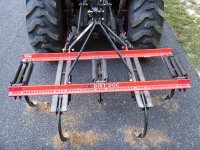
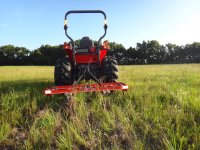
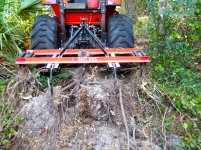
For removing softwood roots, vine roots and corms from below ground level I have had success using a spring protected Dirt Dog (brand) Field Cultivator in my Florida sandy-loam. I had it on my Three Point Hitch yesterday, pulling out subsurface Palmetto calves and wild grape vine roots up to 2-1/4" in diameter.
LINK: http://www.tractorbynet.com/forums/attachments/339095-dirt-dog-all-purpose-plow.html?highlight=
LINK: DD FIELD CULTIVATORS
For overgrown pasture, previously packed by hoofed animals, you may need a moldboard plow to cut through the packed soil and roots. The Dirt Dog Field Cultivator is a secondary tillage implement which has worked 100% for me in woodlands soil but has not been up to primary tillage in hard packed pasture. In really difficult soil you may want a Disc Plow, which is NOT a Disc Harrow, rather than a moldboard plow, however they have a slight tendency to roll over some roots you might wish to sever.
A Chisel Plow would be another alternative. However, a turning plow will probably do more to improve the tilth and fertility of your pasture expansion.
Moldboard plows, Disc Plows and Chisel Plows are all primary tillage implements.
I have hiked a fair amount in Missouri. I saw considerable clay in parts. More loam in the south. How is your soil, generally?
What have to done to your tires to keep air in them? Usually Locust thorns work into tires, resulting in flats.
You did not mention how much forest land you want to clean up, but judging by the roads a considerable amount.
You seem happy with your heavy Case tractor, chainsaw and Bush Hog.
I also suggest a battery powered reciprocating saw for limbs and saplings under 2". Much safer than a chainsaw for small stuff. Reciprocating saw blades are much cheaper and easier to change relative to saw chains. I have found Milwaukee's THE AXE blades superior to pruning blades.
I leave tree stumps, after treating with full strength herbicide to make sure they are dead. Locusts are about the toughest of small trees to kill.
For removing softwood roots, vine roots and corms from below ground level I have had success using a spring protected Dirt Dog (brand) Field Cultivator in my Florida sandy-loam. I had it on my Three Point Hitch yesterday, pulling out subsurface Palmetto calves and wild grape vine roots up to 2-1/4" in diameter.
LINK: http://www.tractorbynet.com/forums/attachments/339095-dirt-dog-all-purpose-plow.html?highlight=
LINK: DD FIELD CULTIVATORS
For overgrown pasture, previously packed by hoofed animals, you may need a moldboard plow to cut through the packed soil and roots. The Dirt Dog Field Cultivator is a secondary tillage implement which has worked 100% for me in woodlands soil but has not been up to primary tillage in hard packed pasture. In really difficult soil you may want a Disc Plow, which is NOT a Disc Harrow, rather than a moldboard plow, however they have a slight tendency to roll over some roots you might wish to sever.
A Chisel Plow would be another alternative. However, a turning plow will probably do more to improve the tilth and fertility of your pasture expansion.
Moldboard plows, Disc Plows and Chisel Plows are all primary tillage implements.
I have hiked a fair amount in Missouri. I saw considerable clay in parts. More loam in the south. How is your soil, generally?
What have to done to your tires to keep air in them? Usually Locust thorns work into tires, resulting in flats.
Attachments




Last edited: