Interested in learning how to weld

/ Interested in learning how to weld #1  

jrclark

Silver Member
Joined
Apr 29, 2014
Messages
189
Location
Harleysville, Pa
Tractor
Kioti DS3510
I'm very interested in learning how to weld, mostly out of necessity with general household needs. I break a lot of stuff and it would be a nice skill to have.

I know very little about welding and would be starting to learn from scratch. I'm not interested in being a professional, but would like to learn the right way. Several close friends are well versed and willing to help me along.

What I'd like to know is, what is a good welder to start with for household use? Almost everything I would be working with is steel, mostly repairing implements and doing tractor related small projects. The thickest material I'm likely to weld is probably 3/8". Should I start with a stick or mig welder? I am fairly budget conscious, and would like to keep the price within reason.
 
/ Interested in learning how to weld #2  
What I'd like to know is, what is a good welder to start with for household use? Almost everything I would be working with is steel, mostly repairing implements and doing tractor related small projects. The thickest material I'm likely to weld is probably 3/8". Should I start with a stick or mig welder? I am fairly budget conscious, and would like to keep the price within reason.
The Mig process is hands down the easiest to learn! SMAW / stick is the cheapest.
 
/ Interested in learning how to weld #3  
If you decide to go with a SMAW / stick welder. I switched welders with my brother-n-law, I have his Everlast PowerArc 200ST. This is a very impressive welder:cool:. You can contact Mark with Everlast to see what kind of deal he can make you.
POWERARC 200ST - Stick Welders | Everlast Generators
 

Attachments

  • 7018 clean.JPG
    7018 clean.JPG
    86.3 KB · Views: 317
  • 7018 Cap.JPG
    7018 Cap.JPG
    133.5 KB · Views: 238
  • 12 10P Plus.JPG
    12 10P Plus.JPG
    92.7 KB · Views: 229
/ Interested in learning how to weld #4  
^^^ What he said (you are the same guy on WW right?). Just be aware that you are not going to be able to weld much tractor stuff without a 230 volt MIG. Little 110 MIGs, while very handy,
do not have the power to weld thicker that 3/16" thick steel (they can make it stick together, but not a real weld).
 
/ Interested in learning how to weld #6  
Consider a community college welding coarse. It'll start you on the right foot.
 
/ Interested in learning how to weld #7  
One nice thing about a good 230 volt DC stick welder is you can get into TIG welding pretty cheap by just adding a regulator on an argon cylinder and a simple 17V TIG torch. About $100 add on if you rent your argon bottle from a local source. With TIG you can do all of those small delicate repairs that stick welding is not very good for. But with stick you can make good solid welds on thicker material.

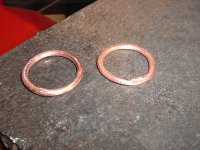
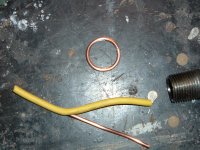
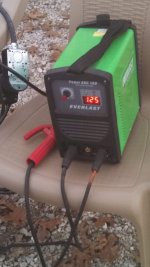
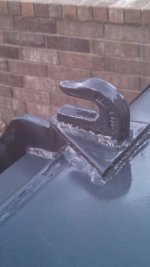
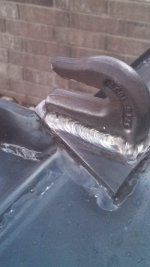
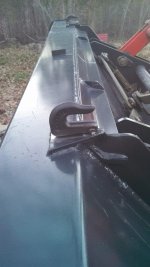
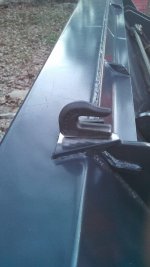
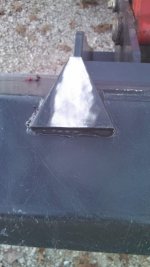
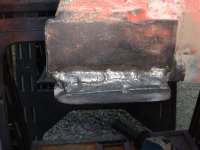
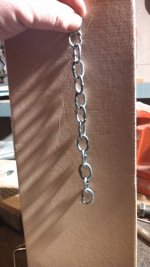
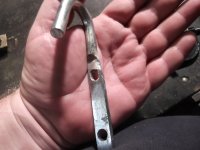
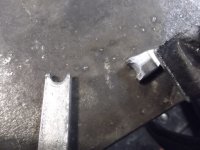
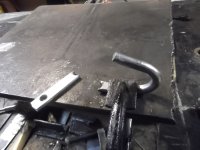
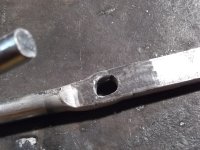
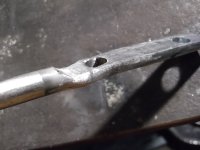
MIG is faster to learn, and faster welds than TIG. Mig is probably the most expensive. Stick is harder to learn, very cheap to operate, very flexible, and makes good strong welds on thick materials. TIG is very precise and will allow welding exotic materials, is probably the hardest to learn. But you can do it.. IF I can do it you can do it. Some pix below show TIG welding copper crush washers, repairing a broken steel hanger hook, and stick welding on bucket hooks, and repairing a cracked Kubota bucket cutting edge. So a combination of very delicate TIG welding and big repair/fabrication jobs using the stick process. All from the same little green Everlast 160 amp DC welder.


DSCF0525.JPGDSCF0524.JPGDSCF0520.JPGIMG_20121117_165336_859.jpgIMG_20121117_170314_242.jpgIMG_20121117_165314_192.jpgIMG_20121117_165303_772.jpgIMG_20121117_164305_653.jpgIMG_20121117_162438_547.jpgIMG_20121117_162424_854.jpg6outside weld.jpgIMG_20131018_115507_563.jpgPicture 015.jpgPicture 006.jpgPicture 007.jpgPicture 011.jpgPicture 014.jpg
 
/ Interested in learning how to weld #8  
Spend the money and take a basic welding class (community colleges, welding schools). This will give you experience with stick, MIG, TIG and plasma cutting on a variety of different welders. Then you can make your welder purchasing decisions with confidence.

Good luck.
 
/ Interested in learning how to weld #9  
I'm surprised how the knowledge of welding "science" changes your plans to equip your garage into revolution inside a garage! At least mine. Thanks to Shield Arc and Big-Barn-Terry :thumbsup:
 
/ Interested in learning how to weld
  • Thread Starter
#10  
Thanks for the replies and suggestions. It looks as though a 120V welder is a waste of money and that I should focus on 240V. Should I install a 30A or 40A outlet in my garage? I know it would depend on the unit, but am likely to opt for the unit Shield Arc suggested, or an equivalent mig.
 
/ Interested in learning how to weld #12  
I have my welders on 220-volts, with 60-AMP breakers.

Same here. Works great for mig welding, but for tig welding, 60 amps gets used up fast when welding aluminum. If you haven't run the wiring yet, I'd suggest going with stranded vs solid. Stranded wire runs cooler.
 
/ Interested in learning how to weld
  • Thread Starter
#13  
Ah, ok. That will probably require 6 wire to my garage. Might almost make sense to run a sub panel into the garage to handle future pole barn power. I have some things to think about there.

Starting to lean towards a cheaper stick welder now. It's time like these that I really would appreciate a trust fund :/
 
/ Interested in learning how to weld #14  
:| I thought it was a 50 amp outlet :/ now I'm going to have to go look in the morning.

Stick welding is a bit of an acquired through practice art. My father-in-law taught me and left me his old welder along with about a hundred pounds of various types of welding rod. He described the start as being like striking a match, and that is a very close description to what is required. Preparation through cleaning and chamfering of the material before proceeding is imperative for good results. Your power settings are dependant upon the nature of the material, the thickness of the material and the size and type of rod being used. Mine is an AC type welder, DC welders have the advantage of being able to weld almost upside down on your workpiece, AC works best when gravity is working for you. The purpose of the outer coating on the welding rod is to exclude oxygen from the actual point where you are creating molten metal, that is a combination of welding rod metal and melting workpiece material. The correct term for this is penetration. If your power setting is to low, you will only be melting welding rod, as you increase the power you will be melting more of the workpiece, eventually if your power is too high you will blow holes clear through the workpiece. ;) that's how you can use the welder to cut steel. Thin rod is for thin material, thicker rod is better suited to thick material and lays in much faster with better spread, coverage and penetration.

Welding is fun, but 3 significant dangers to realize: the light from the arc is intense enough to blind you very quickly, in lesser exposure it will at the very least give you a tremendous headache. Make sure you have sufficient sun or artificial light on your work area so that you can see the workpice and rod while you are wearing your helmet. Secondly the fumes are very toxic, try not to breath in too much of the smoke. The third thing is electric welding is all about grounding, don't weld on a rubber tired vehicle that is not very well grounded or the vehicle will acquire an electric charge just like a giant battery! If you become the ground in that situation it will send you flying and probably blow the false teeth right out of your head :/ seen that happen to my father-in-law once.

Simple AC arc welders also have what is called a duty-cycle. You need to occasionally stop or break very briefly from laying a continuous bead of weld, or you will exceed the machines duty-cycle.

You really should either take a course or seek assistance from an experienced mentor if that is an option, do lots of reading on the subject in advance of attempting to weld. look at examples of really good welds and try to emulate those results, proper welding is to make very tiny circular "stitches" with your welding rod. It's definitely an art form to achieve good results.

Oh ya, one other thing, if you can't get good results with all the cheaper welding rods, say for instance you are attempting to weld a crack in a tractor bell housing :ashamed: get yourself some Nickel rod, that stuff is awesome!

There you go that is the worlds briefest synopsis on how to weld.
 
/ Interested in learning how to weld #15  
"Trials" synopsis:

I wish someone was around to give me this advice 50 years ago. :)

Terry
 
/ Interested in learning how to weld #16  
If you decide to go with a SMAW / stick welder. I switched welders with my brother-n-law, I have his Everlast PowerArc 200ST. This is a very impressive welder:cool:. You can contact Mark with Everlast to see what kind of deal he can make you. POWERARC 200ST - Stick Welders | Everlast Generators
I was in same position several years ago. I bought a Miller 211, and the little Everlast 200. While the MIG is great for fabrication and easier to use, the Everlast is what I use the most for farm implement repairs and for the money, is hard to beat. I have access to a nice Miller Bobcat 250, but the Everlast is my go to welder when something breaks.

Sent from my iPad using TractorByNet
 
/ Interested in learning how to weld #17  
Consider a community college welding coarse. It'll start you on the right foot.

I dropped out of one after 4-5 weeks without seeing a welder except in a book. I think maybe the next session got to weld.

:(

Bruce
 
/ Interested in learning how to weld #18  
Lots of good videos out there on you tube for just about every process and position. Jody with welding tips and tricks and ChuckE2009 are a couple of my favorites.
 
/ Interested in learning how to weld #19  
I agree with the videos. also like both of those. I pretty much taught myself and you can but you can save yourself a lot of time by at least getting some help from someone that knows how. Also you can save some money and get started with a decent AC stick welder but don't go to cheap. How do I know? I started with a 110V welder mostly a toy and very frustrating. Bought a 220V 200 amp Northern tool welder, much better and did a lot of welding with it but didn't do the best job. finally bough some Fourney 7018 rods and couldn't even strike an arc with them. Friend said it was the welder so I went and bought a 220V Lincoln Tombstone AC welder. A good basic stick welder and they've been around since dirt. The difference was night and day. My welding got a lot better overnight. So at least go with a name brand. There are several out there and I'm sure a lot of these guys know better than me what would be a good choice.
Also duty cycle has never been a problem with the Lincoln because you burn a rod then clean slag and get ready to make next weld while the welder cools.
 
/ Interested in learning how to weld
  • Thread Starter
#20  
I've watched a handful of videos, mostly that Chuck kid on YouTube. Pretty entertaining stuff, I actually like how he conveys information on how not to do stuff.

I'm looking into repurposing some old metal cabinets into a welding table. There's another thread in here about tables and it made me start thinking about making a nice work surface. Space is at a premium in my garage, so that would work out well.

The more I crunch numbers, the more I like the stick welder. This is a tough time of year to be focusing on these things. Lots of money coming and going, little to apply to fun/necessary stuff.
 

Marketplace Items

6073 (A61165)
6073 (A61165)
UNUSED ATS CMR1280 ELE.CEMENT MIXER (A62131)
UNUSED ATS CMR1280...
2023  FREIGHTLINER M2 22FT NON CDL BOX TRUCK (A59905)
2023 FREIGHTLINER...
2007 TRAILMOBILE 53X 102 T/A DRY VAN TRAILER (A59909)
2007 TRAILMOBILE...
2016 Ford Escape SUV (A61569)
2016 Ford Escape...
2013 Felling 25' x 102 Tag Trailer (A62613)
2013 Felling 25' x...
 
Top