Rural Living

/ Rural Living #21  
If I have learned anything in my 2 years living in the country, everything is expensive. And when you do a budget you may as well plan on doubling that figure and you should come out about right.
 
/ Rural Living #22  
This was 14 years ago, but the Co-Op here was charging $2-3 per linear foot for over head and gave you the poles for free. Going underground was $6/ft.
 
/ Rural Living #23  
In any case, congrats on your homestead, and welcome to the forum. There is a wealth of information on here, and a lot of good people. We are in a similar situation except we haven't really done anything with our land yet since I have been overseas. My brother in law built on the piece of land next to ours and the power company rolled the cost of power poles into his bill, and he paid it off in installments along with his utility bill over the course of ten years or so. But I don't think it was anywhere close to the amount you are talking about. I think what he paid for was the labor of having the poles and lines installed, the power company owns the lines and poles, so they are the ones who bought the materials. This was in Ohio so different companies do things differently. I would like to do underground utilities as well (once we build). From what I am hearing, you can save money by digging the trench yourself.
In ohio the power company picks up most of the cost and owner pays remainder
 
/ Rural Living #24  
I wonder if any of this has to do with commitment to buy electricity? I remember that here, you need to have a meter base installed on a building, otherwise the power company is less "thrifty" with costs. I guess they want some sort of indication you'll be buying electricity for a long time. Maybe they will want to see a home being built before they bring out the normal prices.
 
/ Rural Living #25  
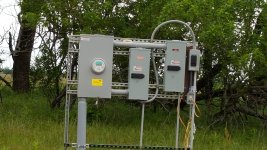
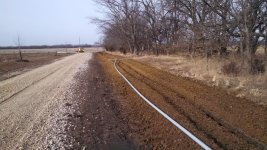
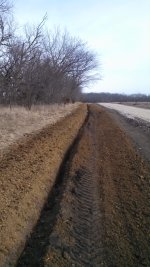
Every power company is different. Mine covered the cost of the pole to bring power across the street, the primary wire, a pull box, and the transformer. I'm in the middle of building a house on our 92 acres and wanted the house 1100' back off of the gravel road. The power company planner came out and I showed him where the house was going. He marked a spot for a pull box and another for the pad transformer. I hired a guy to do the trench and I worked behind him putting string in the pipes and gluing them up. The trench cost me $1100 and the conduit, sweeps, and string cost about $700. I also purchased a 320 amp meter can and two 200 amp disconnects. Since they charge for temporary power, I purchased a small 70 amp breaker panel and did my own temporary power outlet. The electrician wanted $6500 to do everything and I did it myself for around $2200.

Try and find out what you are allowed to do yourself. This is where you will save some money.

20150522_103946.jpgIMG_20150130_101759_170.jpgIMG_20150130_150714_648.jpg
 

Attachments

  • IMG_20150130_150721_153.jpg
    IMG_20150130_150721_153.jpg
    713.4 KB · Views: 141
/ Rural Living #26  
When I purchased this house, I didn't know it at the time but there was no land line telephone connection. The outlets were on the wall in every room, but when the man from AT&T showed up one day to turn on the service, he asked me where the wire came in from the street. That's when I learned how to run a Ditch Witch trencher, riding it for 1300' from the street to the house. The phone company had to run a half mile of cable up the street to the nearest neighbor's place where the line terminated. At first they wanted to string it on new poles, but the immediate neighbor pitched such a fit they ended up running a trench down the middle of the road. That neighbor really blew a gasket on that one :D Anyway, it cost me $3500 to get the line to the end of the road, and about $650 for a couple days of trencher rental. The phone company provided the wire, which they laid and connected and I buried. Much of my trench was through what the locals call slate, and it was a real bronco ride at times on the trencher. It didn't help that a lot of the dirt ended up back in the ditch, and I spent a lot of time with a trenching shovel clearing it back out. Took me a day to dig the 1300' from the street to the house. Through a mix up on the rental company's part, the trencher was at the house for almost a week, and was put to good use trenching the ditches for a sprinkler system as well. :D:D:D:D

This was all in 2011, but I don't imagine rental prices have gone up that much. Talk to your power and phone companies and see what they say about letting you do the trenching. Even if you have to run two ditches, it wouldn't be that much extra expense if you do the work yourself. If you need to go through hard ground or rock, let the rental company know as there are carbide tipped teeth available for the trencher that make fairly quick work of it.

And if you do it yourself, consider burying an extra 2" conduit. No telling when fiber for Internet service might come along, or some equally handy utility, or just power/communications up to the gate.
 
/ Rural Living #27  
Last resort, start looking into generators. Sacrifice peace and quiet, though.
 
/ Rural Living #28  
Hey all, newer to the forums.

We purchased 32 acres and are planning on placing the house to the back of the properties (or the middle to be more precise) so we can enjoy the open views. That being said, it means our driveway is 1300' long. Which in turn means an EXPENSIVE electrical run! The local utility (National Grid) is estimating $25k to run my power 1300 feet from the road to the house.

Anyone have a similar situation - what did you do? Can I dig it myself to save money and have them place it? I've looked at going off-grid, but the batteries don't tend to last long enough for a good ROI. Even the new Tesla batteries I'm a bit uncertain of.

I also need to run cable/internet feed as I work from home!

Thoughts/Suggestions?

Chris...
That $25K price is nuts.Overhead primary line should be MUCH cheaper than Underground wire.Has the power company actually sent someone out to your property for a estimate or are they blowing smoke over the phone?How do I know?I retired last year after 37 years as a electric lineman.
 
/ Rural Living
  • Thread Starter
#29  
That $25K price is nuts.Overhead primary line should be MUCH cheaper than Underground wire.Has the power company actually sent someone out to your property for a estimate or are they blowing smoke over the phone?How do I know?I retired last year after 37 years as a electric lineman.

They told me overhead would be MORE expensive (I'd rather have underground anyhow). I was told they wouldn't come on-site (a second time) for a concrete quote until I have something started on the property (kinda backwards, isn't it?). I figure perhaps I'll get the well dug or something.

I was hoping I could trench the hole using a ditch witch and then have them come do what they need to (I guess I figure that would be the most work intensive). Not sure at this point, but I KNOW I don't have $25k in the budget!
 
/ Rural Living #30  
They told me overhead would be MORE expensive (I'd rather have underground anyhow). I was told they wouldn't come on-site (a second time) for a concrete quote until I have something started on the property (kinda backwards, isn't it?). I figure perhaps I'll get the well dug or something.

I was hoping I could trench the hole using a ditch witch and then have them come do what they need to (I guess I figure that would be the most work intensive). Not sure at this point, but I KNOW I don't have $25k in the budget!
Are they the only electric provider in your area?I assume you are running a single phase primary line?Make sure they put it in 4 inch Pipe for the full run.Ask them how much you will save trenching it yourself verses them trenching it.I had our local power company quote me a price to run 7 spans of overhead wire (1400 ft.)to my hunting cabin and was quoted $9,000-$10,000 bucks.IMHO that price is more in the ball park verses $25,000 grand.
 
/ Rural Living #31  
The price you are being quoted is the result of Texas' deregulation of electricity. It used to be that the power company absorbed the cost of installing the infrastructure because they knew they were going to collect revenue from you for a long time as your retail electricity provider. These days, they won't do that because you could switch to another retail provider and the company that installed the infrastructure would be left to absorb the costs without any offsetting revenue.

It sucks, but I can't say I blame them. I do think they take advantage of the consumer, though, by charging outrageous amounts to install the infrastructure. I think it has become a profit center for them.
 
/ Rural Living #32  
The price you are being quoted is the result of Texas' deregulation of electricity. It used to be that the power company absorbed the cost of installing the infrastructure because they knew they were going to collect revenue from you for a long time as your retail electricity provider. These days, they won't do that because you could switch to another retail provider and the company that installed the infrastructure would be left to absorb the costs without any offsetting revenue.

It sucks, but I can't say I blame them. I do think they take advantage of the consumer, though, by charging outrageous amounts to install the infrastructure. I think it has become a profit center for them.
Pappy,you bring up a excellent point about deregulation,that thought never entered my mind until you said it.Michigan from what I have heard is going threw a similar debate at this time.I tell folks be careful what you wish for.
 
/ Rural Living #33  
Way out here in Orygun we had the electric and phone plowed underground most of the way from the power company's last transformer. They ran something like 7000 volt direct burial wire. It was laid 30" deep (I think) with a vibratory plow behind a bulldozer. I wasn't there or I would tell you the size and brand.

The 7 kv line goes to a transformer near the house and the only trenching is from that transformer to the house. The phone line was put in at the same time, but spaced about 24" to the side with a second head on the plow.

We went about 1300 feet, and the cost was much lower than $25k. The wire is inexpensive because 400 A at 240 V is only ~14 A at 7000 V. The transformer is a couple thousand, but it is well worth it.

It doesn't really matter what the electric costs, putting your house in the center of your property is a good idea. I can give you one very good reason. I once looked at a house where the real estate description sounded great. But, the owner had built his house close to the road and on a flag lot, just like yours. After he built the house, a neighbor built a stable. He put the stable as close to the property line as he could and as far from his own house as he could, which placed it about 50' from the house we were looking at. Everything was legal and there was nothing the owner of the property we looked at could do, but the house was not ever going to sell unless they found someone who loved the flies from other peoples horses.

If you own the surrounding land for a distance you have control over this. Otherwise, you would be amazed at the nuisance normal agricultural practices can cause near a residence and you have no control at all.

P.S. Rural dsl internet is very hit or miss. We were 2500 feet from the switch, and the promised 3 mbps was more like 1.2 on a good day, dropping to less than 25% of that if it rained. And the latency, a number few people even think about was vey high 250 ms or so. If cable internet is available check that out first. Cable comes within 0.5 mile of us, but they will not extend their area. End of discussion. We ended up with microwave internet, which hits the 3 mbps mark and has latency of about 20 ms. This is not available everywhere.

Knowing what I know now, I would be certain of the availability of internet before I broke ground. DW works from home and internet is essential for us. We lucked out after the fact, but I would keep on looking for property until I found something with good internet. Satellite internet is better than dial-up, but has huge latency issues.

P.P.S. While you are building, make provision for a back-up generator. It will never be easier or cheaper. Rural areas have many more power outages than urban or suburban ones, and they tend to last longer. We typically have 2 to 6 outages per year, which last 4 to 8 hours each. And, we have short outages compared to many people. There is a transformer yard about a mile away, so the service crews give our area priority. 2 years ago a number of people we know were out of power for several weeks in the middle of winter.

I just put in a nominal 15 kw generator which runs from our 500 gallon propane tank, and which can run on gasoline if necessary. In 3 months we have used it twice. Once for 4 hours, and once for one hour, although the one hour run was a fluke. The power went off at midnight, and we didn't notice until we woke up.

We have a light we can see from the house which is not on the backup generator. We turn it on when we start the generator, and know that the outage is over when we can see it come on.
 
Last edited:
/ Rural Living
  • Thread Starter
#34  
Yes, the only company in the area. With regard to someone stating it's a result of deregulation, this land isn't in Texas, so the Texas deregulation doesn't apply. The land is in NY, where it's not the same.
 
/ Rural Living #35  
P.S. Rural dsl internet is very hit or miss. We were 2500 feet from the switch, and the promised 3 mbps was more like 1.2 on a good day, dropping to less than 25% of that if it rained. And the latency, a number few people even think about was vey high 250 ms or so. If cable internet is available check that out first. Cable comes within 0.5 mile of us, but they will not extend their area. End of discussion. We ended up with microwave internet, which hits the 3 mbps mark and has latency of about 20 ms. This is not available everywhere.

Knowing what I know now, I would be certain of the availability of internet before I broke ground. DW works from home and internet is essential for us. We lucked out after the fact, but I would keep on looking for property until I found something with good internet. Satellite internet is better than dial-up, but has huge latency issues.

This is good advice but it's pretty hard to be certain. I'm fortunate to have DSL but for a couple of years it was oversubscribed and the promised speeds were not being delivered. The telco's solution was to put a moratorium on new connections until the infrastructure caught up. Because of that I know of at least one person who bought a house knowing the previous owner had good DSL but when he called to get it hooked up, they said nope, no can do, no new hookups, sorry. That would have steamed the **** out of me!! I mean what more could the guy have done, the house had good DSL when he bought it! I guess if he had known he could have tried to get the seller to keep the service and agree to pay him for it, or try to get the existing service transferred, but who can anticipate THAT happening?

P.P.S. While you are building, make provision for a back-up generator. It will never be easier or cheaper. Rural areas have many more power outages than urban or suburban ones, and they tend to last longer. We typically have 2 to 6 outages per year, which last 4 to 8 hours each. And, we have short outages compared to many people. There is a transformer yard about a mile away, so the service crews give our area priority. 2 years ago a number of people we know were out of power for several weeks in the middle of winter.

Yup, this is important to do because it's easy to do now and you also know it's being done right and to code with the proper transfer switch, so you won't backfeed and fry the power line workers.
 
/ Rural Living #36  
Always follow these threads because I'm sort of in the same boat...

The power company was paid to run power to my home in Washington in 1977... it's a high voltage line to a small pad transformer serving just my house... it was direct burial cable... for 30 years not a problem... 3 times in the last 5 years the line had to be spliced... at the power company expense...

The last time they said the line needed to be replaced... AND I would have to pay for it since the line they installed is at the end of it's useful life??? also, had to be in conduit...

All my neighbors have about ground for power, phone and cable... I'm stuck with underground and Comcast wanted 12k to put in cable because of it...
 
/ Rural Living #37  
Welcome to the country. EVERYTHING costs more out here. My backup generator is running right now, sucking up 2 gallons of propane per hour. But otherwise, it would be dark and hot here, so it runs. I spend a lot on gas, since it is a drive to get anything out here. It isn't cheap living out here.
 
/ Rural Living #38  
Welcome to the country. EVERYTHING costs more out here. My backup generator is running right now, sucking up 2 gallons of propane per hour. But otherwise, it would be dark and hot here, so it runs. I spend a lot on gas, since it is a drive to get anything out here. It isn't cheap living out here.

Almost everything... when a 600 square foot shack on an 800 square foot lot sell pushes a million and average 50 year old homes on slab foundations range from 500 to 800k 20 miles out... not quite everything costs more.
 
/ Rural Living #39  
Almost everything... when a 600 square foot shack on an 800 square foot lot sell pushes a million and average 50 year old homes on slab foundations range from 500 to 800k 20 miles out... not quite everything costs more.


Values are pretty much reversed here. There are a lot of 500K properties near me. Down in the city, you can buy whole blocks for a few thousand. Location 3x??
 
/ Rural Living #40  
OP - While your at it ask them the cost for 3 phase.
Your ballpark cost was close to what the Fulton, MS power company was asking to run 3 phase to me, about a 1000 yards.

3 phase would be NICE.
/edit - that was back in 2012
 
Last edited:
 
Top