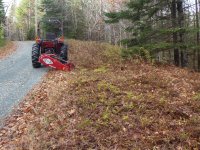
My sickle bar has a single acting cylinder - that is there is only one hose and port on the cylinder. On the ram end in this case. It requires fluid under pressure to push back or retract the ram which raises the bar towards vertical. When the pressure is released gravity pulls the bar down towards horizontal as the fluid in the cylinder flows in the reverse direction out of the cylinder and back into the tractor tank.
The valves on the rear of the tractor and loader are dual acting - push the lever one way and one side of the port is pressurized and the other side has no pressure and is a return to the tank. So pressurized fluid moves into one end of the cylinder while the fluid in the other end gets pushed out and flows back into the tank as the ram moves. If you have a single acting cylinder with one hose, like on my mower, you can connect that hose to either side of a dual acting port. Push the lever one way and pressurized fluid flows into the cylinder and the ram moves. The other port is connected to the tank but nothing happens because there is no connection on that port. Then push the lever the other way. Now the port with the hose gets connected to the tank and gravity moves the ram which pushes out the fluid and it returns to the tank. But, the other half of the port, w/o a hose connection, gets pressurized. The fluid has no where to go so the pressure builds until the relief valve opens giving the pressurized fluid a return path to the tank. In general it is not good to put a system into pressure relief for long periods of time because it heats the fluid. But for low duty cycle situations like an occasional mower height adjustment there is no danger of over heating the fluid. Hope this helps,
gg