New Mods to Loretta's 284 Jinma

   / New Mods to Loretta's 284 Jinma #41  
Thanks Chris,
Those stabilizer braces to rear end are super beefy and robust.
Even more so than what is on the Kama with the Koyker loader. There is always more than one way to do something. I chose this way but your way works too, of course. I copied what Koyker had done for their loader stabilizers to the rear end except did not make the additional plate to sandwich in between.

One thing I wanted was to have the rear section be separate from the loader arm tube for disassembly purposes. But any surface that was to be bolted, I wanted the butt plates to take the stress... butting up to each other in the direction of the load. There is no chance of bolts sliding out of position that way even if they loosen slightly. They only hold the plates in positon and are not used to hold the force or stress themselves.
Thanks for your keen observation.
Rob-

Yea, got you on the removal thing. Mine are totally removable also. I like yours much better than mine, they are twice as nice. I built mine with very little tools at the time. All I had for a welder was a little HF 110 Volt Flux unit. If I were to do it over I would make something similar to the ones you made. I have since gotten a Hobart 187 Mig and a Miller AC/DC Stick Welder so I have more choice.

Either way, nice job. You really need to be loaned out to Jinma for a few weeks.

Chris
 
   / New Mods to Loretta's 284 Jinma
  • Thread Starter
#42  
I got a lot of work done today so I'm pretty pleased with the way things are shaping up.
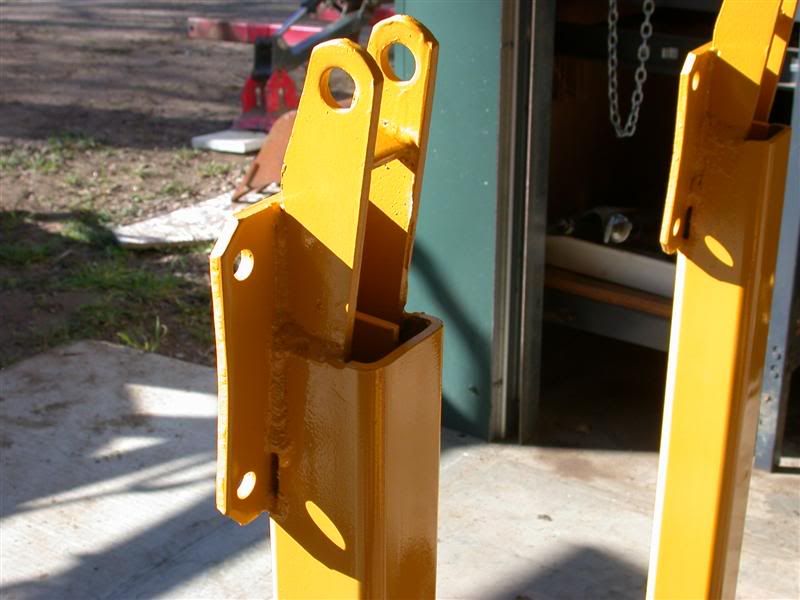
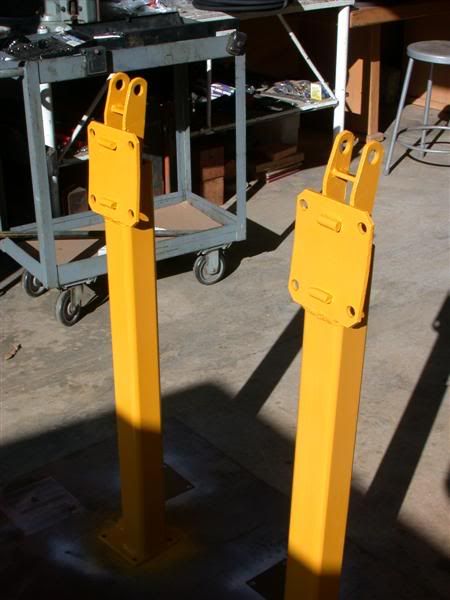
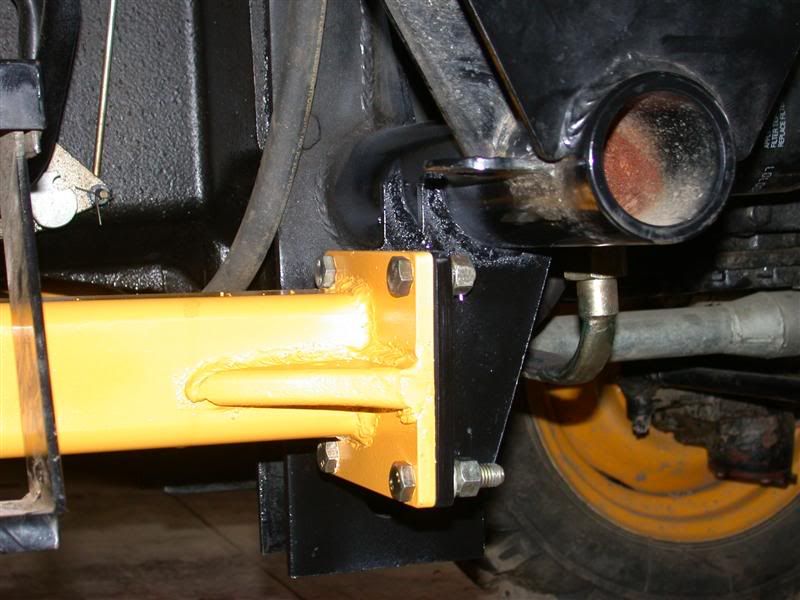
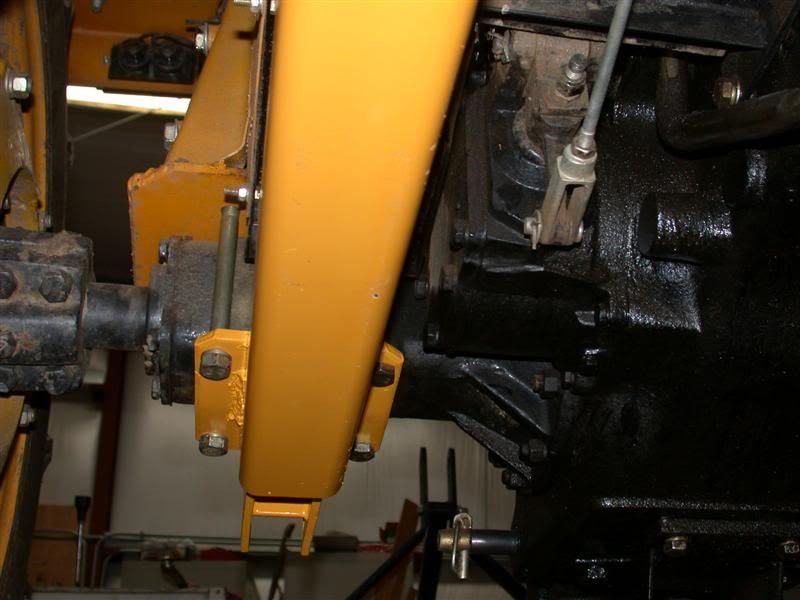
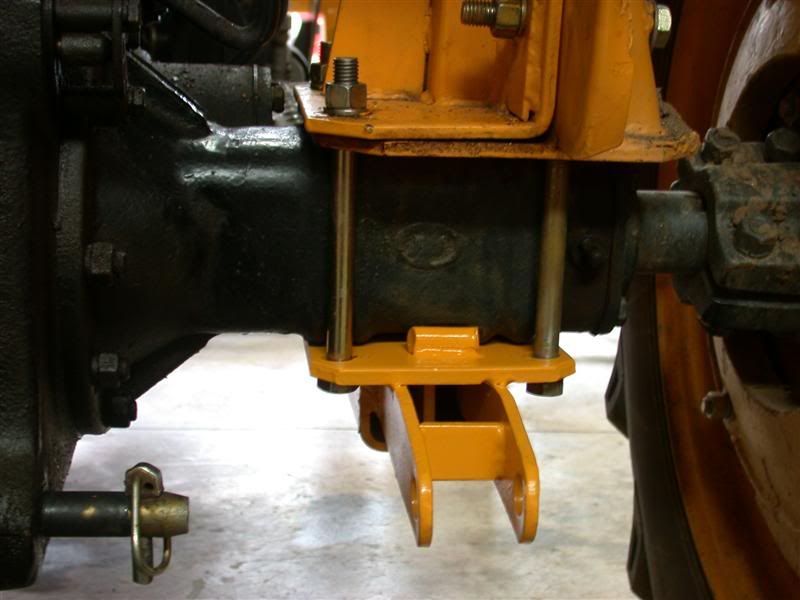
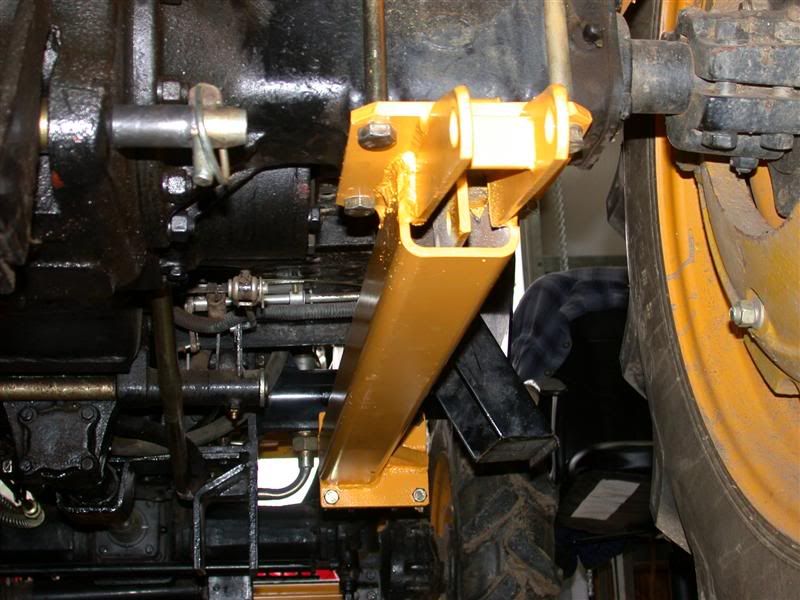
I finished the rear FEL braces completely and got them installed back onto the tractor today. Those stabilizer braces to rear end came out really sweet and I'm very happy with them. I had to paint everything in the morning first though. Here are some shots of the painted braces. You were wanting to see what the other side looks like. The welds on the front round tube still don't look that good ... dang.

 
   / New Mods to Loretta's 284 Jinma
  • Thread Starter
#43  
I loosened the bolts holding the ROPS and fender together so the rear plate would install easier.
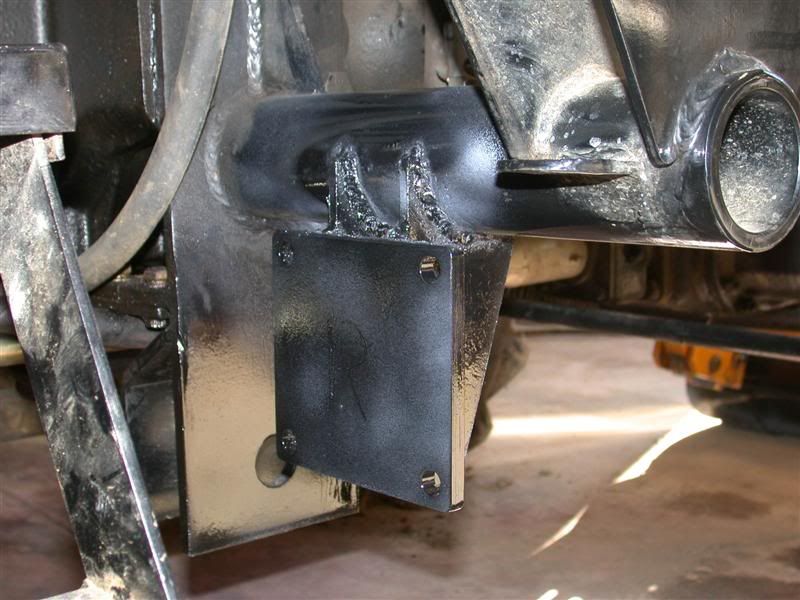
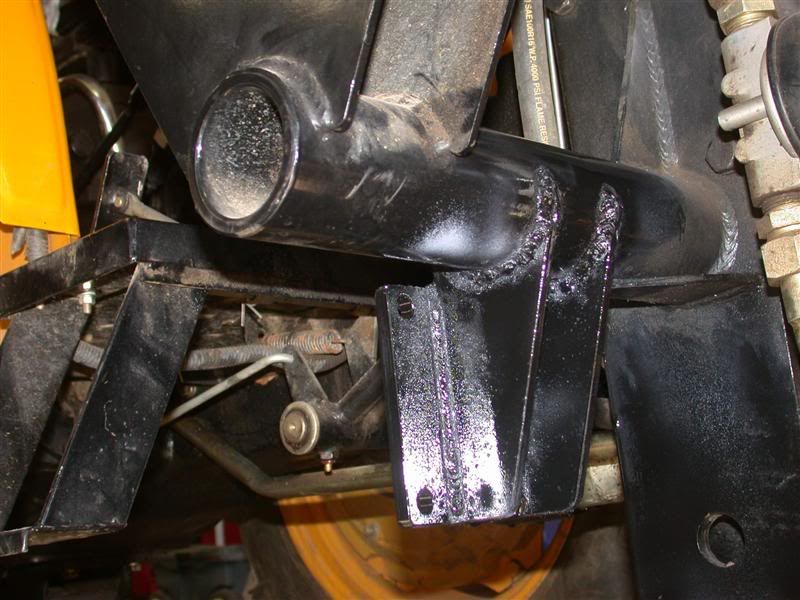
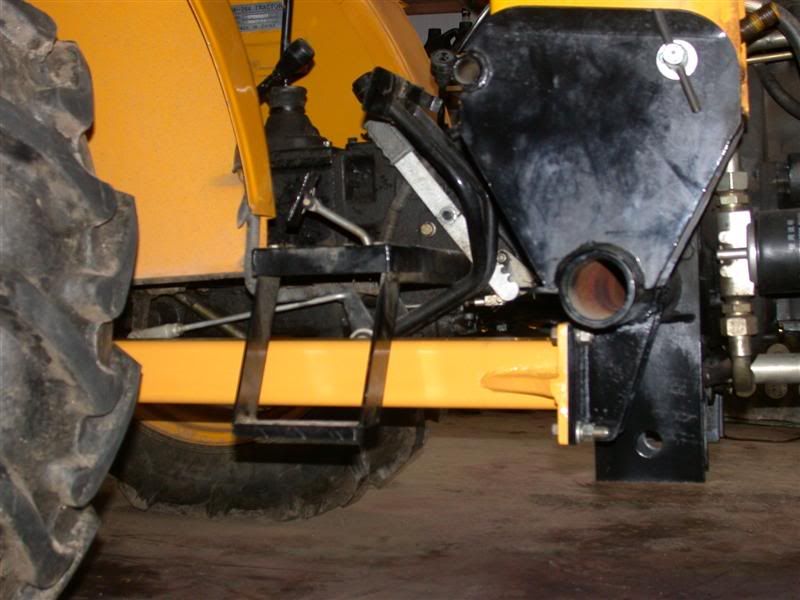
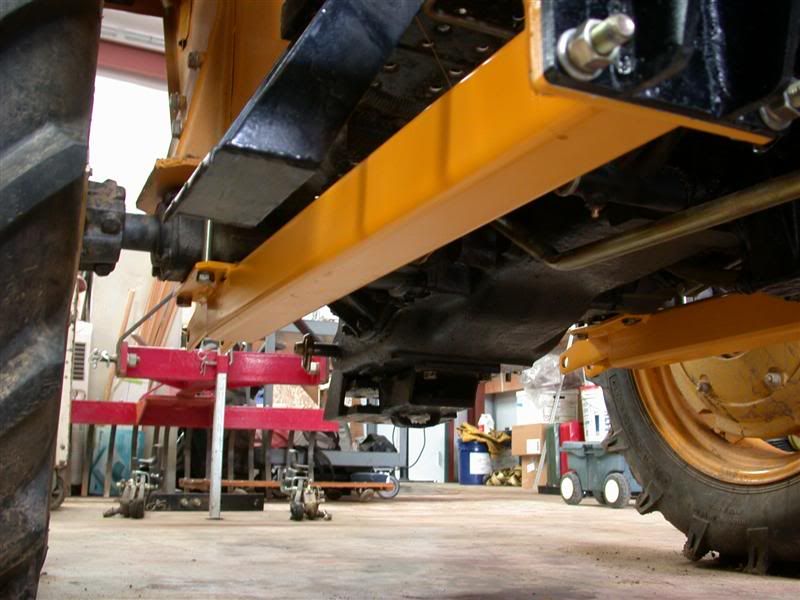
I also hung the front connection with bolts loose. Once I got those heavy suckers suspended, I torqued it all down again. They fit in there great! Here are some shots of them installed. Shown are the rears bolted to the front, underneath and shots from the rear underneath.
Notice the scrap scarifier gussets on the bolt plate.


Finally, a couple side views.
All in all, this mod came out very good and should do a lot for the stability of FEL use. I recommend adding these rear FEL braces if your loader is not equipped with them.
Rob-

 
   / New Mods to Loretta's 284 Jinma
  • Thread Starter
#44  
That's not all I got done today though.
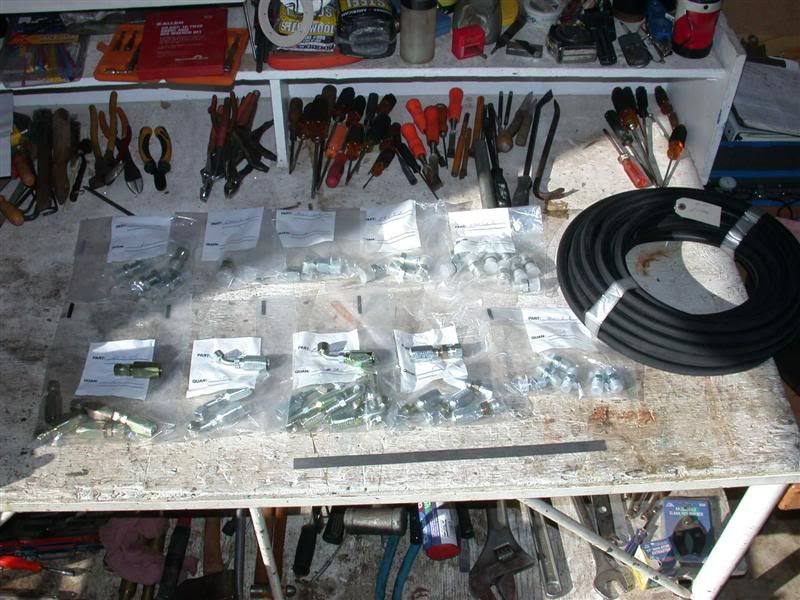
I opened the box from Discount hydraulics and laid out all the fittings and such.


Not all the fittings are there yet so I can't complete the plumbing part yet.
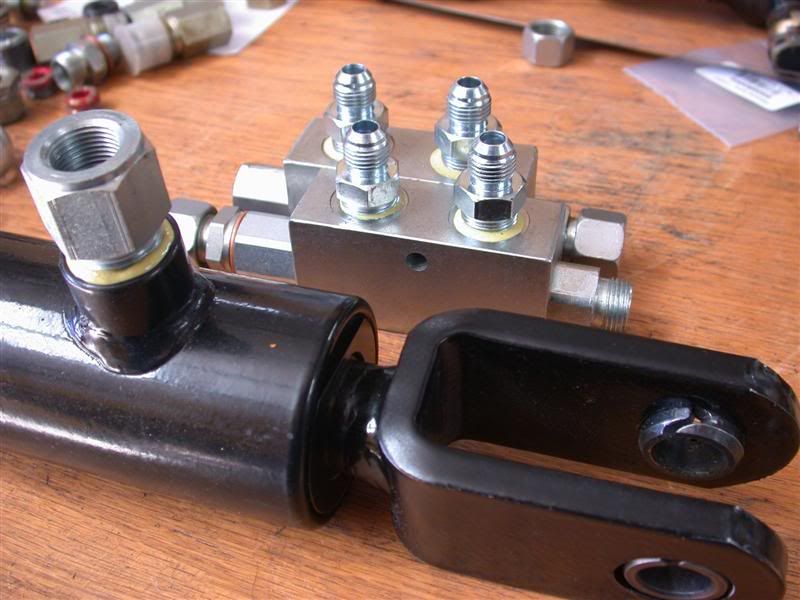
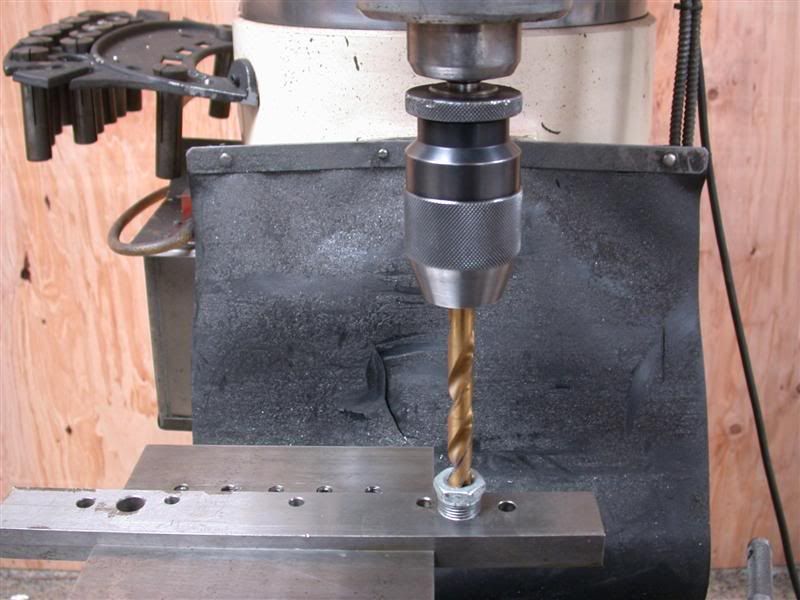
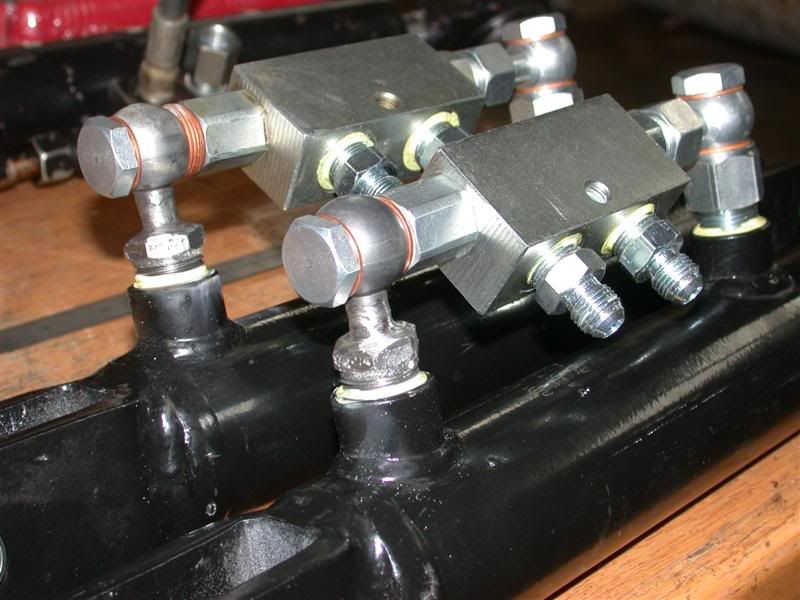
But I was able to finalize how to make those DPOCV's attach to the side link cylinders. I needed a male 1/2NPT to female BSPP for the cylinder port on one port of the cylinder. I got a couple 1/2NPT reducers and drilled out the inside to go in the other port. I made a fixture so they would be straight when I drilled the hole in them. The hole will fit the 12mm banjo fitting.

 
   / New Mods to Loretta's 284 Jinma
  • Thread Starter
#45  
You can see what I did.
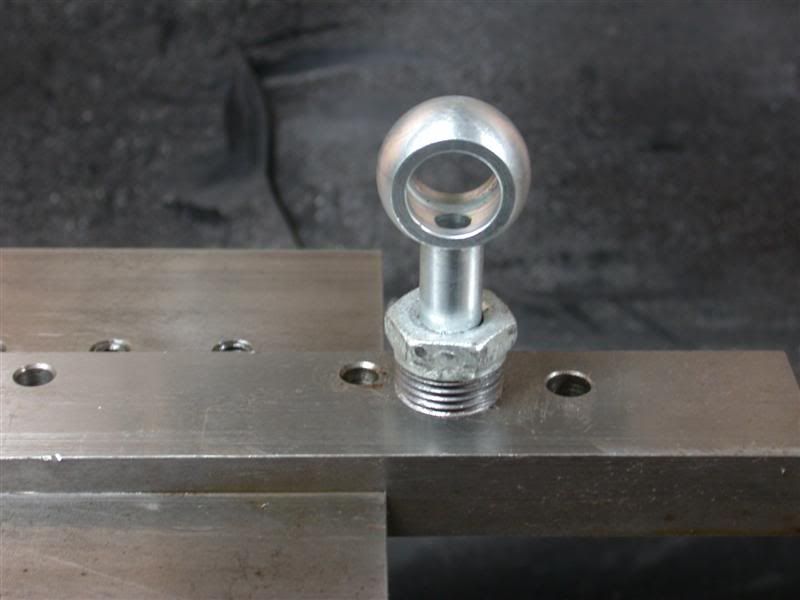
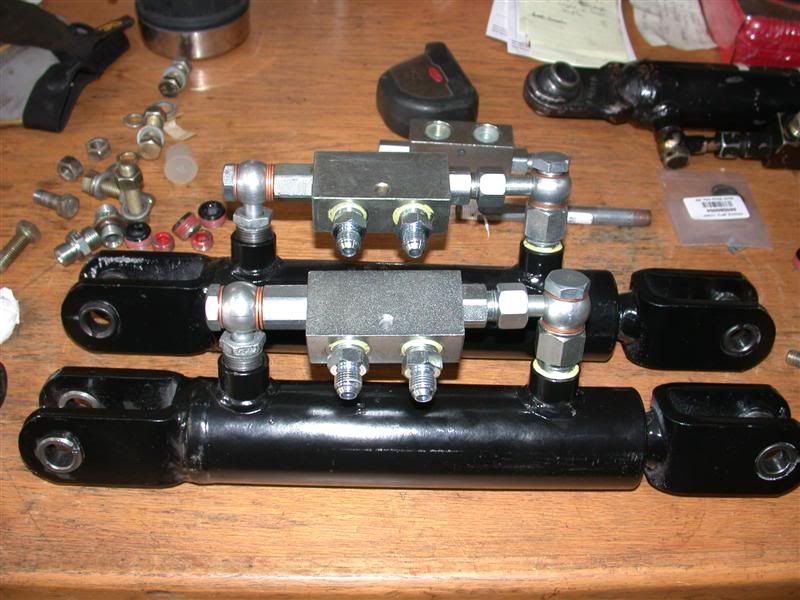
I have one of the banjo fittings going vertical into the left port. I will weld that fitting to the 1/2NPT reducer I drilled out. The other banjo fitting is horizontal into the check valve (as designed) with the banjo bolt going into the adapter (into the cylinder port). This way I was able to complete my hard line bridge. I did have to assemble it once to determine where to position the banjo fitting which was going to be welded. I also had to get it facing the correct way to meet up with the check valve. I did that by tightening it without tape and then added several layers of Teflon tape to be sure to get a good seal when facing the correct way. Second photo shows the banjo fittings welded to the 1/2NPT reducers. Also shown are the BSP taper going into the check valve to JIC 6 for my hydraulic hose ends.
This was a big step for me and I'm glad I got it figured out.


Last today was to turn up some pins to fit the tractor swivel balls.
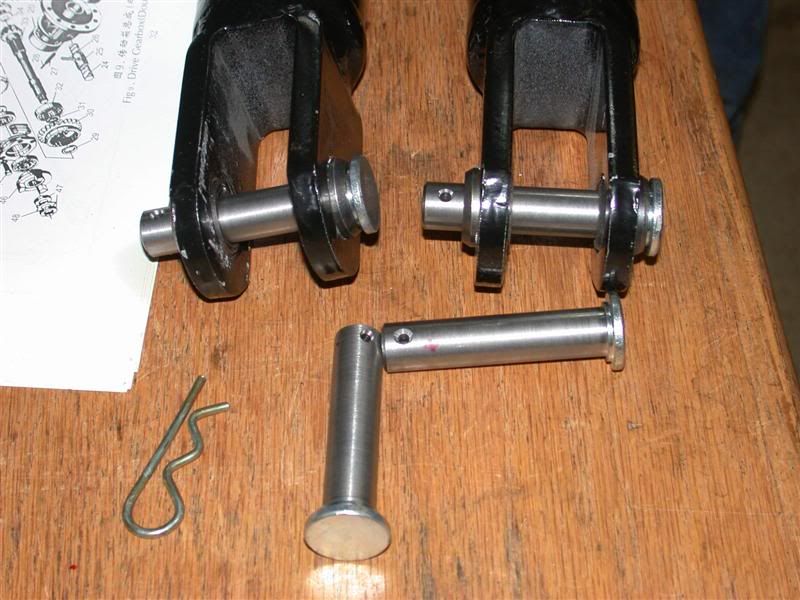
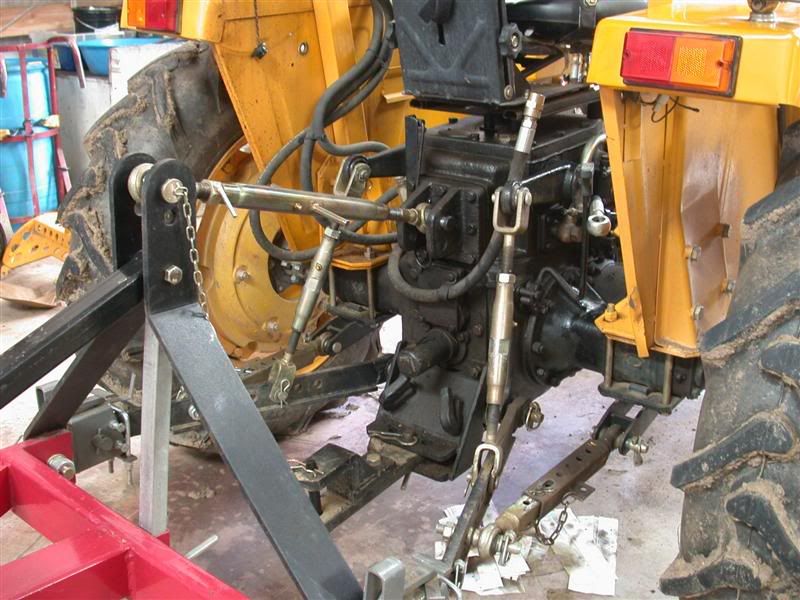
I couldn't use the original pins because I used reducer bushings that Tim gave me about 2 years ago. The bushings stick out a little so they had to be longer. Thanks Tim, I finally put them to good use. You can see them in the first photo above and below. I used the 1" diameter pins that came with the cylinders and turned them down. Then I drilled a lynch pin hole in them. The last photo shows the side link cylinders (with DPOCV's) on the tractor ready to get plumbed up.
Maybe I can start on some of that tomorrow?
Rob-

 
   / New Mods to Loretta's 284 Jinma #46  
Rob:
I haven't seen traction bars like that since drag racing in the 70's.
I didn't see an engine swap on your todo list. How much power has Loretta talked you into ?
 
   / New Mods to Loretta's 284 Jinma #47  
Rob

Why do you need the valve on top of the hydraulic cylinder? What does that do differently then just hooking up directly to the cylinder?

Shane
 
   / New Mods to Loretta's 284 Jinma #48  
Why do you need the valve on top of the hydraulic cylinder? What does that do differently then just hooking up directly to the cylinder?
Dual Pilot Operated Check Valves. They meter hydraulic flow in and out of the cylinder to control systemic leakdown. On a new or well-maintained tractor, they're just "nice to have". Where they come in handy is on older machines with weak/leaky hydraulic systems. Sometimes it's cheaper to install check valves, than it is to overhaul the hydraulic system.

What impresses me more, is Rob's investigatory prowess - in being able to actually find a domestic source for DOPCVs that small.

//greg//
 
   / New Mods to Loretta's 284 Jinma
  • Thread Starter
#49  
Shane,
Greg explained most of it. (Thanks for your input Greg!)
I explained in a previous post some of the things double pilot operated check valves do. Like Greg said, they hold the cylinder in the position you put it. There is no (or very little if any) leak down at all. There is no movement in the hydraulic cylinder once you set it's position. Leak down is caused by small leaks in the valve or even in the cylinder itself where fluid seeps by the seals and lets the cylinder move. I've found that most cylinders are very good but the valves let fluid pass a little, so I like using the check valves. If the cylinders themselves leak, the check valves won't help... but generally it's the valve controlling the cylinders where the problem is.

Another benefit from hard plumbing them onto the cylinder like I did is that if a hose ever ruptures, the cylinder will still stay in it's position ... it won't collapse. It's also a "safety" feature in that respect. One drawback is you can't "float" a cylinder with DPOCV's on it because it stays locked until you move it. Some guys don't like them for that reason. But that is no reason not like or dislike the check valve ... it's just another feature that may not apply to your kind of cylinder use.

For me, I do a lot of grading and road work around my place with the boxblade.
After hours of dragging the boxblade, the setting never changes. That's important to me so I don't need to constantly adjust the cylinder to get the boxblade back to where it was a perfect setting. It takes some fiddling around to get the desired levelness and tilt of the box for crowning or smoothing, so it's a benefit for me. I don't use float in the top link or side link cylinders, I use the float from the 3pt to get that. I can see where float on a top link would be desirable when mowing with a rotary cutter though. But I have a slot for my mower that provides some float so the mower can flex back and forth.
Some have flexible links.

I installed them (dpocv's) on my backhoe stabilizer legs because they were constantly leaking down when I was digging. I was constantly "bumping" the stabilizers to keep the backhoe up. It was a small annoyance but more so, not good to operate the backhoe when it was not stable on the ground. After I added them they don't leak down at all. Another thing is when I park the 3pt backhoe, it stays up in the exact position where I set the legs. It's stayed in the same position for up to six months before I used it again. Before, I would come back to the property and it was flat on the ground! I bought these DPOCV's fro Mark at CCM.
 
   / New Mods to Loretta's 284 Jinma #50  
Got it thanks Rob and Greg.

Shane
 
   / New Mods to Loretta's 284 Jinma #51  
Rob, What a good step by step. Your Kama came with a brace you said. I saw you added the two buckles to the rear. Is that to add laderal stability or were they on the tractor before the brace? The check valve is a good idea. You're full of good ideas. Richard
 
   / New Mods to Loretta's 284 Jinma
  • Thread Starter
#52  
Rob, What a good step by step. Your Kama came with a brace you said. I saw you added the two buckles to the rear. Is that to add laderal stability or were they on the tractor before the brace? The check valve is a good idea. You're full of good ideas. Richard

Thanks Richard,
I'm not sure what you mean about adding the 2 "buckles" to the rear?
Do you mean on the Kama or the Jinma? And exactly what do you mean by "buckles"? I guess I'm not clear on your question...
Rob-
 
   / New Mods to Loretta's 284 Jinma #53  
Howdy Rob; i've been reading some of yer posts. You shurely have fixed up yer beloved wife's tractor mighty nice. She is a Beautiful Machine.......................:D:D...............................:cool::cool:


Have a Great Day

Jack
 
   / New Mods to Loretta's 284 Jinma
  • Thread Starter
#54  
Howdy Rob; i've been reading some of yer posts. You shurely have fixed up yer beloved wife's tractor mighty nice. She is a Beautiful Machine.......................:D:D...............................:cool::cool:


Have a Great Day

Jack

Thanks so much Jack!
I gotta make sure it's in better shape than mine or she will kill me.:D
Really, we do so much work together on our little ranch that it makes sense to have her tractor as functionable (is that a word?) as possible. Otherwise, with the variety of implements and terrain we encounter, we'd spend half the day adjusting all those turnbuckles. The added strength of the rear supports are a big safety margin for when she uses her loader bucket and grapples. The other items are, again, to make it easier to do stuff while working the tractor or for maintenance. That includes having a tool box for whatever pops up when we're out in the trees working.
Thanks for checking out the thread!
 
   / New Mods to Loretta's 284 Jinma #55  
Rob, On the page before this one entry #45 the last picture. There are struts or buckles coming from the rear end of the new brace. I think you put up a picture, earlier in the thread, of the tractor before the brace was added. I'll look for that.
 
   / New Mods to Loretta's 284 Jinma #56  
Rob, Whatever you call them were on Loretta's tractor entry #23 before you installed the braces. What do you call them? They are attached to the end of the new brace. Richard
 
   / New Mods to Loretta's 284 Jinma
  • Thread Starter
#57  
Rob, Whatever you call them were on Loretta's tractor entry #23 before you installed the braces. What do you call them? They are attached to the end of the new brace. Richard

Hi Richard,
I know what you're talking about now.
Those "buckles" are the attachment point for her lower link stabilizers or sway links. The stabilizers are the plated gold looking pieces that keep the lower links from swaying side to side. Those "buckles" or attachments were already on the plate. I didn't add those. I only added the square tube going to the front brace.

Here are some photos.
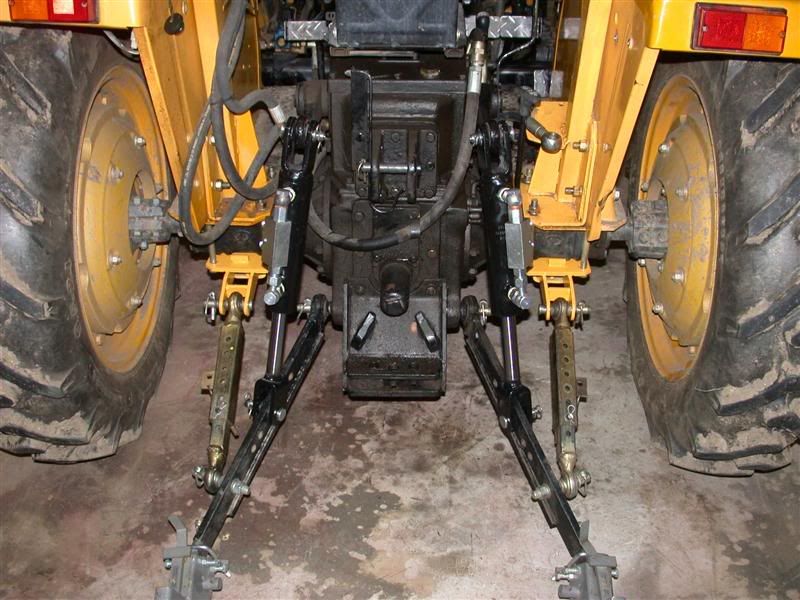
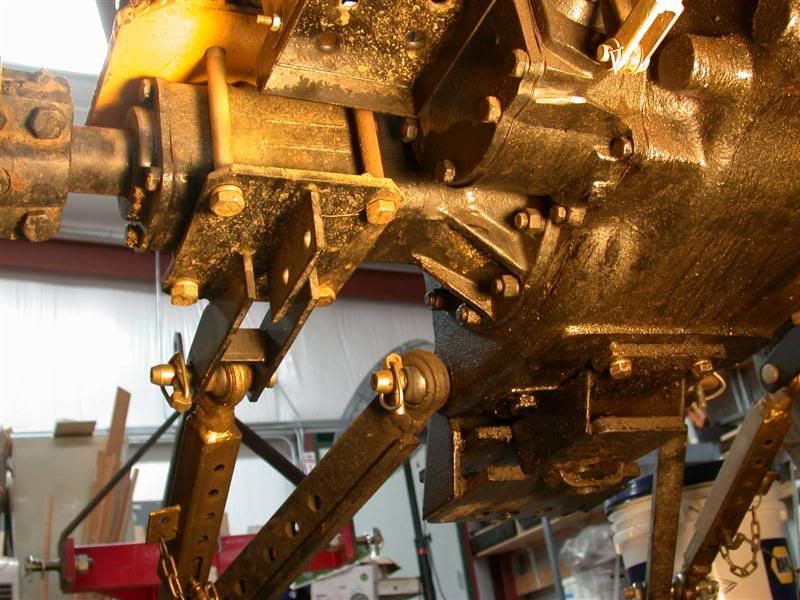
In this photo, you can see those buckles and they are still black. They were factory. They were welded to the plate which bolts to the bottom of the axle housing. You can see the sway links or stabilizer bars attached to them. This is looking from the rear.


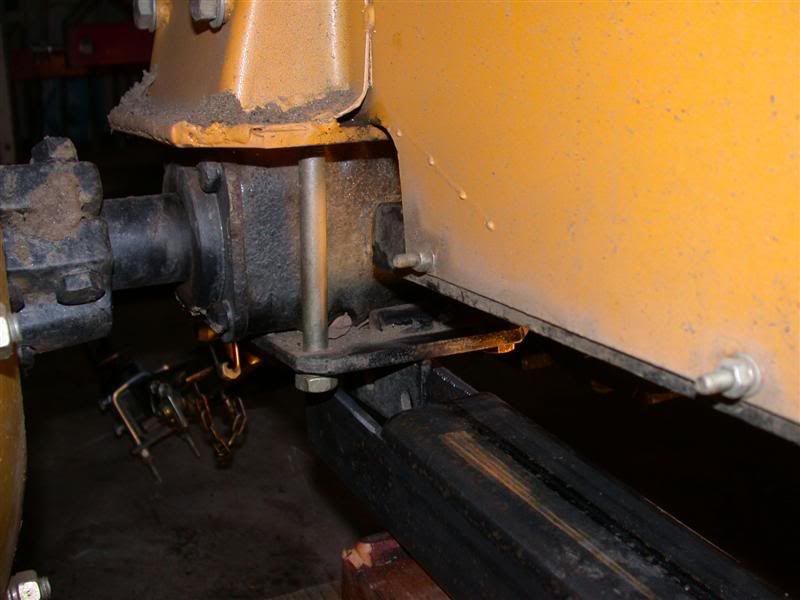
These photos below show them looking from underneath front to rear. Again, they are still black. That plate has those buckles attached to it on the rear of it. You can clearly see them sticking out to the rear of the tractor, with the stabilizer bar or sway link attached. In the second photo, you can see that I'm fitting the square tube to that plate, to show how the tube will be welded to it.


These photos below show the square tube (now painted yellow) already welded to that plate which has the buckles on it. The first one is a similar view from underneath front to rear but now has the yellow tube welded to it. The second one shows a close up view from the rear and the third one shows a view from the rear of the entire welded plate and tube.
Hope that answers you question.
Rob-

 
   / New Mods to Loretta's 284 Jinma #58  
Yes it does Rob, I went back after the post and looked at your photo progression, you showed the rear of the tractor before worked began and in stages to completion. You make this fun Rob! Bet its raining like crazy at you place right now. but you still have some hydraulic work to do, inside work. We're getting the weather here first rain and now snow, looking for 4 to 5 feet. Richard
 

Attachments

  • winter 015.jpg
    winter 015.jpg
    140.3 KB · Views: 187
   / New Mods to Loretta's 284 Jinma
  • Thread Starter
#59  
Ha ... thanks Richard! Hope you don't get snowed under too bad.
You're right, back to the hydraulics for the Top and Tilt mod... I got most of the parts in but I'm still waiting for the rest of the back order. I need those 45 degree hose ends to connect to the new Prince valve so the hoses will route correctly. Not sure when they'll arrive?

I did get a chance to do a little plumbing though, so I'll share the photos of that.
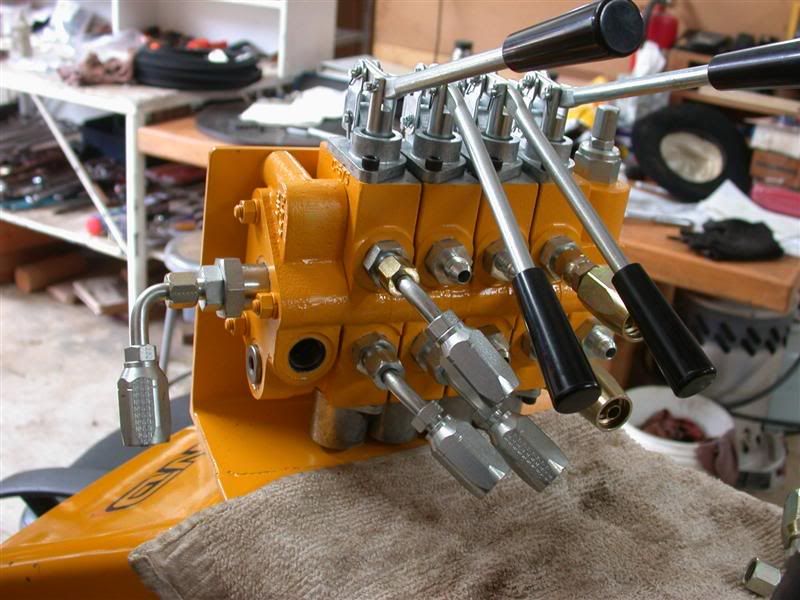
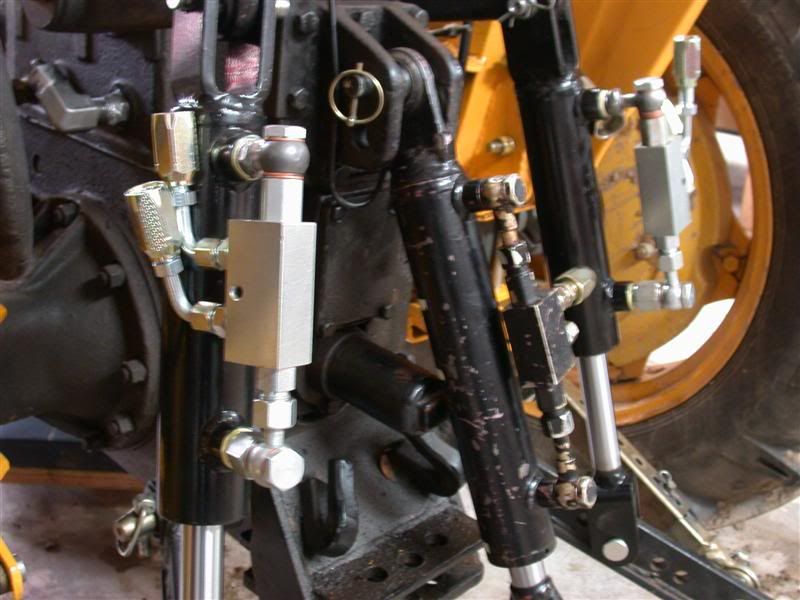
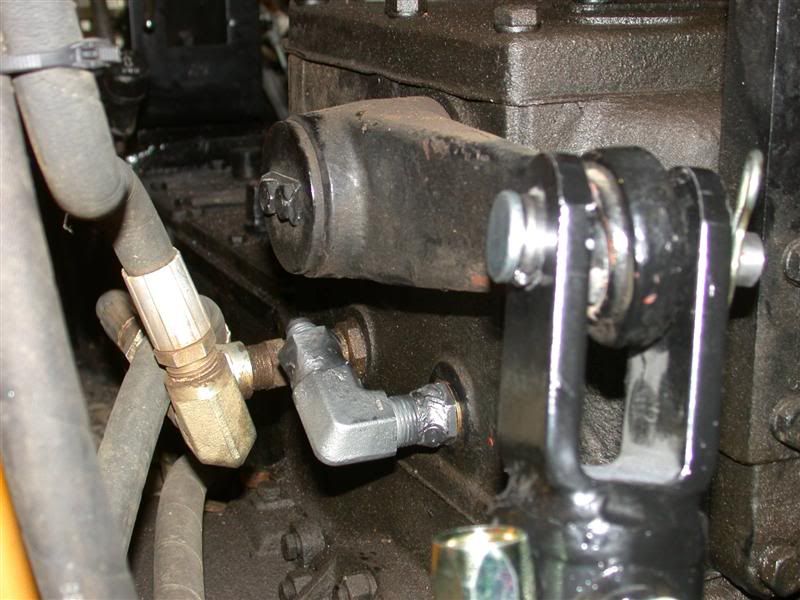
The photos below show what I had in mind, but the fittings are not in stone yet since I need to make sure they will all route properly and are able to rise and fall without restriction. First one shows possible hose ends on the valve. Second one shows the side links and top link ready to get hoses. Third one is a return to tank fitting I made. There was a metric plug in the hydraulic tank there. I took it out and drilled out the center and welded a fitting to it so I could use JIC hose ends there.
Rob-

 
   / New Mods to Loretta's 284 Jinma
  • Thread Starter
#60  
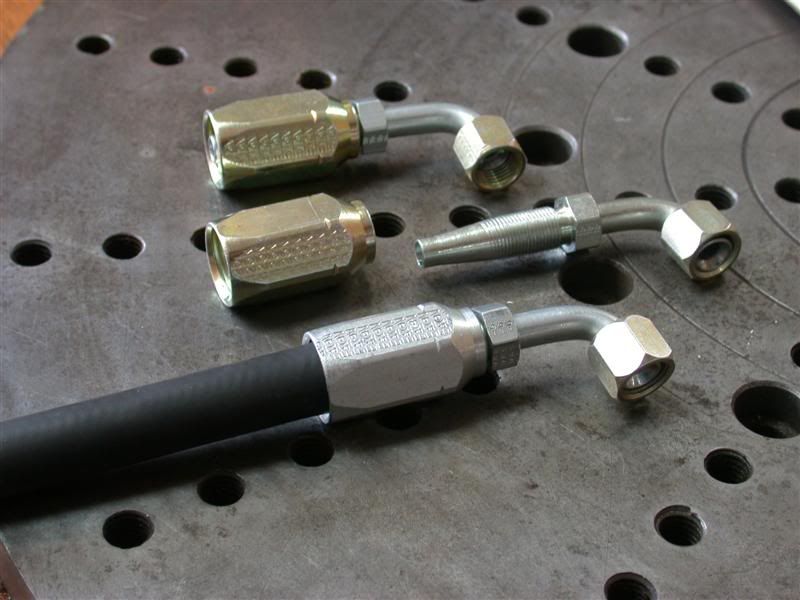
What might be of interest is how to make up the hoses using the Re-usable hose end fittings.
I was really fortunate when Brian (MountainViewRanch) and his brother Mark came to stay at my place. We were talking about what I was doing to Loretta's tractor and Mark pointed out how reasonable the re-usable hose ends cost compared to getting the hoses made. When having a hose made up at the hydraulic dealer, the cost for custom hose ends to fit what you need (90's or 45's) comes out to the same or even more than using these re-usable ones. Plus, when I got hoses made, I always erred to the long side so I'd be sure they fit. If you screwed up the length, you are stuck with the hose you bought but with re-usable ends, you can cut the hose a little to take out any unnecessary length.

The cost is about 8 to 17 bucks an end (depending on what kind) and the hose in bulk feet is about $1.30 per foot for 3/8" hose. I got all the fittings from Discount Hydraulics
They are just as reliable and the beauty of it is you can make your own hoses right in the shop...exactly like you want. You can make them the exact length and also have any 90 or 45 degree fittings face the exact way they need to face for screwing onto the fittings. For example, a 4' long hose with a straight JIC re-usable end on one end and a 90 degree on the other would cost $28.20. And it will be a perfect fit to your application.

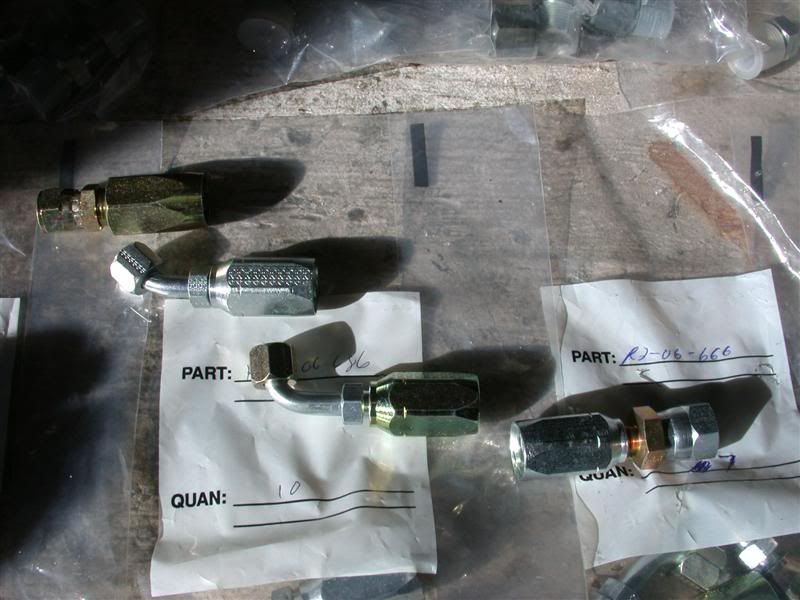
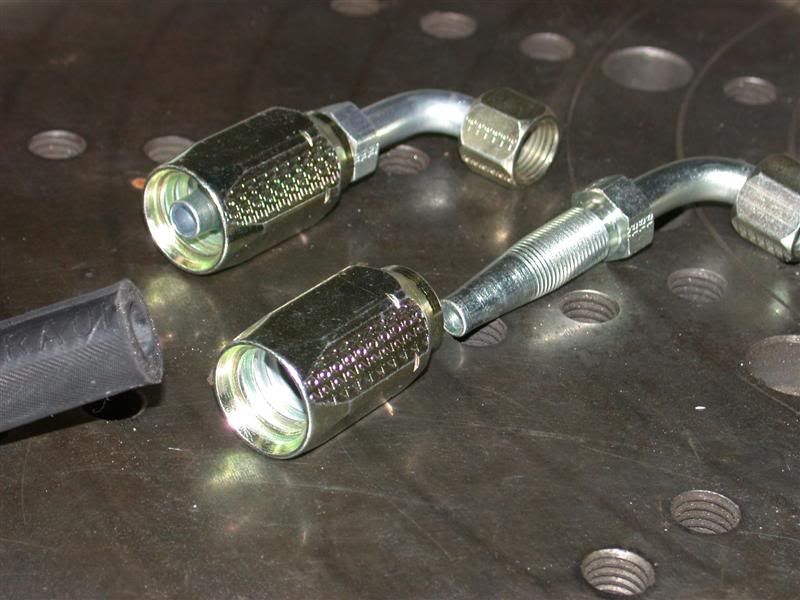
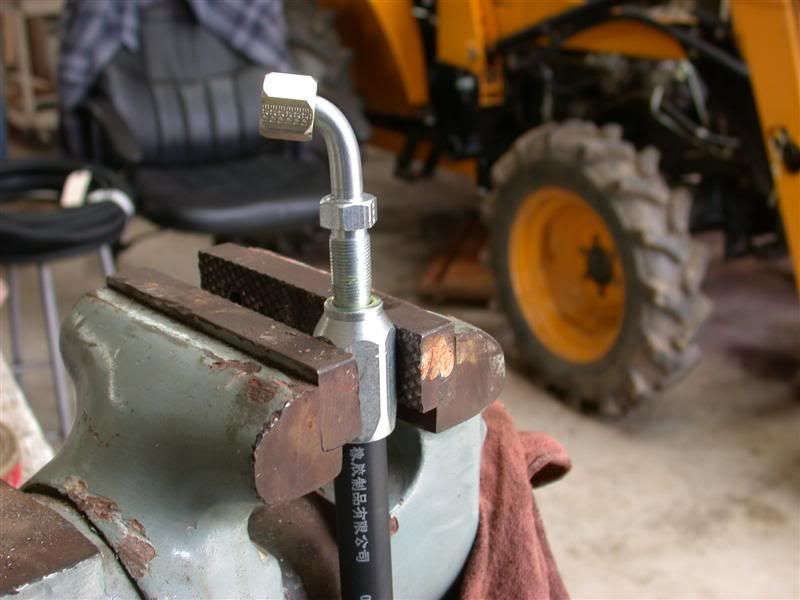
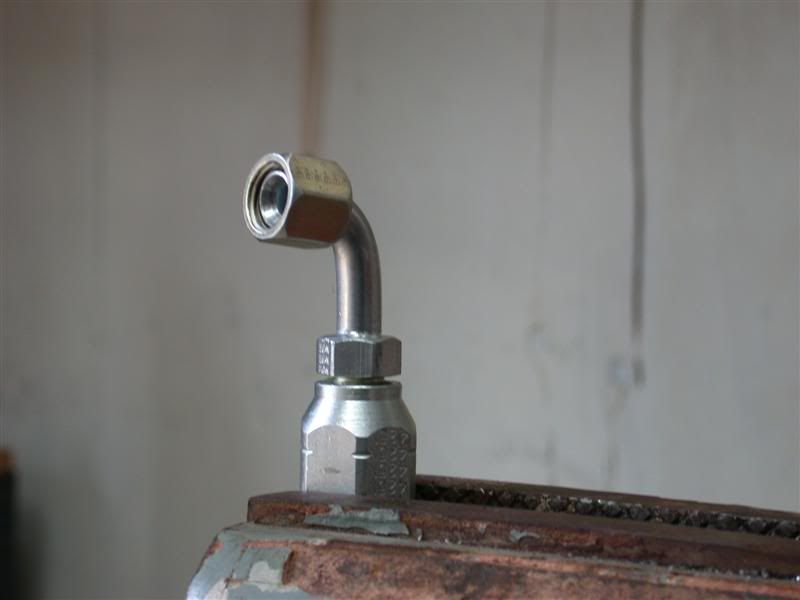
Here are some photos showing the re-usable hose ends I used.
Shown is the hose and end fittings. What you do is screw them apart. Then you take the housing and screw it onto the hose. You screw it on counter-clockwise because those are left-handed threads. You screw the hose until there is about a "thumbnail" of gap before it bottoms out. Then you take the fitting and screw it into the inside of the hose until there is the same gap. I used .030" as an average for the gap. Also use some lubricant to screw together. I used (2 wire) R-2 4000psi hose with R-2 re-usable hose ends. You must use the correct fitting depending whether it's a single or two wire hose.
Rob-


Marketplace Items

2023 MADJAX GENESIS 300 ELECTRIC CART (A57192)
2023 MADJAX...
Ryan Greensaire 24 Walk Behind Aerator (A59228)
Ryan Greensaire 24...
2014 International WorkStar 7300 4x4 Altec AA55E 55ft. Material Handling Bucket Truck (A60460)
2014 International...
Hydraulic Liftgate (A59230)
Hydraulic Liftgate...
2008 TCE MANUFACTURING 20GN GOOSENECK GEN TRAILER (A58214)
2008 TCE...
NEW HOLLAND 706 30 INCH 3PT DIRT SCOOP (A57024)
NEW HOLLAND 706 30...
 
Top