Metal Thickness?

   / Metal Thickness? #1  

BxB301

Member
Joined
Jan 27, 2021
Messages
42
Tractor
Lincoln
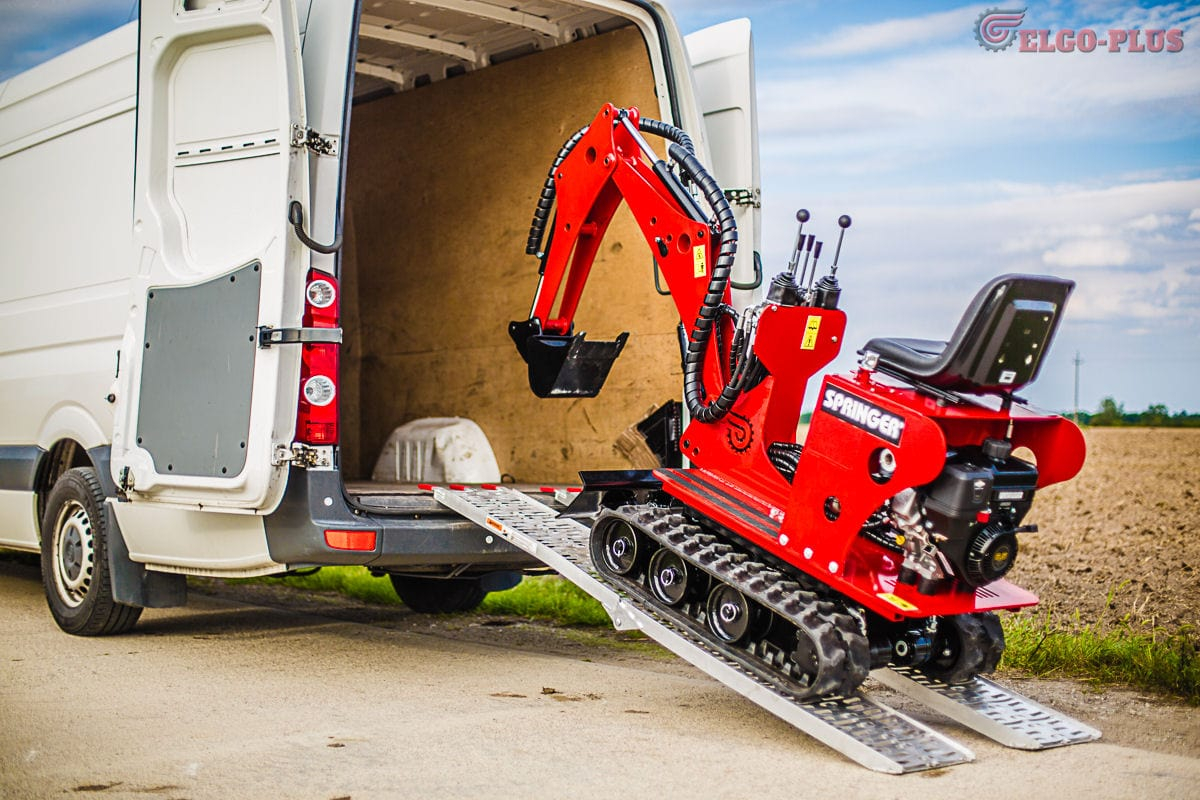
Im going to try and build myself a mini digger, similar to the one pictured.
Its a small machine with just under a 2x4 base, powered by a Honda GX160.
Without the tracks - given the cost of the tracks, motors, roller wheels, sprockets, rotary union, and a turret bearing large enough for the union, it'll have 2 roller wheels and 2 legs.
Anywho, I was going to use 1/4" steel plate, but the pictures look like it might be a 5/16 or 3/8 (or, given the country of origin, 8 or 10mm)

Think 1/4" would work?
I have a Weld-Pack 180, which technically can weld up to 1/2", however as I'm not a pro-welder, I'm more comfortable with 1/4"; but I don't know if it'll be strong enough.
Also, cylinder bore size, should I do 2", or smaller?


springer22.jpg
 
   / Metal Thickness? #2  
Seems like an interesting project. What service will you do with it?

I think 1/4 is pretty thick... what parts are were you considering going so thick with?

Thats also a TON of weight.

I got sent to Brokk school several year ago to be a certified remote controlled excavator/breaker operator. This thing reminds me of those Brokks. They were fun to operate, but also dangerious. Many times, I found myself deep under a building, digging out footers. Running an excavator on my knees remotely. Or standing near the edge of one roof, looking down at my Brokk being suspended from a crane hammering out a different roof below me.

Anyway, thats why I asked about the reason you want one. What small, confined space will you be using it in? Would a backhoe or mini-ex serve you better?
 
   / Metal Thickness?
  • Thread Starter
#3  
I was thinking about using the same material on the whole thing (or, "body)
I have about 2 sqft of 5/8th plate, anything else I would need to buy.
Local metal shop doesn't have scrap, and only sell 4x8 sheets. One sheet should do it, and given the cost, I only want to buy one.
It looks like they did the same thing here, as the boom and base are all the same thickness.

Ill be using it in the Arizona sand to dig trenches for sprinkler pipe, and a future block wall footing. Past that, just random digging projects.
I have a ditch witch now, but its absolutely miserable in the sand. Its like Atreyu trying to pull the horse out of the mud in The Neverending Story.
I've thought about mounting a winch to it, so it can pull itself along. If I can successfully build this, selling that clunker should mostly pay for it.

A mini excavator would 100% serve me better, but they are $20,000 on the cheap side; but most listing I see are $28k+
Even used Bobcates are over $30k locally.
Give the cost, storage, upkeep, this tiny machine would serve me better.
(also, this new is about $14,000 + shipping and import)

Pic here, looks a bit thicker than 1/4"
I like that the hydraulic tank is the seat, but I don't see a filter....

elgo-plus-08-2018-021.jpg
 
   / Metal Thickness? #4  
Sounds "Penny wise and pound foolish" if you are going to spend 1,000 hours designing and building a machine when you don't even have a clue about materials requirements to save a couple hundred dollars in machine rental fees.

Construction equipment these days are appliances like toasters and you are paying by the pound weight. It's not like an iPhone that costs $80 in parts that sells for $1,500.

If your goal is a fun expensive hobby then I take back these comments. What I glean from your initial posting is you want to dig a hole and don't want to spend $$$ on a new machine.
 
   / Metal Thickness? #5  
Sounds "Penny wise and pound foolish" if you are going to spend 1,000 hours designing and building a machine when you don't even have a clue about materials requirements to save a couple hundred dollars in machine rental fees.

Yeah... I have to agree with this...

If you enjoy tinkering for its own sake, then by all means, but designing and building your own excavator is not a way to save money. Of course, you can build something which will work, but, for how long? And how well? Very experienced equipment manufacturers spend immense amounts designing and constructing competitive, desirable equipment. You may be inspired to improve a small detail, but there is no way you can "better" or "economize" a whole machine.

Letting alone material thickness for a minute, boom elements must be tubular, rather than parallel plate for torsional stiffness. Where parallel plate is the only way (at the joints), it's got to be thick to be stiff.

The machine pictured is certainly "cute", but I doubt very practical compared to renting a "real" mini excavator. My first observation is that it has only one hydraulic pump. That means that if more than one function can be run at once, it'll steal hydraulic from another function, so it slows down. There is little "fluid motion" with this type of system. Digging with one function at a time is painfully slow. Three pumps are the common arrangement, with that, you can dig smoothly. Another observation is that there is a minimum practical weight for mini excavators. Too light is handy for getting it into the back of a van, but it won't have the oomph to dig into hard ground, or resist pulling against the bucket (you'll pull it along the ground, rather than digging a trench). And, when it breaks, your jobsite work just topped, while you [try to] load it up, to take it home to tinker more. The rental machine gets returned, and they replace it with a working one.

Sure, tinker and build to your heart's content, but if you value your time, and have a job to do on time, use a proven tool....
 
   / Metal Thickness? #6  
Your homemade excavator is going to have close to no resale value and judging by how things are going so far I doubt it ever moves dirt. Do yourself a favor and just go buy one. You can start work tomorrow and it holds value. Equipment manufacturer aren’t making tons of money to assemble it anyway. You’d spend the asking price to buy the material.
 
   / Metal Thickness?
  • Thread Starter
#7  
Sounds "Penny wise and pound foolish" if you are going to spend 1,000 hours designing and building a machine when you don't even have a clue about materials requirements to save a couple hundred dollars in machine rental fees.

Couple hundred?! Its $500 a day, or $2000 a week, and you have to put your name on a waiting list where you get notified the evening prior to the machine delivered.
AND! If you don't have a 1 ton truck and trailer, you have to pay the $500 delivery fee. I live within viewing distance of the rental yard, and they wont let me drive it here; but when they deliver it, they drive it. Jerks

If your goal is a fun expensive hobby then I take back these comments.

;-)

If you enjoy tinkering for its own sake, then by all means, but designing and building your own excavator is not a way to save money

Calling this thing an excavator is a huge stretch. More like a power assisted shovel.
Now, Aside from the drive train, which I said I was ditching anyway - I could buy all the material, hydraulics, plasma cutter, a better welder, and a predator engine to power the thing, and still be well under the price of a new one.
Not only that, I think if I did use 1/4" material, and it bent, I would still have money left over to build version 2 out of thicker stuff.

Very experienced equipment manufacturers spend immense amounts designing and constructing competitive, desirable equipment.

Maybe the scale of the thing isn't coming across. The operator platform (or cab?) is less than 2'x4'
I put the images into Fusion 360, and calibrated using the known base dimensions to get the dimensions of the boom and arm, I don't remember what they are, but the boom is just under 3' long. Where its pictured driving into the van, at that stance its probably 7' long.

I agree on the money spent on every aspect of equipment, but this is not a John Deer or a Caterpillar, or even a Kubota. This is a cheaply made Chinese machine, being exported and rebranded all over the world. (except the US it seems)
Those aren't the cast iron track rollers you would find on a bobcat, those are stamped and formed steel rollers. It does have a steel cog wheel, but not the same quality you would find on a US machine - but it doesn't need to be. Each one is only responsible for moving a couple hundred pounds, unlike a Bobcat, where its closer to 7000 pounds.

Those are 180x72x31 tracks - dirt cheap ... in China.
31 being a less common size, but if you go with a 180x72x39, they are less than $80 each, unless you buy 25+ then you get the 50% off bulk price. But, shipping one set isn't cost effective compared to just buying them from someone in the US who imported hundreds of them to sell at a massive markup.
If you go with a 180x64, you get into modern snow mobile size, and more track wheel options (the more there are, the cheaper they are)

Simple fact of a 'real' machine is the quality, and mostly built to last. The manufacturing and markup on quality equipment is a whole subject by itself.
This is neither. Its a cheaply made machine with a huge markup. Most common complaint with cheap machinery is the lack of replacement parts - and there are many reasons for that which is a whole discussion by itself.

The machine pictured is certainly "cute", but I doubt very practical compared to renting a "real" mini excavator.

Of course. You aren't using this to break up concrete and load a dump truck.
You are using this to dig trenches for sprinkler pipe, holes for trees, and footings.
Its a small, light weight machine made for small uses.
You shouldn't compare this to anything that has more than one cylinder.

My first observation is that it has only one hydraulic pump. That means that if more than one function can be run at once, it'll steal hydraulic from another function, so it slows down.

Well yeah, but that's common on most machines.

there is a minimum practical weight for mini excavators. Too light is handy for getting it into the back of a van, but it won't have the oomph to dig into hard ground, or resist pulling against the bucket (you'll pull it along the ground, rather than digging a trench)

Correct. But again, you need to remember is use - light duty use. In my case its sand.

rental machine gets returned, and they replace it with a working one.

Not all rental places are created equal, at my local rental yard if it breaks, you pay for it.
They require a couple thousand dollar retainer to cover any equipment damage and mechanical failure.
This bother me, because if you are renting a machine with a few thousand hours on it, can you really be held responsible if the pump dies while you're using it?

Sure, tinker and build to your heart's content, but if you value your time, and have a job to do on time, use a proven tool....

So you think I should use 2"x3"x1/4" box for the boom & arm then?
 
   / Metal Thickness? #9  
So you think I should use 2"x3"x1/4" box for the boom & arm then?
Yes you are right. Please post lots of photos I am subscribing to this thread!
 
   / Metal Thickness? #10  
Heck Northern Tool sells a nice little mini - excavator. Brand new for $18K.

I'm all for the "Build it yourself" mentality. There was a member here from Eastern Europe that built a curved boom backhoe and started (I don't know if he finished) an excavator. Both rivalled the best you can find on the commercial market. But this member was no hobbyist fabricator. His skill in design, fabrication and welding was nothing short of amazing.

You just said you have a cheap welder and aren't the best. I'm going to assume your skill set is in the same realm as mine. Capable of a decent repair, maybe some light fab work, etc. I'm proposing a middle ground. Why not find a digger like WranglerX linked and fabricate a vehicle (track or wheeled) under it? At least 60% of the rig will then be built for you already.
 
   / Metal Thickness? #11  
Oh - one more thing: I think you are looking a the big components to cost this out, but you may get buried in the small stuff. Pins, bushings, hoses, valves, down to the lowly grease fittings. You'll need space to lay out the parts, make jigs to square them up and then drill/bore pin locations, adding bushings for strength.

If you go to the enormous effort of fabricating this entire rig yourself and sourcing and buying components, you might as well take advantage of bulk buying the material and begin building your own mini excavators.
 
   / Metal Thickness?
  • Thread Starter
#12  
Beginning of the year I was going to buy the Harbor Fright version at $2,499
When I went to order, I found out my bank card had a spending limit of $2,500 a day - by the time it was resolved the sale was over and they were $3,000 again.
I skipped the Norther version as they were over $5k I thought - I like this better than the HF version, having 4 levers instead of the twin sticks, and having more attachments.

I really like the idea of the the 360 degree rotation from my version, however I'm not always dumb; This would be a better option.
Shipping seems like the problem, HF is included, Northern will call to let me know the price.
Being in a rural area, it'll probably be a lot.

...I really like the idea of building my own though.
Not for practically, but for the experience.
 
   / Metal Thickness? #13  
You'll get more done in a month rental with the rental if a real mini excavator than a few years worth of using what you're talking about building.

That said I hope you build it and show us the pictures.
 
   / Metal Thickness? #14  
My theory on how heavy of a piece of iron needs to be is this:
If you build it to heavy, you never know.
If you build it too light, you WILL soon know.
Conclusion: build it heavier.
 
   / Metal Thickness? #15  
I think I'd search around for some plans that have been proven to work.
Good luck with your endeavor.
 
   / Metal Thickness?
  • Thread Starter
#16  
I'm all for the "Build it yourself" mentality. There was a member here from Eastern Europe that built a curved boom backhoe and started (I don't know if he finished) an excavator. Both rivalled the best you can find on the commercial market. But this member was no hobbyist fabricator. His skill in design, fabrication and welding was nothing short of amazing.

Thanks for understand the mentality.
When I tell people I want to build something, I always get asked "why?"
my answer has always been a confused "why not?!"

Its baffling to me sometime when people ask why I would want to do something myself when I could just buy, or pay someone to do it.
I've done so much in my life with so little and these dumb ideas I have to try something is what allowed that to be possible.
Even the house I live in ~ when the lady got pregnant, I didn't want us apartment hopping anymore, and wanted to own a home the child could grow up in. Not having the $450,000 to buy one, I decided to build one. Everyone I talked to about it thought I was crazy and couldn't do it, which drove me more to prove them wrong. It took me a year and a half and cost me $61,000 in materials + $11,000 for the cement work, with uncountable hours of research. When covid lockdowns happened, it gave me even more time to work on it. Amazing thing was I passed every inspection first time. When I was done I was left with a 2,560sqft house with an 1,10sqft air conditioned garage sitting on 2.42 acres; but more importantly, have the knowledge (except concrete) to work on every aspect of this home.
You take the knowledge learned from one project, and usually it follows over to the next.

The amazing fabricator you mentioned started somewhere, perhaps this is my starting point.

I'm going to assume your skill set is in the same realm as mine. Capable of a decent repair, maybe some light fab work, etc.

Perfectly put

I'm proposing a middle ground. Why not find a digger like WranglerX linked and fabricate a vehicle (track or wheeled) under it? At least 60% of the rig will then be built for you already.

Same thing I was thinking. Build the base and see where it takes me.

I think you are looking a the big components to cost this out, but you may get buried in the small stuff. Pins, bushings, hoses, valves, down to the lowly grease fittings.

Sadly, that's always the case.

If you go to the enormous effort of fabricating this entire rig yourself and sourcing and buying components, you might as well take advantage of bulk buying the material and begin building your own mini excavators.

Sounds like the Knudson Hillside Tractor story - as that's exactly what he did.
Only I wouldn't build to sell, but sell to build the next/improved one.

Planning is part of it. I plan on starting this after Christmas (If I start getting parts delivered before then, the lady will probably think I skimped on Christmas gifts to buy parts.
(Lets be honest, she wouldn't be wrong)

Bulk buying is always the goal, however it takes a month to import the stuff.
Which is fine if you have a good plan; but that never works out.

I'll give you an example using a pillow block bearing.
I ordered some pillow block bearings to fit a 1" shaft using a 1/2 mounting bolt.
Easy huh? Well, the darn things don't use a 1/2" mounting bolt, they use a 12mm bolt. Too snug to fit without grinding out the hole; But the Chinaman selling them figured rounding was okay.

They should have included the grease fittings, did they? No.
Could I have had them replaced? Absolutely, but the time to get them means my project sits idle for another month - or instead of paying $2 each, I buy them off amazon for $12 each, and get them in 2 days. Or, grind the holes out (too hard to drill with the elongated hole) and buy the grease fitting from ACE around the corner for $3 each.

I really don't think It'll take as long as people are thinking.
I have a CNC router (built that too) I can do the CAD work in 5 minutes, router it out on some 3/4 ply, and use that a stencil to plasma cut out the steel.
Then its just welding and attaching off-the-shelf parts.
Hydraulic pins, spacers, and bushings will be the hardest part - no doubt. That aspect of it will be my learning point.

I'm also not thrilled by the 'open' boom design, but I understand why they did it.
They can make the whole machine out of 1 sheet of steel, and one stick of round tubing.
(the base is pre-built by another Chineese company)

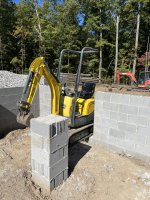
Photo of base without the machine is attached.
Also, the base is $4,030 + import/shipping fees (for 1)
But look at the design of it. Top notch. I really think its meant for robotics, as the build quality of that is far superior than the digger built on top.
max1_InPixio-kopia.jpg


05424.jpg
 
   / Metal Thickness? #17  
Couple hundred?! Its $500 a day, or $2000 a week, and you have to put your name on a waiting list where you get notified the evening prior to the machine delivered.
AND! If you don't have a 1 ton truck and trailer, you have to pay the $500 delivery fee. I live within viewing distance of the rental yard, and they wont let me drive it here; but when they deliver it, they drive it. Jerks


;-)


Calling this thing an excavator is a huge stretch. More like a power assisted shovel.
Now, Aside from the drive train, which I said I was ditching anyway - I could buy all the material, hydraulics, plasma cutter, a better welder, and a predator engine to power the thing, and still be well under the price of a new one.
Not only that, I think if I did use 1/4" material, and it bent, I would still have money left over to build version 2 out of thicker stuff.


Maybe the scale of the thing isn't coming across. The operator platform (or cab?) is less than 2'x4'
I put the images into Fusion 360, and calibrated using the known base dimensions to get the dimensions of the boom and arm, I don't remember what they are, but the boom is just under 3' long. Where its pictured driving into the van, at that stance its probably 7' long.

I agree on the money spent on every aspect of equipment, but this is not a John Deer or a Caterpillar, or even a Kubota. This is a cheaply made Chinese machine, being exported and rebranded all over the world. (except the US it seems)
Those aren't the cast iron track rollers you would find on a bobcat, those are stamped and formed steel rollers. It does have a steel cog wheel, but not the same quality you would find on a US machine - but it doesn't need to be. Each one is only responsible for moving a couple hundred pounds, unlike a Bobcat, where its closer to 7000 pounds.

Those are 180x72x31 tracks - dirt cheap ... in China.
31 being a less common size, but if you go with a 180x72x39, they are less than $80 each, unless you buy 25+ then you get the 50% off bulk price. But, shipping one set isn't cost effective compared to just buying them from someone in the US who imported hundreds of them to sell at a massive markup.
If you go with a 180x64, you get into modern snow mobile size, and more track wheel options (the more there are, the cheaper they are)

Simple fact of a 'real' machine is the quality, and mostly built to last. The manufacturing and markup on quality equipment is a whole subject by itself.
This is neither. Its a cheaply made machine with a huge markup. Most common complaint with cheap machinery is the lack of replacement parts - and there are many reasons for that which is a whole discussion by itself.


Of course. You aren't using this to break up concrete and load a dump truck.
You are using this to dig trenches for sprinkler pipe, holes for trees, and footings.
Its a small, light weight machine made for small uses.
You shouldn't compare this to anything that has more than one cylinder.


Well yeah, but that's common on most machines.


Correct. But again, you need to remember is use - light duty use. In my case its sand.


Not all rental places are created equal, at my local rental yard if it breaks, you pay for it.
They require a couple thousand dollar retainer to cover any equipment damage and mechanical failure.
This bother me, because if you are renting a machine with a few thousand hours on it, can you really be held responsible if the pump dies while you're using it?


So you think I should use 2"x3"x1/4" box for the boom & arm then?
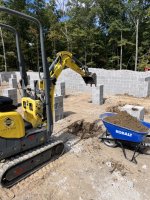
1/4 inch steel would probably work for the boom skin but the ends of the boom where the pins go is heavier than 1/4. The boom hinge is a lot more than 1/4. Almost the whole undercarriage is more than 1/4. I own a larger excavator but I had to rent this little one. There’s a lot of steel in that heavier than 1/4. I got my job done in 2 hours and they changed me the lowest rate of $130. I think the daily rate is $200. I expect you can buy that machine in decent used condition for $10k. I stick with the opinion that you would be a lot better off buying one. I’d buy a bigger one too. The only useful reason to go that small is it can drive through doors. Otherwise I’d go 5000 pounds minimum.
 

Attachments

  • IMG_2974.JPG
    IMG_2974.JPG
    1.8 MB · Views: 188
  • IMG_2975.JPG
    IMG_2975.JPG
    1.7 MB · Views: 184
   / Metal Thickness? #18  
Nice!!

If you can already CNC anything on a machine you built and have built a house then we can skip all the skepticism and just talk about the actual project. That's my opinion, anyway..

I do think it's a borderline reasonable idea to build a vehicle underneath a towable hoe like the northern or harbor freight model, but it would be more of a time and mental energy savings than dollar savings to do it that way. I have thought of using a zero turn mower as a basis for something like this with the caveat that the original transaxles wouldn't support any side radial loading of any kind, and would probably just be chain sprocketed down to new axles with a reduction built in. Mini-excavators are fairly slow and by the time you do the greater than 2:1 (probably 3:1) reduction to bring the top speed of a zero turn down to the top speed of an excavator, i believe their drivelines would be 'sufficient' for a small machine, although preferably minimizing actual 'zero turning' just out of slight paranoia. LOL

As far as the material thickness, throw yourself into the rabbit hole/bottomless abyss of excavator arm design a little and i think you will be surprised how thin some of the sections are. But, there is almost always something going on internally that is not obvious from the outside on a commercial excavator arm. Only the homebuilt or the towable type stuff actually uses 'just square tube' for arm sections. But to answer your question, 1/4" wall thickness on the arms of a small digger is more than adequate. I have two small backhoes here and neither of them has 1/4" wall thickness ANYWHERE on either arm of either hoe, except where i am adding some (and not because the thinner stuff failed) or where the material is doubled because of the pin brackets welded to the arm walls.

As far as size, my experience with small backhoes is that UNLESS the thing easily and conveniently propels itself, then you should really build the arms (thus the whole machine) to a length that doesn't make you constantly have to reposition the machine. A short arm is fine on a real excavator where you can scoot yourself around effortlessly, but it's irritating on a backhoe where you have to change positions to move the machine. Narrow is one issue but if you aren't trying to fit it through a particular gate or doorway then that is a small issue. Length, on the other hand, has a huge impact because it changes the leverage your machine weight has on the fulcrum point created by the front blade. Making a machine of the same weight longer will make it 'stronger' in that sense. Real excavators often need to be built as heavy as possible in their footprint to achieve 'zero swing' or something close to it where the entire back half of the machine basically stays in the same radius as the corners of the tracks no matter how you spin it. They usually have counterweights a lot like a forklift where most of the stuff on the very back of the machine is built out of solid metal to fit as much weight into the footprint as possible while reducing rear 'swing'. If you aren't concerned about that type of maneuverability, just adding length on the backside will reduce how heavy you actually need to build it.


You can also compare outriggers on tractor backhoes, vs the towable hoes, vs excavator blades. The towables are very light machines and put their outriggers as far forward as practical to change the leverage across the fulcrum. Tractor backhoes have a ton of weight (the whole tractor) on the other side of their outriggers so they are wide but do not extend to the rear by very much, usually. Excavator blades are doing dual duty as outrigger and blade and extending them out from the machine, while it would make some aspects of digging better, would also limit their 'reach' because you can't set the blade down in a hole, so however far forward you stick that blade is how far you would have to back up the machine from the edge of the hole, and that reduces your arm 'reach'. Basically, outriggers which go forward and out are another way to cheat more capability out of a very light machine.
 
Last edited:
   / Metal Thickness?
  • Thread Starter
#19  
1/4 inch steel would probably work for the boom skin but the ends of the boom where the pins go is heavier than 1/4. The boom hinge is a lot more than 1/4. Almost the whole undercarriage is more than 1/4. .... I expect you can buy that machine in decent used condition for $10k. I stick with the opinion that you would be a lot better off buying one. I’d buy a bigger one too. The only useful reason to go that small is it can drive through doors. Otherwise I’d go 5000 pounds minimum.

Only thing about $10k near me is an imported mini, which run 10k-13k. Which, the metal on them might be okay, but repair part and longevity is not going to happen with those.
I'm no expert, but it seems any low priced used equipment on the west coast gets trailered into Mexico. Decent low priced functioning equipment is few and far between out here.
There was a Skid-Steer from the late 70's for sale, repowered by a Honda twin cylinder. Guy was asking $12k for it yesterday, and now the listing is gone.
If I wanted one, a trip to a new equipment dealer would be the best option.
I have a mini dozer from the 40's that I use to fill the trenches left from my ditch witch, I was offered $2,500 for it - which is just insane. I would have taken it, but I needed it to build my driveways and fill trenches. Ditch Witch I will sell in a heart beat once I have a replacement trencher.
Its good because it works, but every part on that thing costs a fortune should it ever break.

Thanks for your input on the metal.
Perhaps I can make the boom with 1/4, then add a second backing plate of 1/4 to give it more rigidity at the pin mounts, and do the same thing on the boom mount.
 
   / Metal Thickness? #20  
I have a mini dozer from the 40's that I use to fill the trenches left from my ditch witch, I was offered $2,500 for it - which is just insane.
I dunno, a running mini dozer of any kind would have to be a real pile of crap to not be worth $2500 here in South Texas.. what is it?!
 

Tractor & Equipment Auctions

2022 Transcend Xplor 245RL 30ft. T/A Travel Trailer (A59231)
2022 Transcend...
2015 AMERITRAIL MANIFOLD TRAILER (A58214)
2015 AMERITRAIL...
2016 Freightliner Bucket Truck with Altec LR756 (A56438)
2016 Freightliner...
Meyer 8' Snow Plow w/ Bracket (A55272)
Meyer 8' Snow Plow...
UNUSED FUTURE 16" HYD AUGER (A52706)
UNUSED FUTURE 16"...
SKIDDED FRAC TANK (A58214)
SKIDDED FRAC TANK...
 
Top