jyoutz
Super Star Member
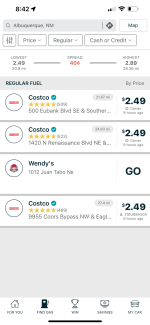
Today’s prices locally to me.87 octane is $3.76 here
Today’s prices locally to me.87 octane is $3.76 here
Our electric company increased its prices 45% last June, and our water increased 25% last June.It‘s funny isn’t it??? listening to the remaining few who actually believe the economy doesn’t suck worse than ever try to convince us everything’s fine.
My wife is working a second job just to make an extra 5k the last 2years to make up for increasing costs of food, fuel, insurance.
”I see better than I hear”
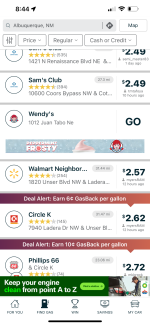
Wow. A big difference. We do have several in-state refineries, so maybe that’s the difference or local fuel taxes?And here is ours

Bing Maps
Map multiple locations, get transit/walking/driving directions, view live traffic conditions, plan trips, view satellite, aerial and 3d imagery. Do more with Bing Maps.www.bing.com
It’s obviously different in different regions of the country. Business is brisk near me. Contractors are booked up for months, stores are full, and new businesses and housing starts are everywhere. It appears that the rust belt isn’t doing as well as the south and west. I had about a 50% increase in natural gas prices last winter; this winter the price per therm is back down to near previous prices.Our electric company increased its prices 45% last June, and our water increased 25% last June.
We just got another notice from the water company that there is going to be another huge increase beginning in January.
The economy SUCKS.

It's the cumulative effect of inflation over the past 3 years that you're seeing issues with. Here we are seeing everything from 10 to 40% higher then it was in 2019. It just depends on the product.Whoever reported that is using some pretty skewed math.
If inflation was all the way up to 10%, then that would mean that his "average American family" makes substantially over $100,000 per year. But inflation is not 10%, it is more like half that, and so are average wages.
Inflation is a problem, but getting the math wrong doesn't help anyone fix it.
rScotty

It’s obviously different in different regions of the country. Business is brisk near me. Contractors are booked up for months, stores are full, and new businesses and housing starts are everywhere. It appears that the rust belt isn’t doing as well as the south and west. I had about a 50% increase in natural gas prices last winter; this winter the price per therm is back down to near previous prices.

It's the cumulative effect of inflation over the past 3 years that you're seeing issues with. Here we are seeing everything from 10 to 40% higher then it was in 2019. It just depends on the product.
Ohio has historically been a good microcosm of the rest of the US. Which is why they often use it for a test market for things.
Anyone who was already struggling to make ends meet in 2019 is really struggling now. And the old statistic that I remember hearing was 95% of the public is generally living paycheck to paycheck.
This economy does suck for about 95% of the United States. The few on here that don't believe it is sucking perhaps belong in the 5%.

 www.bls.gov
Free always has a price tag that often pops up in the oddest places. Notice how we quit hauling freight by train and all goes by truck? Diesel fuel at $4 / gal and truck gets 6 mpg. Now instead of $1/mile you need at least 3 to make it work, least until the insurance bill comes in.I don’t think anyone’s saying business isn’t “brisk”. We’re saying inflation is out of control.
What is the most depressing is the last 2 years of runaway inflation is now built into the economy. Those high prices are not going away.


The CPI in Canada includes mortgage costs. Are you sure that isn’t the case in the US?I would be careful about concluding that the CPI is a fair measure of actual inflation. For one thing, it takes increases in property rental into account, but does not include increases in the cost, maintenance, property tax or insurance cost of homes. Some people pay more than 50% of their monthly income just to cover their home mortgage which means that the CPI does not even pretend to measure what is the biggest monthly expense for many households.
Interesting.... The CPI in the USA doesn't change with short term changes in mortgage costs. I didn't know that Canada's did. But the US method doesn't ignore homeowner costs. Instead of tracking changes in mortagage, the US CPI uses a formula derived from the average rental cost across the country, and applies that to owner-owned houses.The CPI in Canada includes mortgage costs. Are you sure that isn’t the case in the US?
"Spending to purchase and improve houses and other housing units is treated as investment and not consumption in the CPI. Interest costs (such as mortgage interest), property taxes, real estate fees, most maintenance, and all improvement costs are part of the cost of the capital good and are also not treated as consumption items. These non-consumption costs of owned housing are out of scope for the CPI under the cost-of-living framework that guides the index." Measuring Price Change in the CPI: Rent and Rental Equivalence : U.S. Bureau of Labor StatisticsThe CPI in Canada includes mortgage costs. Are you sure that isn’t the case in the US?

:max_bytes(150000):strip_icc()/shopping_prices-5bfc2f4546e0fb0026021cc8.jpg)
I’m guess spreading rent control and pandemic years of no rent increases tamp down the USA CPIInteresting.... The CPI in the USA doesn't change with short term changes in mortgage costs. I didn't know that Canada's did. But the US method doesn't ignore homeowner costs. Instead of tracking changes in mortagage, the US CPI uses a formula derived from the average rental cost across the country, and applies that to owner-owned houses.
The idea being to estimate what homeowners would would pay if they were renting instead of paying a mortgage. Like all estimates, it isn't perfect when things change rapidly. For the past couple of years the effect of that estimate has been to artificially increase the annual inflation number.
Very interesting. I would like to see the formula for that estimation. Here in Canada, the variable interest rate went up from a low of about 1.45% A couple of years ago to 6.2% now. Meanwhile, In Toronto at the same time the rental rates must’ve gone up at least 50%. Then, of course, there’s the “affordability“ issue, which includes principal and interest on a mortgage. So I have always compared the cost of renting to the cost of mortgage, principal and interest, given a particular loan to value ratio. Always kept that ratio as high as possible on property that I was hoping to see a capital gain, but now that the interest rates are so high, I am reducing that loan to value ratio to his close to zero as possible.Interesting.... The CPI in the USA doesn't change with short term changes in mortgage costs. I didn't know that Canada's did. But the US method doesn't ignore homeowner costs. Instead of tracking changes in mortagage, the US CPI uses a formula derived from the average rental cost across the country, and applies that to owner-owned houses.
The idea being to estimate what homeowners would would pay if they were renting instead of paying a mortgage. Like all estimates, it isn't perfect when things change rapidly. For the past couple of years the effect of that estimate has been to artificially increase the annual inflation number.
I think most people feel the effects of inflation and you are living in an area that apparently has not. Our energy has gone up. I know our grocers have seen more than 8%. Restaurants have gone up more than 8%. Our insurance has stayed the same but when we purchase a replacement car for my wife. It will be interesting to see if there is much increase. That will most likely be in 2 to 3 years. Obviously fuel prices reached a record high as they did with obama. We are finally seeing break in fuel prices but its also freight and overall things are in fact slowing down. Freight is extremely down. You should research that a bit. Also OPEC cut oil production to boost prices and they have not really worked all that great. The next question will be what will opec do next year? My guess is they will start easing production cuts to allow "market" to determine prices. Another words they will increase production. I maybe wrong but with venezuela getting ready to come back on the scene and america producing 13 million barrels. They do not like that like.Well, that's my mistake then.
I meant my reply to be to the more general general conversation of cost of living increases, not just one household's personal spending.
I know how that can happen. A few years ago we had a flood. Rebuilding caused our next few years' expenses to be 10 times what our annual expenses had been before. Almost wiped us out.
We did save the Kubota, though.
rScotty
Most people would love to have those decisions to make.Very interesting. I would like to see the formula for that estimation. Here in Canada, the variable interest rate went up from a low of about 1.45% A couple of years ago to 6.2% now. Meanwhile, In Toronto at the same time the rental rates must’ve gone up at least 50%. Then, of course, there’s the “affordability“ issue, which includes principal and interest on a mortgage. So I have always compared the cost of renting to the cost of mortgage, principal and interest, given a particular loan to value ratio. Always kept that ratio as high as possible on property that I was hoping to see a capital gain, but now that the interest rates are so high, I am reducing that loan to value ratio to his close to zero as possible.
Very relevant to a big decision I have to make today, which I am in favor of doing so far. Someone has made an attractive offer on our big 23 acre waterfront property, which will allow me to get rid of all of my mortgages, and have a good whack of leftover money to invest. Question is, invest in a house in town, or turn it over to my sister-in-law, who is a broker in a big investment firm.
And a related big question is, are houses in Toronto going to continue to go up?
I know you are replying to Scotty, but once again I have to say that your observations in the Midwest about business and freight slowdowns don’t match what we are experiencing in much of the west. I still see more trucks on the interstates than previously and the freight train traffic on the BNSF transcontinental route is also heavier than I have seen in a decade. Who knows what will happen with fuel prices, but they have been declining for the past month, and $2.50 regular gas is easy to find. Yes, prices are up for most everything, but spending is also up, so people are navigating the new prices, maybe from increased wages. It was reported that this year’s online and box store Black Friday and cyber Monday sales set new record highs. And last winter’s high natural gas prices have come down considerably.I think most people feel the effects of inflation and you are living in an area that apparently has not. Our energy has gone up. I know our grocers have seen more than 8%. Restaurants have gone up more than 8%. Our insurance has stayed the same but when we purchase a replacement car for my wife. It will be interesting to see if there is much increase. That will most likely be in 2 to 3 years. Obviously fuel prices reached a record high as they did with *****. We are finally seeing break in fuel prices but its also freight and overall things are in fact slowing down. Freight is extremely down. You should research that a bit. Also OPEC cut oil production to boost prices and they have not really worked all that great. The next question will be what will opec do next year? My guess is they will start easing production cuts to allow "market" to determine prices. Another words they will increase production. I maybe wrong but with venezuela getting ready to come back on the scene and america producing 13 million barrels. They do not like that like.
Nobody knows when a recession will hit just like the mortgage crisis. Jobs were readily available wages seemed ok. Everything was humming along and then the bottom fell out. There are people saying the next bubble is about to pop. I do know one thing. The white house seems to try to convince people that its not as bad as it seems. Yet people have seen there bills go up. Spending habits have changed in most households. You seem to thing otherwise. I think thats why so many are perplexed by your opinion.