Citydude
Super Member
We use an In-situ type of mining for uranium here that was developed in Texas in the 70's.

How efficient when snow covered? Going to need sun to melt the panels correct or do they self heat. I am all for putting them on roofs or whatever. But to take over large tracks of open ground, well.....................................I can't but those thoughts on here.Solar actually does work on cloudy days, it’s just not as efficient. Gas will be an important part of the energy picture for awhile.


Why not build solar farms over the ocean under wind farms?


I assume that gas plants are already being built? The issue with nuclear power is that no states are volunteering to build and house the waste disposal areas.Its a territorial thing for sure. For example, The Southwest is less populated, has many more days of sun and probably more wind. Put the wind & solar farms there, where they work.
In the Northeast, where it’s densely populated, more cloudy and the winds are lower, build gas & nuke plants. We have abundant Marcellas gas and already have lots of nuke plants ready for retooling.
Lots of people have rooftop solar. The power companies make the business decisions on where to buy and lease lands for their operations, not proponents.People who are pro-solar or pro-wind should be first in line to offer-up their back yard or rooftop.
Also weary of city types pushing their green agenda solar panels & wind mills on fly-over country people.
Its always “Their ideas & our inconvenience”.
Oh yeah?! lolLots of people have rooftop solar. The power companies make the business decisions on where to buy and lease lands for their operations, not proponents.
You don’t think politics doesnt play a heavy hand in who/where/what gets used for power generation? 
there is a corporation in the UK that has nuclear Fusion plants on the drawing boards that have a real-world route to cheap as hell nuclear fusion (not fission) power.Has anyone plugged into the equation what happens when after 2035 only electric new cars will be available?
 wonderfulengineering.com

 www.newscientist.com
there is a corporation in the UK that has nuclear Fusion plants on the drawing boards that have a real-world route to cheap as hell nuclear fusion (not fission) power.
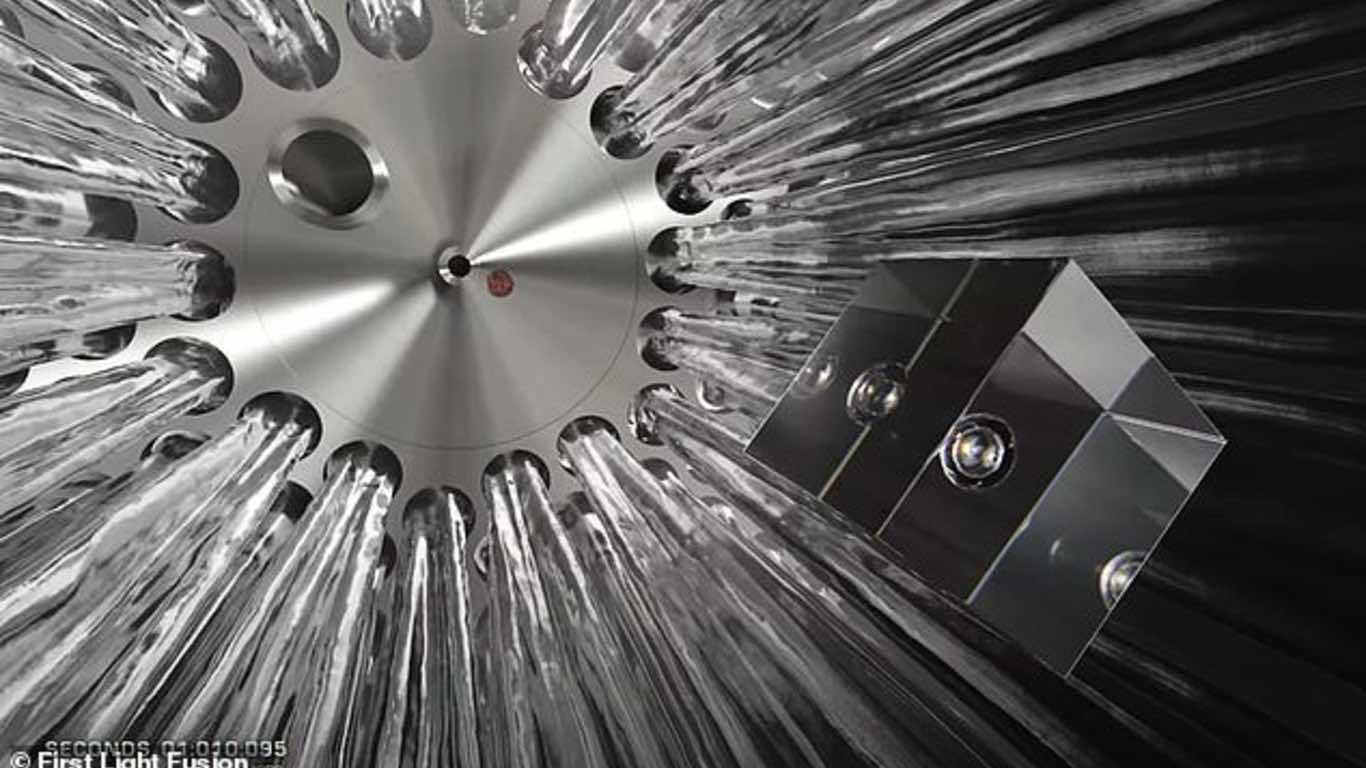
Skipping the lasers, the super-magnets, the particle accelerators they figured a way to accelerate a bit of tritium or deuterium to about 200 times the speed of sound to hit another particle the energy fuses the two. one impact of a tiny little bit ( a few grams) of material will power an average home for two years. Their plants will do one such discharge every thirty seconds.
And they can do it cheap cheap c
heap
This U.K Startup Has Made A Breakthrough In Nuclear Fusion - By Using Projectile Fusion
Scientists have come up with a new technique to achieve nuclear fusion. FirstLight Fusion, a spin-out from the University of Oxford, has used a tNuclear fusion breakthrough achieved with new projectile technique
In a world first, First Light Fusion, a UK based start-up, has achieved fusion with a projectile approach

That falls in the anecdotal category of: "Everyone can become a billionaire; just look at Jeff Bezos". No doubt that that such big installation can work for heating a small rural community; also single houses are self-sufficient if you hang enough collectors on it. What I did not see on their page is the investment and operating costs, the lifetime and the number of houses that is connected to this grid, which furthermore is stated to be in an area with many sunshine hours. That its functioning is marginally, however, can be deduced from the fact that it took years to become viable and that still fossil fuel is needed.The coming change in energy sources is inevitable!
Solar viability and storage?
Take a look at Drakes Landing. Solar based community with ground storage system For heat. It’s been in operation for a few years. It works.
In the North Sea, between the UK and the continent, very big windfarms have been, are and still will be constructed; already those existing wreak havoc on that environment. Adding solar farms will kill off everything that still is living there.Why not build solar farms over the ocean under wind farms?
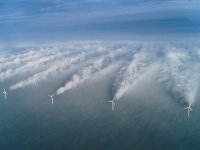
Yah those stinking wood shoed dutch, and their shabby windmills are so boring.ugly windmills.
When we lived i CT, we had a 52 panel array on our roof. Produced 15+MW a year. We had electric heat pumps for heating and cooling 2500SqFt home, pool. We were netmetering and the only bill each month was a $19 service charge. WE'd get a credit at the end of March every year. The payoff was 8 years or so, although its not an aples to apples calculation in our case. 12 years later, solar panels are much more efficient, producing more power than the ones we had. Solar does work, if you have the room.“Solar [works] on cloudy days”…..
So it’s kind of like having an NG or Nuke plant and turning down it’s output to 10%.
And this happens frequently because it’s dark roughly 1/2 of every day and of the remaining days, it could be cloudy some of the time, or perhaps snow covered panels.
And we get to deface open meadows with thousands of acres of them AND they’re made in China?
Yippee
Sign me up.
Power companies make their own lease agreements with private landowners and public lands. They decide where the best site locations are related to operations (considering local zoning and transmission line locations). In most places, but not the corrupt rust belt. The whole world is different in the northeast.Oh yeah?! lol
Keep dreamin‘
Some questions:When we lived i CT, we had a 52 panel array on our roof. Produced 15+MW a year. We had electric heat pumps for heating and cooling 2500SqFt home, pool. We were netmetering and the only bill each month was a $19 service charge. WE'd get a credit at the end of March every year. The payoff was 8 years or so, although its not an aples to apples calculation in our case. 12 years later, solar panels are much more efficient, producing more power than the ones we had. Solar does work, if you have the room.
No, we used no power from grid. Our excess production is held in a " bank" and when we need it at night, it is returned.Some questions:
1) the only bill was the $19 service charge: Were you not using any electricity from the grid at all? So no electric Bill at all?
2) "The payoff was 8 years or so,[...] 12 years later," Huh? You purchased the panels and took 12 years to pay? Who'd ya buy from: private or the power company? What was that bill?
Odd that you would set up that system and after payoff you decide to move. Are you going to do the same thing at your current residence?No, we used no power from grid. Our excess production is held in a " bank" and when we need it at night, it is returned.
Paid off in 8, yes. The 12 year comment is in reference to the efficiency increase of the panels over that time.
15mw is a lot of energy to produce and use. We used most of it being an all electric household. Our credit at end of year was around $100 depending on price of electricity at the time.
We bought system from private company. Took 3 months of red tape, inspections etc. from time system was complete to actual start up.
Before we went with CREP, which was to help out the Chesapeake bay, we also had someone from Duck Unlimited come out to see about putting in a wooded pond to help migratory birds, but decided to go with the Crep route due to the added value of the trees we would be planting. CREP will tell you to farm the best and CREP the rest. It has really helped out with erosion and i do not have to mow in a mud pit lol. Its also providing a lot of habitat for wildlife.There were several of that type of programs over the years, funded by various methods. Some of the money you pay for firearms and fishing equipment goes to fund conservation programs.
When we lived i CT, we had a 52 panel array on our roof. Produced 15+MW a year. We had electric heat pumps for heating and cooling 2500SqFt home, pool. We were netmetering and the only bill each month was a $19 service charge. WE'd get a credit at the end of March every year. The payoff was 8 years or so, although its not an aples to apples calculation in our case. 12 years later, solar panels are much more efficient, producing more power than the ones we had. Solar does work, if you have the room.