Whatever you feel like thread.

   / Whatever you feel like thread. #481  
I live in a HOA neighborhood. But I'm part of the Lichy Farm Subdivision. He was the old geezer who sold his 166 acres to a developer who had a HOA. For years they tried to get him to join it. He refused. The deed to this property even states that the 166 was separate from the 4 acres he kept. That legal jargon stopped them from ever getting us to join and my two neighbors who I sold property to were able to get exempted too. But the nice thing is that everyone in the neighborhood has to follow those rules. Except us so we can park an RV on the property or a trailer or junk cars or a mobile home lol. Yeah, I don't do that anyway though. Sometimes there is an advantage to those things. As long as I'm not part of it though!
 
   / Whatever you feel like thread. #482  
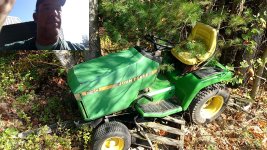
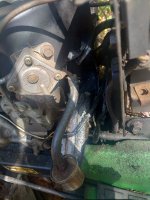
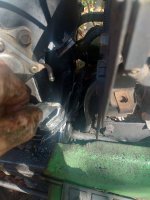
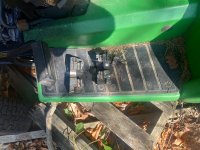
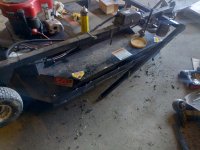
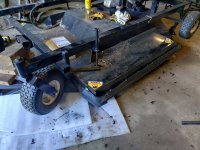
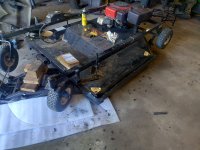
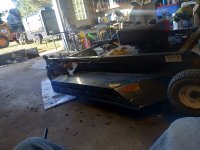
Anyone ever blow up a Kawasaki 540v in a old 260 JD lawn tractor? What would cause such a catastrophic failure? I changed the oil seasonally always checked oil before mowing never really burned much. However noticed a slight what I thought was a rod knock last several times I used it. Anyways lasted a few years paid a few hundred fo it no major part replacement mostly maintenance and some minor backwoods tinkering to keep it going. Parts on running board is what I fished out of the blown apart crank case. Thinking jb weld wont fix this one Lol. So I already started pulling a few parts off it surprisingly a few shelves and the deck belt fit my older JD decks I have laying around so I was able to get one old deck back on a older 212 and cutting again.
 

Attachments

  • KMC20250927_112903774.JPG
    KMC20250927_112903774.JPG
    2.2 MB · Views: 42
  • KIMG20250927_114832311.JPG
    KIMG20250927_114832311.JPG
    6.5 MB · Views: 35
  • KIMG20250927_114937796.JPG
    KIMG20250927_114937796.JPG
    5.1 MB · Views: 38
  • KIMG20250927_114958599.JPG
    KIMG20250927_114958599.JPG
    6.4 MB · Views: 35
  • KIMG20250927_114640257.JPG
    KIMG20250927_114640257.JPG
    8 MB · Views: 39
Last edited:
   / Whatever you feel like thread. #483  
How often did you check valve lash? Supposed to be every 600 hours, on most Kawi’s.
 
   / Whatever you feel like thread. #484  
Never, wouldn't I hear some valve tapping or ticking if valves out of adjustment? its old but the lower half disintegrated with a little over 500 hrs only. I did add a primer bulb to the fuel line cuz I believed the fuel pump was shot, however it is a pulse pump hooked to crankcase with a breather tube 🤔 🤔 wonder if that was a sign of things to come, It has an hr meter that was working I believe. Anyways feel I got my money's worth on it. 3 yrs of mowing around my 5-10 acres of old and new Xmas trees and about a 1.5 acre field the kids play in. I have some 260 parts now anyone need some that don't work with my old 212s pm me. I'm not putting it in my barn or covering it so any old functional parts will probably be junk after a year or so. Then probably scrap yard.
 
   / Whatever you feel like thread. #485  
Never, wouldn't I hear some valve tapping or ticking if valves out of adjustment?
You said you did, in your last post?
However noticed a slight what I thought was a rod knock last several times I used it.
I think some of the Kawi's spec checking valve lash as frequently as 200 hours, check the manual for yours. I think my own is more like 400 - 600 hours.

Usually, the lift reduces, so it's likely not an interference issue. But it could be a failure to open a valve, if excessively loose.
 
   / Whatever you feel like thread. #486  
You said you did, in your last post?

I think some of the Kawi's spec checking valve lash as frequently as 200 hours, check the manual for yours. I think my own is more like 400 - 600 hours.

Usually, the lift reduces, so it's likely not an interference issue. But it could be a failure to open a valve, if excessively loose.
This sounded like more of a faint rod knock occasionally so not all the time. The entire lower half of the crank case is blown apart. If I get bored and more importantly find time I might drag it Indoors and pull what's left of the engine apart. That will definitely tell me what happened. I'm pretty sure the top end of the motor didn't cause this. Nor have I ever experienced a engine failure this severe 2 or four strokes.
 
   / Whatever you feel like thread. #487  
Yeah, wasn't implying it was. I was just throwing it out there as one possibility.

The only time I've ever lost a rod cap was due to my own lack of care, keeping oil checked and topped up on an engine that I knew consumed it. Bottom end failures on engines with good top ends and good lubrication seem rare, but I guess they happen!
 
   / Whatever you feel like thread. #488  
It definitely was pretty beat up problaby why it was so cheap unfortunately It was also probably severely mechanically neglected earlier in its life although it did run when I took possession it was hard starting until I put a inline primer bulb on it. Changed oil and filter last fall like I did for the three seasons I had it. Darn it, just talking about it now I really want to tear that engine down and see what really happened at least the lower half is already visible cuz it's blown apart. 😂
 
Last edited:
   / Whatever you feel like thread. #489  
Busy Sunday morning got sick of looking at my 50" self contained atv pull behind mower so finally finished wrapping deck in old plastic landscaping edging works pretty good cuz I can countersink self tappers on flaps, anything I use to mow my Xmas tree rows I wrap deck with plastic, much better than stock metal mower deck especially when mowing new tree with metal edge and bumping tree knocking bark off or worse , next going to finally replace the starter on one of my old JD 212s and maybe throttle and choke cable with old functional parts off a junk JD 214 that I got so sick of replacing random parts on 214 every time I tried or sometimes got it running and used it. Wonder if these cables are interchangeable? Both have those old somewhat indestructible kohlers.
 

Attachments

  • KIMG20250928_093714984.JPG
    KIMG20250928_093714984.JPG
    6.6 MB · Views: 30
  • KIMG20250928_090550699.JPG
    KIMG20250928_090550699.JPG
    7.7 MB · Views: 35
  • KIMG20250928_093648464.JPG
    KIMG20250928_093648464.JPG
    9.3 MB · Views: 26
  • KIMG20250928_093706493.JPG
    KIMG20250928_093706493.JPG
    9.2 MB · Views: 27
  • KIMG20250928_093729240.JPG
    KIMG20250928_093729240.JPG
    6.8 MB · Views: 27
  • KIMG20250928_093739984.JPG
    KIMG20250928_093739984.JPG
    6.5 MB · Views: 31
   / Whatever you feel like thread. #490  
Great humidifier hack if you burn wood most folks that burn wood probably know this but maybe some don't instead of buying an overpriced not very durable and expensive maintenance prone humidifier filters I just use a. Old pot of Water putting it on top of wood stove next to the mostly aesthetic but cool functional heat powered fan. Went from 10% humidity in my cabin to a more comfortable 40% just have to remember to fill the old pot and the larger pot you use the more moisture it puts out.
 

Attachments

  • KIMG20251221_082404782.JPG
    KIMG20251221_082404782.JPG
    2 MB · Views: 7
   / Whatever you feel like thread. #491  
We have to pull humidity out of the air. Dehumidifier runs frequently just to keep it down to 50% indoors. A little less in 'winter'.
 
   / Whatever you feel like thread. #492  
We have to pull humidity out of the air. Dehumidifier runs frequently just to keep it down to 50% indoors. A little less in 'winter'.
I run the dehumidifier in my cabins utility room pretty much nonstop in the humid summer months up here.
 
   / Whatever you feel like thread. #493  
Winters in my experience it's the opposite. The cold winter air is dry.
 
   / Whatever you feel like thread. #494  
We keep a cast iron "tea pot" on the wood stove. Add another pot when needed on the really cold days (by our standards)
 
   / Whatever you feel like thread. #495  
We keep a cast iron "tea pot" on the wood stove. Add another pot when needed on the really cold days (by our standards)
I need to find one of those. I do like to think the overpriced imo heat powered fan helps spread the moisture lol. I do Run the electric powered squirrel cage fan on backside of stove occasionally also.
 
   / Whatever you feel like thread. #496  
I just use a. Old pot of Water putting it on top of wood stove next to the mostly aesthetic but cool functional heat powered fan. Went from 10% humidity in my cabin to a more comfortable 40% just have to remember to fill the old pot and the larger pot you use the more moisture it puts out.
Works pretty well on any stove without a convection top, but many modern stoves won’t allow it due to convection tops running too cool. I can actually sit my hand on top of my stoves when they’re running with the blowers.

The amount of humidity you need to generate, and the ability to get it done solely with a pot on the stove, is going to depend on size of the house and where you’re drawing your make-up air. Those with an outside air kit (OAK) on their stove will have better success with this than those drawing make-up air from the house, which must be replaced with outside air.

Most over at hearth.com who’ve tried this on their radiant (non-convective) stoves over the years report that the pot on the stove rarely generates as much humidity as they need, but these are also likely folks not running OAKs on their stoves, or with larger spaces requiring more heat and thus more total air volume up the flue.

We run 3 humidifiers, which consume roughly 30 gallons of water per week trying to hold near RH = 50%, but I’m running two large stoves without OAKs in a very large and inefficient house. I could make the pot on stove trick work if I removed the convection decks from my stoves, but I think I’d still have trouble evaporating that volume of water from two or four pots of water.

We have to pull humidity out of the air. Dehumidifier runs frequently just to keep it down to 50% indoors. A little less in 'winter'.
It’s a problem unique to heating climates, especially those running combustion sources (oil or coal furnaces and boilers, or wood stoves) from air taken out of the home. The combustion plant draws air from the house, so the house has to draw new cold air in from outside. But then you have to heat that outside air, which drives its relative humidity toward zero.

Our house runs 17% - 19% without humidifiers running 24/7 during heating season, and it’s supposedly a “damp old mud-stacked stone” house. :ROFLMAO: My barn and music studio both hold closer to 30%, as their heat pump heating sources don’t draw combustion make-up air from the heated envelope.

Winters in my experience it's the opposite. The cold winter air is dry.
(y)
 
   / Whatever you feel like thread. #497  
Oh, just realized some might not know what a convection top is. Quick explanation:

Most old stoves are a cast iron or steel box, designed to radiate heat into the living space. Radiant heating works by transferring energy (heat) to high-mass objects in their line of sight, just as the sun heats your skin on any sunny day. Those objects absorb the heat, and the air in-between all these objects stays warm by stripping that heat off every object in the room (mix of conduction and convection).

But there are several problems with this type of stove design. First, it drives the required clearances way up, as radiant energy flux density is highly dependent on distance, and any object placed close to the stove will overheat and burn. Second, any energy radiated into masonry that’s connected to outside or earth, is mostly lost. So putting such a stove into or in front of a fireplace means throwing away a lot of your effort into heating your back yard or the earth under your house.

So stove manufacturers started adding a “convective jacket” around stoves. Initially this was in the form of rear heat shields, the idea being that air can pass between between the firebox and the outer heat shield, to strip off heat (convection) and keep the outer shield cooler than the firebox. This reduces its radiation, and allows you to place the stove closer to the wall behind it.

Then came the “alcove problem”, with many customers wanting to put their stove into an alcove with a lowered ceiling. So manufacturers responded with adding convection decks to the top of the stove, again just a second plate of metal above the firebox, thru which air can be blown or flow naturally, to reduce radiation from the top of the stove and increase transference into the room by convection.

Realizing there were advantages to convection in applications like concrete basements, stone houses, and stoves stuffed into fireplaces, some stove manufacturers have put convective jackets around the entire stove, excepting the front glass. This is how my stoves are built, since each of mine sit inside a large cooking (aka “walk in”) fireplace. Whereas my old stoves did a great job of uselessly heating up the stone in the fireplace, only to have it radiate outside in some vane attempt to warm this part of eastern Pennsylvania, the new stoves direct nearly all of their energy into our house.

Conclusion: Radiant stoves work great in framed and insulated houses, but fail in uninsulated stone houses or concrete basements. For these latter applications, look at convective stoves.
 
   / Whatever you feel like thread. #498  
We run conventional humidifiers at our house down state after the second humidifier Ion our conventional furnace bit the dust again. My cabin up north is about a little less than 1000 square ft. another thing I learned is when burning wood in our wood stove up there is keep the bedroom doors closed during the day or the upstairs rooms get to hot and uncomfortable. Since I'm talking about wood stoves these temp gauges I installed on wood stove really help me to keep it safely regulated using stoves damper one on stove one on pipe.
 

Attachments

  • KIMG20251221_090205509.JPG
    KIMG20251221_090205509.JPG
    1.9 MB · Views: 11
  • KIMG20251221_090215408.JPG
    KIMG20251221_090215408.JPG
    1.7 MB · Views: 11
   / Whatever you feel like thread. #499  
Great humidifier hack if you burn wood most folks that burn wood probably know this but maybe some don't instead of buying an overpriced not very durable and expensive maintenance prone humidifier filters I just use a. Old pot of Water putting it on top of wood stove next to the mostly aesthetic but cool functional heat powered fan. Went from 10% humidity in my cabin to a more comfortable 40% just have to remember to fill the old pot and the larger pot you use the more moisture it puts out.
Oops my bad it's 35%humidity and a very comfortable 74 degrees burning wood only. I really like to boastfully brag about what I designed and built up north 😂.
 

Attachments

  • KIMG20251221_092516914.JPG
    KIMG20251221_092516914.JPG
    2 MB · Views: 12
   / Whatever you feel like thread. #500  
Yep. I also drive by flue temp, to some degree. I have a surface-mount one on single-wall stove pipe on one stove, and a probe type on the double-wall pipe on my other stove. Since they’re catalytic stoves, I also have a cat probe thermometer on each. One has a very tall flue, so I added a key damper and magnehelic to that one, to dial draft down appropriate to conditions.
 

Tractor & Equipment Auctions

Link-Belt 75X3 (A53317)
Link-Belt 75X3...
2009 Ford Econoline Wagon Van, 101,671 Miles (A56438)
2009 Ford...
2007 Ford F-150 4x4 Ext. Cab Pickup Truck (A59230)
2007 Ford F-150...
2016 FORD F-350 XL SUPER DUTY EXT CAB TRUCK (A59823)
2016 FORD F-350 XL...
2018 JLG 742 TELESCOPIC FORKLIFT (A60429)
2018 JLG 742...
500 BBL FRAC TANK (A58214)
500 BBL FRAC TANK...
 
Top