Agriculture Lime

   / Agriculture Lime #1  

Fred185

Member
Joined
Nov 20, 2023
Messages
47
Tractor
Ford/New-Holland TL70
I figured a lot of people here, know about ag-lime. I searched online for hours and found nothing on my search. I will start from the begining. I read the reason for decline in fish pond size is poor water PH. I am in Pennsylvania in gas drilling area. I had paid for water testing before any wells were drilled near me 18 years ago. The pond is 100% water shed and does fill to the max every spring. The pond water test was PH 6.0. (in 2008) Catching a half dozen 5-pound bass lasted the first 10 years. Now the biggest fish is short of 3-pounds. Recent water test this year PH -4. I read on Bass forum sites, must put ag-lime in the water in large amounts. 3-7 tons a acre. I could only find one place with trucking of ag lime 30 miles from me the rest were over a hundred miles. Placed order over a month ago for 20 tons at 70 dollars a ton (ENV 83%) no shipping charge. Got the lime today and a bill for trucking $1,400.00. I ask the driver for a scale ticket and the quarry contents of the lime. He said he only has the shipping price and can't tell me anything about the product except it came from a New York State quarry. I was trying to find out if there is any way I can "self test" the product I bought, to at very least prove it is ag-lime, and not something that will damage my pond fish. I was thinking to take a 5-gallon bucket, fill it with pond water and dump a cup of this product in it and see if the PH comes up. The Law in NY is written, any business that sells AG-Lime must provide the Quarry name, Quality of Product in like 10 catogories. It's my fault for dealing with this company. It would have cost another $600.00 but at least I would know what I bought. This is like a gas station with no readout on the pump. You go inside and pay the man based on what he said. I bought a lot of crushed stone, top soils, and always had a ticket from the quarry, with the quarry name, scale, truck empty, the truck gross weight, and the difference in writing.
Thanks in advance,
Happy Easter
 
   / Agriculture Lime #2  
The trucker was probably contracted out. Who did you place your order through? Any place I would get it from can readily provide me details on the lime. The company I buy from now send the specs with the bill and this lime comes from Lockport, NY. My other source for lime would come from Ohio. If you want it tested find your local USDA, Conservation, FSA office and they can get you pointed in the right direction.
 
   / Agriculture Lime
  • Thread Starter
#3  
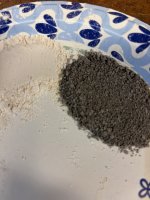
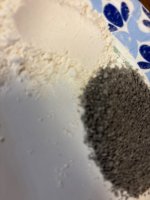
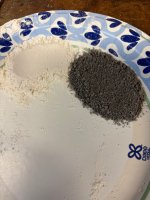
Yes, I seen testing runs about $125.00. Really, I was suspicious of this guys bussiness practices from the start. I prefer not to mention his name, because of a lot of unknows. Maybe I got what he said he sold me ? It is a large trucking operation with 50+ trucks around Binghamton NY. Can't understand why he held back the details under NYS Law on Ag-Lime requirements. The driver was the owners son, and informed me of everything else they sell that I might need. Did learn something last night online ! Cover the lime and protect from weather to keep the fine particles from washing out. I will post a picture, of a small pile of product compared to flour. Seems like partcile size is key to quality.
Thanks for your input.
 
   / Agriculture Lime #4  
Did you try Martins Lime? Not sure where you are in PA, guessing "upstate"?
 
   / Agriculture Lime #5  
I'm not sure how Ph, and Ag Lime will increase the size of your fish. How clear is your water? Do you have healthy plants growing in your pond?

The size of bass is based on the size of the food it eats. For a bass to grow, it needs larger feeder fish. If all your feeder fish are small, you're bass will be small. This is what causes a stunted pond. When there are too many fish, they all compete for the same feed, and their ability to grow becomes impossible.

The only way to get bigger bass is to remove smaller bass. Then the feeder fish can grow bigger, and the remaining bass will grow bigger. Rule of thumb is 100 total pounds of predator fish per surface acre of water. My 4 1/2 acre pond should only have 450 total pounds of predator fish. In my case, that's catfish and bass combined.

When we fish, we remove everything we catch. Most are in the one pound range, and on a good day, we might catch 30 fish. The more we do this, the bigger our best fish has become. Currently the pond record for a large mouth bass is 7 1/2 pounds. Five pound bass are caught every year.
 
   / Agriculture Lime
  • Thread Starter
#7  
I'm not sure how Ph, and Ag Lime will increase the size of your fish. How clear is your water? Do you have healthy plants growing in your pond?

The size of bass is based on the size of the food it eats. For a bass to grow, it needs larger feeder fish. If all your feeder fish are small, you're bass will be small. This is what causes a stunted pond. When there are too many fish, they all compete for the same feed, and their ability to grow becomes impossible.

The only way to get bigger bass is to remove smaller bass. Then the feeder fish can grow bigger, and the remaining bass will grow bigger. Rule of thumb is 100 total pounds of predator fish per surface acre of water. My 4 1/2 acre pond should only have 450 total pounds of predator fish. In my case, that's catfish and bass combined.

When we fish, we remove everything we catch. Most are in the one pound range, and on a good day, we might catch 30 fish. The more we do this, the bigger our best fish has become. Currently the pond record for a large mouth bass is 7 1/2 pounds. Five pound bass are caught every year.
A Google Answer, but many websites and video on Youtube. Unfortunatly my pond gets filled with only acid rain EPA map area of PH=4. A fish not hatched but stocked in water with a PH of 4 will die.
"Adding ag lime (agricultural lime) to a pond helps increase fish size by improving water quality, particularly by stabilizing pH and increasing alkalinity, which reduces stress on fish and enhances food availability. By buffering pH fluctuations, lime allows fish to conserve energy that would otherwise be used to regulate their internal environment, leading to healthier growth. Additionally, lime improves nutrient availability for phytoplankton, which are a food source for fish, further contributing to their growth.
 
   / Agriculture Lime
  • Thread Starter
#8  
I figured a lot of people here, know about ag-lime. I searched online for hours and found nothing on my search. I will start from the begining. I read the reason for decline in fish pond size is poor water PH. I am in Pennsylvania in gas drilling area. I had paid for water testing before any wells were drilled near me 18 years ago. The pond is 100% water shed and does fill to the max every spring. The pond water test was PH 6.0. (in 2008) Catching a half dozen 5-pound bass lasted the first 10 years. Now the biggest fish is short of 3-pounds. Recent water test this year PH -4. I read on Bass forum sites, must put ag-lime in the water in large amounts. 3-7 tons a acre. I could only find one place with trucking of ag lime 30 miles from me the rest were over a hundred miles. Placed order over a month ago for 20 tons at 70 dollars a ton (ENV 83%) no shipping charge. Got the lime today and a bill for trucking $1,400.00. I ask the driver for a scale ticket and the quarry contents of the lime. He said he only has the shipping price and can't tell me anything about the product except it came from a New York State quarry. I was trying to find out if there is any way I can "self test" the product I bought, to at very least prove it is ag-lime, and not something that will damage my pond fish. I was thinking to take a 5-gallon bucket, fill it with pond water and dump a cup of this product in it and see if the PH comes up. The Law in NY is written, any business that sells AG-Lime must provide the Quarry name, Quality of Product in like 10 catogories. It's my fault for dealing with this company. It would have cost another $600.00 but at least I would know what I bought. This is like a gas station with no readout on the pump. You go inside and pay the man based on what he said. I bought a lot of crushed stone, top soils, and always had a ticket from the quarry, with the quarry name, scale, truck empty, the truck gross weight, and the difference in writing.
Thanks in advance,
Happy Easter
After adding 8 ounces and stiring (5 gallon bucket ) water very little change on test strips to PH of 4. Adding a second 8 ounces made test strip all in the green zone of very good PH=7. At least I think its lime and not stone dust from cutting stone. I bought stone dust and still have a pile of it. They almost look the same but stone dust might be finer. The pics are of the ag-lime and general purpose baking flour.
 

Attachments

  • IMG_6227.JPG
    IMG_6227.JPG
    2 MB · Views: 78
  • IMG_6229.JPG
    IMG_6229.JPG
    1.6 MB · Views: 76
  • IMG_6228.JPG
    IMG_6228.JPG
    2.5 MB · Views: 69
   / Agriculture Lime #9  
I'm familiar with adding Gypsum to a pond to clear up the water from acidic soil. The positive electrical charge created by the soil will suspend the soil in the water. Neutralizing that positive charge with Gypsum will allow the soil to settle to the bottom and clear up the water. This allows plants to grow in the pond at deeper depths.

I've never heard of this having any impact on the size of your predator fish.

I use Ag Lime in my chicken coops to clean up my nesting boxes.
 
   / Agriculture Lime #10  
Get some in your eye and you'll know if it's lime
Happened to me Ouch
 
   / Agriculture Lime
  • Thread Starter
#11  
I'm familiar with adding Gypsum to a pond to clear up the water from acidic soil. The positive electrical charge created by the soil will suspend the soil in the water. Neutralizing that positive charge with Gypsum will allow the soil to settle to the bottom and clear up the water. This allows plants to grow in the pond at deeper depths.

I've never heard of this having any impact on the size of your predator fish.

I use Ag Lime in my chicken coops to clean up my nesting boxes.
As a matter of fact, its just the oppsite. If pond water has a low PH of 4,(acidic soil) it is very clear water. Can see down 10 feet in my pond. If the PH is normal at 7, seeing down past 3 feet is difficult.
 
   / Agriculture Lime #12  
There are many factors to raising bigger fish in your pond. Ph is important but not the chief thing to address. As mentioned earlier fish are predators and eat smaller fish. If you can see 10 ft down, you are lacking some nutrients that encourage plankton growth. Smaller fish eat plankton, reproduce, get eaten by bigger fish who may in turn get eaten by bigger fish. It's suggested that correct visibility is about 18"-2'. Controlled by the plankton in the water (not mud).

I fertilize my pond from time to time. Our 2 acre pond has Bass, crappie, bream (mixture of kinds) and at least one channel cat. Your pond should have an ecological balance of smaller baitfish to feed the larger fish. Too many of one or the other throws the balance out. Bream are a bass's main diet, same for a channel cat and crappie.

A pond will support X #'s of fish (just like an ag field will only produce X#'s of food). It doesn't care if there are 10 10# fish in it or 100 1# fish. To make a pond healthy requires proper fertilization, and harvesting.

If you supplemental feed the fish you can harvest more #'s per acre. If not it is essential to get the fertilization ratio correct to promote alge and having the correct amount of feeder fish for the bass (fat head minnows/bream etc).

You can buy floating catfish food at TSC (among other places). It will feed the bream/catfish/crappie. At least that seems to be what is eating it when I toss it out.

My 2 acre pond can safely harvest about 50#'s of fish a year. I mainly do that with the crappie in there. I inherited the pond with crappie in it. It's not a good idea to stock such a small pond with crappie/catfish if you want large bass as they compete with one another for the same food sources.

And don't get me started on fish STEALING birds... I have to address them as well.
 
   / Agriculture Lime #13  
Ph is important, but like you said, it’s just one piece of the puzzle. Nutrients for plankton growth and having a good mix of baitfish is key to supporting bigger fish. If you’re looking to grow bigger fish, focusing on overall pond health and proper feeding really makes a difference.
 
   / Agriculture Lime #14  
When I stocked my pond, I talked to the owner of Tyler Fish Farm, here in Tyler Texas. He is a Biologist that stocks ponds for a living, and raises them in over 2 dozen ponds.

According to him, Copper Nose Bluegill are the best choice in feeder fish for bass because of how big they get. Big bass have to have big food. If their feeder fish do not get bigger, the bass will never get bigger.

From what I understand about crappie, they are known to take over a pond and actually hurt the bass population due to their ability to eat all the baby bass when they are born. You have to be super aggressive in catching crappie in a pond if you want big bass. People who love crappie fishing should not mix them with bass or other predator fish.

Just about every problem with a fishing pond is from having too many fish in it.
 
   / Agriculture Lime
  • Thread Starter
#15  
There are many factors to raising bigger fish in your pond. Ph is important but not the chief thing to address. As mentioned earlier fish are predators and eat smaller fish. If you can see 10 ft down, you are lacking some nutrients that encourage plankton growth. Smaller fish eat plankton, reproduce, get eaten by bigger fish who may in turn get eaten by bigger fish. It's suggested that correct visibility is about 18"-2'. Controlled by the plankton in the water (not mud).

I fertilize my pond from time to time. Our 2 acre pond has Bass, crappie, bream (mixture of kinds) and at least one channel cat. Your pond should have an ecological balance of smaller baitfish to feed the larger fish. Too many of one or the other throws the balance out. Bream are a bass's main diet, same for a channel cat and crappie.

A pond will support X #'s of fish (just like an ag field will only produce X#'s of food). It doesn't care if there are 10 10# fish in it or 100 1# fish. To make a pond healthy requires proper fertilization, and harvesting.

If you supplemental feed the fish you can harvest more #'s per acre. If not it is essential to get the fertilization ratio correct to promote alge and having the correct amount of feeder fish for the bass (fat head minnows/bream etc).

You can buy floating catfish food at TSC (among other places). It will feed the bream/catfish/crappie. At least that seems to be what is eating it when I toss it out.

My 2 acre pond can safely harvest about 50#'s of fish a year. I mainly do that with the crappie in there. I inherited the pond with crappie in it. It's not a good idea to stock such a small pond with crappie/catfish if you want large bass as they compete with one another for the same food sources.

And don't get me started on fish STEALING birds... I have to address them as well.
I agree with what you wrote but before I can do anything, the PH must be taken care of first. Experts says. Nothing will work unless you get the water PH in a neutral zone.
"
No, largemouth bass would not thrive in water with a pH of 4.0. The optimal pH range for largemouth bass is generally considered to be between 6.5 and 8.5. While they can tolerate short-term exposures to pH levels outside this range, the Bass Fishing Resource Guide states that consistently low pH levels (like 4.0) can be detrimental to their health and ability to reproduce.

Here's why:
  • Acidic water and metal toxicity:
    Low pH can increase the solubility of heavy metals like aluminum, which can be toxic to fish at even low concentrations.

  • Impact on growth and reproduction:
    Prolonged exposure to low pH can negatively impact fish growth, reproduction, and overall health.

  • Optimal range for fish:
    Most freshwater fish, including largemouth bass, thrive in pH ranges between 6.5 and 9.0, with some species preferring slightly different values within that range.
 

Tractor & Equipment Auctions

2023 John Deere XUV 825M S4 (A60462)
2023 John Deere...
2018 Dodge Ram 3500 (A53317)
2018 Dodge Ram...
2020 CATERPILLAR 289D3 SKID STEER (A60429)
2020 CATERPILLAR...
500 BBL FRAC TANK (A58214)
500 BBL FRAC TANK...
Deere 410L (A53317)
Deere 410L (A53317)
Unused 2025 CFG Industrial H15R Mini Excavator (A59228)
Unused 2025 CFG...
 
Top