In-Floor Heating for a Shop & Greenhouse - Considerations ?

/ In-Floor Heating for a Shop & Greenhouse - Considerations ? #1  

PandDLong

Silver Member
Joined
Apr 24, 2012
Messages
162
Location
Southern Alberta
Tractor
Kubota L3540, JD Z445 Mower, JD LX188 Lawn Tractor
I am in the process of putting up a multi-use building - Building a shop / shed / barn / greenhouse

It will have a shop area about 28' x 30' that will be insulated with a finished interior and a concrete slab for the floor. I want to be able to heat it but only from time-to-time when I am working on a project (or repairs). I am thinking it is likely to be for a few days at a time every 2-4 weeks and then I can let it revert to being unheated. I have an oversized attached garage that I keep heated and above freezing all winter where I store all the various products and items that can't freeze.

I will also have an attached 8' x 16' greenhouse lean-to that will have a concrete floor. The greenhouse is a season extender rather than being in use all year. My frost-free period is mid-May to early-September so adding a couple months on each end makes a big difference.

My contractor recommended I install piping for in-floor heating and the slab will be insulated properly for it. I gasped a bit when I got estimates for a natural gas boiler and installation so I am not convinced I will go that route, but if I don't add the pipe now, I can't do it later. So I am going ahead with the piping - the cost of the pipe isn't much and I am going to lay it myself.

Now I realize, I need to make a couple decisions just to be in-floor heat ready - where will the boiler go and where will it vent? I am a bit challenged as I can't find a local place where I can go in and see what a full setup looks like and the space it needs on the wall.


For those with in-floor heating:

1. Any specific considerations I should make for boiler location?

2. Do you recommend in-floor heat and would you do it again?

3. If it is gas or propane, is it vertically vented or just out the wall or out the wall and then vertical?


Any recommended dos/don'ts for laying the pipe?

For those that have the piping for in-floor heat but don't use it - why not?


Thanks for your collective wisdom!


Michael
 
/ In-Floor Heating for a Shop & Greenhouse - Considerations ? #2  
I have done in floor heating in both my attached [to house] garage, and my separate workshop. I am very happy with both systems, but yes, the boilers are expensive! My heating expert made the design recommendations for me, and I did the work laying the pipe. There are many considerations. I don't claim to be expert at it, but it seems that I have avoided mistakes which could have been made - both systems work excellently.

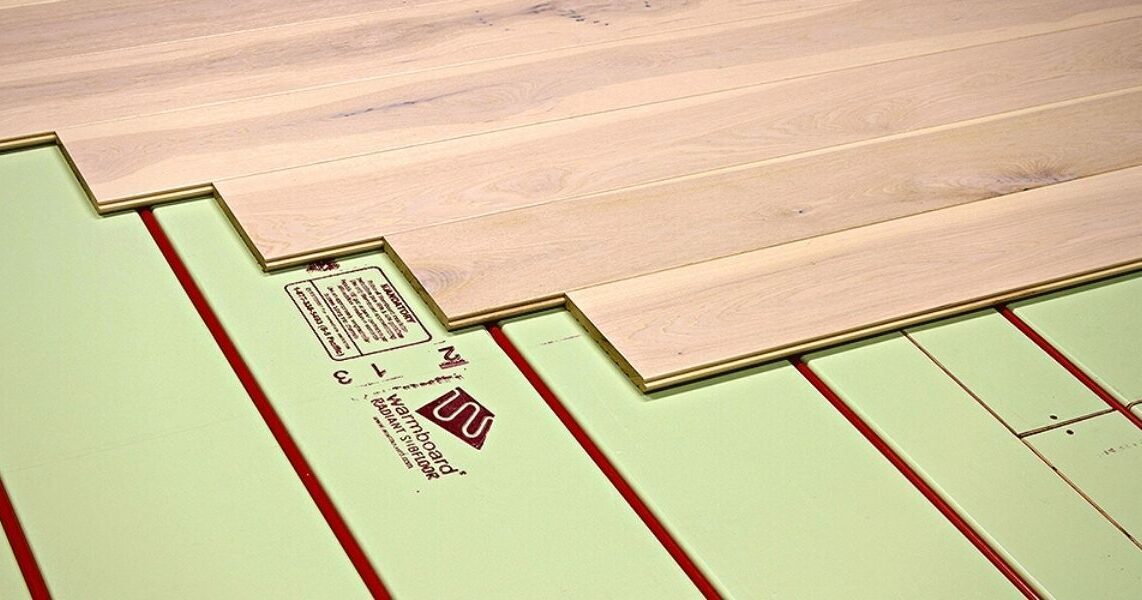
I like the insulation which is like Lego, the pipe snaps in. For my garage, I stapled the pipe to plain insulation - more layout, and requires two people - Lego insulation much better result. It also keeps the pipe safe when you walk on it (the concrete floor guys are casual about this!). You're supposed to protect the pipe from sunlight, so I sewed up protective "socks" from old tarps for the pipe which would remain exposed after the floor was poured (I also used the same pipe for compressed air outlets around the shop).

Use plastic rebar chairs to keep the rebar off the pipe, and in the middle of the poured slab. The rebar also keeps the pipe down, so it does not pop up during pouring, you don't want the pipe near the upper surface of the poured slab, in case you drill a hole for something in the slab later.

If the floor could be left unheated for any period, use glycol in the system. I just use water, but I never let it freeze. When I first "started" the garage floor, it was just at freezing, and the floor water froze a little in one corner. I had to use a heat gun on the floor to get it flowing, and it worked.

Arrange your loop terminations neatly where they come out to the boiler, you'll be happy you made the effort later. Make sure your gas line is coming to the same place as the loops come out of the floor! I put in a lot of in floor conduit for electrical, and one for a gas line. My boiler is in the enter of the workshop, mounted to a center pillar, as that worked better for my arrangement. But I expect that most boilers are placed on a convenient wall. My air and exhaust go straight up, out a roof chimney.

The floor holds heat really well, and is nice when you're going to lie on it to work under a machine! I would do this for every floor I would ever pour!

IMG_7148.JPG


IMG_7163.JPG
 
/ In-Floor Heating for a Shop & Greenhouse - Considerations ? #3  
In floor radiant shines for steady comfort but for your infrequent use, explore other means.
With radiant you'll need hours to heat up your shops slab and everything in it only to shut it down. It's arguable that leaving a radiant system with a well insulated building "on" for the season at a much lower temperature your fuel use could be similar "spot heating a couple of days every 2 weeks. Insulation is everything regardless of how you heat in terms of economy.
 
/ In-Floor Heating for a Shop & Greenhouse - Considerations ?
  • Thread Starter
#4  
In floor radiant shines for steady comfort but for your infrequent use, explore other means.
With radiant you'll need hours to heat up your shops slab and everything in it only to shut it down. It's arguable that leaving a radiant system with a well insulated building "on" for the season at a much lower temperature your fuel use could be similar "spot heating a couple of days every 2 weeks. Insulation is everything regardless of how you heat in terms of economy.

That's a good point - i have heard that once it is warm, keeping it a low temperature takes little energy. So it may be less energy to heat and keep at a low temp than cycling hot/cold. May take a bit of experimentation to find the right balance.

For my immediate and intermittent needs, a simple blower may be a cheap solution. Perhaps I will do that while I debate the merits of buying the boiler.

I should add that I can envision that in a few years, when I move to semi-retirement - and beyond - I would spend more time in the shop. Perhaps I make in-floor heat ready now and install the boiler when I begin to use the shop on a more frequent basis (or I find a bargain).

Michael
 
Last edited:
/ In-Floor Heating for a Shop & Greenhouse - Considerations ?
  • Thread Starter
#5  
I have done in floor heating in both my attached [to house] garage, and my separate workshop. I am very happy with both systems, but yes, the boilers are expensive! My heating expert made the design recommendations for me, and I did the work laying the pipe. There are many considerations. I don't claim to be expert at it, but it seems that I have avoided mistakes which could have been made - both systems work excellently.

I like the insulation which is like Lego, the pipe snaps in. For my garage, I stapled the pipe to plain insulation - more layout, and requires two people - Lego insulation much better result. It also keeps the pipe safe when you walk on it (the concrete floor guys are casual about this!). You're supposed to protect the pipe from sunlight, so I sewed up protective "socks" from old tarps for the pipe which would remain exposed after the floor was poured (I also used the same pipe for compressed air outlets around the shop).

Use plastic rebar chairs to keep the rebar off the pipe, and in the middle of the poured slab. The rebar also keeps the pipe down, so it does not pop up during pouring, you don't want the pipe near the upper surface of the poured slab, in case you drill a hole for something in the slab later.

If the floor could be left unheated for any period, use glycol in the system. I just use water, but I never let it freeze. When I first "started" the garage floor, it was just at freezing, and the floor water froze a little in one corner. I had to use a heat gun on the floor to get it flowing, and it worked.

Arrange your loop terminations neatly where they come out to the boiler, you'll be happy you made the effort later. Make sure your gas line is coming to the same place as the loops come out of the floor! I put in a lot of in floor conduit for electrical, and one for a gas line. My boiler is in the enter of the workshop, mounted to a center pillar, as that worked better for my arrangement. But I expect that most boilers are placed on a convenient wall. My air and exhaust go straight up, out a roof chimney.

The floor holds heat really well, and is nice when you're going to lie on it to work under a machine! I would do this for every floor I would ever pour!

Super useful post and pictures - thanks so much.

I definitely like the advantages of the "Lego" - I will definitely look into getting that. Is it a thin sheet which sits on top of your slab insulation or does it replace some of the slab insulation (I am currently planning for 3" of insulation under the slab)?

I like the look and advantage of the conduit sweeps and verticals where your pipe comes up to the boiler area. The only in-floor heating system I have seen roughed-in just had exposed pipe coming up the wall.

I hadn't thought of conduit for the gas line - I have been wrestling with the fact that the logical entry for the gas line is on my south wall but the logical place for the boiler is on the north - conduit across the floor seems like an elegant solution.

That's a busy floor. Do you have an "after" picture - particularly of your boiler setup?

Michael
 
/ In-Floor Heating for a Shop & Greenhouse - Considerations ? #6  
You can zoom into the middle of this photo, and see the boiler (white) on the pillar wall, the wood stove is behind it (for quick heating!). The boiler plumbing is quite something, you'll need someone familiar to do that.

IMG_0855.JPG
 
/ In-Floor Heating for a Shop & Greenhouse - Considerations ? #7  
Keep in mind that all an in slab radiant system needs is around 110* +/-. A simple job for even a regular hot water heater.
My design guy suggested a "Bock" hwh that has a separate supply (from domestic hw) for radiant heating. My choice of fuel was oil and this is used up until we fire our (indoor) wood boiler.
Imo the white "coffee cup" (Lego) foam is very convenient for the installer but severely lacks in actual insulation value compared to the blue or pink foam. Stick with your proposed 3" that will reward you forever despite the grumblings of the installer.
 
/ In-Floor Heating for a Shop & Greenhouse - Considerations ?
  • Thread Starter
#8  
Keep in mind that all an in slab radiant system needs is around 110* +/-. A simple job for even a regular hot water heater.
My design guy suggested a "Bock" hwh that has a separate supply (from domestic hw) for radiant heating. My choice of fuel was oil and this is used up until we fire our (indoor) wood boiler.
Imo the white "coffee cup" (Lego) foam is very convenient for the installer but severely lacks in actual insulation value compared to the blue or pink foam. Stick with your proposed 3" that will reward you forever despite the grumblings of the installer.

A HWH certainly has a different price point.


Since I am the installer I guess I will need to keep the grumbling to a minimum :)
 
/ In-Floor Heating for a Shop & Greenhouse - Considerations ? #9  
Since I am the installer I guess I will need to keep the grumbling to a minimum :)
That happens a lot with me. Generally the guy ordering the installation (Me) dreams up things to improve the process overnight, then Me, Myself, and I talk it over in the morning and come up with a plan.
 
/ In-Floor Heating for a Shop & Greenhouse - Considerations ? #10  
I heat a 24' x 32' shop with two 1500 watt electric heaters. R30 in the walls, R60 in the ceilngs. The 5 1/2" Concrete slab has 6" of closed cell foam under it. The thermal mass of the concrete keeps the Temps above 55° F for several days. The heat is only on if the Sun is shining. Solar is only source of power.
If the temps get below 10° F, I have to supplement the electric with a 12,000 btu propane heater.
 
Last edited:
/ In-Floor Heating for a Shop & Greenhouse - Considerations ? #11  
Max I was wondering how much solar gain the OP would have with his greenhouse if it's attached? 👍
Your super insulation is a prime example of the importance of insulation.
The more you "worry" about insulating, the less you need to be concerned about heating (or cooling)!
It's really that simple.
 
/ In-Floor Heating for a Shop & Greenhouse - Considerations ? #12  
Max I was wondering how much solar gain the OP would have with his greenhouse if it's attached? 👍
Your super insulation is a prime example of the importance of insulation.
The more you "worry" about insulating, the less you need to be concerned about heating (or cooling)!
It's really that simple.
If you read his other thread, which is a good read.

Building a shop / shed / barn / greenhouse

He has an 8' x16' greenhouse lean to on one side of his building. The length being twice the depth is the rule of thumb for green house buildings to utilize solar gain to the maximum. In his climate in Alberta it will definitely extend his growing season. It will ad some solar gain to his shop for limited hours in the winter, just has to isolate the greenhouse losses at night by an insulation barrier to not lose more than is gained during the day.
I am sure from reading his threads, that he will figure it all out.
 
/ In-Floor Heating for a Shop & Greenhouse - Considerations ? #13  
I have in floor heat in one of my bathrooms and it takes forever to warm up.

Based on that, I used a mini split system in my 12' x 22' shop. It provides both heat & A/C and brings the room to the desired temp very quickly.
 
/ In-Floor Heating for a Shop & Greenhouse - Considerations ? #14  
I did radiant in my shop and house throughout. You don't NEED a boiler to do this. I used an on-demand HW heater (nat gas) for both. You could also use a conventional tank HW heater. The one caveat I found with the on-demand is that they are super sensitive to hard water, and if you use hard water to fill them, the units will fail in all too short of a time (couple years). I wish I knew that going in.... Some will say that it takes forever to heat up, but I find mine heats up pretty much fully within an hour or two from cold when I start it up in the fall. I haven't fired it up this year yet but probably will fairly soon as it has gotten a lot colder the past week or two now.

I did add glycol as an insurance policy even though I heat the shop throughout the winter. I figured if I lose power or something I didn't want the risk of freezing up.

I have 4" of insulation below my slab, and went with a frost-protected shallow footing style with additional insulation below the footings and outside. If you have any plans to bolt anything down to the floor, you either need to plan for it now, or pretty much forget it. I left space to be able to bolt down a car lift someday (still waiting...) and took measurements of that before the pour.

This is the shop tubing, divided into 2 zones - front and back. There is a wall across in the center where you see the gap.
Radiant Tubing done (Large).JPG


And here is the heating layout and plumbing. I didn't have the control wires in yet, but that is all that is missing. The controls are on that small section of plywood above the plumbing. The stuff on the plywood to the right is fiber internet service. The one manifold for this side is below and the other one is on the other side of the wall.

Shop heat plumbed (1) (Medium).JPG
 
/ In-Floor Heating for a Shop & Greenhouse - Considerations ? #16  
Its always nice seeing other installs!
I built my 28x32 (12' ceiling) shop a few years ago. 5" thick slab. 2" of EPS foam under it.
I used an electric boiler to heat glycol.
I also have a wood stove. I have a water jacket on top of the wood stove as well, it'll preheat the water a little bit as with the stove going, the boilers thermostat wont turn on.
If i had to run electric only, it would be a few hundred a month in electricity. Electric boiler was cheap to install.
Floor looses and gains heat very linear it seems to me. It takes a full day to warm the slab.
My pex is stapled to the foam. In my basement in house, floor is also heated, that pex is tied to mesh and was pulled into middle of slab. I dont think it matters.
My walls are R28, ceiling r50ish. We get cold winters here. I love the heated floor, having it dry and quick recovery after the overhead door has been opened.
 

Attachments

  • 20230105_151800.jpg
    20230105_151800.jpg
    1.7 MB · Views: 157
/ In-Floor Heating for a Shop & Greenhouse - Considerations ? #17  
I designed our in floor heat differently from any other. It works wonderfully. See if any of this works for you.
1. Any specific considerations I should make for boiler location?
The location for the boiler doesn't matter. What does matter is laying out the floor in "zones".
You can have as many or as few as you want, but zones allow each to be heated or isolatd individually.
I used 8 zones and each one has it's own wall thermostat that turns that zone on/off. Each zone can be operated indiviually or in any combination.
All of the zones are connected to a manifold and then the manifold is connected to the boiler.
Boiler, all the levers and controls and associated piping are arranged in the special hydronic utility room. Mine also has tools and a workbench and a library. It's a sanctuary.

2. Do you recommend in-floor heat and would you do it again 3. If it is gas or propane, is it vertically vented or just out the wall or out the wall and then vertical?

Of course I would recommend in-floor heat. There are no downsides. I wasn't looking for full house heat - my main interest was in something fail safe that would maintain a baseline temperature of about 60 degrees inexpensively and without any fire danger. We live in a cold climate, have lots of plants, and like to be able to take come and go without worrying about home heat.

I vented - and inspected - for a boiler vented out the wall and then vertical.
But then I didn't use the vent! Read on....

After reading all the information and doing a lot of heat transfer calculations I didn't like any of the commerial recommendations. They all seemed like they didn't take advantage of this manner of heating.
Or was it that I just was not understanding the subject???
So I just couldn't decide on a boiler....., to keep building inside during the wintr and to do something - anything - so I could test the system until I understood it better I bought a standard 50 gallon 220 volt Hot Water Heater. My choice was a Marathon brankd epoxy/fiberglass wound type so that the hydronic fluid would not corrode it. Total cost of this "boiler" was hundreds of dollars instead of thousands.
I typically run about 5 psi and fluid at 100 degrees.
BTW, "hydronic fluid" is just propylene glycol or RV anitfreeze plus distilled water. You can pay a lot more, but that is what you get.
I typically run about 5 psi and after a day to reach equilibrium I see the fluid vary from about 95 to 110 degrees as it enters the manifold.
Circulation is via a small "taco" pump about the size of my hand. Very low wattage silent pump.

The floor is working from about Oct until May each year - actually it is ON all the time, but I turn the thermostats down so it goes to sleep half the year.

3. Recommendations & dos and don'ts for laying the pipe.


Make each zone of pipe within its section of concrete to be one continuous length of your hydronic heat pipe. Avoid any joints where you cannot service them standing or sitting comfortably in your "hydronic room.
Space within the concrete on 6" to `12" apart using 1/2" pex in a zig zag pattern.
Take lots of photos before pouring the concrete.
Once the concrete is in, you cannot drll through the floor for any reason to access basement or crawl space without the danger of hitting a buried pipe. So before pouring, make yourself some way to access through the concrete. Put some thought into that. I used stubby pieces of pipe level with the finished floor.

4. OTHER - finishing the floor

I made the living room floor to have a perimeter of hydronic & concrete and the center section a faster thermo-responding design of hydronically heated hardwood wood. So it looks tradtional. Most of the rest of the house has very smooth stained/waxed/buffed concrete floors. Basic house construction is lots of massive beams and varnish....like an old sailboat. You can finish concrete floors really nicely with a water stain and then burn wax into it with an industrial buffer like they do for gymnasium floors. Makes the floor look like old leather. Lots of rugs.

Enjoy,
rScotty
 
/ In-Floor Heating for a Shop & Greenhouse - Considerations ? #18  
/ In-Floor Heating for a Shop & Greenhouse - Considerations ? #19  
There is alot of science and design in making loops efficient.

Not much different than duct work sizing in a house. Sure....you could throw together duct work and blow the conditioned air through the house.....and it will work. But a proper system is designed for balance and efficiency.

The perimeter of the slab needs the loops closer together than the middle. Otherwise the perimeter of the slab will be colder and the middle will be warmer.

You need to pay attention to which is supply and return. Sending a loop supply down one wall.....return it down the same wall. Not just make a circle around the building. Cause if you do that for a few consecutive loops.....you basically have all your supply (hot) loops all next to each other and all the return (cold) loops next to eachother. MAkes for uneven heating.

And yes....it is a very SLOW temp change with radiant. Dont expect to go out there when its 40 and jack the thermostat and have it 70 by lunch time. Radiant shines for a constant, even, and quiet heat. Which is why I heat my shop with wood. Quick warmup if Im down there, and cost nothing if im not.

Also....the perimeter of the slab needs insulated as well. Many people overlook this and only insulateunder the slab. But most good installs will dig a trench along your band-board/skirt board.....and install a vertical 2" foam board going down into the ground about a foot below slab level. Prevents cold creep from coming in under the slab.

Also gotta watch freeze if you install loops but then choose not to heat a certain area.

Doing radiant heat the right way is definitely not something to just DIY-wing it. You need to know and understand exactly what you are doing because there is no way to correct it in the future
 
/ In-Floor Heating for a Shop & Greenhouse - Considerations ? #20  
And yes....it is a very SLOW temp change with radiant. Dont expect to go out there when its 40 and jack the thermostat and have it 70 by lunch time. Radiant shines for a constant, even, and quiet heat. Which is why I heat my shop with wood. Quick warmup if Im down there, and cost nothing if I'm not.

That's worth repeating. Good efficient radiant is slow to heat and cool. It is best used for maintaining a baseline temperature - that is its strength & makes it great for houses but less so for a shop.

No matter how good the radiant is, you'll want to add something else for quick heat. Propane direct vent or wood stoves are both common here.
rScotty
 

Marketplace Items

KOMATSU WA270 (A58214)
500BBL WHEELED FRAC TANK (A58214)
500BBL WHEELED...
2003 Big Tex 10PI 16ft. T/A Pipe Top Utility Trailer (A55973)
2003 Big Tex 10PI...
WATER TRAILER (A58214)
2007 FORD F-150 XL TRITON (A58214)
2007 FORD F-150 XL...
APPROX (20) 9'-3"X3" SQUARE TUBING (A60432)
APPROX (20)...
 
Top