You are using an out of date browser. It may not display this or other websites correctly.
You should upgrade or use an alternative browser.
You should upgrade or use an alternative browser.
Joined the red club!
- Thread starter Whitbread
- Start date
- Views: 17847
More options
Who Replied?
/ Joined the red club!
#41

scaredychicken
Veteran Member
- Joined
- Jul 21, 2012
- Messages
- 2,278
- Location
- Salmon Arm BC, Canada
- Tractor
- John Deere 160 (1988), Arctic Cat 400 ATV (2006), Kubota BX23S (2018), Jacobsen Super Chief 1450 (1969), Cub Cadet RZT S50 zero turn mower (2012)
terrific, way to go

ljjhouser
Veteran Member
Congratulations on the tractor. Look very nice. And looks like it came at the right time. Have fun, be careful.
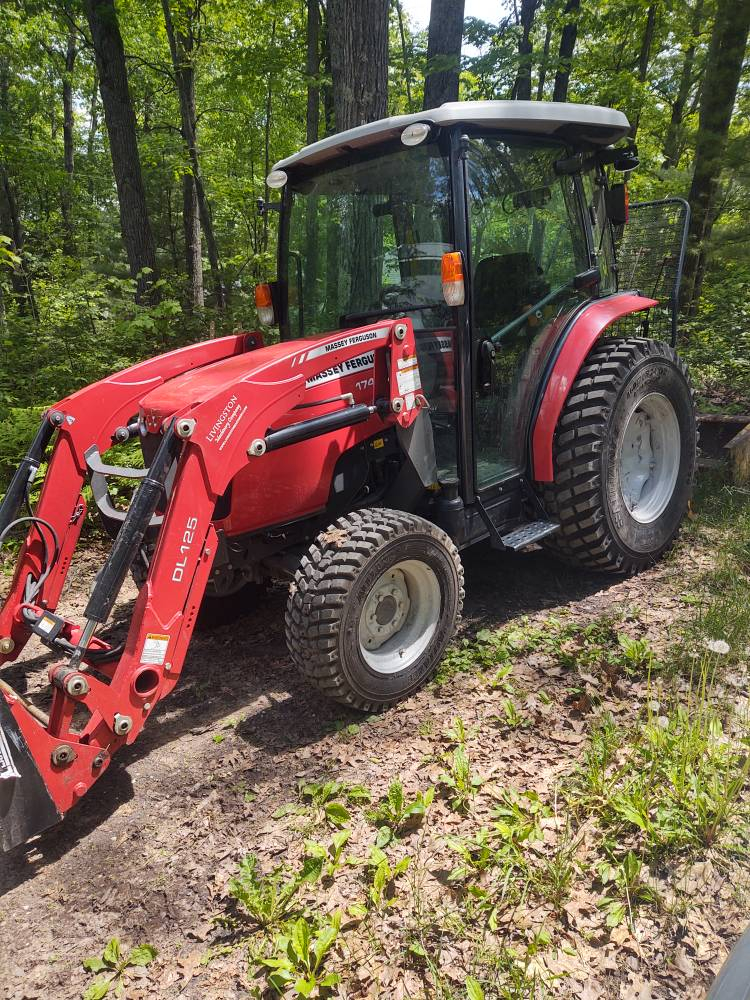
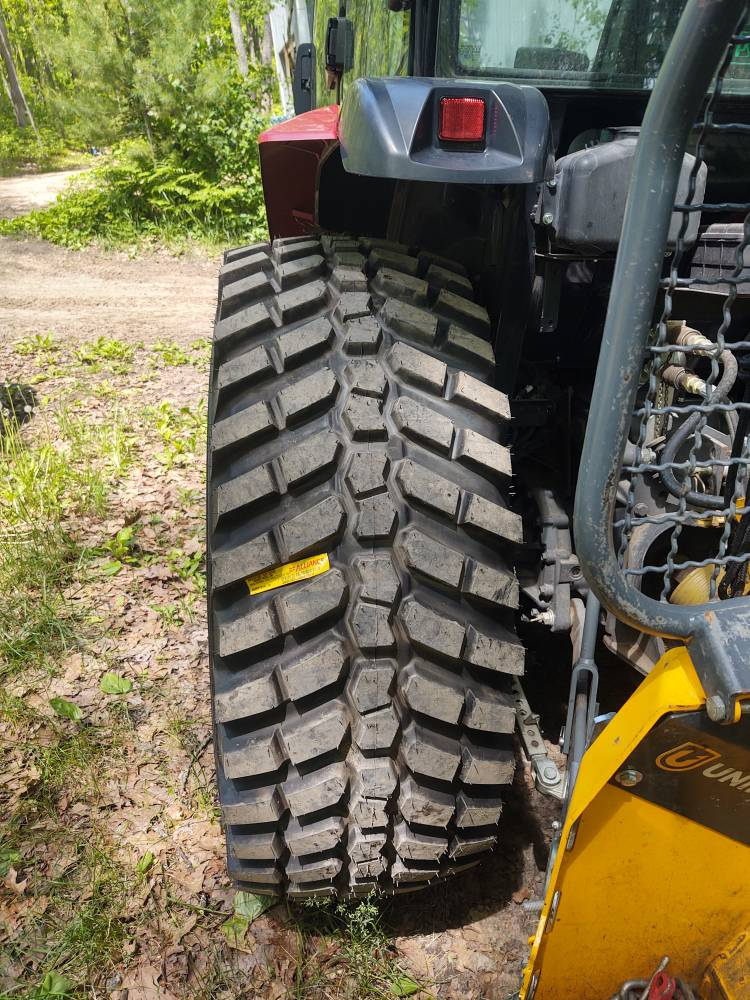
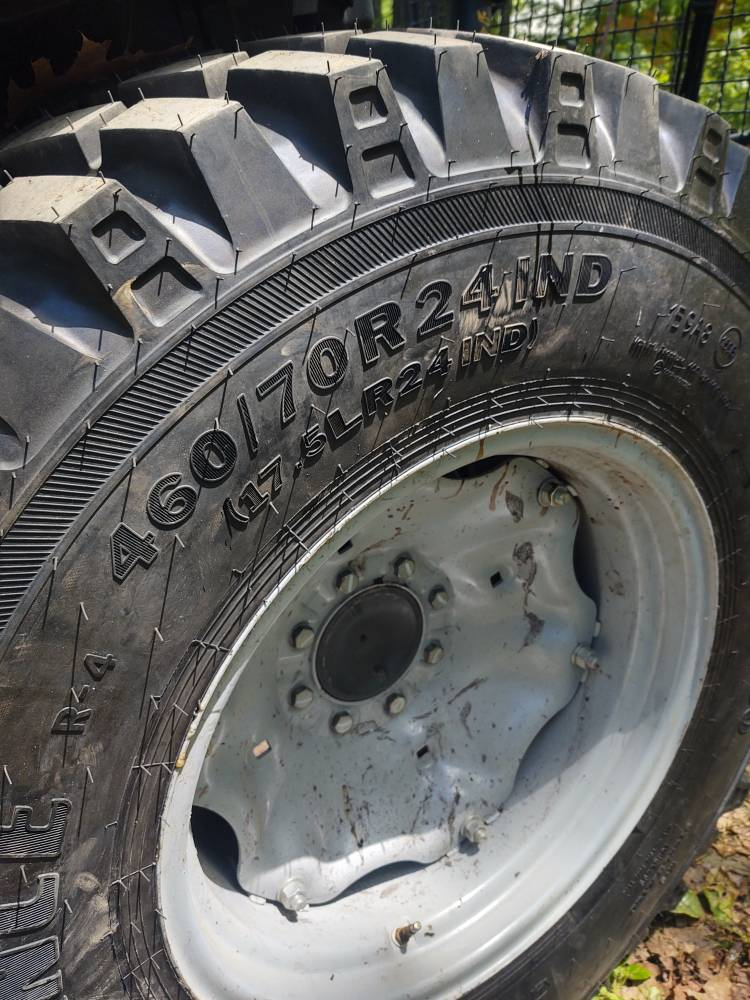
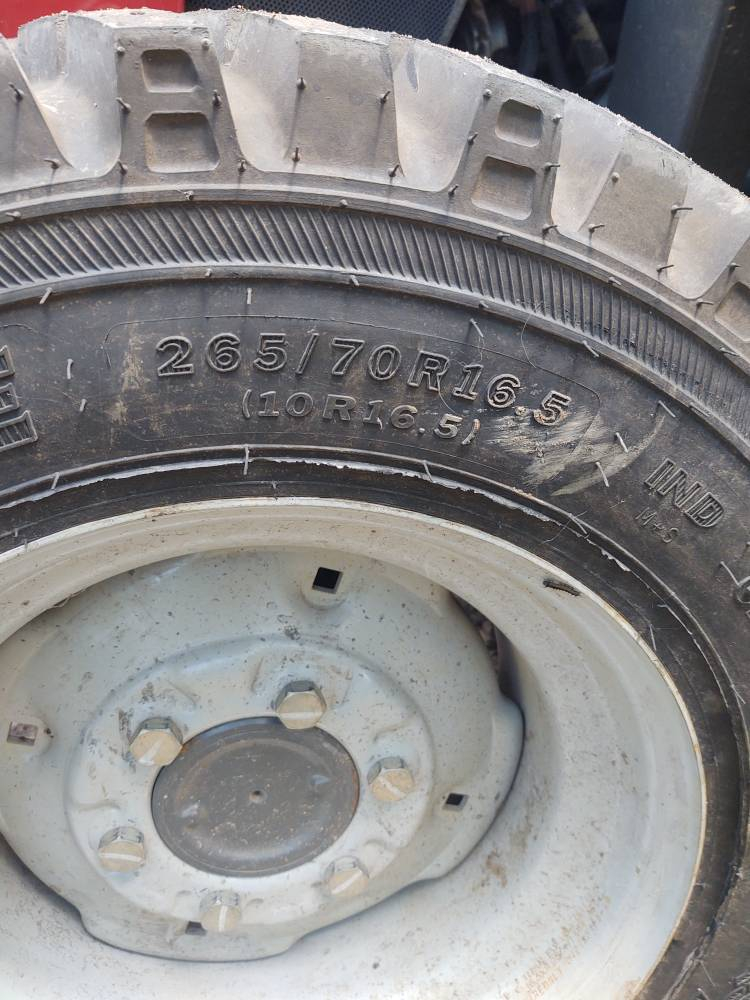
The correct size rear tires finally came in so I ran down to the Mennonite tractor shop and helped them switch the tires out and fill all 4 with rim guard. If these save chaining up for the winter, they will be worth every penny.

JWR
Elite Member
- Joined
- Apr 19, 2011
- Messages
- 4,127
- Location
- So MD / WV
- Tractor
- MF 2660 LP, 3 Kubota B2150, Kubota BX2200, MH Pacer, Gravely 5660, etc.
Are those what's called "R14?"
ljjhouser
Veteran Member
Nice looking tires. I like them. The picture showing the size also says R-4, They don't look like R4.
metalbender
Veteran Member
Sweet tractor, looks the same as my 1742. Just the right size for 90 % of the work at hand.
Not exactly, but they are a hybrid design tire also. I now realize I forgot to specify that these are Alliance 550 tires made by Yokomaha. They are a radial tractor tire marketed towards municipal equipment or farm equipment that travels frequently on roads but still needs to handle heavy loads and have good traction off road. They are rated up to 40mph and 10,220lbs load at 64psi on the rears.Are those what's called "R14?"
In my opinion, these or bkt ridemax 696 should be the "standard" option on compact tractors instead of r4's.
They're definitely not a normal r4, maybe the sidewall says it because these 2 particular sizes are a common r4 replacement size?Nice looking tires. I like them. The picture showing the size also says R-4, They don't look like R4.
Here's what the Yokomaha site says about these Alliance 550's:
"550 MULTIUSE pattern is used in agricultural applications because of its versatile tread design. Specific block tread design enables high performances on snow-covered as well as on sandy terrains. Basic directional lug design, divided by separated blocks, provides a good grip on soft surfaces. In addition, high number of blocks and rubber to void tread ratio, enables long tread wear life and low rolling resistances during transport operation on hard surfaces. Uniform ground pressure distribution and tread wear are provided by steel belted carcass structure. In addition, steel belts give the most efficient puncture protection."
Looking at my tracks on the dirt, there is way more rubber in contact with the ground now vs the r4s it came with. These radials have a much more square profile. I can't wait to try them out tomorrow skidding some logs!
Randy Gann
Silver Member
- Joined
- Nov 8, 2015
- Messages
- 105
- Location
- McLeansville, NC
- Tractor
- Oliver 550 Diesel, Massey 1528 with gel
Great looking tractor and love the new tires. I have a little 1528 and just love it. A little off topic, but I wonder why the smaller Diesel engines have not gained the popularity here in the US that they have in Europe. My oldest son lives in Italy and drives a little Fiat diesel. It gets great mileage. My other son lives in Ky and has a Ford Transit 15 passenger van converted with handicap lift with a Diesel engine. If my memory is correct he gets around 24mpg on the highway even when fully loaded. His van is the high top version. So I am impressed with his mileage. Your GC diesel sounds like a great vehicle. Just wish they made more smaller diesels for the US market, even with the cost of fuel going up!
JWR
Elite Member
- Joined
- Apr 19, 2011
- Messages
- 4,127
- Location
- So MD / WV
- Tractor
- MF 2660 LP, 3 Kubota B2150, Kubota BX2200, MH Pacer, Gravely 5660, etc.
My local Kubota dealer employee said they were "R14s" that seem to be coming through on many new tractors. I failed to get a picture but they sure look like the ones you show. VERY close anyway. Maybe a very slightly different tread pattern in the middle. The ones I saw are on an L5460 and are Good Year brand. I can see these becoming extremely popular because they will satisfy a greater spectrum of users than any other single tire -- including most private individuals (those not operating commercial loaders , those people will still want R4), a large % of the AG users who are doing a lot of mowing but not plowing, and many who want something good for snowblowing and turf cutting but not satisficed with turf tires. I predict they will take a big market share over the next couple years.Not exactly, but they are a hybrid design tire also. I now realize I forgot to specify that these are Alliance 550 tires made by Yokomaha. They are a radial tractor tire marketed towards municipal equipment or farm equipment that travels frequently on roads but still needs to handle heavy loads and have good traction off road. They are rated up to 40mph and 10,220lbs load at 64psi on the rears.
In my opinion, these or bkt ridemax 696 should be the "standard" option on compact tractors instead of r4's.
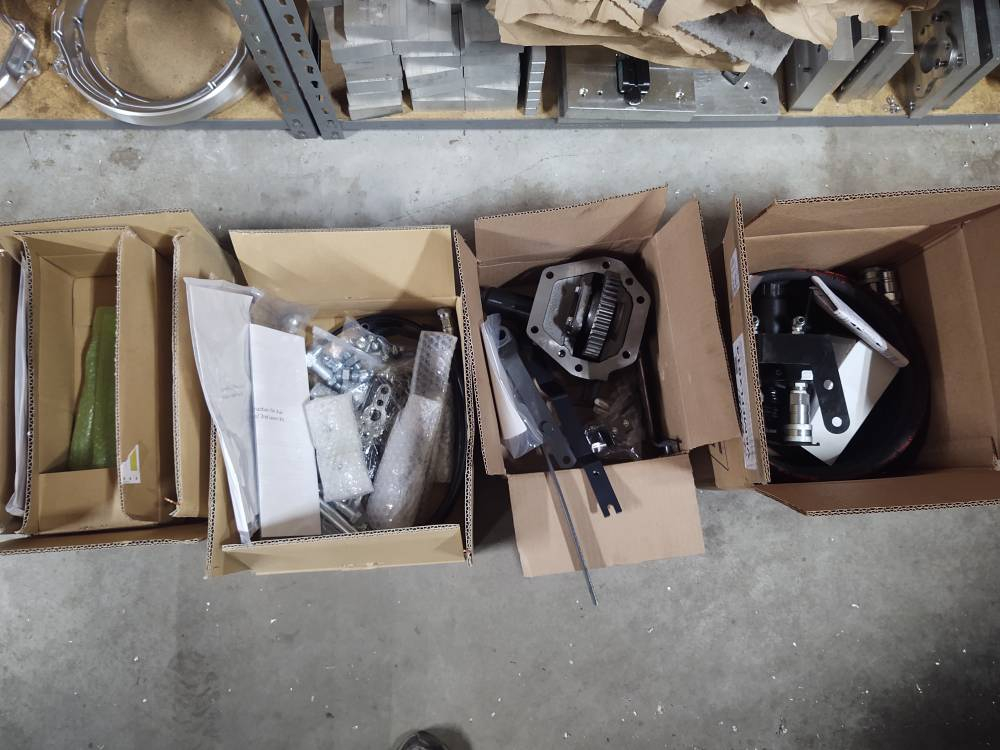
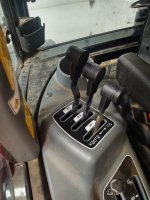
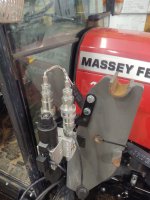
Looks like I've got some work to do! Ups man dropped off mid pto kit, 2nd and 3rd remotes, and a wr long 3rd kit. Mid pto to run the front mount blower, 3rd function for the grapple, and rear remotes for top/tilt/hydraulic rippers on box blade.

TractorTYMe
Veteran Member
Late to the joy, but might I congratulate you and a heck of a find on a super nice tractor man. On the towing thing, yeah I get crap all the time for towing my tractor with my 2004 Chevy 1500 on a 10k trailer all the time. But I have done my dues and my towing rig has worked good for thousands of miles (I mow pastures for homeowners on the side).
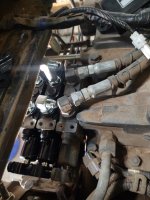
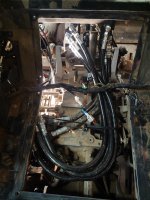
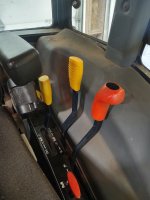
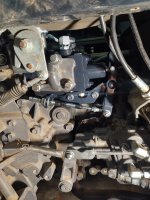
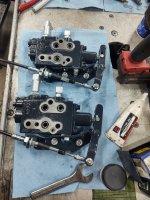
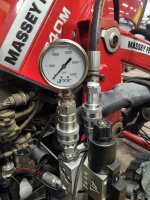
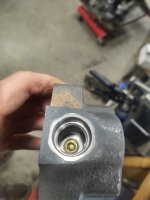
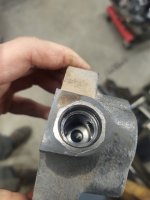
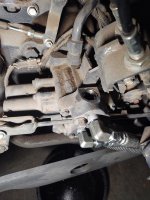
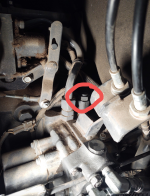
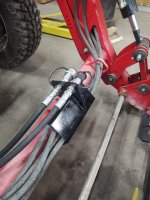
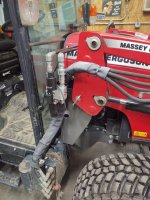
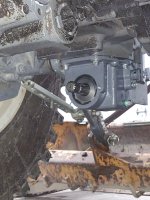
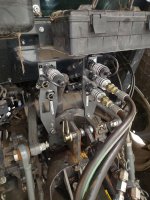
Spent a day and a half putting the 2nd and 3rd rear remotes, bumped loader valve relief pressure from 2300psi to 2700psi, wr long 3rd kit, and mid pto on. The front mount blower is supposed to be arriving in the next two weeks so I made use of time when the shop was closed.
For anyone else looking at doing this job, save yourself the $105 on the silly massey power beyond plug. Simply drill/tap the port for an 1/8" npt pipe plug.
For anyone else looking at doing this job, save yourself the $105 on the silly massey power beyond plug. Simply drill/tap the port for an 1/8" npt pipe plug.
Attachments
-
 IMG_20221125_114505313_HDR.jpg2.6 MB · Views: 160
 -
 IMG_20221125_152809159_HDR.jpg2.8 MB · Views: 160
 -
 IMG_20221126_163017830_HDR.jpg2.1 MB · Views: 167
 -
 IMG_20221126_163023423_HDR.jpg2.3 MB · Views: 175
 -
 IMG_20221125_114455060_HDR.jpg2.9 MB · Views: 178
 -
 IMG_20221125_112100869_HDR.jpg3.4 MB · Views: 163
 -
 IMG_20221125_103643074_HDR.jpg2.7 MB · Views: 174
 -
 IMG_20221125_094643604_HDR.jpg1.8 MB · Views: 168
 -
 IMG_20221125_093604529_HDR.jpg1.9 MB · Views: 172
 -
 IMG_20221124_211216727.jpg2.9 MB · Views: 182

sd455dan
Super Member
- Joined
- Oct 23, 2012
- Messages
- 6,810
- Location
- North Idaho
- Tractor
- Rhino 554, Ford 550 TLB (JD X500, MTD, Gilson riding mowers) Ford 3000-Sold
Not really, this is a 2008 Grand Cherokee crd. It's the same 3.0L diesel V6 engine and transmission that's in a Mercedes Sprinter of the same era. The Jeep weighs 5500 lb and the factory tow rating is 7700 lb. The engine has a stage 1 tune and downpipe which bumps it to 420 lb/ft of torque. There are airlift helper bags inside the rear coil springs and there's a weight distributing hitch on the trailer. Both axles are braked on the trailer also.
The tires are not loaded on the tractor, so it should be right about 3,700lbs. Add the 2000-2500 lb trailer and I'm still a minimum of 1500 lb under the factory tow rating. I've been averaging 14 MPG and it has been very smooth and comfortable towing at 70 mph.
Congrats, I think you negotiated one a heck of a good deal. That looks brand New.
Last edited:
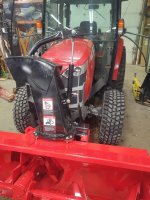
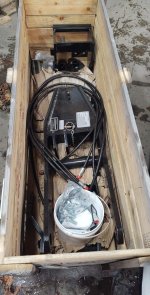
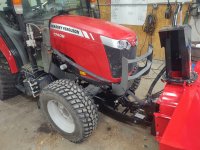
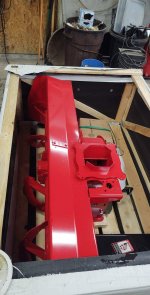
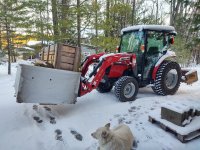
Dealer called saying the blower kit came in! It was definitely not quite "bolt on" like you'd expect though. A handful of wrong hardware, holes too small, and the latch on the quick connect mechanism needed tweaks. But the war was won and then mounted a 1x6 hydraulic ram for the chute deflector that runs off the wr long 3rd function valve.
Attachments
Last edited:
JWR
Elite Member
- Joined
- Apr 19, 2011
- Messages
- 4,127
- Location
- So MD / WV
- Tractor
- MF 2660 LP, 3 Kubota B2150, Kubota BX2200, MH Pacer, Gravely 5660, etc.
None of your attachments will show.

lpakiz
Gold Member
- Joined
- Jul 25, 2017
- Messages
- 441
- Location
- Greenwood, WI
- Tractor
- MF1754 HST, Cab, 6 foot Front Mount Snowblower
I GUARANTEE you will love that front mount blower. Didn't notice if you have Hydrostatic drive but if you do, you are GOLDEN.
I leave my loader on with the blower. I mounted a hydraulic-pressure rated ball valve in the lift arm line. Its just suspended on the hoses, but the mounting points are close, so it doesn't sag or droop.
Then when Im ready to mount the blower, I remove the forks/bucket outside, get into the shed and raise the arms up about 2" higher than i could bump my head on them. Roll the tilt all the way back. Close the hydraulic valve, shut off the engine, then put the control levers in float, raise, lower everywhere, to drain off any latent pressure.
Then pop the lines off and tie them up. I made a hook on the loader frame somewhere and hang a tin can from it and put all 4 hose tips in the can to keep drizzling hydraulic oil off the glass.
Then mount the blower under the raised arms. I've done this since 2016--loader has never been off since I discovered this. Once in a while the arms interfere with the flow of snow from the chute but usually I can adjust my way out of that.
I leave my loader on with the blower. I mounted a hydraulic-pressure rated ball valve in the lift arm line. Its just suspended on the hoses, but the mounting points are close, so it doesn't sag or droop.
Then when Im ready to mount the blower, I remove the forks/bucket outside, get into the shed and raise the arms up about 2" higher than i could bump my head on them. Roll the tilt all the way back. Close the hydraulic valve, shut off the engine, then put the control levers in float, raise, lower everywhere, to drain off any latent pressure.
Then pop the lines off and tie them up. I made a hook on the loader frame somewhere and hang a tin can from it and put all 4 hose tips in the can to keep drizzling hydraulic oil off the glass.
Then mount the blower under the raised arms. I've done this since 2016--loader has never been off since I discovered this. Once in a while the arms interfere with the flow of snow from the chute but usually I can adjust my way out of that.
Last edited:
Try taking a look again, I re-uploaded them. Go figure.None of your attachments will show.
I hope so! I had a front mount on my old new holland so this is what I'm used to. I looked at inverted 3pt units, but they were hardly any cheaper when you added a rear scraper blade and hydraulic chute rotation/deflector.I GUARANTEE you will love that front mount blower. Didn't notice if you have Hydrostatic drive but if you do, you are GOLDEN.
I leave my loader on with the blower. I mounted a hydraulic-pressure rated ball valve in the lift arm line. Its just suspended on the hoses, but the mounting points are close, so it doesn't sag or droop.
Then when Im ready to mount the blower, I remove the forks/bucket outside, get into the shed and raise the arms up about 2" higher than i could bump my head on them. Roll the tilt all the way back. Close the hydraulic valve, shut off the engine, then put the control levers in float, raise, lower everywhere, to drain off any latent pressure.
Then pop the lines off and tie them up. I made a hook on the loader frame somewhere and hang a tin can from it and put all 4 hose tips in the can to keep drizzling hydraulic oil off the glass.
Then mount the blower under the raised arms. I've done this since 2016--loader has never been off since I discovered this. Once in a while the arms interfere with the flow of snow from the chute but usually I can adjust my way out of that.
That's not a bad idea! I'm so used to the involved process of swapping between the loader and blower on my old NH, so the fact that both the blower and loader are quick connect is spoiling me.
Here are some similar links:
- Replies
- 11
- Views
- 3K


