Battery based electric vehicles of today and tomorrow.

Status
Not open for further replies.
/ Battery based electric vehicles of today and tomorrow. #5,621  
I can imagine all those large farm outbuildings being covered with solar panels.
That would be OK, as long as those panels aren't covering good productive land. For one thing, it's pretty damn stupid to destroy a CO2 consuming forest for a solar "farm"
Personally, I don't see solar power being effective for high density areas. I do think Solar will be good for individual homes and, in some instances, farms
 
/ Battery based electric vehicles of today and tomorrow. #5,622  
That would be OK, as long as those panels aren't covering good productive land. For one thing, it's pretty damn stupid to destroy a CO2 consuming forest for a solar "farm"
Personally, I don't see solar power being effective for high density areas. I do think Solar will be good for individual homes and, in some instances, farms
This could be the best comment in 5623 posts. 👍
 
/ Battery based electric vehicles of today and tomorrow. #5,623  
I can imagine all those large farm outbuildings being covered with solar panels.
Relatively common site here, and other parts of the world I'd suspect.....

Likely same your side of the border, I've noticed an explosion of self-storage facilities the last 40 years (Do we have too much Junk ?... but that's another thread.... :cool: ). I've noticed many self-storage places here, totally roofed over with PV panels.

Rgds, D.
 
/ Battery based electric vehicles of today and tomorrow. #5,624  
Do we have too much Junk ?... but that's another thread.... :cool: ).

Short answer, YES! Storage owners tell me that most of the things there aren't worth as much as the rent people are paying. I once dated a woman who had 5 dining room table and chair sets... she kept rotating them out, 4 in storage while the fifth was being used.
She was one of those people who move every two years, as soon as she didn't need to worry about capital gains on each home.
 
/ Battery based electric vehicles of today and tomorrow. #5,625  
Rivian had a good week. I’ve read and watched some reviews, seems to be an overall favorable impression so far of the R1T.
They also picked up a wee bit of operating capital.
 
/ Battery based electric vehicles of today and tomorrow. #5,626  
Its interesting how North Americans will frame the usefulness of EVs. And I'll admit I'm using some very large brushes to point out why EVs are problematic in North America, yet perfect solutions for parts of Europe and the British Isles. As a younger man, from 1976 to about 2003, I'd driven an ICE vehicle from the Pacific West Coast to the Mid-East Coast, and back, at least 11 times. About 3,400 miles each way and I drove near every route from Route 2 in the North to Route 10 in the South, and most in between.... 90, 80, 70 etc. Shortest drive was four days, and the longest, 2 weeks. For many years, 1982 to 2011, I also, every other month or so, would take a train or bus or drive from Eugene, Oregon to Seattle, Washington. The train was always more expensive, then driving, even if I added the parking fees, and added 2 hours to the trip. The bus, Grey Hound, was less expensive than driving, but, frankly, a depressing experience, on clapped old ICE buses, filthy stations, and grumpy staff and sketchy fellow passengers.


Wife and I have been traveling to England, Italy or France, near every year for the last 17 years. Seeing, over time, how these counties have adopted EVs has been fascinating to us.


Just before the pandemic in 2018, our last trip was a top to bottom trip through France only using trains and buses.


There is no way to compare the compactness of Europe to the vastness of the USA.


So when I read a post comparing a particular European country with the USA, the comparison makes no sense. In Europe you can get a train to most any city, and then take a bus to near any more rural location. Owning a car in Europe is VERY expensive.


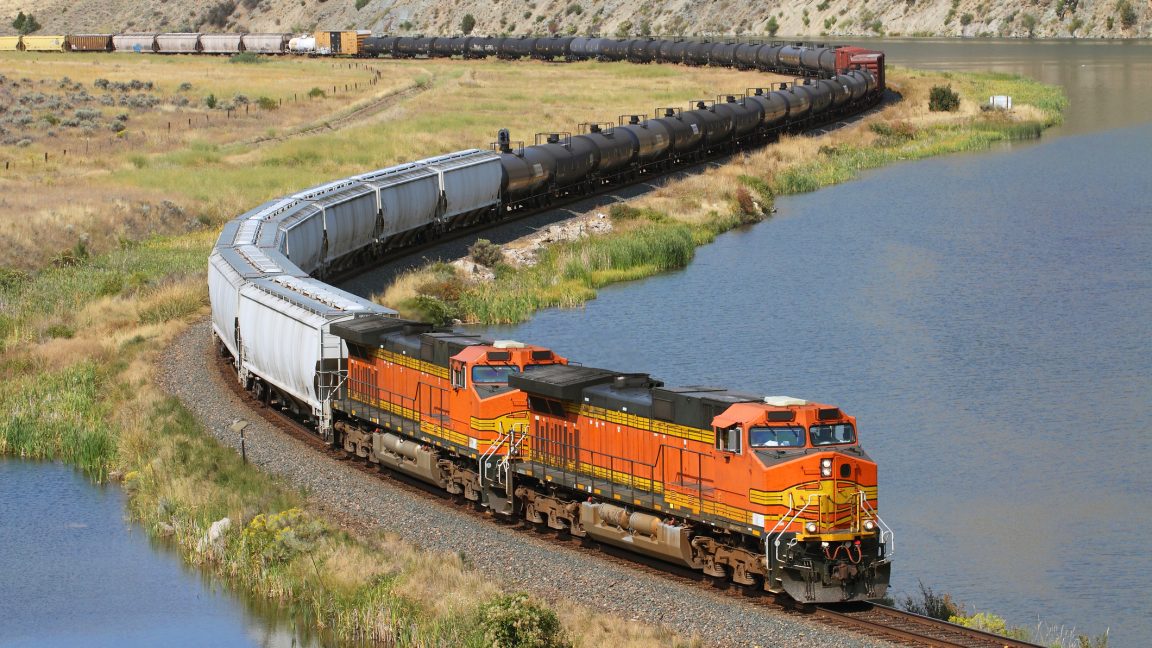
In Europe, pubic mass trans is a point of National Pride and heavily subsidized. . The Government Owns the railways, on which private companies bid to use the tracks. In the USA, public mass trans is an after thought, Amtrak doesn't even have the right of way on these privately held rail lines owned mostly by Union Pacific and BNSF. This plays into the EV equation in the sense that there are few, spur lines, that Amtrak operates on, and few private bus lines to take you from the Train Station to your destination. So you have to have a car if you are going anywhere out side the main point to points that Amtrak operates in. This is a general, “do I even need a car?” consideration.


The largest Mass Trans System in the US is the Yellow School Bus. There are 480,000 school buses in the USA, only 2,100 of those are EVs.


In comparison, in England they are publicly committing 140 Million Pounds to replace at least 500 of their school buses to all electric, with the next goal being 4,000 buses in the next five years. All for a much smaller population


These are usually small countries , with few people that people use as comparisons. And some of these comparative counties have huge wind generated electrical potential. The wind blows all the time in the Northern Sea. And their cities are closer together and well with in the current 140 mile range of average EVs. My next biggest city is Portland, 110 miles away, meaning I'd have to find a QUICK charging station. One of the eight, on the way back. And most likely have to be a subscriber to the Quick charge, and have the right interface to do that to have a 20 minute experience ....... Gas only has one interface, takes 5 minutes and at damn near every exit,... its available.

Our impressions of Europe, is that, we wouldn't need a car at all, if we moved there. Aside from more rural areas of Italy, the trans systems were cheap, organized, on time, and clean. “Do you need a car, anyway?” Which, I believe is the larger question when we compare the USA to Europe. If we lived in an Urban area of Europe the answer would be, “No.” Even though electricity is very expensive in Europe: What we would want is a tiny electric car to get us to the next village and back for only local trips.

This doesn't work in the USA. Its too big, and there is no public will for any tax to support mass transportation infrastructure. What does work in the US, is smaller ICE type cars that get better then 30 mpg, usable on our 75 MPH Hiways. My 1993 Ford Festiva gets 35 MPG and the Wife's 2017 Accent Hyundai gets 37. There is no compelling reason to change to an EV. If we need a big truck.. we will rent it.

We have been brain washed to think that you have to personally own, the biggest truck, that you will rarely use to its potential. And in the mean time, run that behemoth around as a grocery get-er and then complain about gas prices and not the fact that your 400 HP, 4WD, Dual Cab Truck gets 12 miles per gallon, while in Europe they are paying $5.50 per US Standard Gallon.
In Norway, its more like $9 a Standard US Gallon. In this, there is something true to the European concept of the Ugly American running those damn ICE engines at half their prices in those big underused trucks. :)
 
Last edited:
/ Battery based electric vehicles of today and tomorrow.
  • Thread Starter
#5,627  

I watched this entire 10 year old video and found it technically interesting how hydrogen fuel cells work and their pros and cons.

With millons of new EVs hitting the roads annually powered by lithium ion batteries yearly 10 years after this video was compiled clearly shows it did not age well. Toyota is at risk because of their hydrogen bet and selling their large Tesla ownership stake.

Clearly hydrogen has it's market but passenger vehicles have yet to embrace the hydrogen fuel cell technology in a meaningful way.
 
/ Battery based electric vehicles of today and tomorrow. #5,628  
I know it's over simplistic, but I always wondered about using electrolysis as a means of storing surplus solar energy. I know it's not efficient, but you use solar powered electricity to separate hydrogen from H2O. Then when the sun isn't shining, you use the hydrogen as fuel to generate electricity.
 
/ Battery based electric vehicles of today and tomorrow. #5,629  
I know it's over simplistic, but I always wondered about using electrolysis as a means of storing surplus solar energy. I know it's not efficient, but you use solar powered electricity to separate hydrogen from H2O. Then when the sun isn't shining, you use the hydrogen as fuel to generate electricity.
I've wondered that also, and why the other storage systems like mass dynamo systems didn't take hold. There lots of different ways to think about "Batteries." We seem fixed on the lithium ones.
 
/ Battery based electric vehicles of today and tomorrow.
  • Thread Starter
#5,630  
I know it's over simplistic, but I always wondered about using electrolysis as a means of storing surplus solar energy. I know it's not efficient, but you use solar powered electricity to separate hydrogen from H2O. Then when the sun isn't shining, you use the hydrogen as fuel to generate electricity.
 
/ Battery based electric vehicles of today and tomorrow. #5,631  
Its interesting how North Americans will frame the usefulness of EVs. And I'll admit I'm using some very large brushes to point out why EVs are problematic in North America, yet perfect solutions for parts of Europe and the British Isles. As a younger man, from 1976 to about 2003, I'd driven an ICE vehicle from the Pacific West Coast to the Mid-East Coast, and back, at least 11 times. About 3,400 miles each way and I drove near every route from Route 2 in the North to Route 10 in the South, and most in between.... 90, 80, 70 etc. Shortest drive was four days, and the longest, 2 weeks. For many years, 1982 to 2011, I also, every other month or so, would take a train or bus or drive from Eugene, Oregon to Seattle, Washington. The train was always more expensive, then driving, even if I added the parking fees, and added 2 hours to the trip. The bus, Grey Hound, was less expensive than driving, but, frankly, a depressing experience, on clapped old ICE buses, filthy stations, and grumpy staff and sketchy fellow passengers.


Wife and I have been traveling to England, Italy or France, near every year for the last 17 years. Seeing, over time, how these counties have adopted EVs has been fascinating to us.


Just before the pandemic in 2018, our last trip was a top to bottom trip through France only using trains and buses.


There is no way to compare the compactness of Europe to the vastness of the USA.


So when I read a post comparing a particular European country with the USA, the comparison makes no sense. In Europe you can get a train to most any city, and then take a bus to near any more rural location. Owning a car in Europe is VERY expensive.


In Europe, pubic mass trans is a point of National Pride and heavily subsidized. . The Government Owns the railways, on which private companies bid to use the tracks. In the USA, public mass trans is an after thought, Amtrak doesn't even have the right of way on these privately held rail lines owned mostly by Union Pacific and BNSF. This plays into the EV equation in the sense that there are few, spur lines, that Amtrak operates on, and few private bus lines to take you from the Train Station to your destination. So you have to have a car if you are going anywhere out side the main point to points that Amtrak operates in. This is a general, “do I even need a car?” consideration.


The largest Mass Trans System in the US is the Yellow School Bus. There are 480,000 school buses in the USA, only 2,100 of those are EVs.


In comparison, in England they are publicly committing 140 Million Pounds to replace at least 500 of their school buses to all electric, with the next goal being 4,000 buses in the next five years. All for a much smaller population


These are usually small countries , with few people that people use as comparisons. And some of these comparative counties have huge wind generated electrical potential. The wind blows all the time in the Northern Sea. And their cities are closer together and well with in the current 140 mile range of average EVs. My next biggest city is Portland, 110 miles away, meaning I'd have to find a QUICK charging station. One of the eight, on the way back. And most likely have to be a subscriber to the Quick charge, and have the right interface to do that to have a 20 minute experience ....... Gas only has one interface, takes 5 minutes and at damn near every exit,... its available.

Our impressions of Europe, is that, we wouldn't need a car at all, if we moved there. Aside from more rural areas of Italy, the trans systems were cheap, organized, on time, and clean. “Do you need a car, anyway?” Which, I believe is the larger question when we compare the USA to Europe. If we lived in an Urban area of Europe the answer would be, “No.” Even though electricity is very expensive in Europe: What we would want is a tiny electric car to get us to the next village and back for only local trips.

This doesn't work in the USA. Its too big, and there is no public will for any tax to support mass transportation infrastructure. What does work in the US, is smaller ICE type cars that get better then 30 mpg, usable on our 75 MPH Hiways. My 1993 Ford Festiva gets 35 MPG and the Wife's 2017 Accent Hyundai gets 37. There is no compelling reason to change to an EV. If we need a big truck.. we will rent it.

We have been brain washed to think that you have to personally own, the biggest truck, that you will rarely use to its potential. And in the mean time, run that behemoth around as a grocery get-er and then complain about gas prices and not the fact that your 400 HP, 4WD, Dual Cab Truck gets 12 miles per gallon, while in Europe they are paying $5.50 per US Standard Gallon.
In Norway, its more like $9 a Standard US Gallon. In this, there is something true to the European concept of the Ugly American running those damn ICE engines at half their prices in those big underused trucks. :)
all true but let me add this.

i had a huge custome van, chevy. we called them shaggin wagons. it was converted at the factory? so everything was straight and pretty nice.

I bought it because i was a traveling salesman and figured it would be easier to get 4-5 guys in that for lunch vs a honda accord.

when my european business associates would come over on a "business trip" i would give them my van for the week.

THEY LOVED IT!

I've spent sometime there and noticed the vehicles seem to be getting bigger.
 
/ Battery based electric vehicles of today and tomorrow. #5,632  
all true but let me add this.

i had a huge custome van, chevy. we called them shaggin wagons. it was converted at the factory? so everything was straight and pretty nice.

I bought it because i was a traveling salesman and figured it would be easier to get 4-5 guys in that for lunch vs a honda accord.

when my european business associates would come over on a "business trip" i would give them my van for the week.

THEY LOVED IT!

I've spent sometime there and noticed the vehicles seem to be getting bigger.
Yes, cars and vans are much bigger than before, much larger engines and so on, on commercial vehicles it was particularly bad, my old VW Transporter has 78hp diesel and total weight with trailer is 5000kg, Nissan pickups 4x4 whit 75hp diesel was no race car....
 
/ Battery based electric vehicles of today and tomorrow.
  • Thread Starter
#5,633  
/ Battery based electric vehicles of today and tomorrow. #5,634  
Whenever I go into NYC, I take the train. Pre-Covid that was 4days/week.
The train is in NJ and has the worst on time record in the US.
They got infused with billions and who knows what they spent it on, it certainly isn't train maintenance.
Most late/canceled trains are due to mechanical issues.

When traveling in Europe/Asia the trains are heavily subsidized and you can get around to other countries quite easily.
Paris to Frankfurt was easier than my trip from NJ to NYC. And the stations are nicer.

Some people I work with no drive into NYC since the trains are so bad.
So the trains still run (kinda) , but now more cars too.
 
/ Battery based electric vehicles of today and tomorrow. #5,635  
In Norway the average is 450kg waste pr person pr year, did not find numbers for the US, and it's recycled, some of the plastic will be burned for energy as that is the most valuable use of unclean plastic waste. We pay good money for this service so it's not easy to fool people as many is watching how public spendings are done. It's also controlled by the central government.
I subscribe to garbage service and they pick up an 80 gallon (~1 cubic meter) roll can every week. That's uncompacted. I try to have it full on garbage day, with household garbage, shop waste, cardboard and plastic packaging, etc. The county is getting set to open a new landfill because the old one is getting full. They ran a recycling program until the Chinese quit taking plastic. Now they just recycle motor oil and uncoated cardboard. There is nowhere to recycle plastic, glass, or tin cans. Once a year I load my pickup with structural metals and haul it to a scrap yard.
 
/ Battery based electric vehicles of today and tomorrow. #5,636  
Its interesting how North Americans will frame the usefulness of EVs. And I'll admit I'm using some very large brushes to point out why EVs are problematic in North America, yet perfect solutions for parts of Europe and the British Isles. As a younger man, from 1976 to about 2003, I'd driven an ICE vehicle from the Pacific West Coast to the Mid-East Coast, and back, at least 11 times. About 3,400 miles each way and I drove near every route from Route 2 in the North to Route 10 in the South, and most in between.... 90, 80, 70 etc. Shortest drive was four days, and the longest, 2 weeks. For many years, 1982 to 2011, I also, every other month or so, would take a train or bus or drive from Eugene, Oregon to Seattle, Washington. The train was always more expensive, then driving, even if I added the parking fees, and added 2 hours to the trip. The bus, Grey Hound, was less expensive than driving, but, frankly, a depressing experience, on clapped old ICE buses, filthy stations, and grumpy staff and sketchy fellow passengers.


Wife and I have been traveling to England, Italy or France, near every year for the last 17 years. Seeing, over time, how these counties have adopted EVs has been fascinating to us.


Just before the pandemic in 2018, our last trip was a top to bottom trip through France only using trains and buses.


There is no way to compare the compactness of Europe to the vastness of the USA.


So when I read a post comparing a particular European country with the USA, the comparison makes no sense. In Europe you can get a train to most any city, and then take a bus to near any more rural location. Owning a car in Europe is VERY expensive.


In Europe, pubic mass trans is a point of National Pride and heavily subsidized. . The Government Owns the railways, on which private companies bid to use the tracks. In the USA, public mass trans is an after thought, Amtrak doesn't even have the right of way on these privately held rail lines owned mostly by Union Pacific and BNSF. This plays into the EV equation in the sense that there are few, spur lines, that Amtrak operates on, and few private bus lines to take you from the Train Station to your destination. So you have to have a car if you are going anywhere out side the main point to points that Amtrak operates in. This is a general, “do I even need a car?” consideration.


The largest Mass Trans System in the US is the Yellow School Bus. There are 480,000 school buses in the USA, only 2,100 of those are EVs.


In comparison, in England they are publicly committing 140 Million Pounds to replace at least 500 of their school buses to all electric, with the next goal being 4,000 buses in the next five years. All for a much smaller population


These are usually small countries , with few people that people use as comparisons. And some of these comparative counties have huge wind generated electrical potential. The wind blows all the time in the Northern Sea. And their cities are closer together and well with in the current 140 mile range of average EVs. My next biggest city is Portland, 110 miles away, meaning I'd have to find a QUICK charging station. One of the eight, on the way back. And most likely have to be a subscriber to the Quick charge, and have the right interface to do that to have a 20 minute experience ....... Gas only has one interface, takes 5 minutes and at damn near every exit,... its available.

Our impressions of Europe, is that, we wouldn't need a car at all, if we moved there. Aside from more rural areas of Italy, the trans systems were cheap, organized, on time, and clean. “Do you need a car, anyway?” Which, I believe is the larger question when we compare the USA to Europe. If we lived in an Urban area of Europe the answer would be, “No.” Even though electricity is very expensive in Europe: What we would want is a tiny electric car to get us to the next village and back for only local trips.

This doesn't work in the USA. Its too big, and there is no public will for any tax to support mass transportation infrastructure. What does work in the US, is smaller ICE type cars that get better then 30 mpg, usable on our 75 MPH Hiways. My 1993 Ford Festiva gets 35 MPG and the Wife's 2017 Accent Hyundai gets 37. There is no compelling reason to change to an EV. If we need a big truck.. we will rent it.

We have been brain washed to think that you have to personally own, the biggest truck, that you will rarely use to its potential. And in the mean time, run that behemoth around as a grocery get-er and then complain about gas prices and not the fact that your 400 HP, 4WD, Dual Cab Truck gets 12 miles per gallon, while in Europe they are paying $5.50 per US Standard Gallon.
In Norway, its more like $9 a Standard US Gallon. In this, there is something true to the European concept of the Ugly American running those damn ICE engines at half their prices in those big underused trucks. :)
I took the Coast Starlight to San Jose a couple years ago. It was an inferior experience. The seats were vinyl, hard, and uncomfortable. The private rail line was poorly maintained, and we were delayed for several hours because the freight in front of us derailed. While moving, the ride was rough and uncomfortable. There are some decent commuter trains in the East, but they do not exist in the West. If you want to catch a train on the West Coast, you have one choice a day.

If you drive an EV, I noticed there are several Tesla superchargers in the Tractor Supply parking lot at the Tri City/Riddle exit. I-5 is well served with charging stations, but off the freeway you are on your own.

As for trucks, a lot of the 1-ton and larger trucks around here are working trucks. I see them hauling cattle and hay past my house all the time.
 
/ Battery based electric vehicles of today and tomorrow. #5,637  
I took the Starlight ONCE. It was delayed 4 hours, then they put us on buses anyway up to Portland to transfer to the Cascade train. There are two west coast trains a day. The Starlight, which was the Classy train, and then there was the Cascade. Cascade was cheaper, and cheaper in every respect, as they haven't up dated the couches since 1955. Didn't even have Wifi.
There is a newish kid on the block called "FlexBus." They are a German Bus company and they run almost entirely new electric buses. You buy all your tickets online which gives you a QR code to show the driver or you can print one out for them to scan. Its all done using smart phone tech. They are all over Europe and recently started a run from my town, Eugene, to Seattle. $40 each way. $80 round trip. Just checked Amtrak, and its $116 round trip. Edit... Just checked Grey Dog, ...lots of different prices, but looks like I can do a round trip for $60. Thats actually cheaper than driving and parking! And Grey dog runs diesel buses. This is a bit odd.
 
Last edited:
/ Battery based electric vehicles of today and tomorrow. #5,638  
I took the Starlight ONCE. It was delayed 4 hours, then they put us on buses anyway up to Portland to transfer to the Cascade train. There are two west coast trains a day. The Starlight, which was the Classy train, and then there was the Cascade. Cascade was cheaper, and cheaper in every respect, as they haven't up dated the couches since 1955. Didn't even have Wifi.
There is a newish kid on the block called "FlexBus." They are a German Bus company and they run almost entirely new electric buses. You buy all your tickets online which gives you a QR code to show the driver or you can print one out for them to scan. Its all done using smart phone tech. They are all over Europe and recently started a run from my town, Eugene, to Seattle. $40 each way. $80 round trip. Just checked Amtrak, and its $116 round trip. Edit... Just checked Grey Dog, ...lots of different prices, but looks like I can do a round trip for $60. Thats actually cheaper than driving and parking! And Grey dog runs diesel buses. This is a bit odd.
they had something in chicago called megabus?

i don't know how they did it but milwaukee to chicago, maybe 80-100 miles, something crazy like $2.67?

bus was nice, showed ferris beuler movie which took place in chicago.
 
/ Battery based electric vehicles of today and tomorrow.
  • Thread Starter
#5,639  

A technical explanation of GM Bolt battery fires.

He does mention the mental hurdle of trusting lithium ion battery fix or EVs in general.


More on how GM plans to compete with Tesla technology.
 
Last edited:
/ Battery based electric vehicles of today and tomorrow.
  • Thread Starter
#5,640  

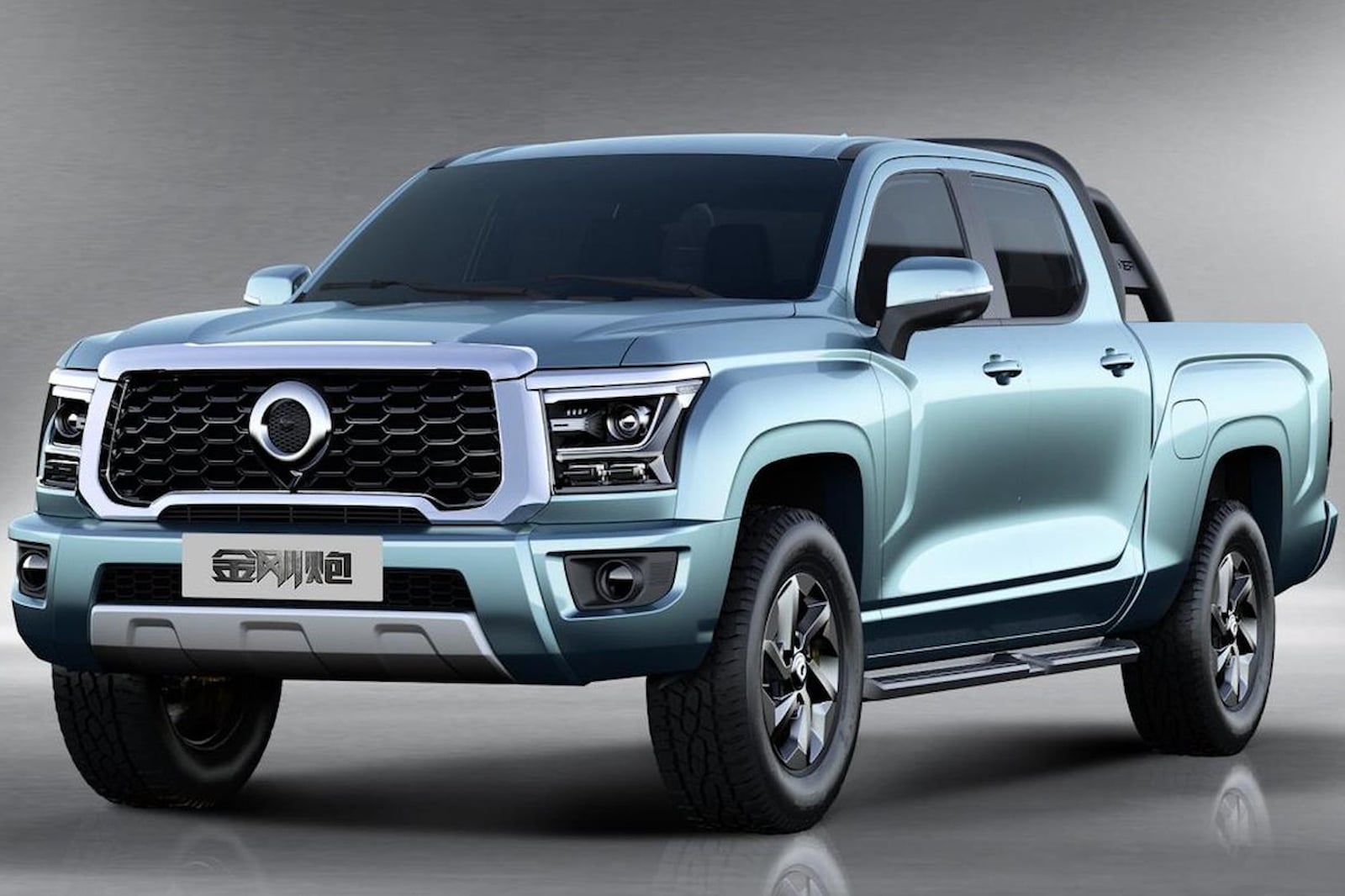
I can see King Kong Lighting to follow. :) If it's a solid truck it may get traction in countries that have to import the F-150.
 
Status
Not open for further replies.

Marketplace Items

THREE POINT MAINTAINER BLADE (A58214)
THREE POINT...
KJ K4020 40'x20' Carport Shed (A60463)
KJ K4020 40'x20'...
2016 PETERBILT PB320 GARBAGE/SANITATION TRUCK (A59823)
2016 PETERBILT...
2024 GMC Sierra Elevation Crew Cab 4X4 Pick-Up Truck (A60352)
2024 GMC Sierra...
SET OF PALADIN JRB 60" PALLET FORKS (A52707)
SET OF PALADIN JRB...
22" PIN-ON EXCAVATOR BUCKET W/PINS (A60429)
22" PIN-ON...
 
Top