Fixing a bushhog...

/ Fixing a bushhog... #1  

aczlan

Good Morning
Joined
Mar 7, 2008
Messages
17,540
Location
Northern Fingerlakes region of NY, USA
Tractor
Kubota L3830GST, B7500HST, BX2660. Formerly: Case 480F LL, David Brown 880UE
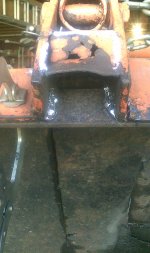
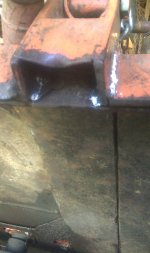
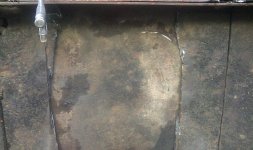
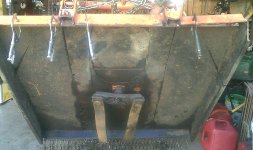
I went to hook up the bushhog the other day and I noticed that the deck was sagging in the middle. Took a closer look and the welds broke between two sections. I got it in the shop and picked it up to start cleaning it up and this is what I found:
IMAG0656.jpg IMAG0657.jpg IMAG0658.jpg IMAG0659.jpg IMAG0660.jpg
White lines are where I am going to grind out the weld (or crack) and re-weld. I plan to re-weld the cracked/broken sections, then weld a backer all the way across the front to tie all three sections together like the chain holder does on the back. I have a piece of flat stock (~2.25" x 3/16 or 1/4") that I am looking at using as a backer (shown clamped in place). Should that be adequate, or should I get a piece of angle to go in there?

This will be welded with a 220V AC buzzbox and one of the rods that I have on hand (6011, 6013, 7014 or 7018 IIRC).

Aaron Z
 
/ Fixing a bushhog... #2  
i welded one a few weeks ago with a crackerbox and 6011 ground out the welds, ground paint off around the weld area. have mowed with it twice weekly since then.. no prob. Of course the wing on my 15' JD batwing I welded the hinge back on 10 ys ago is still mowing fine weekly too. same deal .. same rod.. same machine.

I went to hook up the bushhog the other day and I noticed that the deck was sagging in the middle. Took a closer look and the welds broke between two sections. I got it in the shop and picked it up to start cleaning it up and this is what I found:
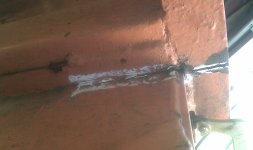
View attachment 387624 View attachment 387625 View attachment 387626 View attachment 387627 View attachment 387628
White lines are where I am going to grind out the weld (or crack) and re-weld. I plan to re-weld the cracked/broken sections, then weld a backer all the way across the front to tie all three sections together like the chain holder does on the back. I have a piece of flat stock (~2.25" x 3/16 or 1/4") that I am looking at using as a backer (shown clamped in place). Should that be adequate, or should I get a piece of angle to go in there?

This will be welded with a 220V AC buzzbox and one of the rods that I have on hand (6011, 6013, 7014 or 7018 IIRC).

Aaron Z
 
/ Fixing a bushhog... #3  
Looks like you will be putting on some patches on the rusted out holes in a short while so might be a good thing to do it now. 6011 is a good rod for the thin metal. I use a lot of 7018 but I have an AC/ DC machine. I got some 3/32 6013 a few weeks back to use for super thin stuff. I haven't used them much but they don't penetrate much and would be good for patching on the thin rust out areas.
 
/ Fixing a bushhog... #4  
yep.. i'd use the 6013 for the thin metal patches too.. and the 6011 for the deep bite.
 
/ Fixing a bushhog... #5  
I know lots of the pros aren't fond of 6013, but that and 6011 on an AC buzz box was all I used on the farm for 40 years. Repaired, built, and modified a seemingly endless number of projects. Didn't know any different. Wasn't even certain what DC was.... Just the dumb farm boy:)

Terry
 
/ Fixing a bushhog... #6  
I know lots of the pros aren't fond of 6013, but that and 6011 on an AC buzz box was all I used on the farm for 40 years. Repaired, built, and modified a seemingly endless number of projects. Didn't know any different. Wasn't even certain what DC was.... Just the dumb farm boy:)

Terry

those are the only 2 rods i stock on my farm in any quantity. I also have a few rods for cast iron.. and some braze and alloy solder rods.. but none of the other fancy stuff. if I need some i'll go get it.. but always have a need for a few pounds of 6011 around here.
 
/ Fixing a bushhog...
  • Thread Starter
#7  
Back from getting some cutting discs from HF ($6 for 10 thin metal discs, I got 4 packs).

Looks like you will be putting on some patches on the rusted out holes in a short while so might be a good thing to do it now.
I will be replacing the rusted piece on the right 3 point arch mount (left side of the picture). The one on the right isn't rusted (yet). The center section was patched from the top before I got it, so it should be good for a while. The outer sections were replaced just after I got it. IMO, they should have been heavier metal but they will do for now.
Looking at getting a larger one this fall (a 6' 3 point one perhaps or I found a 7' tow behind one that needs a coat of paint) and possibly selling this one.

Aaron Z
 
/ Fixing a bushhog... #8  
I know lots of the pros aren't fond of 6013, but that and 6011 on an AC buzz box was all I used on the farm for 40 years. Repaired, built, and modified a seemingly endless number of projects. Didn't know any different. Wasn't even certain what DC was.... Just the dumb farm boy:)

Terry

Well I am no pro either:
a) 6011 is my hardest rod for my limited skillset to run but it is a must have for me to have around ole junky, rusty, dirty, farm equipment repairs.
b) 6013 is also a must have especially if you lack a wire feeder. Works good on really thin sheet. Also works good on repairs you will be reshaping to size with handheld power tools. 6013 shapes almost as easy as virgin steel with a carbide burr tool.
c) 7014 I like this one too. So easy to run that it almost welds itself (there is a reason it is called idiot rod and it is because it is so easy to use).

6011, 6013, and 7014 do NOT require rod oven storage either so no added expense for having them readily on hand. Any of the 3 burn equally well on AC or DC. 7014 might even burn slightly better on AC compared to DC (might be only rod you can say this for).

Do Not get me wrong 7018 (and 7018AC) have their place too, but both of these they can be quite tempermental to run on lower end welding power sources, cost you money to store the rods properly even if you have a top of the line welding power source (i.e. keeping a rod oven at temp , 24 hours a day, 365 days a year cost some dollars for electricity any way you slice it). Certainly necessary is some cases, but most of this hassle is simply not needed for almost all my repair based projects. Yah Yah I already know that many run 7018 just fine without oven storage, but those same people also readily admit they run much better from the oven in comparison and few of those people are using an AC buzzbox type welder either.
 
/ Fixing a bushhog... #9  
Hate to sound like a broken record but for 99% of any welding that will be done by the people on this forum, a rod oven for 7018 is NOT required. Keep them dry and don't store them in a high moisture location and you'll be good to go. Do they run a little nicer when hot, yes, but if you have trouble burning them "cold", maybe you just need a little more practice. :confused: In Lieu of that, short the rod out on the plate for a couple seconds and they'll be just as hot as if they came out of a rod oven. ;)
 
/ Fixing a bushhog... #10  
I like to keep mine stored on the shelf at TSC just stop and get a small box when I have a project to do.
 
/ Fixing a bushhog... #11  
I have occasionally used 7018AC (usually from a small package) but for the most part, 7014 works just fine. I mostly use 3/32, but step up to 1/8 when welding thicker sections. For fussy thin stuff, I like it in 1/16" too. I've not had any problem with anything staying together I've actually taken my time and done the proper prep on, rather than just got in a hurry and slapped something on.
 
/ Fixing a bushhog... #12  
7014 rod is my favorite for an AC machine.

I never could get 7018 to run on our craftsman "tapped" AC machine. Even the AC variety.

Built, repaired, and fixed lots of things with 7014 and 6013 and never had any problems.

Never tried 6011. Never had a reason to as 7014 and 6013 have done everything I want.

Looks like a fun repair. Nothing like having the tools and knowledge to put to use and get more years of service out of a piece of equipment:thumbsup:
 
/ Fixing a bushhog... #13  
I like to keep mine stored on the shelf at TSC just stop and get a small box when I have a project to do.
Buying in small quantities like that is best if you don't have a hot box to keep them in. If you have a foodsaver vacuum packer, just seal the plastic back up when finished and it would be good to go.

I have my shop on a separate meter so my hot box usually cost me nothing because I usually pay no more than the minimum monthly charge. Once all the rods are hot, it stays hot with very little current required to maintain the temp. Sure it does cost a few cents per day of electricity but having a dry rod that starts easily and doesn't produce a bunch of porosity or damp rods that rust the core wire and ruin the rod is worth it to me. Using a hot box to keep my low hydrogen rods in is paramount to why I use synthetic oil. Using both makes me feel I am doing the right thing. YMMV
 
/ Fixing a bushhog... #14  
I'll second the motion to short the rod. It works great. I have an oven. I have some high dollar specialty rods in it. All my common everyday make a living pay the bill rods are in cans they came in. Even on the BIG jobs where everything is code- welders find their stinger holding a less than perfect rod, and a weld is made unless their one of those prima-donna types. Just kidding if your a prima-donna welder take a breath and don't break a nail typing. ;)
 
/ Fixing a bushhog... #15  
Hate to sound like a broken record but for 99% of any welding that will be done by the people on this forum, a rod oven for 7018 is NOT required. Keep them dry and don't store them in a high moisture location and you'll be good to go. Do they run a little nicer when hot, yes, but if you have trouble burning them "cold", maybe you just need a little more practice. :confused: In Lieu of that, short the rod out on the plate for a couple seconds and they'll be just as hot as if they came out of a rod oven. ;)

lol, I totally agree, if I need to weld when it's cold outside, I throw a handful on the wood stove
and leave them there until needed...lol
Never had a problem with moisture content in the summer.
And we live by the river...lol
 
/ Fixing a bushhog... #16  
Well I am no pro either:
a) 6011 is my hardest rod for my limited skillset to run but it is a must have for me to have around ole junky, rusty, dirty, farm equipment repairs.
b) 6013 is also a must have especially if you lack a wire feeder. Works good on really thin sheet. Also works good on repairs you will be reshaping to size with handheld power tools. 6013 shapes almost as easy as virgin steel with a carbide burr tool.
c) 7014 I like this one too. So easy to run that it almost welds itself (there is a reason it is called idiot rod and it is because it is so easy to use).

6011, 6013, and 7014 do NOT require rod oven storage either so no added expense for having them readily on hand. Any of the 3 burn equally well on AC or DC. 7014 might even burn slightly better on AC compared to DC (might be only rod you can say this for).

Do Not get me wrong 7018 (and 7018AC) have their place too, but both of these they can be quite tempermental to run on lower end welding power sources, cost you money to store the rods properly even if you have a top of the line welding power source (i.e. keeping a rod oven at temp , 24 hours a day, 365 days a year cost some dollars for electricity any way you slice it). Certainly necessary is some cases, but most of this hassle is simply not needed for almost all my repair based projects. Yah Yah I already know that many run 7018 just fine without oven storage, but those same people also readily admit they run much better from the oven in comparison and few of those people are using an AC buzzbox type welder either.

Thanks, Rank. :thumbsup:
Lots of good info for those who have AC welders. I have learned a lot from you over the years on the different forums. Both your welding experience on AC and the use of carbon arc torches, as well as your hands on repairs. :)
 
/ Fixing a bushhog... #17  
... I throw a handful on the wood stove
and leave them there until needed...lol

An old guy told me to do that many years ago with 7018. :) (at least 20 yrs ago now....yikes...)
One time a buddy was over using my shop and said "what the heck is wrong with these rods, they start really bad"

I reminded him to take from on top the wood stove, not the box on the shelf - he was surprised it made such a difference

Yep, I know it ain't technically right, but these were very old rods being used on a non-critical hunk of steel being transformed into an "anvil shaped object" ;)
 
Last edited:
/ Fixing a bushhog... #18  
7014 rod is my favorite for an AC machine.

I never could get 7018 to run on our craftsman "tapped" AC machine. Even the AC variety.

Built, repaired, and fixed lots of things with 7014 and 6013 and never had any problems.

Never tried 6011. Never had a reason to as 7014 and 6013 have done everything I want.

Looks like a fun repair. Nothing like having the tools and knowledge to put to use and get more years of service out of a piece of equipment:thumbsup:

I really like 7014's :)
 
/ Fixing a bushhog... #19  
I have to do some repairs on mine before spring. Thanks for posting pictures. It gave me a game plan on how to do it. Also, I noticed that your stump jumper is gone. Ever have any issues without it?
 
/ Fixing a bushhog...
  • Thread Starter
#20  
I have to do some repairs on mine before spring. Thanks for posting pictures. It gave me a game plan on how to do it. Also, I noticed that your stump jumper is gone. Ever have any issues without it?
This one came to me without one. I had to weld one of the spacers behind the blade back on, but otherwise it has done fine (we mostly use it for field mowing though, so YMMV)

I need to post the pictures I took of it post welding and get some now that I have it primed...

Aaron Z
 
 
Top