You are using an out of date browser. It may not display this or other websites correctly.
You should upgrade or use an alternative browser.
You should upgrade or use an alternative browser.
Plank logging roads
- Thread starter bcp
- Start date
- Views: 3615
More options
Who Replied?
/ Plank logging roads
#1


Industrial Toys
Super Star Member
- Joined
- Feb 25, 2008
- Messages
- 17,407
- Location
- Ontario Canada
- Tractor
- Kubota R510 Wheel Loader + Cab and backhoe, JD 6200 Open Station, Cushman 6150, 4x4, ten foot 56 hp Kubota diesel hydraulic wing mower, Steiner 430 Diesel Max, Kawasaki Diesel Mule, JD 4x2 Electric Gator
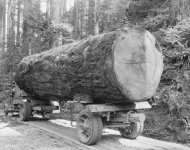
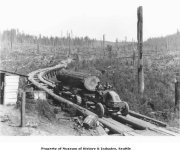
These men should have been ashamed! Look at the topography!
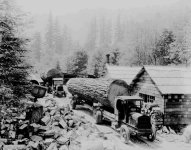
That sloped hood sure looks like a modern design.
That sloped hood sure looks like a modern design.
RoyKing
Platinum Member
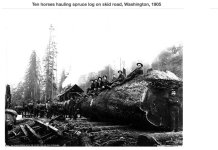
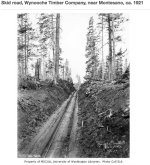
Plank roads are referred to as skid row and when saloons and girls showed the name stuck
mapper
Veteran Member
When I grew up in Bellingham the school system had a conservation site that we made field trips to for environmental education (although I don't think it was called that then). One of the things discussed was early logging methods, on the site were the remains of an old skid road, logs laid at 90 degrees of the direction of travel about 10 feet apart, each with a notch in the center for the logs to slide along(well worn as you can imagine). If I remember correctly it had led down to lake whatcom. Possibly to the old Blodel-Donaven mill?

Thomas
Epic Contributor
- Joined
- Apr 6, 2000
- Messages
- 32,606
- Location
- Lebanon,NH.
- Tractor
- Kubota B2650HSD w/Frontloader & CC LTX1046 & Craftman T2200 lawn mower.
Amazing how they work figure out and got it done.
mcfarmall
Veteran Member
- Joined
- Oct 1, 2015
- Messages
- 1,482
- Location
- Kalamazoo, MI
- Tractor
- Kubota M5660, Farmall C, JD 260 lawn tractor
Anyone notice the "turf" tires on the semi tractor? They remind me of the diamond style turfs.

oosik
Epic Contributor
Ok - I thought it would be a road with hundreds of small trees laid at 90 degrees to the traveled way. I must be thinking of corduroy road. Processing those monsters must have required the same level of ingenuity as harvesting. You could build an entire town, in the wild west, with the lumber from just one of those.
mapper
Veteran Member
When homesteaders first settled in Whatcom county many of the trees were too large to be easily cut down with axe and crosscut saws and the logs too big to move. So they had a method of boring intersecting holes in the trunk that were then packed with vine maple coals, a week or so later the trunk would burn through enough for the tree to fall. They would then burn the rest on the ground. Seems like a waste to us now but they were homesteaders just trying to clear land for farming...
On another note, while I was in college studying forestry we toured several of Weyrhouser mills in Everett, Mill B was still in operation at that time was the oldest, it had been designed for cutting logs that were a minimum size of 6 feet in diameter! That day they were cutting 3 foot logs, they looked like tooth picks going through that headsaw!
On another note, while I was in college studying forestry we toured several of Weyrhouser mills in Everett, Mill B was still in operation at that time was the oldest, it had been designed for cutting logs that were a minimum size of 6 feet in diameter! That day they were cutting 3 foot logs, they looked like tooth picks going through that headsaw!

bunyip
Elite Member
Plank roads were several grades above skid roads, on which logs were skidded by draft animals or steam donkey (winch).
Bruce
When I was in the UK we had Donkey Engines on farm equipment, wonder if that is where it originated from, they were a small petrol engine used on conveyors etc and notorious for starting fires on hay stacks.
When homesteaders first settled in Whatcom county many of the trees were too large to be easily cut down with axe and crosscut saws and the logs too big to move. So they had a method of boring intersecting holes in the trunk that were then packed with vine maple coals, a week or so later the trunk would burn through enough for the tree to fall. They would then burn the rest on the ground. Seems like a waste to us now but they were homesteaders just trying to clear land for farming...
On another note, while I was in college studying forestry we toured several of Weyrhouser mills in Everett, Mill B was still in operation at that time was the oldest, it had been designed for cutting logs that were a minimum size of 6 feet in diameter! That day they were cutting 3 foot logs, they looked like tooth picks going through that headsaw!
On this side of the continent people are building mills that will cut trees only 4 inches on the top; they might get (1) 2x3 from each stem. The remainder is chipped and sold for pulpwood. That might seem wasteful to some people but they are trees that would die anyways.
ultrarunner
Epic Contributor
- Joined
- Apr 6, 2004
- Messages
- 29,970
- Tractor
- Cat D3, Deere 110 TLB, Kubota BX23 and L3800 and RTV900 with restored 1948 Deere M, 1949 Farmall Cub, 1953 Ford Jubliee and 1957 Ford 740 Row Crop, Craftsman Mower, Deere 350C Dozer 50 assorted vehicles from 1905 to 2006
When homesteaders first settled in Whatcom county many of the trees were too large to be easily cut down with axe and crosscut saws and the logs too big to move. So they had a method of boring intersecting holes in the trunk that were then packed with vine maple coals, a week or so later the trunk would burn through enough for the tree to fall. They would then burn the rest on the ground. Seems like a waste to us now but they were homesteaders just trying to clear land for farming...
On another note, while I was in college studying forestry we toured several of Weyrhouser mills in Everett, Mill B was still in operation at that time was the oldest, it had been designed for cutting logs that were a minimum size of 6 feet in diameter! That day they were cutting 3 foot logs, they looked like tooth picks going through that headsaw!
Yep... a friend has some old timber he was hoping to sell when clearing for his homesite.
Turned out the buyers for really large timber are few... and to think 160 years ago giant redwoods were being felled with hand tools...

MossRoad
Super Moderator
- Joined
- Aug 31, 2001
- Messages
- 67,284
- Location
- South Bend, Indiana (near)
- Tractor
- Power Trac PT425 2001 Model Year
Interesting reading regarding Weyerhaeuser Mill B....
PCAD - Weyerhaeuser Timber Company, Mill B, Everett, WA
PCAD - Weyerhaeuser Timber Company, Mill B, Everett, WA
mapper
Veteran Member
On this side of the continent people are building mills that will cut trees only 4 inches on the top; they might get (1) 2x3 from each stem. The remainder is chipped and sold for pulpwood. That might seem wasteful to some people but they are trees that would die anyways.
The same day that we toured Mill B we also toured Mill E, that was their first computer controlled mill. It was set up to scan the logs as they came into the head saw and set them for the optimum yield. The logs they were cutting were 4" tops and most of them yielded a couple of 2x4's or one 4x4. The computer itself was the size of a refrigerator and probably had less processing power than the remote control for your TV. This was in 1974, it did speed up the process since up to that time the headsaw was set manually by the sawer after he looked the log over to determine the best yield, the logs moved into the headsaw of mill E as fast as feed conveyor moved, one after the other.
mapper
Veteran Member
A coworker had some trees cut a few years ago, the largest they would take was 45", anything larger was left. The days of the one log loads are over.Yep... a friend has some old timber he was hoping to sell when clearing for his homesite.
Turned out the buyers for really large timber are few... and to think 160 years ago giant redwoods were being felled with hand tools...
mapper
Veteran Member
::: Kinsey Brothers Photographs of the Lumber Industry and the Pacific Northwest, ca. 189-1945 :::
Check out this link to the Kinsey brothers collection at the University of Washington.
Check out this link to the Kinsey brothers collection at the University of Washington.
ultrarunner
Epic Contributor
- Joined
- Apr 6, 2004
- Messages
- 29,970
- Tractor
- Cat D3, Deere 110 TLB, Kubota BX23 and L3800 and RTV900 with restored 1948 Deere M, 1949 Farmall Cub, 1953 Ford Jubliee and 1957 Ford 740 Row Crop, Craftsman Mower, Deere 350C Dozer 50 assorted vehicles from 1905 to 2006
It was not that long ago the mill in Shelton shut down... quite an operation they had.
Still non-stop loads of logs going out the port of Olympia be freighter...
Still non-stop loads of logs going out the port of Olympia be freighter...
mapper
Veteran Member
It was not that long ago the mill in Shelton shut down... quite an operation they had.
Still non-stop loads of logs going out the port of Olympia be freighter...
Along with mill jobs. The rational I used hear was our mills couldn't cut the dimensions required by the country's they were being exported to. Never could wrap my head around that one, how hard can it be to change the vernier on the headsaw to metric or modify the computer code in a modern mill? :confused3:
MossRoad
Super Moderator
- Joined
- Aug 31, 2001
- Messages
- 67,284
- Location
- South Bend, Indiana (near)
- Tractor
- Power Trac PT425 2001 Model Year
::: Kinsey Brothers Photographs of the Lumber Industry and the Pacific Northwest, ca. 189�-1945 :::
Check out this link to the Kinsey brothers collection at the University of Washington.
That's gonna take me some time to look though! Thanks. :thumbsup:
MossRoad
Super Moderator
- Joined
- Aug 31, 2001
- Messages
- 67,284
- Location
- South Bend, Indiana (near)
- Tractor
- Power Trac PT425 2001 Model Year
Along with mill jobs. The rational I used hear was our mills couldn't cut the dimensions required by the country's they were being exported to. Never could wrap my head around that one, how hard can it be to change the vernier on the headsaw to metric or modify the computer code in a modern mill? :confused3:
Employees and machinery cost money. If you can exploit the forest as much as possible with the least amount of labor and sell it with the least amount of handling for the most amount of profit, that's what's gonna happen.


